The short answer
The snappy, yappy Chihuahua stereotype is a training failure, not a breed trait. A well-raised Chihuahua is confident, clever, bold, and devoted. The fix for the stereotype is simple in principle: treat a Chihuahua like a real dog, with the same rules, training, and socialisation you would give a big one, instead of coddling it. Snapping is almost always fear-based, so build confidence with positive socialisation, don’t reinforce the fear by scooping the dog up at every reaction. House-train with a consistent schedule (and consider indoor potty options for deep cold). And manage the breed’s serious cold sensitivity through a Red Deer winter. Do this, and the Chihuahua is a delight.
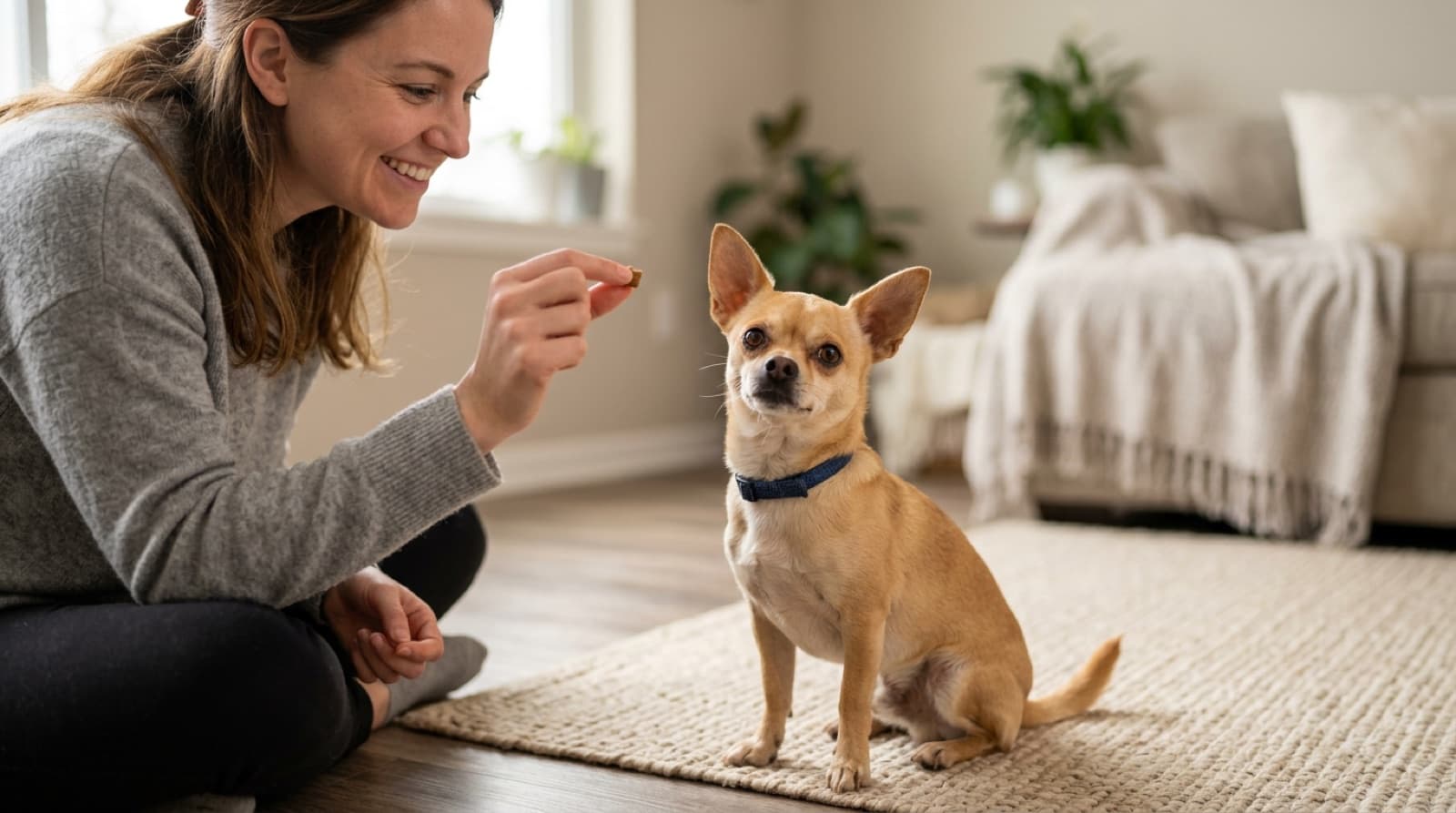
The real temperament, and small-dog syndrome
A well-raised Chihuahua is confident, alert, lively, and devoted, a big personality in a tiny body, often bonded intensely to one or two people and quite willing to stand up to a much larger dog. The snappy, neurotic reputation is not the true temperament; it is small-dog syndrome, the pushy, reactive behaviours that develop when a tiny dog is coddled instead of trained. Behaviours never tolerated in a big dog, jumping up, growling, nipping, get laughed off in a small one, and the dog is rarely socialised because it is carried everywhere. The result is an anxious, unmannered dog. The fix: treat a Chihuahua like a real dog, and small-dog syndrome does not develop.
Fixing fear-based snapping, and house-training
Snapping is fear, not dominance. A small, vulnerable dog defends itself when it feels threatened. Build confidence with gradual, positive socialisation, reward calm, and don’t force interactions or punish, which deepens fear. Crucially, don’t scoop the dog up at every reaction, which reinforces it; let the dog learn the world is safe. A positive-methods trainer helps a lot with an under-socialised rescue.
House-training takes consistency. Tiny bladders need frequent opportunities, and small accidents are easy to overlook. Use a consistent schedule, reward success immediately, supervise indoors, and clean accidents thoroughly. In a Red Deer winter, an indoor potty option (pee pads or a litter box) is a legitimate solution for a dog that genuinely cannot tolerate deep cold, train it before winter hits.
Ask your Red Deer vet or the rescue you adopt from for a current positive-methods trainer. The American Kennel Club breed profile covers the Chihuahua’s temperament.
Managing a cold-sensitive dog through winter
Winter management is a real part of Chihuahua ownership in Central Alberta, and it ties into training. Because the breed is extremely cold-sensitive, outdoor time must be short and the dog needs a warm coat, so outdoor potty trips are brief and unpleasant in deep cold, which is why many owners set up an indoor potty option for the coldest stretches and train the dog to use it before winter. Keep up mental stimulation indoors with training games and puzzle toys, since a Chihuahua still needs engagement when it cannot be out much. Watch constantly for shivering and get the dog in quickly. Plan the winter routine early, and know your local emergency vet with our Red Deer emergency vet guide.
Ready for a Chihuahua of your own?
Browse adoptable Chihuahuas from Central Alberta rescues. Ask the foster about the individual dog’s confidence, socialisation, and needs.
See Available Chihuahuas →Frequently Asked Questions
What is a Chihuahua’s temperament really like?
A well-raised Chihuahua is confident, alert, lively, and devoted, a big personality in a tiny body, often bonding intensely with one or two people. They are clever, curious, and surprisingly bold, quick to alarm-bark and quite willing to stand up to much larger dogs, which is charming and occasionally a management issue. The snappy, yappy, neurotic reputation the breed carries is not the true temperament; it is what happens when a Chihuahua is under-socialised, untrained, and coddled instead of guided. Given proper socialisation and training, Chihuahuas are affectionate, engaged, entertaining companions that can be well-mannered and even friendly with strangers and other dogs. The breed’s personality is a feature, not a flaw, when the dog is raised as a dog.
What is small-dog syndrome, and is it real?
Small-dog syndrome describes the bundle of pushy, reactive, or aggressive behaviours, excessive barking, snapping, guarding laps, refusing to follow rules, that some small dogs display, and it is real but misnamed. It is not a syndrome of the dog; it is a product of how small dogs are often raised. Behaviours that would never be tolerated in a large dog, jumping up, growling, nipping, get laughed off or even rewarded in a tiny one, and the dog is rarely trained or socialised because owners carry it everywhere and manage the world for it. The result is an anxious, unmannered dog. The fix is simple in principle: treat a Chihuahua like a real dog, with the same rules, training, and socialisation you would give a big one. Do that, and small-dog syndrome does not develop.
How do I stop my Chihuahua from being snappy or aggressive?
Chihuahua snapping is almost always fear-based, a small, vulnerable dog defending itself because it feels threatened and has learned that snapping makes scary things back off. So the answer is building confidence and trust, not punishment, which makes fear worse. Socialise the dog gradually and positively to people, other dogs, and situations, never forcing interactions but rewarding calm. Do not coddle or pick the dog up every time it reacts, which reinforces the fear; instead, let it learn the world is safe. Teach basic obedience to build communication and confidence, and manage situations so the dog is not repeatedly pushed past its comfort. For an under-socialised rescue Chihuahua, a positive-methods trainer or behaviourist can help enormously. With patience, most snappy Chihuahuas become far more relaxed.
Are Chihuahuas hard to house-train?
They have a reputation for being difficult, and there is some truth to it, but much of it comes down to owner habits with small dogs. Chihuahuas have tiny bladders and need frequent opportunities, and their small accidents are easy to miss or clean up without addressing the training, so problems persist. In cold climates like Red Deer, the challenge compounds, because a Chihuahua genuinely does not want to go outside in deep cold, which is a legitimate reason many owners use indoor potty options like pee pads or a litter box in winter. The keys are the same as for any dog: a consistent schedule, taking the dog out (or to the pad) frequently, rewarding success immediately, supervising closely indoors, and cleaning accidents thoroughly. With consistency, Chihuahuas house-train fine; the trouble comes from inconsistency, not incapacity.
Do Chihuahuas need training and socialisation like big dogs?
Absolutely, and skipping it is the single biggest mistake Chihuahua owners make. A Chihuahua is a dog, and it needs the same foundation as a Labrador: basic obedience, positive socialisation to people, dogs, and the world, clear and consistent rules, and mental stimulation. The tiny size makes it tempting to carry the dog everywhere and let it opt out of the world, but that is exactly how you create a fearful, reactive dog. Enrol in a positive-methods training class, socialise carefully and continuously, especially in the early weeks with a new dog, and hold the dog to normal manners. This is not being harsh; it is giving the dog the confidence and structure it needs to be happy and well-adjusted. A trained, socialised Chihuahua is a delight; an untrained one is the stereotype.
Are Chihuahuas good with children and other pets?
It depends on the individual and the situation, and honesty helps here. Chihuahuas can do well with respectful older children and with other pets, especially other small dogs and cats they are raised with, but there are real caveats. Their fragility means rough handling by a young child can injure them, and a frightened Chihuahua may snap defensively, so households with very young children need caution and supervision, and many Chihuahua rescues prefer homes with older kids. With larger dogs, the size difference is a safety concern in both directions, a bold Chihuahua may provoke a big dog, or be hurt in play. With good socialisation and sensible management, many Chihuahuas live happily with kids and other pets, but match the specific dog’s temperament, which a rescue can describe, to your household.
How do I manage a Chihuahua through a Red Deer winter?
Winter management is a real part of Chihuahua ownership in Central Alberta, and it intersects with training. Because the breed is so cold-sensitive, outdoor time must be short and the dog needs a warm coat, which means outdoor potty trips are brief and unpleasant for the dog in deep cold, so many owners set up an indoor potty option (pee pads or a litter box) for the coldest stretches, and training the dog to use it is worth doing before winter hits. Keep up mental stimulation indoors with training games and puzzle toys, since a Chihuahua still needs engagement when it cannot be out much. Watch for shivering any time the dog is outside, and get it in quickly. Plan the winter routine, indoor potty, warm gear, indoor enrichment, before the cold arrives.
Where can I train a Chihuahua in Red Deer?
Look for a trainer or class using positive, reward-based methods, which are essential for a small, sometimes fearful breed where punishment backfires badly. A good group class does double duty, teaching manners and providing the socialisation that prevents the breed’s reactivity problems, and many Chihuahuas benefit enormously from it. If your rescue Chihuahua has significant fear or reactivity, ask about a trainer or behaviourist experienced with small, under-socialised dogs. Ask your Red Deer vet or the rescue you adopt from for a current recommendation, as programs change over time. Beyond formal classes, the daily work matters most: consistent rules, ongoing gentle socialisation, rewarded confidence, and treating the dog as a capable dog rather than a fragile accessory. That is what turns a Chihuahua into the wonderful companion the breed can be.
Related Guides
New dog? Start with these care guides
Everything a new adopter needs to set up a safe, happy home.