The short answer
Reactivity in Chihuahuas is fear asking for distance. Give the distance, reward calm at a range the dog can handle, and stop correcting the bark. Rule out pain first, because sore knees and sore teeth both shorten a dog's fuse. In Vancouver, manage the elevator and the crowded seawall deliberately rather than hoping the dog gets used to them, because forced close quarters is what turns mild worry into a habit.
It is fear, not attitude
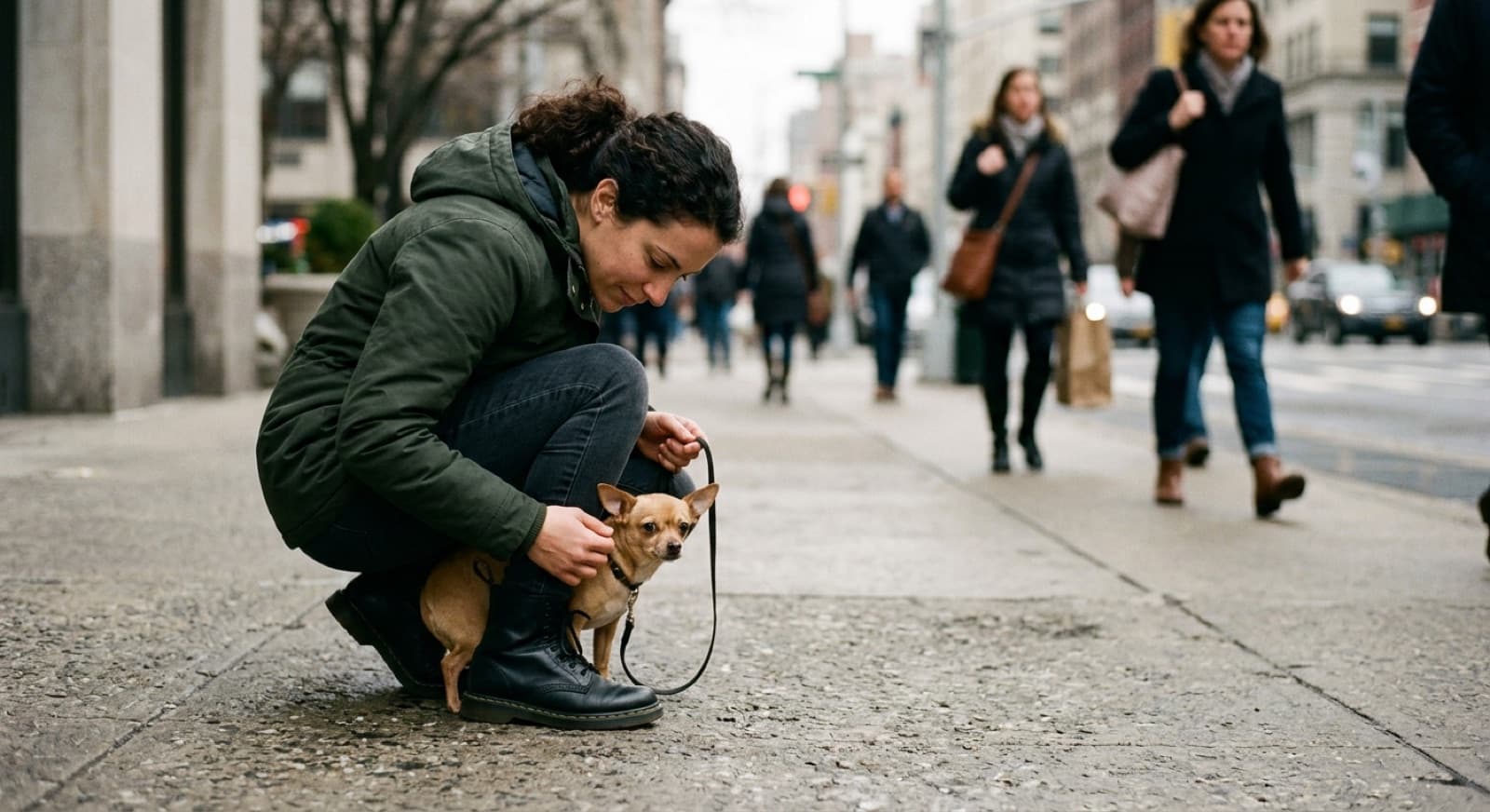
The phrase “small dog syndrome” describes behaviour accurately and explains it wrongly. What people are seeing is a small animal surrounded by much larger ones, asking for space the only way it can. A four-pound dog next to a Labrador is in a genuinely different situation from the Labrador, and its caution is proportionate rather than silly.
The difference in how we treat it is the problem. A growling large dog gets a behaviour plan. A growling Chihuahua gets laughed at, or scooped up mid-growl. Both dogs are saying the same thing. Reading it as attitude leads to correction, and correcting a frightened dog usually makes it worse, because you have punished the warning while leaving the fear intact. A dog that learns growling gets it in trouble often stops growling and goes straight to snapping.
The American Veterinary Society of Animal Behavior publishes position statements on the use of punishment in training that are worth reading before anyone sells you a quick fix.
Rule out pain before you train anything
This is the step people skip. Chihuahuas are prone to luxating patella and to dental disease, and both hurt. A dog with a painful mouth or a knee that slips has a shorter fuse, tolerates handling less, and may snap when touched in a way it never used to. Any noticeable change in tolerance deserves a veterinary examination first.
Training around untreated pain is effort in the wrong place, and it is unfair to the dog. Our Vancouver Chihuahua health guide covers what to have checked and roughly what it costs.
The elevator is the Vancouver problem
If you want one thing that makes condo dogs reactive in this city, it is the elevator. It is a small sealed box with no escape route, in which a stranger and often another dog can step in unannounced and stand well inside your dog's comfort distance. Your dog cannot leave. Most Vancouver condo dogs do this several times a day, every day.
Manage it rather than hoping familiarity fixes it. Stand in a corner with your dog behind your legs so there is a barrier. Let a full car go and take the next one. When someone asks whether they can say hello, it is completely reasonable to say no, and most people take it fine if you say the dog is nervous. Lobbies and narrow corridors are the same problem in slower motion, so give yourself room there too.
The crowded seawall on a sunny weekend is the outdoor version. It is not a training environment, it is a flooding environment. Work at quieter hours or on less-busy routes and come back to it when the dog is ready.
Stop picking the dog up by default
Small dogs get carried in a way large dogs never do, and in a dense city it happens constantly. It ends the immediate moment, which is why people keep doing it. The cost is that the dog learns the exit from anything frightening is being lifted, rather than learning that its own feet can create distance. Over time that builds dependence and tends to raise reactivity rather than lower it.
Walk away instead, calmly, and let the dog move itself. The exception is obvious and worth stating: if a loose dog is bearing down on you, pick your dog up. Safety wins over method in the moment. The point is that scooping should be the emergency response, not the routine one.
Distance, then patience
The method that works is unglamorous. Find the distance at which your dog can see the thing that worries it and still take food. Reward calm there. Shorten the distance slowly, over weeks, and back off whenever the dog stops coping. If your dog reacts on every outing, you are consistently working too close, and no amount of persistence at that range will fix it.
Vancouver rain makes this harder in a way that deserves saying out loud. Outings shrink through the wet months exactly when a newly adopted dog most needs varied, low-pressure exposure. A proper waterproof coat buys back outings you would otherwise skip, and covered ground such as parkades and building overhangs lets you do short calm sessions near ordinary city noise without either of you getting soaked.
Browse adoptable Chihuahuas in Vancouver
Plenty of Chihuahuas in BC rescue are not reactive at all, and a foster home can tell you how a dog actually handles elevators and strangers before you commit.
See Available Chihuahuas →Getting help, and who to avoid
Ask for help early rather than after an incident. Look for someone credentialled through a body such as the International Association of Animal Behavior Consultants or the Certification Council for Professional Dog Trainers, and ask one direct question before booking: what do you do when a dog gets it wrong? If the answer involves a correction, a prong collar or a shock collar, keep looking. A frightened four-pound dog does not need to be told off.
Where anxiety is severe, medication alongside behaviour work is sometimes the right call. That is a conversation with your veterinarian, who knows the dog. It is not something to source, guess at or dose yourself, and no article should be telling you what to give.
Questions Vancouver adopters ask
Why is my Chihuahua so reactive to other dogs?▼
Almost always fear rather than attitude. A four-pound dog living among animals ten to thirty times its size has a genuine reason to want distance, and barking and lunging are how it asks for that distance when it has no other way to get it. The behaviour looks like bravado and is usually the opposite. What works is increasing the space between your dog and whatever worries it, then rewarding calm at a distance the dog can cope with. What does not work is correcting the barking, because that removes the warning without touching the fear underneath.
Is "small dog syndrome" real?▼
Not as a personality trait. It is a label people put on fearful behaviour in small dogs that would be treated as anxiety in a larger one. The difference is mostly in how we respond: a growling Labrador gets a training plan, a growling Chihuahua gets laughed at or picked up. Both are the same signal. Treating it as an attitude problem leads to correction, and correction on a frightened dog tends to escalate it. Treating it as fear leads to distance, patience and counter-conditioning, which is what actually changes the behaviour.
Why are Vancouver elevators so hard for a small dog?▼
An elevator is a small sealed box with no escape route, where a stranger and often another dog can step in without warning and stand well inside your dog's comfort distance. For a dog whose entire coping strategy is creating space, that is close to a worst case, and most Vancouver condo dogs ride one several times a day. Practical fixes: stand in a corner with your dog behind your legs, let a full car go and wait for the next one, and if someone asks to say hello it is entirely reasonable to say no. Repeatedly forcing the situation is how a mildly worried dog becomes a reliably reactive one.
Should I pick my Chihuahua up when it reacts?▼
Try not to make it the default. Scooping the dog does end the moment, but it also teaches that the way out of a scary situation is to be lifted away from it, and it removes the dog's ability to move itself. Over time that tends to make the dog more dependent and more reactive, not less. Better to walk calmly away and put distance in yourself so the dog learns its own feet solve the problem. There is an obvious exception: if a loose dog is genuinely bearing down on you, pick your dog up. Safety beats training theory in the moment.
Could pain be causing the reactivity?▼
Yes, and it is the first thing to rule out. Chihuahuas are prone to luxating patella and to dental disease, and both hurt. A dog in pain has a shorter fuse, is less willing to be handled, and may snap when touched in a way it never used to. Any sudden change in tolerance deserves a veterinary examination before you treat it as a behaviour problem. Working on training while an untreated painful mouth or knee is driving the behaviour is effort spent in the wrong place.
How do I stop my Chihuahua barking at people on the seawall?▼
Change the distance before you change the dog. A crowded seawall on a sunny Saturday is far too much for a dog that is still learning, so go at quieter hours or use less-busy routes while you work on it. Reward the dog for noticing a person and staying calm, at whatever distance it can manage without reacting, then close that distance gradually over weeks. If your dog reacts every time, you are working too close. Progress on this is measured in months, not sessions.
Does Vancouver rain make socialisation harder?▼
It genuinely does, and it is worth planning around rather than discovering. A short-coated small dog does not want to be out in a November downpour, so outings shrink exactly when a new dog most needs varied, low-pressure exposure to the world. A decent waterproof coat buys you outings you would otherwise skip. Covered ground helps too: parkades, awnings and building overhangs let you do short calm sessions near normal city activity without either of you getting soaked.
When should I get professional help, and what kind?▼
Get help early rather than after a bite, and choose someone who works without pain or intimidation. Look for credentials from bodies such as the International Association of Animal Behavior Consultants or the Certification Council for Professional Dog Trainers, and ask directly what a trainer does when a dog gets something wrong. If the answer involves a correction, a prong or a shock collar, keep looking. Where anxiety is severe, medication is sometimes appropriate alongside behaviour work, but that is a conversation with your veterinarian and it is not something to source or dose yourself.
Will adopting an adult Chihuahua mean adopting its problems?▼
It means you can see what you are getting, which is an advantage. A foster home that has lived with the dog can tell you how it handles elevators, strangers, children and other dogs, and that is far more useful than guessing how a puppy will turn out. Many Chihuahuas in Vancouver rescue are not reactive at all. Where a dog does have a history, a good rescue will say so and tell you what has helped, so ask specifically rather than hoping.
General information, not veterinary or behavioural advice for your individual dog, and deliberately naming no medications. A dog that has bitten, or is escalating, needs a qualified professional in the room rather than an article.
Chihuahua Health Issues →
Knees and teeth first, because pain is often what shortens the fuse.
Chihuahuas in Vancouver Condos →
Strata rules, barking through shared walls, and the rain problem.
Chihuahua Adoption in Vancouver →
Where to look, real costs, and what rescue dogs arrive with.
Adoptable Chihuahuas in Vancouver →
Live listings from BC SPCA and Lower Mainland rescues.
New dog? Start with these care guides
Everything a new adopter needs to set up a safe, happy home.