The short answer
English Springer Spaniels are genuinely high-energy working dogs needing at least one to two hours of vigorous daily exercise plus real mental stimulation. They are also very trainable, eager to please, intelligent, and people-oriented, which makes training a joy and a great energy outlet. Under-exercise and under-stimulation cause the breed's problem behaviours (hyperactivity, destruction, anxiety), the leading reason Springers are surrendered. Meet the needs with Vancouver's trails, beaches (they love water), off-leash areas, and dog sports (agility, scent work), plus positive training and enrichment. A Springer can suit an active first-time owner, but the deciding factor is always your activity level and commitment, not experience.
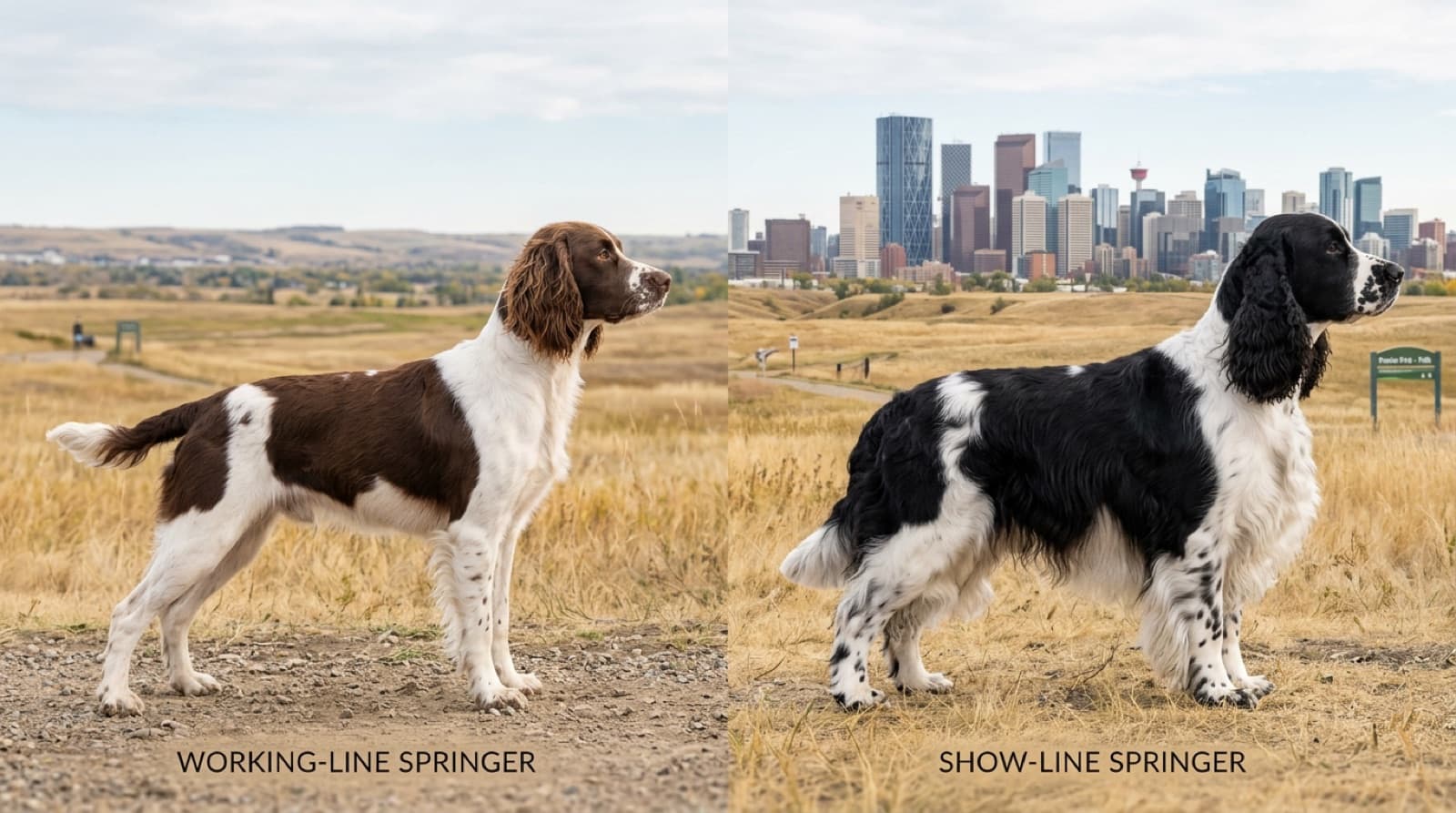
How much energy do Springer Spaniels have?
English Springer Spaniels are a genuinely high-energy breed, one of the most important things to understand before adopting one. Bred as working gundogs to flush and retrieve game all day, they have tremendous stamina, drive, and enthusiasm, and carry this into pet life. A Springer is not a couch dog, it wants to move, explore, use its nose, play, and do things, and it needs a real outlet every day. Without one, the energy turns into hyperactivity, restlessness, anxiety, and destruction.
An adequately-exercised Springer, by contrast, is a happy, affectionate, and reasonably calm companion at home, they can relax and cuddle, but only once their considerable energy has been channeled. This is a breed whose energy is a defining feature, and prospective owners must honestly assess whether they can meet it: an active person or family who hikes, runs, and does things with a dog will find a Springer a wonderful partner, while a sedentary household will find the energy overwhelming. Committing to the exercise and stimulation the breed requires is the foundation of living with a Springer.
Meeting the exercise needs in Vancouver
Vancouver is excellent for meeting a Springer's exercise needs, with abundant options for an active, water-loving, athletic breed. Aim for at least one to two hours of vigorous daily exercise plus mental stimulation, and use variety.
- •Hiking and running: the North Shore and regional trails (Springers love exploring and using their nose), and the seawall for running once mature.
- •Off-leash play: dog parks and areas, Springers are generally good off-leash given their people-oriented, trainable nature, though recall training matters given the working drive.
- •Swimming and retrieving: Springers adore water, so Vancouver's beaches and swimming spots are a fantastic low-impact outlet, and fetch taps into their retrieving heritage.
- •Dog sports and scent work: Springers excel at agility, flyball, scent work, and field activities, combining physical and mental exercise and giving the dog a job.
The mild Vancouver climate means you can get a Springer out and active nearly every day of the year. The key is a consistent mix of vigorous physical exercise and mental enrichment, and Vancouver's trails, beaches, and dog-sport community make that very achievable.
Are Springer Spaniels easy to train?
Yes, Springer Spaniels are generally very trainable and a pleasure to work with, one of the breed's great strengths. Intelligent, eager to please, food and praise-motivated, and people-oriented, they are highly responsive to training, and bred to work closely with a handler, they are naturally inclined to cooperate. They excel at obedience, respond beautifully to positive reinforcement, and enjoy learning, and they shine in dog sports.
To train a Springer well: use positive, reward-based methods (they respond to treats, praise, and play, and do not need or benefit from harsh methods, which can be counterproductive with this sensitive, willing breed); keep sessions engaging and fun; start early and socialize well; and channel the breed's energy and intelligence into training, which doubles as mental stimulation. Because Springers love a job, scent work, agility, and advanced obedience are excellent. Training is most effective when the dog's exercise needs are also met. A qualified positive-reinforcement trainer or a dog-sport club can help you get the most from this capable breed.
Why mental stimulation matters so much
Mental stimulation matters enormously for a Springer, arguably as much as physical exercise, because they are intelligent, working-bred dogs whose minds need engagement just as their bodies do. A Springer that gets plenty of physical exercise but no mental challenge can still be restless, bored, and prone to problem behaviours, because the working intelligence needs an outlet.
Good mental stimulation includes training sessions (which the eager-to-please breed loves), scent work and nose games (excellent for a gundog, start with find-the-treat and progress to formal scent work), puzzle toys, learning new skills, and dog sports like agility. Build mental exercise into daily life, use training during walks, hide treats to find, teach new skills, and give the dog jobs to solve. The payoff is significant: a Springer that gets both physical and mental exercise is calmer, happier, and better-behaved. For this intelligent, working breed, engaging the mind is not optional enrichment, it is a core part of meeting the dog's needs.
What under-exercise causes, and is a Springer a good first dog?
An under-exercised, under-stimulated Springer is prone to hyperactivity, destruction, excessive barking, restlessness, anxiety, and nuisance behaviours, the leading reason the breed ends up in rescue. These are not character flaws, they are the predictable result of an active, capable dog's needs not being met, and they typically improve dramatically when the dog gets adequate exercise and mental stimulation. The difference between a well-exercised Springer (happy, calm, a joy) and an under-exercised one (hyperactive, difficult) is stark.
On the first-dog question: a Springer can be a good first dog for a genuinely active first-time owner, the trainability, eagerness to please, and affectionate nature are first-owner-friendly and make the training learning curve gentler. But the deciding factor is your activity level and commitment, not experience. A Springer suits an active, committed first-timer well, and is a poor choice for anyone seeking a low-maintenance, easygoing, or low-exercise dog. Adopting an adult Springer, whose energy you can assess, is a smart approach for a first-timer. Be honest about your activity level, and if it matches the breed, a Springer can be a wonderful first dog.
Browse adoptable Springer Spaniels in Vancouver
Adopting an adult Springer lets you assess its real energy and match it to your active lifestyle. A good rescue will tell you how the dog does with exercise and training. Refreshed regularly across Lower Mainland rescues.
See Available Springer Spaniels →Frequently Asked Questions
How much energy do Springer Spaniels have?
A lot, they are high-energy working gundogs with tremendous stamina and drive. Not a couch dog. They need at least one to two hours of vigorous daily exercise plus mental stimulation, or the energy turns into problem behaviours. An active owner is essential.
How do I meet the exercise needs in Vancouver?
Hiking and running the trails and seawall, off-leash play, swimming and retrieving (they love water), and dog sports like agility and scent work. Plus mental stimulation. The mild climate means near-daily activity is achievable. Variety and consistency are the keys.
Are they easy to train?
Yes, very. Intelligent, eager to please, and people-oriented, they respond beautifully to positive reinforcement and love learning. Keep sessions fun, avoid harsh methods, and channel the energy into training and dog sports. Training is most effective when exercise needs are met.
Why does mental stimulation matter so much?
A physically-tired-but-mentally-bored Springer is still restless and prone to problems, the working intelligence needs an outlet. Use training, scent work, puzzles, and dog sports. A Springer that gets both physical and mental exercise is calmer and better-behaved. It is not optional enrichment.
What happens if they do not get enough?
Hyperactivity, destruction, barking, restlessness, and anxiety, the leading reason Springers are surrendered. These are unmet-needs behaviours, not flaws, and they improve dramatically with adequate exercise and stimulation. Only choose the breed if you can commit to meeting the needs.
Is a Springer a good first dog?
For a genuinely active first-time owner, yes, the trainability and affectionate nature are first-owner-friendly. But the deciding factor is your activity level, not experience. It is a poor choice for anyone wanting an easy, low-exercise dog. Adopting an adult helps a first-timer match energy to lifestyle.
Related Vancouver guides
Springer Spaniel Adoption in Vancouver
Where to adopt in BC, the energetic temperament, exercise needs, real costs, and who it suits.
Springer Spaniel Health Issues
Hip and elbow dysplasia, eye conditions, ear infections, PFK deficiency, and the breed's vet picture.
Adoptable Springer Spaniels in Vancouver
All currently available Springers and Springer mixes with foster energy notes. Updates regularly.
Best Dog Rescues in Vancouver
Every Vancouver-area rescue reviewed on cost, wait time, and best fit by adopter type.
New dog? Start with these care guides
Everything a new adopter needs to set up a safe, happy home.