The short answer
The Great Dane carries the giant-breed health profile, and a short 7 to 10 year lifespan: dilated cardiomyopathy (DCM), a leading cause of death that can be silent, so cardiac screening matters; bloat/GDV, for which the Dane is the highest-risk breed (many owners choose a preventive gastropexy); hip and elbow dysplasia and wobbler syndrome; bone cancer; and growth-related joint problems in puppies. The highest-impact things you control: monitor the heart, guard against bloat, keep the dog lean, feed a proper giant-breed diet, and protect the joints. Insure while young and healthy. Adopting an adult means the risky growth phase is safely behind you.
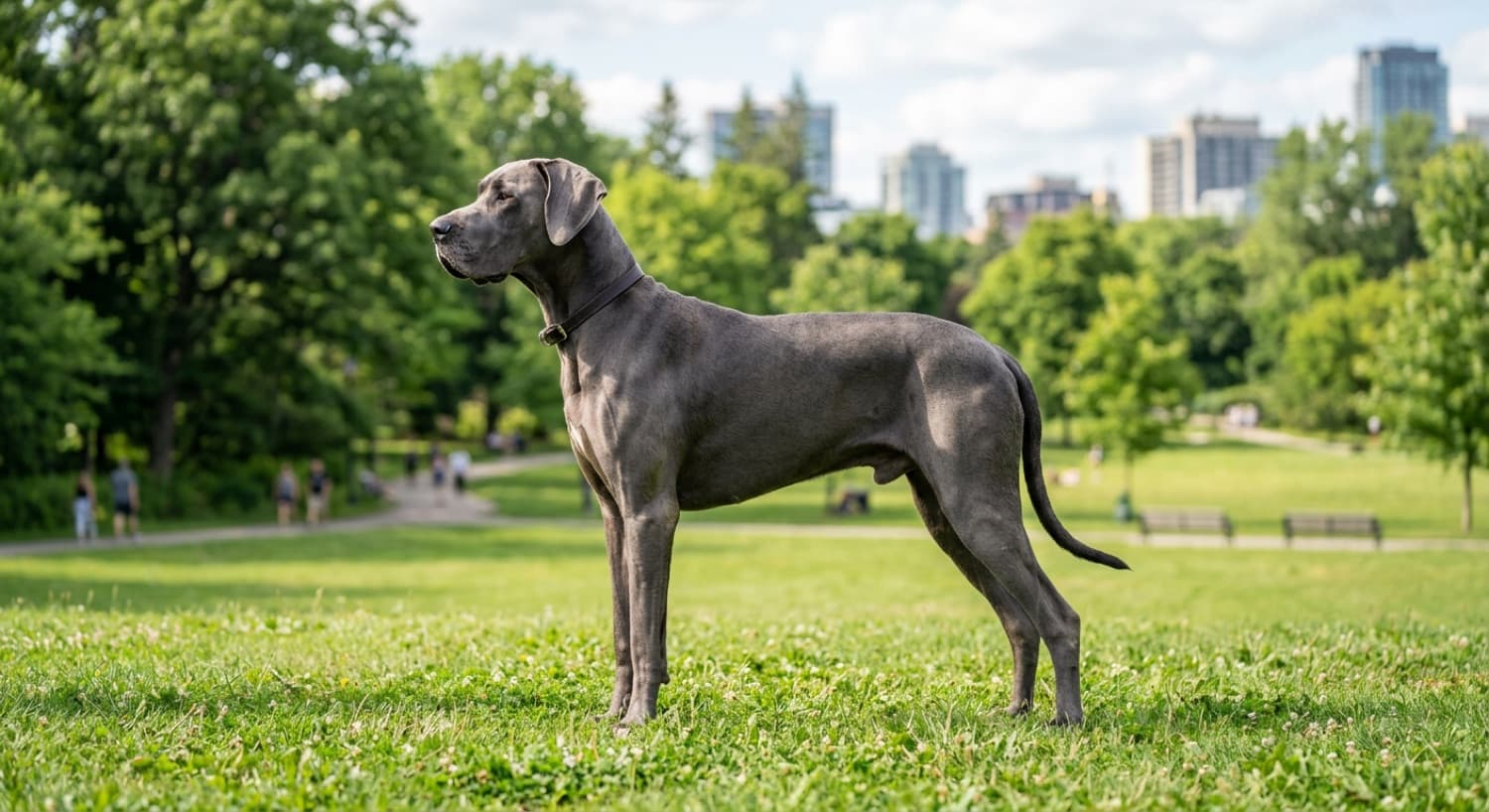
What health problems are Great Danes prone to?
The giant-breed profile, plus a few breed-specific concerns, and a short lifespan (7 to 10 years) that reflects them. The most important: dilated cardiomyopathy (DCM), a leading cause of death; bloat/GDV, a life-threatening emergency the breed is at exceptional risk for; hip and elbow dysplasia and other joint problems; wobbler syndrome (a spinal condition); osteosarcoma (bone cancer); hypothyroidism; and growth-related orthopedic issues in puppies. None of this means a Dane cannot have a wonderful life, but the breed requires an owner prepared to screen for the heart, guard against bloat, protect the joints, and budget for giant-breed care.
Why is heart disease such a concern in Great Danes?
Great Danes are among the breeds most prone to dilated cardiomyopathy (DCM), a leading cause of death. The heart muscle enlarges and weakens, and it is dangerous because it can develop with few obvious symptoms until it is advanced, sometimes the first sign is sudden collapse or death from an arrhythmia. This is why cardiac screening is so important: regular veterinary cardiac evaluation (which may include an echocardiogram and Holter monitor) from young adulthood can catch DCM early, when medication can slow it and improve and extend life. Watch also for exercise intolerance, coughing, laboured breathing, fainting, or a swollen belly, and see the vet promptly. Working with your vet on a cardiac-monitoring plan is one of the most important things a Dane owner can do.
The VCA guide to dilated cardiomyopathy explains the disease and its monitoring well.
Are Great Danes at high risk of bloat?
Yes, extremely, the Great Dane is often cited as the breed at highest risk of bloat (GDV) of any breed, because of its giant, deep-chested build. Bloat is a sudden, life-threatening emergency in which the stomach fills with gas and can twist, cutting off blood flow, and without immediate surgery it is rapidly fatal. Because the risk is so high, many Dane owners and rescues opt for a preventive gastropexy (tacking the stomach so it cannot twist, often done at spay/neuter), which does not prevent gas but does prevent the deadly twisting. Every Dane owner must know the signs cold, a distended belly, unproductive retching, restlessness, drooling, and distress, and treat them as an instant emergency requiring a rush to a Vancouver emergency vet.
Given the breed's exceptional risk, our dedicated Great Dane bloat and GDV guide covers prevention, the gastropexy decision, and emergency response in detail, essential reading for any owner.
Do Great Danes have joint and bone problems?
Yes, as a giant, fast-growing breed, Danes are prone to a range of orthopedic issues. Hip and elbow dysplasia are common, and their enormous size loads the joints throughout life. They are also prone to wobbler syndrome (a neck-vertebrae condition causing a wobbly gait) and osteosarcoma (bone cancer, elevated in giant breeds). Growth is a particular concern: Dane puppies grow enormously fast, and improper nutrition or over-exercise during growth can cause serious developmental joint problems, which is why giant-breed puppies need a specific giant-breed puppy diet and carefully managed exercise (no forced running or jumping while growing). For an adult, keep the dog lean, provide traction on slippery floors and orthopedic bedding, and monitor for lameness. Adopting an adult Dane means the risky growth phase is safely behind you.
How do I keep a Great Dane as healthy as possible?
Within the limits of the breed, attentive care makes a real difference to both the length and quality of a Dane's life. The highest-impact things: establish a cardiac-monitoring plan with your vet; know the signs of bloat cold and strongly consider a preventive gastropexy; keep the dog lean; feed an appropriate diet (and for a puppy, a proper giant-breed growth diet with managed exercise); provide traction and orthopedic bedding; watch for lameness, gait changes, and any cardiac or breathing signs; and keep up with routine checkups, which matter more as a giant breed ages faster. Because Danes are prone to serious, sometimes sudden conditions, a proactive relationship with your vet and pet insurance are especially valuable. And cherish the time, giant breeds give us fewer years, which makes the care all the more meaningful.
Should I get pet insurance for a Great Dane?
Strongly recommended, arguably as much as for any breed. Giant breeds are both expensive to treat and prone to serious, costly emergencies, bloat surgery, cardiac care, cancer treatment, and joint or spinal surgery can each run into the thousands. Insure while the dog is young and healthy, before any condition is diagnosed and excluded as pre-existing, especially important for a breed where a condition like early DCM could be found on screening and then excluded. Compare Canadian providers on their coverage of hereditary, cardiac, and emergency conditions, read the exclusions, and treat either insurance or a substantial dedicated vet fund as a core part of ownership. Given the breed's bloat and cardiac risk in particular, a financial plan for a major emergency is one of the most responsible parts of owning one.
Our Vancouver adoption cost guide covers giant-breed budgeting in full.
Browse adoptable Great Danes in Vancouver
Live inventory from Lower Mainland rescues, each with a foster's notes on temperament and any known health history, including cardiac and bloat history where available. Adopting an adult puts the risky growth phase behind you. Refreshed regularly.
See Available Great Danes →Frequently Asked Questions
What health problems are Great Danes prone to?
The giant-breed profile: DCM heart disease (a leading cause of death), bloat (highest-risk breed), hip and elbow dysplasia, wobbler syndrome, bone cancer, and growth-related joint issues in puppies. Lifespan is about 7 to 10 years.
Why is heart disease a concern?
The breed is very prone to DCM, which can be silent until advanced, sometimes causing sudden death. Cardiac screening (echo, Holter) from young adulthood catches it early, when medication helps. Watch for exercise intolerance, coughing, or fainting.
Are they at high risk of bloat?
Yes, often cited as the highest-risk breed. Many owners choose a preventive gastropexy. Know the signs (distended belly, unproductive retching, restlessness) and rush to an emergency vet. See our dedicated bloat guide.
Do they have joint problems?
Yes, hip and elbow dysplasia, wobbler syndrome, and bone cancer. Puppies need a giant-breed growth diet and managed exercise to develop healthy joints. Adopting an adult skips the risky growth phase. Keep the dog lean.
How do I keep one healthy?
Cardiac monitoring, bloat prevention (know the signs, consider gastropexy), keep the dog lean, feed appropriately, provide traction and good bedding, and keep up routine care. Insure early. Cherish the time.
Do I need pet insurance?
Strongly recommended. Bloat surgery, cardiac care, cancer, or joint surgery each run into the thousands. Insure while young and healthy, before a screened condition like early DCM is diagnosed and excluded.
Related Vancouver guides
Great Dane Adoption in Vancouver
Where to adopt in BC, the space and cost reality, the short lifespan, and who the breed suits.
Great Dane Bloat & GDV
The breed's deadliest emergency: recognizing bloat, preventing it, and the gastropexy decision.
Adoptable Great Danes in Vancouver
All currently available Great Danes and Dane mixes with foster health notes. Updates regularly.
Vancouver Dog Adoption Costs
Adoption fees, giant-breed annual care, and the insurance case for BC adopters.
New dog? Start with these care guides
Everything a new adopter needs to set up a safe, happy home.