The short answer
The Portuguese Water Dog is generally healthy but has known inherited conditions: hip dysplasia, eye disease (PRA, leading to vision loss), Addison's disease (a hormonal condition with vague signs, very treatable once diagnosed), and two serious puppy conditions, GM1 storage disease and juvenile dilated cardiomyopathy (JDCM), both avoidable through DNA testing and both affecting very young puppies, so an adopted adult has already survived them. Lifespan is a good ~11 to 14 years. The levers you control: keep the dog lean, exercise it well (swimming is ideal), groom diligently, and stay on routine vet care. Because joint, eye, and Addison's treatment can be costly, the insurance case is real, insure while young.
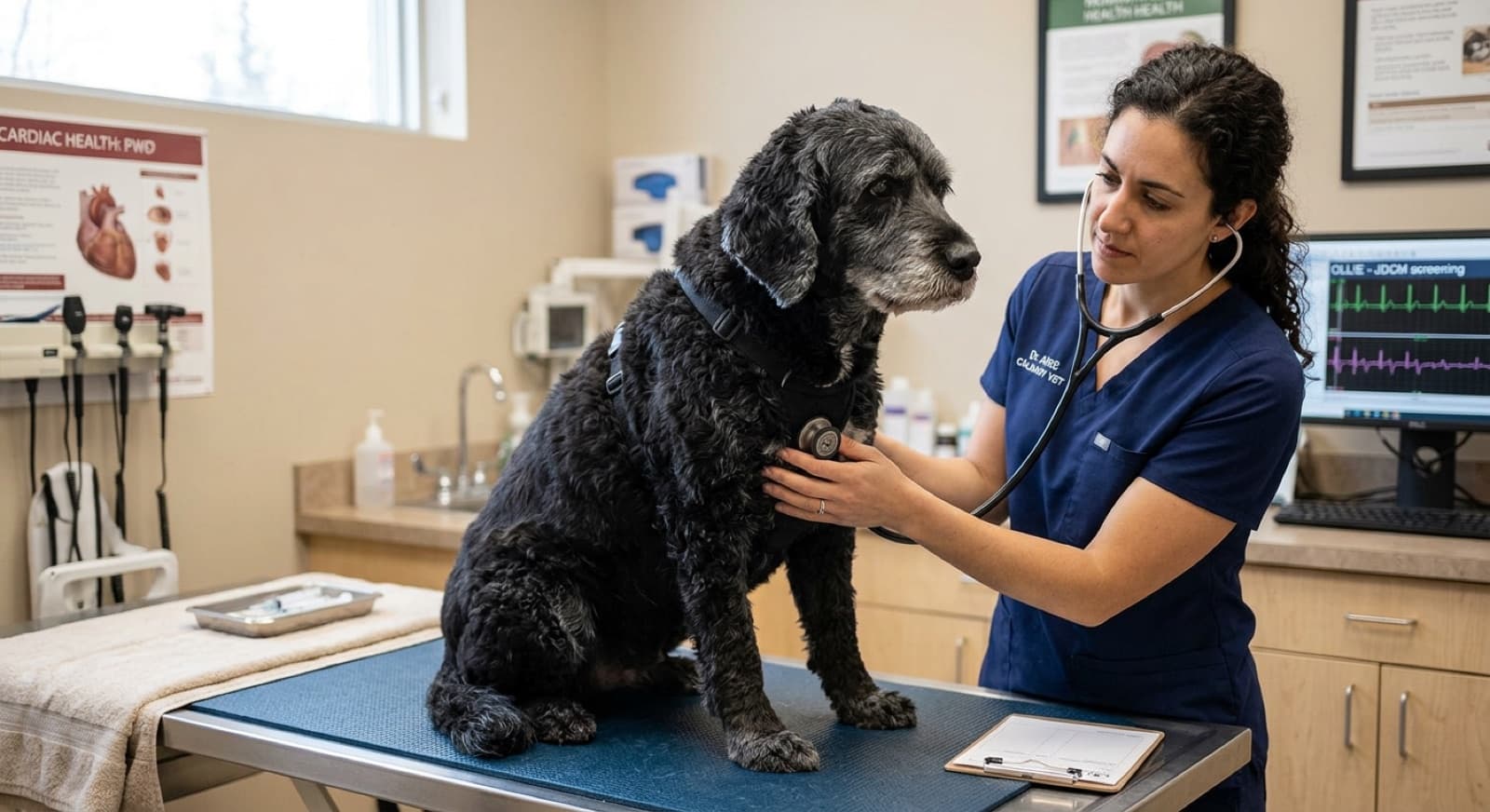
The Portuguese Water Dog is a fairly healthy, athletic breed, but a handful of inherited conditions come with it. Knowing them lets you catch problems early, and reassuringly, the breed's scariest conditions strike puppies, so an adopted adult has already cleared them. Here is the medical picture, condition by condition.
Hips and joints
Hip dysplasia is one of the conditions the breed can be prone to, as in many medium-to-large active breeds. It is a joint malformation leading to arthritis, pain, and reduced mobility. Signs include stiffness, difficulty rising, reluctance to exercise or climb stairs, limping, or an altered gait. Management ranges from weight control, supplements, appropriate exercise, and medication to surgery in severe cases.
Keeping a Portuguese Water Dog lean is the biggest lever, and it is easy given the breed's activity level and Vancouver's options. Swimming is a particularly joint-friendly, low-impact exercise, ideal for this water-loving breed. Appropriate exercise that maintains fitness without overstressing the joints helps too. Ask the rescue about any known mobility issues, and start good weight management from day one. The OFA maintains breed health-screening data.
Eyes: progressive retinal atrophy
The main eye concern is progressive retinal atrophy (PRA), a degenerative condition causing gradual vision loss and eventual blindness. It is usually not painful and progresses slowly, and dogs often adapt remarkably well. The breed has a known form (prcd-PRA) with a DNA test, but a rescue's history is usually unknown. Watch for night blindness (often the first sign), dilated pupils, a reflective or cloudy look, and increasing daytime difficulty.
There is no cure, but catching it lets you support the dog (consistent furniture, scent and sound cues, safety on walks), and a visually-impaired dog can live a happy, full life. Cataracts and other eye issues can also occur. Given the potential, eye care is part of the routine, and the possibility of eye disease is part of the insurance argument.
GM1 and JDCM: the puppy conditions
The breed is specifically associated with two serious inherited conditions of very young puppies. GM1 gangliosidosis (GM1 storage disease) is a fatal metabolic disorder, but a DNA test exists, so responsible breeders never produce affected puppies, it is essentially a concern only in poorly-bred litters. Juvenile dilated cardiomyopathy (JDCM) is a fatal heart condition of puppies under a year, which responsible breeding works to avoid.
Both affect very young puppies, so they are not a concern for an adopted adult or older Portuguese Water Dog, which has survived past the age at which they strike. For adopters this is reassurance: adopting an adult sidesteps some of the breed's scariest inherited risks, they are risks for young purchased puppies from untested breeding, not for the adult rescue in front of you.
Addison's disease
Addison's disease (hypoadrenocorticism) is a hormonal condition the breed can be prone to, worth knowing because its signs are vague and intermittent, easy to miss: lethargy, poor appetite, vomiting, diarrhea, weight loss, weakness, increased thirst, often waxing and waning, and occasionally a sudden severe crisis (an emergency). The good news: once diagnosed, it is very manageable with lifelong medication, and dogs live full lives.
The key is getting the diagnosis (blood tests), so if a Portuguese Water Dog shows those recurring vague signs, mention Addison's to your vet as a possibility given the breed predisposition, it is sometimes overlooked precisely because the signs are non-specific. It typically develops in young to middle-aged adults, so it is one of the adult-onset conditions to keep in mind for an adopted Portie. Awareness is the main defense.
Lifespan and keeping a Portie healthy
Portuguese Water Dogs typically live around 11 to 14 years and are generally hardy. Keep the dog lean and well-muscled, provide the substantial exercise and mental work the breed needs (swimming is ideal and joint-friendly), maintain the coat's grooming plus ear care (important in damp Vancouver), and stay on routine vet care so joint, eye, and adult-onset conditions are caught early. Watch for mobility changes, vision changes, and the vague signs of Addison's.
Feed a good-quality diet, maintain dental care, parasite prevention, and vaccinations. A Portuguese Water Dog kept lean, well-exercised, well-groomed, and given routine care has an excellent chance at a long, active life, and the breed's athleticism means an engaged owner who provides real exercise is already doing much of the work. See our exercise and training guide.
Is pet insurance worth it?
Pet insurance is worth considering, because while the breed is generally healthy, the conditions it can develop, hip dysplasia (expensive surgery), eye conditions like PRA, and Addison's (diagnosis plus lifelong medication), can be costly, and Vancouver vet care is not cheap. The hip, eye, and Addison's conditions in particular make the case.
Take out insurance while the dog is young and healthy, before any condition (especially an adult-onset one like Addison's) is diagnosed and excluded. Compare providers, understand coverage (including chronic conditions requiring lifelong medication) and limits, and read the fine print. If you self-insure, keep a solid vet fund with the joint, eye, and Addison's possibilities in mind. For an adopted adult, understand what a policy covers, and remember the scariest inherited risks (GM1, JDCM) are puppy conditions an adult has already survived. See our Vancouver costs guide for the numbers.
Browse adoptable Portuguese Water Dogs in Vancouver
An adopted adult Portie has already cleared the breed's puppy conditions, and a good rescue shares known health history. Refreshed regularly across Lower Mainland rescues.
See Available Portuguese Water Dogs →Frequently Asked Questions
What are the main health problems?
Generally healthy but with inherited conditions: hip dysplasia, eye disease (PRA), Addison's disease, and two puppy conditions (GM1 storage disease, JDCM) that are avoidable through DNA testing and affect only very young puppies. Lifespan ~11 to 14 years.
Do they have hip and joint problems?
Hip dysplasia can occur. Keeping the dog lean is the biggest lever, and swimming is a joint-friendly, ideal exercise for this water-loving breed. Vancouver's trails, seawall, and water make fitness easy. Ask the rescue about known mobility issues.
What eye conditions affect them?
Mainly PRA, a degenerative condition causing gradual vision loss, watch for night blindness first. No cure, but dogs adapt well and can live full lives. Catching it lets you support the dog. Cataracts and others can also occur.
What are GM1 and JDCM?
Two serious inherited conditions of very young puppies, GM1 storage disease (avoidable via DNA test) and juvenile dilated cardiomyopathy. Both strike puppies, so an adopted adult Portie has already survived them, they aren't a concern for an adult rescue.
What is Addison's disease?
A hormonal condition the breed can be prone to, with vague, easy-to-miss signs (lethargy, poor appetite, vomiting, weakness). Very manageable with lifelong medication once diagnosed. If a Portie shows those recurring signs, mention Addison's to your vet given the breed predisposition.
Is pet insurance worth it?
Worth considering, hip dysplasia, eye conditions, and Addison's (lifelong medication) can be costly. Take insurance out while the dog is young, before an adult-onset condition is excluded. For an adopted adult, understand what a policy covers.
Related Vancouver guides
Portuguese Water Dog Adoption in Vancouver
Where to adopt in BC, the athletic temperament, the low-shedding coat, real costs, and who it suits.
Portuguese Water Dog Exercise & Training
Meeting the breed's substantial needs in Vancouver: swimming, trails, dog sports, and the working drive.
Adoptable Portuguese Water Dogs
All currently available Portuguese Water Dogs and athletic mixes with foster health notes. Updates regularly.
Low-Cost Vet Care in Vancouver
Affordable clinics and options for routine care and the monitoring a Portie needs.
New dog? Start with these care guides
Everything a new adopter needs to set up a safe, happy home.