The short answer
The Rottweiler's health profile is a large, powerful breed's: joints (hip and elbow dysplasia, and cruciate ligament injuries), an elevated bone cancer (osteosarcoma) risk that is the breed's most serious concern, heart disease (notably subaortic stenosis), and bloat (GDV) as a deep-chested breed. Obesity, thyroid, and some eye conditions also appear. None of this is a reason to avoid a devoted breed. It is a reason to keep your Rottweiler lean, enrol pet insurance early (roughly $50 to $100 per month in BC, pre-existing conditions excluded), and act fast on limping, leg swelling, or any sudden change. Rottweilers commonly live about 8 to 10 years. This is general information, not veterinary advice; your vet is the right guide for your dog.
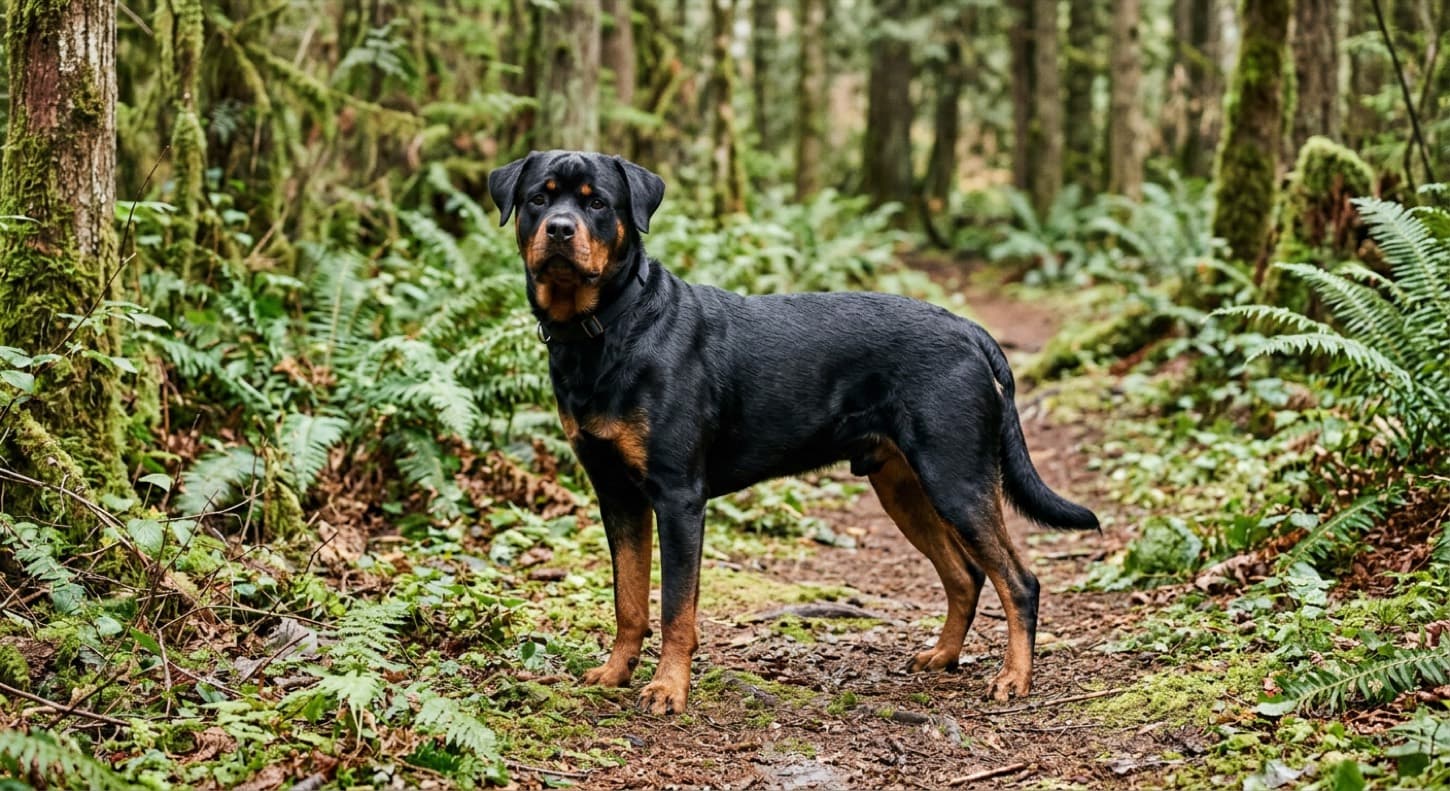
Joints: hips, elbows, and cruciate ligaments
As a large, heavy, powerful breed, the Rottweiler's joints are a lifelong priority. Hip and elbow dysplasia (developmental joint conditions that can lead to arthritis) are both seen in the breed, and cranial cruciate ligament (CCL) rupture, the canine version of an ACL tear, is a common injury in strong, active dogs.
Reputable breeders clear both parents for hips and elbows through the OFA. In a rescue Rottweiler you usually will not have those results, so watch for limping, stiffness after rest, reluctance on stairs, or a bunny-hopping gait, and raise anything with your vet. A cruciate injury often shows up as sudden hind-leg lameness and frequently needs surgery to restore stable, pain-free function; it is one of the more common large vet bills for the breed.
The single most powerful thing you control is weight. Keeping a Rottweiler lean dramatically reduces the load on its joints and is the best lifelong protection you can give a heavy breed. Add sensible, consistent conditioning (rather than occasional intense bursts) and careful exercise during the growth phase, and you protect the joints for years.
Bone cancer (osteosarcoma)
Rottweilers have an elevated breed risk of osteosarcoma (bone cancer), and it is one of the most serious health concerns in the breed. It usually affects the limbs and often first appears as lameness or a firm swelling on a leg, sometimes mistaken for an injury. Be accurate: this is an increased risk, not a certainty, and many Rottweilers never develop it.
Because osteosarcoma is aggressive when it occurs, the practical response is simple and it matters: have any persistent limping, leg swelling, or lameness that does not resolve checked by your vet promptly rather than assuming it is a strain, and carry pet insurance enrolled while your dog is young and healthy so treatment is affordable and nothing is pre-existing. Early veterinary assessment gives the most options. The AKC Canine Health Foundation funds ongoing research into the cancers that affect the breed, and your vet can refer you to a veterinary oncology service if a diagnosis is ever made.
Heart: subaortic stenosis
Subaortic stenosis (SAS) is the heart condition most associated with the breed, a congenital narrowing below the aortic valve that a vet may first detect as a murmur during an exam. Severity ranges from mild (monitor only) to serious (assessed by a veterinary cardiologist with an echocardiogram). This is one reason a thorough vet exam matters when you adopt a Rottweiler, and why reputable breeders heart-clear the parents.
If your vet hears a murmur, they may recommend referral for an echocardiogram to assess it. As with the breed's other conditions, the point is awareness and monitoring, not alarm: many Rottweilers have healthy hearts their whole lives. The AKC Rottweiler breed profile lists the health screenings recommended for the breed, including cardiac evaluation.
Bloat, weight, and other conditions
Bloat (GDV). As a deep-chested breed, the Rottweiler is at higher risk of gastric dilatation-volvulus, where the stomach fills with gas and can twist. It is a fast, life-threatening emergency: a swollen abdomen, unproductive retching, restlessness, and drooling mean an emergency vet immediately. Some owners discuss a preventive gastropexy with their vet, and feeding smaller meals with no hard exercise right after eating is a common precaution.
Obesity. This is the one most in your control and it affects everything else. A lean Rottweiler lives an easier, longer life with less strain on joints and heart. The breed loves food and will happily overeat, so measured meals and limited treats are a genuine health priority, not a cosmetic one.
Hypothyroidism. An underactive thyroid appears in the breed and shows up as weight gain, low energy, or coat changes. It is diagnosed with a blood test and managed with an inexpensive daily medication. The AVMA overview is a helpful primer.
Eyes. Some Rottweilers see eyelid conditions such as entropion or ectropion, and progressive retinal atrophy occurs in the breed. Mention any redness, squinting, or vision changes to your vet and include an eye check in routine care.
The Rottweiler health profile at a glance
| Concern | What it is | What helps |
|---|---|---|
| Hip & elbow dysplasia | Developmental joint conditions, arthritis | Keep lean, sensible exercise, vet management |
| Cruciate (CCL) injury | Knee-ligament rupture in strong dogs | Conditioning, weight control, often surgery |
| Osteosarcoma | Elevated bone cancer risk, often the limbs | Insure early, check any limping or leg swelling fast |
| Subaortic stenosis | Congenital heart narrowing, murmur | Vet exam, echocardiogram if flagged |
| Bloat (GDV) | Deep chest, stomach can twist. Emergency | Know the signs, emergency vet, discuss gastropexy |
| Obesity / thyroid / eyes | Weight, hypothyroidism, eyelid and retinal | Lean weight, blood test, routine eye checks |
Should I get pet insurance for my Rottweiler?
For a Rottweiler, yes, and the timing is everything. Between the joint conditions (dysplasia and cruciate surgery are common and costly), the elevated bone cancer risk, heart disease, and bloat, the lifetime odds of a big vet bill are higher than for many breeds, and orthopedic surgery, cancer treatment, and emergency care all run into the thousands. BC pet insurance for a young, healthy Rottweiler commonly runs roughly $50 to $100 per month, and some insurers price large guardian breeds a little higher.
The rule that catches everyone: anything already present becomes a pre-existing condition and is excluded, so a policy taken out the week you adopt a healthy young Rottweiler covers vastly more than one bought after the first limp or lump. Compare a few BC providers on annual and per-condition limits, deductibles, and reimbursement percentage, and enrol while your dog is healthy. Budget roughly $2,000 to $4,000 per year in total care for a Rottweiler in Vancouver.
To keep routine costs down, see our guides to low-cost vet options in Vancouver and affordable spay and neuter.
Ready to meet a Rottweiler?
Browse adoptable Rottweilers and Rottie mixes from Lower Mainland rescues. A rescue can tell you what a specific dog's health has looked like in foster, including anything a vet has flagged. Refreshed regularly.
See Available Rottweilers →Frequently Asked Questions
What health problems are Rottweilers prone to?
Rottweilers are a powerful, generally hardy breed, but as a large, fast-growing dog they have a real health profile to plan for. The main concerns are joints (hip and elbow dysplasia, and cruciate ligament injuries), an elevated risk of bone cancer (osteosarcoma) that is one of the breed's most serious issues, heart conditions (notably subaortic stenosis), and bloat (GDV) as a deep-chested breed. Obesity, hypothyroidism, and some eye conditions also appear. None of this means avoid the breed; it means keep your Rottweiler lean, enrol pet insurance early, stay current on vet care, and act quickly on limping, swelling, or any sudden change. Always confirm specifics with your vet.
Are Rottweilers prone to hip and elbow dysplasia?
Yes, hip and elbow dysplasia are both seen in the breed, as in most large dogs. These are developmental joint conditions that can lead to arthritis and mobility problems over time. Reputable breeders clear both parents through the OFA before breeding, and the OFA publishes breed statistics. With a rescue Rottweiler you usually will not have the parents' results, so watch for limping, stiffness after rest, reluctance on stairs, or a bunny-hopping gait, and raise anything you notice with your vet. The single most powerful thing you control is weight: keeping a Rottweiler lean dramatically reduces the load on developing and arthritic joints and is the best lifelong protection you can give a heavy breed.
Do Rottweilers have a high risk of bone cancer?
Rottweilers have an elevated breed risk of osteosarcoma (bone cancer), and it is one of the most serious health concerns in the breed. It typically affects the limbs and often shows up as lameness or a firm swelling on a leg, sometimes mistaken at first for an injury. Be accurate about what this means: it is an increased risk, not a certainty, and many Rottweilers never develop it. Because it is aggressive when it occurs, the practical response is to have any persistent limping, leg swelling, or lameness that does not resolve checked by your vet promptly rather than waiting, and to carry pet insurance enrolled while your dog is young and healthy. Early veterinary assessment gives the most options.
What heart conditions affect Rottweilers?
The heart condition most associated with the breed is subaortic stenosis (SAS), a congenital narrowing below the aortic valve that a vet may first detect as a heart murmur during an exam. Severity ranges widely, from mild cases that need only monitoring to serious ones that a veterinary cardiologist should assess with an echocardiogram. This is one reason a thorough vet exam matters when you adopt a Rottweiler, and why reputable breeders have the parents heart-cleared. As with the other breed conditions, the message is awareness and monitoring rather than alarm; many Rottweilers have healthy hearts their whole lives. If your vet hears a murmur, follow through on any recommended cardiology referral.
Are Rottweilers at risk of bloat (GDV)?
Yes. Bloat, or gastric dilatation-volvulus (GDV), is a life-threatening emergency where the stomach fills with gas and can twist, and deep-chested breeds like the Rottweiler are at higher risk. Signs include a swollen or distended abdomen, unproductive retching (trying to vomit with nothing coming up), restlessness, drooling, and distress. It comes on fast and needs an emergency vet immediately, not in the morning. Some owners of at-risk breeds discuss a preventive gastropexy (a surgery that tacks the stomach to prevent twisting, sometimes done at the same time as spay or neuter) with their vet. Feeding smaller meals and avoiding hard exercise right after eating are commonly suggested precautions. Ask your vet what is right for your dog.
Do Rottweilers get cruciate ligament injuries?
They can. Cranial cruciate ligament (CCL) rupture, similar to an ACL tear in people, is a common orthopedic injury in large, powerful, active dogs, and Rottweilers are among them. It often shows up as sudden hind-leg lameness, sometimes after a twist or hard play. Surgery is frequently recommended to restore stable, pain-free function, and it is one of the more common significant vet bills for the breed, which is a big reason to carry pet insurance. Keeping your Rottweiler lean and fit (not weekend-warrior fit, but consistently conditioned) reduces the risk, and if one knee goes, the other is statistically more likely to follow, so ask your vet about protecting it.
What else should Rottweiler owners watch for?
A few other conditions round out the picture. Obesity is a major one, and entirely in your control: a lean Rottweiler lives an easier, longer life with less strain on joints and heart, and the breed loves food, so measured meals matter. Hypothyroidism (an underactive thyroid) appears in the breed and shows up as weight gain, low energy, or coat changes; it is diagnosed with a blood test and managed with an inexpensive daily medication. Some eye conditions, including entropion or ectropion (eyelid problems) and progressive retinal atrophy, are seen too. Keep up routine vet exams, mention anything unusual, and treat your Rottweiler's weight as a health priority, not a cosmetic one.
How long do Rottweilers live, and how do I give mine the best odds?
Rottweilers commonly live around 8 to 10 years, which is typical for a large, heavy breed. Genetics matter, especially given the cancer and heart risks, but you influence a great deal: keep your dog lean (the single biggest lever for a big breed), provide sensible, consistent exercise without over-stressing growing joints, stay current on vet check-ups and dental care, and act promptly on any limping, leg swelling, fainting, or sudden change. A lean, well-conditioned Rottweiler with attentive owners who catch problems early has the best chance of a full, comfortable life at the top of that range.
Is pet insurance worth it for a Rottweiler?
For a Rottweiler, it is one of the best decisions you can make, and enrolling early is everything. Between the joint conditions (dysplasia and cruciate surgery are common and expensive), the elevated bone cancer risk, heart disease, and bloat, the lifetime odds of a significant vet bill are higher than for many breeds, and orthopedic surgery, cancer treatment, and emergency care all run into the thousands. BC pet insurance for a young, healthy Rottweiler commonly runs roughly $50 to $100 per month, and some insurers price large guardian breeds a little higher. The catch that catches everyone: anything already present becomes a pre-existing condition and is excluded, so enrol while your dog is young and healthy. Budget roughly $2,000 to $4,000 per year in total care for a Rottweiler in Vancouver.
The full Rottweiler cluster
Rottweiler Adoption in Vancouver
Where to adopt, real costs, the guardian-breed reality, and the housing, strata, and insurance considerations.
Rottweiler Temperament & Training
The guardian temperament, socialisation, life with kids and pets, and training a powerful breed well.
Adoptable Rottweilers in Vancouver
All currently available Rottweilers and Rottie mixes. Updates regularly.
Low-Cost Vet Options in Vancouver
Keep routine care affordable so your budget is free for the conditions that matter.
New dog? Start with these care guides
Everything a new adopter needs to set up a safe, happy home.