The short answer
Golden Retrievers are scarce in Victoria rescue and go fast, so alerts and same-day applications win. Start with the BC SPCA Victoria and spread alerts across foster-based Island rescues like Victoria Humane Society, VPAS, Bless Rescue Partners, and Promises Rescue Society. Fees run $250 to $700 across the Island, with seniors reduced to $150 to $300. Most rescue Goldens are seniors, owner surrenders, or Golden crosses rather than young purebreds; puppies almost never appear. Before you commit, understand the breed's elevated lifetime cancer risk (the Morris Animal Foundation Golden Retriever Lifetime Study is the honest reference), budget for a double coat that needs year-round grooming in Victoria's wet climate, and steer clear of the “free Golden puppy” and out-of-region transport scams that target this breed. Enrol in pet insurance in week one, and adopt through a verified rescue that requires an application and a conversation.
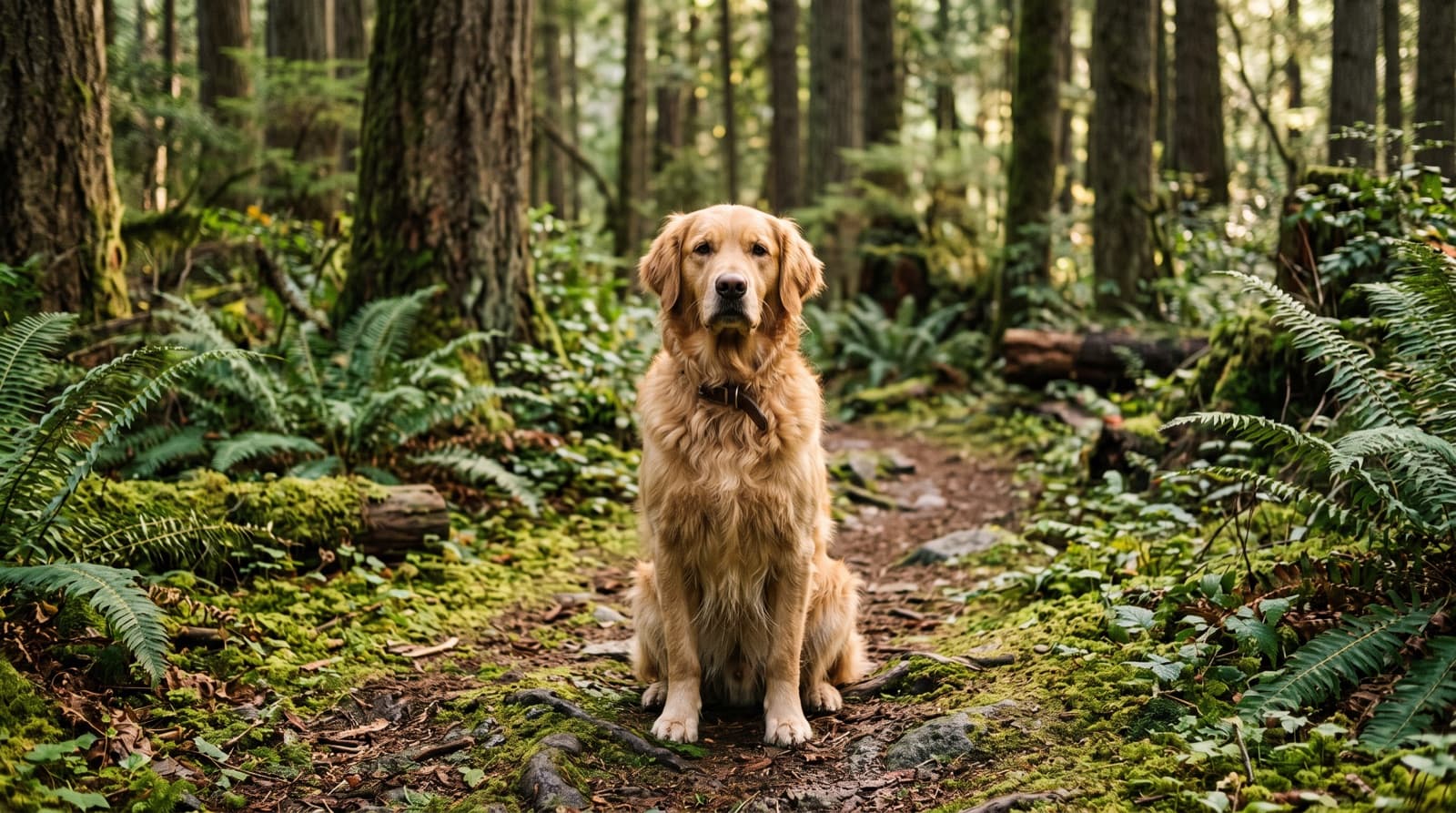
Why Goldens are rare in Victoria rescue, and place fast
If you have been watching Island rescue listings hoping a Golden Retriever appears, you already know the pattern: they show up rarely, and when one does, it is gone almost immediately. This is not bad luck. It is the direct result of the breed's popularity and temperament, and understanding it changes how you should approach the search.
Goldens are one of the most popular family dogs in Canada, and popular family dogs are the least likely to end up in rescue. A well-raised Golden tends to stay with its family for life. When a Golden does become available, it is usually through circumstances rather than a behaviour problem: an owner passes away, a family moves overseas, a new baby triggers an allergy, a divorce splits a household, or an ageing owner can no longer manage a large active dog. Because the dog itself is rarely the issue, the moment one is listed, applications pile up within hours.
What that means for you is that the search is a preparation game, not a patience game. The adopters who get the Golden are the ones who had their references lined up, their vet contact ready, their household on the same page, and their alerts set across every rescue before the dog was ever posted. Waiting to sort out your application until after you see the listing almost always means you are too late.
A few realities about what actually reaches Island rescue:
- Seniors are the most available. An older Golden whose owner has died or moved into care is the most common rescue Golden, and these dogs are wonderful, calm, and often overlooked. SAINTS and other senior-focused groups are where to look.
- Golden crosses are more common than purebreds. Golden Lab, Golden Shepherd, and Golden-doodle-type mixes appear more often than pedigree Goldens, and they frequently carry the same friendly temperament at a fraction of the wait.
- Puppies almost never appear. Golden puppies in rescue are so rare that a listing for one should raise your suspicion of a scam before your hopes.
- Transport intake shows up on the Island. Some Vancouver Island foster-based rescues bring dogs in from northern BC or out of region, which is one route a Golden or Golden mix may arrive, and part of why foster-based fees run higher.
The upshot is simple. Stay open to a senior, an adult, or a Golden cross rather than holding out for a young purebred, spread your alerts across every Island rescue, and be ready to move the day the right dog appears.
Victoria and Vancouver Island rescues to set alerts on
No single Victoria rescue specialises in Goldens, so the strategy is breadth: set listing alerts on every reputable Island rescue at once so you catch a Golden the moment it lands anywhere. For a fuller directory with what each group is known for, see our guide to the best dog rescues in Victoria. The core list to watch:
- BC SPCA Victoria: the region's largest general shelter, taking in every type of dog through owner surrender and stray intake. You can meet a dog in person before you apply, and staff put together a straightforward read on temperament, health, and history. Fees run $250 to $500. A Golden here is gone quickly, so watch the listings closely and act the day one appears.
- Victoria Humane Society: a foster-based rescue covering a wide southern Vancouver Island footprint through a volunteer foster network. Because its dogs live in real homes, the temperament notes on how a Golden does with kids, cats, other dogs, and being alone tend to be accurate. Foster-based fees run toward the higher end of the range when transport is involved.
- Victoria Pet Adoption Society (VPAS): a foster-based rescue placing dogs across the region. Worth an alert and a saved profile so your application is ready to go.
- Bless Rescue Partners: a foster-based group known for unusually detailed foster write-ups, which is exactly the kind of honest temperament read you want when adopting a large family breed sight-largely-unseen.
- Promises Rescue Society: a Vancouver Island rescue that receives dogs through surrender and transport, another good group to have alerts on for a Golden or Golden mix.
- SAINTS Senior Animal Sanctuary: the place to look for an older Golden. Senior dogs are the most available Goldens in rescue, and a senior-focused sanctuary is where they land. Reduced fees, calm dogs, deeply rewarding placements.
- CRD Animal Shelter: the Capital Regional District shelter handles stray and surrendered dogs and administers dog licensing for member municipalities. It publishes fees from $25 for small animals up to $700 for puppies. Check its available-animal list directly.
Whichever rescue lists the Golden, confirm it is legitimate before any money changes hands. A real Vancouver Island rescue has a genuine address, charitable-registry status, a current adoptable-dog list, and an application-and-conversation process. Because Goldens are so scarce, they draw more fraud than almost any breed: free-Golden posts and cheap out-of-region transport offers that move puppy-mill or unvetted dogs long distances for an upfront deposit. No real rescue asks you to wire funds for a dog you have not met, so this caution is not optional. If you also need routine care lined up, our low-cost vet guide for Victoria covers the local options.
The cancer reality, and the rest of Golden health
There is no responsible way to write about Golden Retrievers without addressing cancer directly. The breed carries an elevated lifetime cancer risk compared to dogs in general, and it is the leading health reason Goldens are lost, often in middle to older age. This is the one thing every prospective Golden adopter should understand before falling for that face.
The Morris Animal Foundation Golden Retriever Lifetime Study is the definitive research effort on this question. It has followed thousands of Goldens over their lifetimes to understand why cancer is so prevalent in the breed and which genetic, environmental, and lifestyle factors influence it. Because the study is ongoing and honest science, be sceptical of any exact percentage circulating online; the reliable takeaway is that hemangiosarcoma, lymphoma, mast cell tumours, and osteosarcoma all appear at meaningful rates in Goldens. What you do with that information matters more than the number.
Knowing the risk should not scare you off the breed. It should shape how you plan. Enrol in pet insurance in your first week, before anything shows up in the medical record, because Golden cancer treatment and specialty care are expensive and pre-existing conditions are not covered. Know where the nearest emergency and specialty veterinary care is in the Victoria area before you need it. Keep annual wellness exams so a lump, a limp, or a change in energy gets investigated early, when outcomes are best. And if you adopt a senior Golden, go in with clear eyes and a budget, because the near-term chance of an age-related or breed-related diagnosis is simply higher.
Cancer aside, Goldens have several other predictable health considerations:
- Hip and elbow dysplasia. Common orthopaedic issues in the breed. Responsible breeders screen through the Orthopedic Foundation for Animals, though a rescue Golden usually arrives without those records.
- Heart conditions. Subvalvular aortic stenosis and other cardiac issues occur in the breed and are worth a listen at the baseline vet visit.
- Ear infections. Drop ears plus a love of water trap moisture, so regular ear checks and drying after swims are part of Golden care, especially in a wet coastal climate.
- Hypothyroidism. Shows up in middle age, diagnosed with bloodwork and managed with a daily pill.
- Eye conditions. Cataracts and progressive retinal atrophy appear in the breed.
- Obesity. Goldens are food-motivated and gain weight easily, which worsens joint problems. Measured meals and treat discipline matter.
None of this replaces veterinary advice, and this guide never recommends specific medications or treatments. Book a baseline exam in your first month to establish records, score body condition, and check the ears, hips, heart, and eyes. If cost is a barrier to care, our Victoria low-cost vet guide sets out the BC programs that actually apply here.
Grooming a double coat in Victoria's wet climate
Victoria's mild, wet Pacific climate is a mixed blessing for a Golden. The good news is you rarely deal with deep snow or brutal cold, so your dog can stay active outdoors nearly year-round. The catch is rain and mud, and a Golden's coat is built to collect both.
Goldens carry a dense double coat: a water-repellent outer layer over a soft insulating undercoat, developed to keep a retriever warm and buoyant in cold water. That coat sheds steadily all year and blows heavily twice a year, so shedding is a permanent feature of Golden ownership, not a season. Plan on brushing two or three times a week at minimum, and daily during a coat blow, using a slicker brush and an undercoat rake to reach the dead undercoat before it mats.
The feathering, the longer hair on the legs, chest, belly, ears, and tail, is where Victoria's mud lives. After a wet walk on the coastal trails or a muddy romp at an off-leash park, that feathering picks up dirt, grit, and moisture and mats fast if you leave it. A rinse and a proper towel-and-blow dry after muddy outings keeps mats and skin problems at bay. Wet feathering that stays damp against the skin is also how you get hot spots, so drying matters more here than in a dry climate.
A professional groom every six to eight weeks for a bath, blow-out, nail trim, and a sanitary and feather tidy keeps the whole system manageable. One firm rule: never shave a Golden's double coat. Shaving disrupts the coat's natural insulation and cooling and often grows back patchy or with a changed texture. If your Golden is overheating, the answer is thinning the undercoat through brushing and grooming, not a clipper.
One more coastal-climate note: Victoria's mild winters mean fleas and ticks are essentially a year-round concern rather than a summer one, because the parasites are not knocked back by a hard freeze. Keep up year-round parasite prevention on your vet's advice, and check the coat and ears after walks in long grass and wooded parks.
Adopt vs breeder: what a Victoria rescue Golden actually costs
Adoption fees across Victoria-area rescues run $250 to $700 for most dogs. The BC SPCA Victoria and the CRD Animal Shelter sit at the lower end, around $250 to $500, while foster-based rescues that cover out-of-region transport intake often run $500 to $700 because the fee helps offset the cost of bringing the dog to the Island. Senior Goldens, seven and up, are frequently reduced to $150 to $300. That number is not a purchase price. It recovers part of the medical work already behind the dog: a basic vet workup, spay or neuter, core vaccinations, a microchip, deworming, and parasite treatment. Priced out one by one at retail BC vet rates, that care comes to well more than the adoption fee.
Now the breeder comparison, which is where the Golden math becomes stark. A puppy from a responsible, health-testing Golden breeder in BC typically runs $2,500 to $4,000, and reputable breeders often have waiting lists a year or more deep. That price buys a puppy with no medical work yet done, an unknown adult temperament, and the full puppy phase ahead of you. A rescue Golden, especially an adult or senior, costs a fraction of that, arrives already vetted and altered, and often comes with a temperament read from foster care. If your goal is a Golden in your home rather than a specific pedigree puppy, adopting is dramatically cheaper and often the kinder path for the dog.
Budget an additional $200 to $400 in your first month for your own vet baseline exam and grooming setup (a slicker brush, an undercoat rake, and a first professional groom). If your rescue Golden arrives already spayed or neutered, which most do, you can skip that cost, but our Victoria spay and neuter guide covers local options if needed.
Ongoing costs for a Golden run higher than for a small breed: roughly $2,000 to $3,500 a year covering quality food for a 55 to 75 lb dog, routine vet care, regular grooming, year-round parasite prevention, pet insurance (genuinely essential for this breed given the cancer and orthopaedic risks), and a dog licence. Licensing in the region is administered by the CRD for member municipalities and by the City of Victoria within city limits; our Victoria pet licensing guide walks through where and how to register depending on where you live.
Browse adoptable Victoria Goldens and Golden mixes
Current Vancouver Island listings from the BC SPCA Victoria, Victoria Humane Society, and other local rescues in one place. Goldens are rare and place fast, so alerts and same-day applications are how you win one.
See Victoria Adoptable Dogs →The first 30 days with a Victoria rescue Golden
Goldens follow the same 3-3-3 arc as any rescue dog: the first three days are raw decompression, the routine settles over about three weeks, and the real bond deepens over roughly three months. Most Goldens land on the faster end because the breed is social and wired for company, but a dog that has just lost a lifelong owner or come off transport still needs the space to decompress. Our first week with a rescue dog guide covers the general plan; here is the Golden-specific version.
- Enrol in pet insurance in week one. This is the single most important first-week task for a Golden. Enrol before any lump, limp, or symptom appears in the record, because the breed's cancer and orthopaedic risks are exactly what you want covered and pre-existing conditions never are.
- Book a baseline vet visit in the first two weeks. Establish records, score body condition, and check the ears, hips, heart, and eyes. Confirm the microchip is registered to you.
- Set up the grooming routine from day one. Brush two or three times a week, get a slicker brush and an undercoat rake, and book a first professional groom. Start an after-walk rinse-and-dry habit for the feathering in Victoria's mud.
- Keep it on leash until you know the recall. Goldens are more biddable than most breeds, but a newly adopted dog's recall is unknown. Build recall on a long-line in a safe area before trusting off-leash freedom.
- Set the feeding and weight plan. Measured meals, treats counted into the daily total, no free-feeding. Goldens gain weight easily and extra pounds worsen the joints.
- Start year-round parasite prevention. Victoria's mild climate means fleas and ticks all year, so get on a prevention plan on your vet's advice from the start.
- Introduce water gradually. Most Goldens love to swim, but let a rescue dog show you its confidence level before assuming it will take to the coastal beaches, and always rinse off salt and sand after.
- Licence the dog. Register with the CRD or the City of Victoria depending on your municipality, quick to arrange and required.
- Same routes, same routine for the first two weeks. Predictability speeds settling. Save busy off-leash parks and new dog friends for after week three.
- Watch for decompression stress. A Golden grieving a lost owner may be quiet, off its food, or clingy at first. Give it calm, time, and low expectations, and let the affectionate dog surface on its own schedule.
By around week three, a Golden that arrived quiet or clingy starts to relax, and the trademark velcro attachment forms as the dog decides your household is home. By the three-month mark the bond feels solid and the grooming, weight-watching, insurance-backed routine is just how your week runs. Resist judging the dog in the first few weeks. A Golden grieving a former owner or shaking off a transport trip may be subdued or off its food at first, and that early flatness lifts with a steady routine, patient grooming sessions, and time.
Frequently asked questions
Where can I adopt a Golden Retriever near me in Victoria?
Start with the BC SPCA Victoria branch and then cast a wide net across the foster-based Island rescues, because purebred Golden Retrievers are genuinely rare in rescue and place within days. The BC SPCA Victoria lists dogs of all types through owner surrender and stray intake, with adoption fees running $250 to $500. Victoria Humane Society, Victoria Pet Adoption Society (VPAS), Bless Rescue Partners, and Promises Rescue Society are all foster-based groups covering southern Vancouver Island, and any of them can receive a Golden or Golden mix through owner surrender or out-of-region transport. SAINTS handles senior dogs, which is where an older Golden is most likely to appear. Most rescue Goldens on the Island are either seniors, owner surrenders with a health or life-change story, or Golden crosses (Golden Lab, Golden Shepherd) rather than young purebreds. Because supply is thin and demand is high, set listing alerts on every rescue you would consider, get your references and vet contact ready in advance, and apply the same day a suitable dog is posted. Waiting a day usually means the dog is already spoken for.
Why are Golden Retrievers so rare in Victoria rescue?
Goldens are one of the most popular family breeds in Canada, and popular family breeds are the least likely to be surrendered and the fastest to place when they are. A well-raised Golden tends to stay in its home for life, and when a Golden does become available through a death in the family, a move, an allergy, or an owner who can no longer manage the dog, word travels fast and applications stack up within hours. That scarcity is exactly why patience and preparation matter. It also creates a scam market: fake "free Golden Retriever puppy" and cheap-rehoming posts on Kijiji, Facebook groups, and classified sites almost always turn out to be shipping-fee scams, sick puppy-mill dogs, or out-of-province transport with no real vetting. A legitimate Vancouver Island rescue will always want an application, a conversation, a reference check, and often a home visit before it places a dog, and it will never ask you to wire money for a dog you have not met.
How much does it cost to adopt a Golden Retriever in Victoria?
Adoption fees across Victoria-area rescues run $250 to $700 for most dogs. The BC SPCA Victoria and the CRD Animal Shelter sit at the lower end, roughly $250 to $500, while foster-based rescues that cover out-of-region transport intake often run $500 to $700 because the fee helps offset the cost of bringing the dog to the Island. Senior Goldens, seven years and up, are frequently reduced to $150 to $300. Whatever the number, the fee barely dents what the underlying care would cost you. It reflects a basic vet workup the rescue has already done, plus spay or neuter, core vaccinations, a microchip, deworming, and parasite treatment, and priced out at retail BC vet rates that work would come to well more than the adoption fee. Compare that to a Golden puppy from a responsible breeder at $2,500 to $4,000 with a waiting list often a year or more deep and no medical work yet done, and the rescue route is dramatically cheaper. Budget an additional $200 to $400 in your first month for your own vet baseline and grooming setup.
Do Golden Retrievers really have a high cancer risk?
The breed does carry an elevated lifetime cancer risk compared to dogs overall, and this is the single most important thing to understand before adopting one. The Morris Animal Foundation runs the Golden Retriever Lifetime Study, a long-term project following thousands of Goldens to learn why cancer is so common in the breed and what factors influence it. It is honest work still in progress, so treat any specific percentage you see quoted online with caution. What is not in dispute is that hemangiosarcoma, lymphoma, mast cell tumours, and osteosarcoma all appear at meaningful rates in Goldens, often in middle to older age. This is not a reason to avoid the breed. It is a reason to budget for it: enrol in pet insurance in the first week before anything shows up in the record, know where the nearest emergency and specialty vet care is, and keep up with annual exams so anything unusual is caught early. Adopting a Golden with eyes open to this reality is far kinder than adopting one and being blindsided later.
What other health problems do Golden Retrievers have?
Beyond the breed cancer risk, Goldens have a handful of predictable orthopaedic and other issues. Hip and elbow dysplasia are common, which is why responsible breeders screen through the Orthopedic Foundation for Animals, though a rescue Golden usually arrives without those records. Subvalvular aortic stenosis and other heart conditions appear in the breed. Hypothyroidism shows up in middle age and is managed with a daily pill. Eye conditions including cataracts and progressive retinal atrophy occur. Ear infections are common because the drop ears and love of water trap moisture, so regular ear checks are part of Golden ownership. And obesity is a real day-to-day risk because Goldens are food-motivated and will happily overeat, which then worsens the joint problems. A baseline vet visit in your first month to establish records, score body condition, and check the ears, hips, and heart is the sensible starting point for any rescue Golden.
How much grooming does a Golden Retriever need in a wet climate like Victoria?
A fair amount, and Victoria's mild wet climate makes it a year-round job rather than a seasonal one. Goldens have a dense double coat with a water-repellent outer layer and a soft insulating undercoat, built for retrieving in cold water. That coat sheds steadily all year and blows heavily twice a year. Plan to brush two or three times a week minimum, more during a coat blow, with a slicker brush and an undercoat rake. In Victoria's rain and mud the feathering on the legs, chest, belly, and tail picks up dirt and mats quickly, so a rinse and dry after muddy walks on the coastal trails is routine. Never shave a Golden's double coat; it disrupts the natural temperature regulation and often grows back patchy. A professional groom every six to eight weeks for a bath, blow-out, nail trim, and sanitary and feather tidy keeps things manageable, and regular ear drying after swims and wet walks prevents the moisture-trap infections the breed is prone to.
Are Golden Retrievers good with kids and other pets?
Generally excellent on both counts, which is a large part of why the breed is so popular and so rarely surrendered. Goldens were bred to work cooperatively with people and are among the most reliably gentle, patient, and sociable dogs with children and other animals. That said, a rescue Golden is still an individual with a history you may not fully know, so the foster or shelter assessment matters. A young Golden is bouncy and strong and can knock over a toddler by accident through sheer enthusiasm, so supervise early interactions and teach children to respect the dog. For homes with other dogs or cats, ask the rescue for a foster note confirming how the dog has behaved around them. Victoria's foster-based rescues, which place dogs from real homes rather than kennels, tend to have the most accurate read on how a specific Golden does with kids, cats, and other dogs.
How much exercise does a Golden Retriever need?
A healthy adult Golden needs a solid 60 to 90 minutes of activity a day, and the breed thrives on it. Goldens are working retrievers with real stamina and a strong desire to do things with their people, so a mix of walking, fetch, swimming, and training keeps them happy and prevents the boredom behaviours that occasionally send a young Golden into rescue. Victoria's mild climate is a genuine advantage here: unlike a prairie or Atlantic winter, you can keep a Golden active outdoors nearly year-round. The coastal off-leash beaches and regional parks are ideal, and most Goldens love water, so a swim at an off-leash beach is both exercise and enrichment. Just build up a rescue dog's fitness gradually if it arrives overweight or deconditioned, protect the joints in a young or senior dog by avoiding forced repetitive high-impact exercise, and rinse the salt and sand off after beach outings.
Can I trust a Golden Retriever off leash in Victoria?
More than most breeds, yes, but only after you have built reliable recall with the individual dog and only in designated off-leash areas. Goldens are people-oriented and biddable, which makes recall training more achievable than with a scent hound or a northern breed, and many settled adult Goldens are genuinely reliable off leash. A newly adopted rescue Golden is a different matter: you do not yet know its recall, its history, or how it reacts to other dogs and wildlife, so keep it on leash or a long-line until you have tested and built recall in a safe, enclosed setting. Victoria has excellent designated off-leash options for once you are ready. Always follow the posted rules, which vary by park and by municipality across the City of Victoria, Saanich, Oak Bay, and the Westshore, and keep a leash on anywhere off-leash is not permitted.
Should I adopt a Golden Retriever puppy or an adult?
For most Victoria households, an adult is both more realistic and easier. Golden puppies almost never reach rescue, so if you are set on the breed, an adult or senior is by far the more available option. It is also the lower-work option: an adult Golden has a settled temperament, established house manners, a documented medical history, and often a known temperament read from foster care, and it skips the demanding puppy phase entirely. Senior Goldens, seven and up, are some of the most rewarding dogs you can adopt. They are calm, affectionate, already trained, and often available at a reduced fee, and rescues like SAINTS specialise in placing them. The trade-off with a senior is a shorter time together and a higher near-term chance of age-related and breed-related health costs, which is where pet insurance and an honest budget matter. If you have your heart set on a young purebred Golden puppy specifically, rescue will rarely deliver that, and a long breeder waiting list is the usual reality.
How do I avoid Golden Retriever scams and puppy mills?
Because Goldens are scarce and sought-after, they attract more scams than almost any other breed. The warning signs are consistent: a "free" or unusually cheap Golden puppy advertised online, a seller who wants to ship the dog to you sight-unseen, pressure to wire money or send an e-transfer for a deposit before you have met anyone, a story about being overseas or relocating, and no willingness to let you visit. Out-of-region transport that skips proper vetting is another trap; some operations move puppy-mill dogs long distances and hand off sick, under-socialised animals with no real medical history. Protect yourself by going through a verified Vancouver Island rescue that requires an application, a reference check, and often a home visit, or through the BC SPCA Victoria. Confirm charitable-registry status and a real local address, ask to see the dog in person or over a live video call, and never send money for a dog you have not met. A legitimate rescue moves at the speed of a proper adoption process, not at the speed of a wire transfer.
Related Victoria adoption guides
Victoria Adoptable Dogs
Current Vancouver Island Golden Retriever and Golden-mix listings from the BC SPCA Victoria, Victoria Humane Society, and other local rescues.
Best Dog Rescues in Victoria
A directory of the Vancouver Island shelters and foster-based rescues worth setting listing alerts on, with what each is known for.
Victoria Off-Leash Parks Guide
The best beaches and regional parks for exercising an active water-loving breed, plus the rules that vary by municipality.
First Week With a Rescue Dog
The 3-3-3 decompression plan, settling routines, and what to expect in the first days with a newly adopted Victoria rescue dog.
Find your Victoria rescue Golden
Browse current Vancouver Island Golden Retriever and Golden-mix listings. Goldens are rare and place fast; alerts and same-day applications are how you win one.
Browse All Victoria Dogs →New dog? Start with these care guides
Everything a new adopter needs to set up a safe, happy home.