The short answer
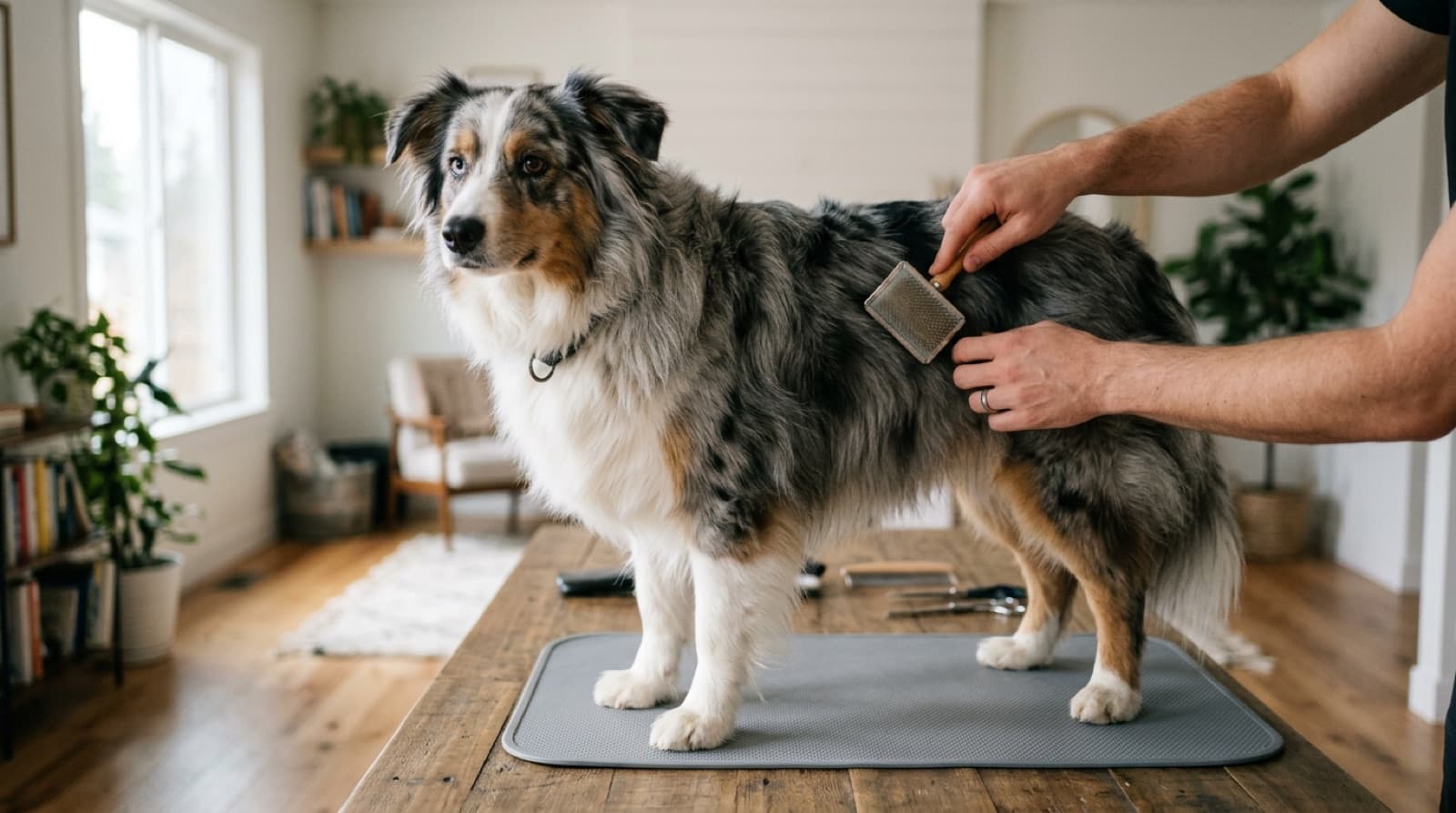
Never shave an Aussie, focus your brushing on the feathering, and tidy the coat rather than clipping it. The medium double coat sheds year-round plus two coat blows, so deshed with an undercoat rake and a high-velocity dryer and dry to the skin. The body coat is low-drama; the feathering behind the ears, on the britches, and on the tail is where mats form. Light tidies of the feet, ears, sanitary, and stray feathering are fine, but the body is never clipped short.
Never shave the double coat
Shaving an Aussie does not cool it and does not reduce shedding. It removes the coat's insulation and sun protection and can grow back patchy with a changed texture. Deshed and tidy, never shave.
Start with the most-regretted mistake. An Australian Shepherd has a medium double coat, a dense insulating undercoat under a weather-resistant guard coat, built for a working dog in all conditions. As the American Kennel Club explains, shaving a double coat removes the airflow that keeps the dog cool as well as the insulation that keeps it warm, and exposes the skin to sunburn, so it tends to make the dog hotter rather than cooler.
It also does not reduce shedding, and it can make it worse: the undercoat often regrows faster and denser than the guard coat, so a shaved Aussie can shed more, with a patchy, puppy-coat texture that takes one to two years to grow out and sometimes never fully recovers. This is post-clipping alopecia, and it is why breed clubs and groomers are firm that a double coat is not shaved except for a genuine medical reason. For heat and for shedding, the answer is brushing.
The feathering is the job, not the body
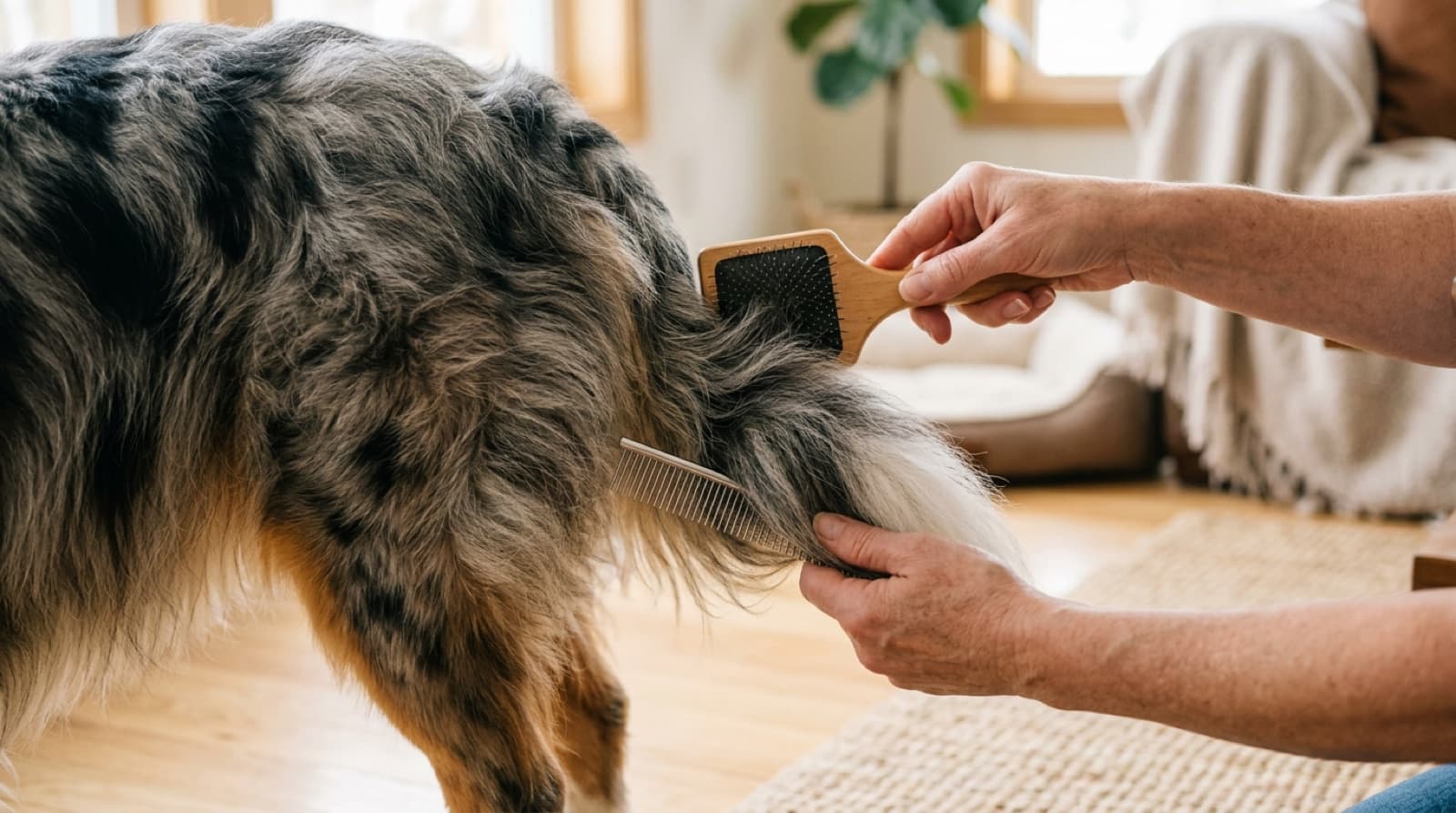
Here is the reframe that makes Aussie grooming click: the medium body coat is genuinely low-drama, and almost all the matting lives in the feathering. The feathering is the longer, finer hair on the back of the legs, the britches at the rear thighs, the tail plume, behind the ears, and the neck ruff, and it tangles in the high-friction spots far faster than the body coat.
Behind the ears is the classic Aussie matting complaint, with the britches and the collar line close behind. So map your attention to the friction zones and treat the feathering as its own task: line brush it to the skin with a slicker brush, then check it with a steel comb, because if the comb catches, there is a mat the brush missed. Keep the feathering neat with thinning shears rather than letting it overgrow and pick up burrs. A guide that maps the exact spots beats a generic reminder to brush your dog, because on an Aussie the where is the whole point.
Some of the product links in this section are Amazon affiliate links — we may earn a small commission at no extra cost to you. It never changes which products we recommend.
Deshedding the body coat and the coat blow
Away from the feathering, the body coat is straightforward, and the job there is managing the shed. An Aussie sheds moderately to heavily all year and then blows its undercoat in spring and fall over roughly two to four weeks, dropping it in clumps that owners describe as enough to build another dog. The tool that does the real work is an undercoat rake, which reaches past the guard coat to pull the dead undercoat, finished with the slicker and a pin brush to smooth and redistribute the coat's oils.
The biggest upgrade is a high-velocity dryer, which blows the loose undercoat out during a bath and dries the coat to the skin. That drying step matters more than owners think: letting the undercoat air-dry makes the dead hair shrink and tightens any mats, so a proper blow-out is a grooming step, not a luxury. During the blow, move to daily raking and, if you can, a deshedding bath with a deshedding shampoo to loosen the undercoat first.
Light tidy yes, body clip no
Like a Golden, an Aussie is tidied rather than clipped, and knowing exactly where the line is saves the coat. The tidies that are fine and useful: neaten the feet and the fur between the pads, tidy the hocks, clean up the sanitary area, trim a neat quarter-inch edge on the ears and thin the hair inside the flaps for airflow, shape the tail, and thin overgrown or stray feathering with thinning shears.
What you do not do is clip the body short, and you also do not contour-scissor into the undercoat the way a Poodle is shaped, because that damages the coat balance the same way clipping does. The breed standard itself treats excessive trimming as a fault, which is a handy way to remember the goal: a neat, natural outline, not a haircut. When you book a groom, ask for a deshedding bath, a force-dry, and a light tidy, and be clear you do not want the body clipped.
The honest cost: groomer versus doing it yourself
An Aussie groom is a deshedding bath, a force-dry, and a light tidy, priced as a mid-tier medium-dog groom, more than a small smooth-coat wash and less than a full Poodle scissor cut, and Aussies often carry a double-coat or deshedding surcharge. Canadian grooming cost surveys such as Dogster's give a sense of the ranges, which climb during coat-blow season and in bigger cities, so a local quote is worth getting. Owners typically book every six to twelve weeks, more often at the blows.
The at-home tradeoff is favourable if you will put in the brushing. The core kit, an undercoat rake, a slicker, a steel comb, and thinning shears, is modest, and the meaningful upgrade is a high-velocity dryer, which does at home what the groomer's deshedding fee covers and handles the essential dry-to-the-skin step. Many owners keep an occasional professional deshed at coat-blow season while doing the weekly maintenance themselves.
Thinking about adopting an Australian Shepherd?
Keep the feathering brushed, skip the clippers, and the coat stays healthy and beautiful. Browse Australian Shepherds and Aussie mixes available now from the rescues we track across Canada.
See Available Australian Shepherds →Frequently Asked Questions
Should you shave an Australian Shepherd in summer?
No. The double coat insulates against heat as well as cold and protects the skin from the sun, so shaving raises the risk of overheating and sunburn and does not reduce shedding. It can also cause post-clipping alopecia, where the coat grows back patchy, with a puppy-coat texture, over one to two years, and sometimes never fully returns. Manage summer heat with shade, cool water, cooling mats, and avoiding midday exercise, and manage the coat with brushing rather than clippers.
Does shaving an Aussie reduce shedding?
No, and it can make it worse. Shaving removes the visible length, but the coat keeps shedding, and the undercoat often grows back faster and denser than the guard coat, which changes the coat balance for the worse. The thing that actually reduces what lands on your floor is removing the loose undercoat with a rake and a high-velocity dryer, not shortening it with clippers.
Why does my Aussie keep matting behind the ears?
Because the fine feathering there rubs and tangles far faster than the body coat. Behind the ears is the single most common Aussie matting complaint, along with the britches at the back of the thighs and the collar line. The body coat is low-drama; the feathering is the real work. Give those spots a dedicated line-brush and a comb check every session, even when you skip the rest of the coat.
How often should you brush an Australian Shepherd?
Two to three times a week normally, and daily during the spring and fall coat blow, always brushing down to the skin and then checking with a comb for hidden mats. Pay particular attention to the feathering behind the ears, on the britches, and on the tail plume, where mats form first. A quick check of those friction zones between full brush-outs prevents most trouble.
Can you trim an Australian Shepherd at all?
Yes, light tidies only. It is fine to neaten the feet and the fur between the pads, the hocks, the sanitary area, the ear edges and inside the flaps for airflow, the tail, and to thin overgrown feathering with thinning shears. But the body coat is never clipped short, and scissoring into the undercoat damages the coat the same way clipping does. The breed standard itself treats excessive trimming as a fault, which is a useful reminder that the natural coat is the goal.
How often should you bathe an Australian Shepherd?
Roughly every four to eight weeks, or when the dog is genuinely dirty. Over-bathing strips the coat's natural oils, dries the skin, and can worsen shedding. Always brush the coat out first, since water tightens existing tangles into mats, and dry it to the skin afterward, ideally with a dryer, because improper drying lets dead hair shrink and mats tighten.
What tools do you need for an Australian Shepherd?
An undercoat rake to pull the dead undercoat, a slicker brush for the coat and feathering, a steel comb to check for mats, and thinning shears for the feathering upkeep cover most owners. A high-velocity dryer is the biggest single upgrade, both for blowing out the undercoat during a coat blow and for drying to the skin. Use a Furminator-style deshedding blade sparingly, since overuse can cut the guard coat.
Do Australian Shepherds shed a lot?
Yes, moderately to heavily year-round, plus two coat blows in spring and fall that each last roughly two to four weeks and drop the undercoat in clumps. It is a working double coat built for weather, so the shed is significant, though a consistent brushing routine keeps it manageable. New owners are often surprised by the seasonal blow, which is normal, not a problem.
How to Groom a Golden Retriever
The same feathering-is-the-workload and light-tidy-not-clip rules.
How to Groom a German Shepherd
Another working double coat with the same never-shave, undercoat-rake routine.
What to Feed an Australian Shepherd
The other half of Aussie care: fueling a high-energy working dog, and portions.
Australian Shepherds for Adoption
Live listings of Australian Shepherds and Aussie mixes from the rescues we track.