The short answer
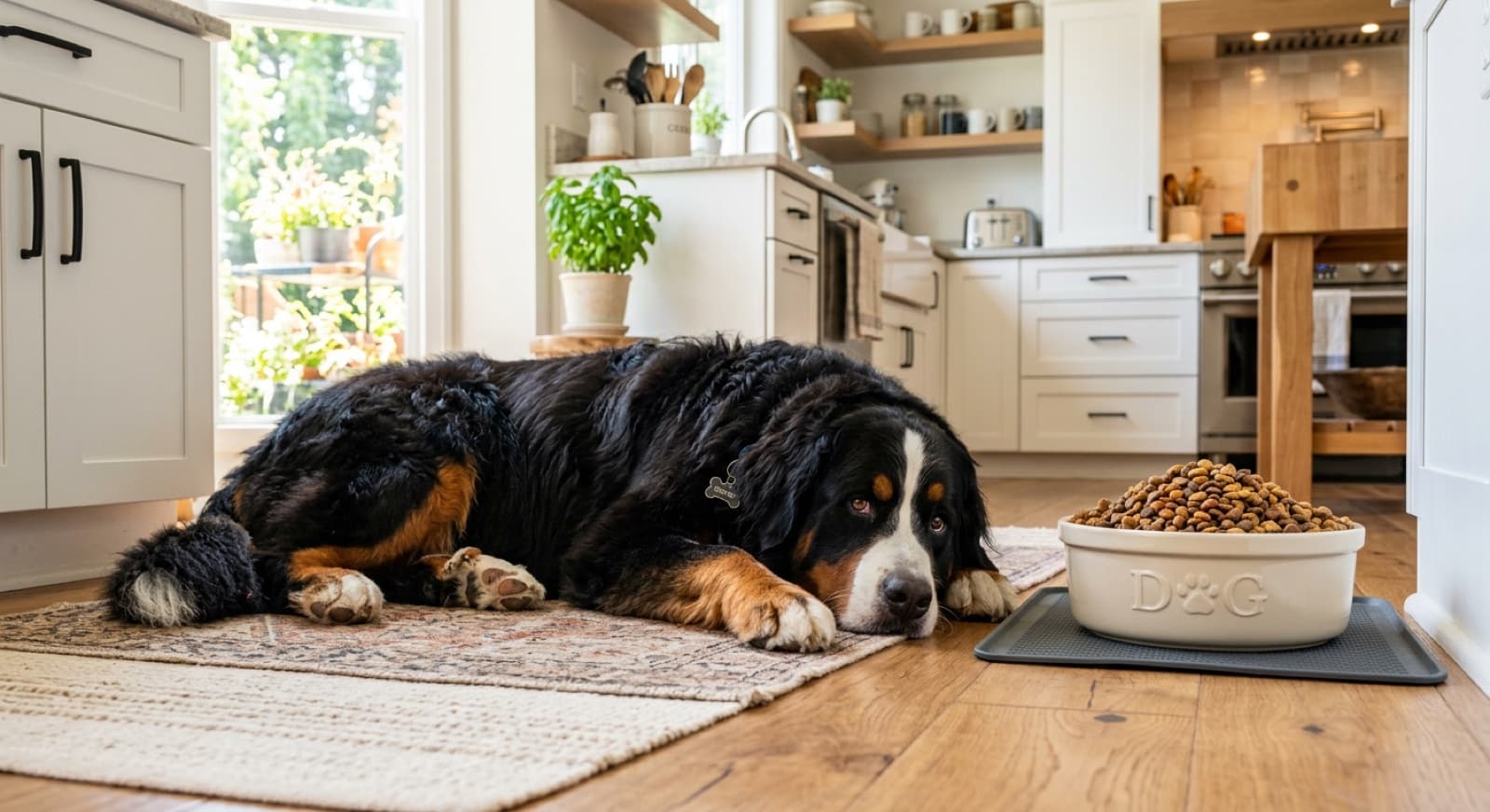
Feed a Bernese Mountain Dog for slow, controlled growth as a puppy, and keep it lean for life. Use a large-breed puppy formula (not regular puppy food) to control calcium and growth rate, which protects the joints. Keep the adult on a complete large-breed food from a nutritionist-backed brand, and feed to body condition: a Berner that is slightly ribby is doing well, not starving. Feed two or more smaller meals a day, use a slow feeder, skip raised bowls, and know the signs of bloat. And the honest part: no diet prevents the cancers this breed is genetically prone to. Lean weight and good nutrition support health and joints, nothing more.
What is the best food for a Bernese Mountain Dog?
There is no single best bag, and any site that names one is selling something. What there is, is a way to choose well. The standard most vets point to comes from the WSAVA global nutrition guidelines.
Pick a brand that does the science. Ask whether the company employs a full-time, board-certified veterinary nutritionist and runs real feeding trials. For a healthy Berner the safe defaults are Purina Pro Plan Large Breed, Royal Canin, and Hill's Science Diet Large Breed.
For a giant breed, the life-stage formula matters more than the brand. A Berner puppy needs a large-breed puppy food, and a Berner adult needs a large-breed adult food. Get that right and you have done the most important part. Then watch the dog: firm stool, glossy coat, steady energy, and a lean body condition mean the food is working.
Keep it lean: the “too skinny” problem
The hardest part of feeding a Berner is ignoring everyone who tells you the dog looks too thin. For a giant breed, lean is protective. A puppy you can run your hands over and feel the ribs on, with a visible waist, is growing at the right pace. If you have to press through a layer of fat to find the ribs, the dog is carrying weight its joints cannot afford.
Adult Berners are frequently overweight, partly because owners feed to the bag chart and partly because a big, gentle dog is easy to over-treat. The charts tend to overfeed. A common adult range is roughly 4 to 6 cups a day split into two meals, but that is a starting point, not a target. The target is body condition. Keeping a Berner lean is one of the single most useful things you can do for its joints, its comfort, and its years.
What should I feed a Bernese Mountain Dog puppy?
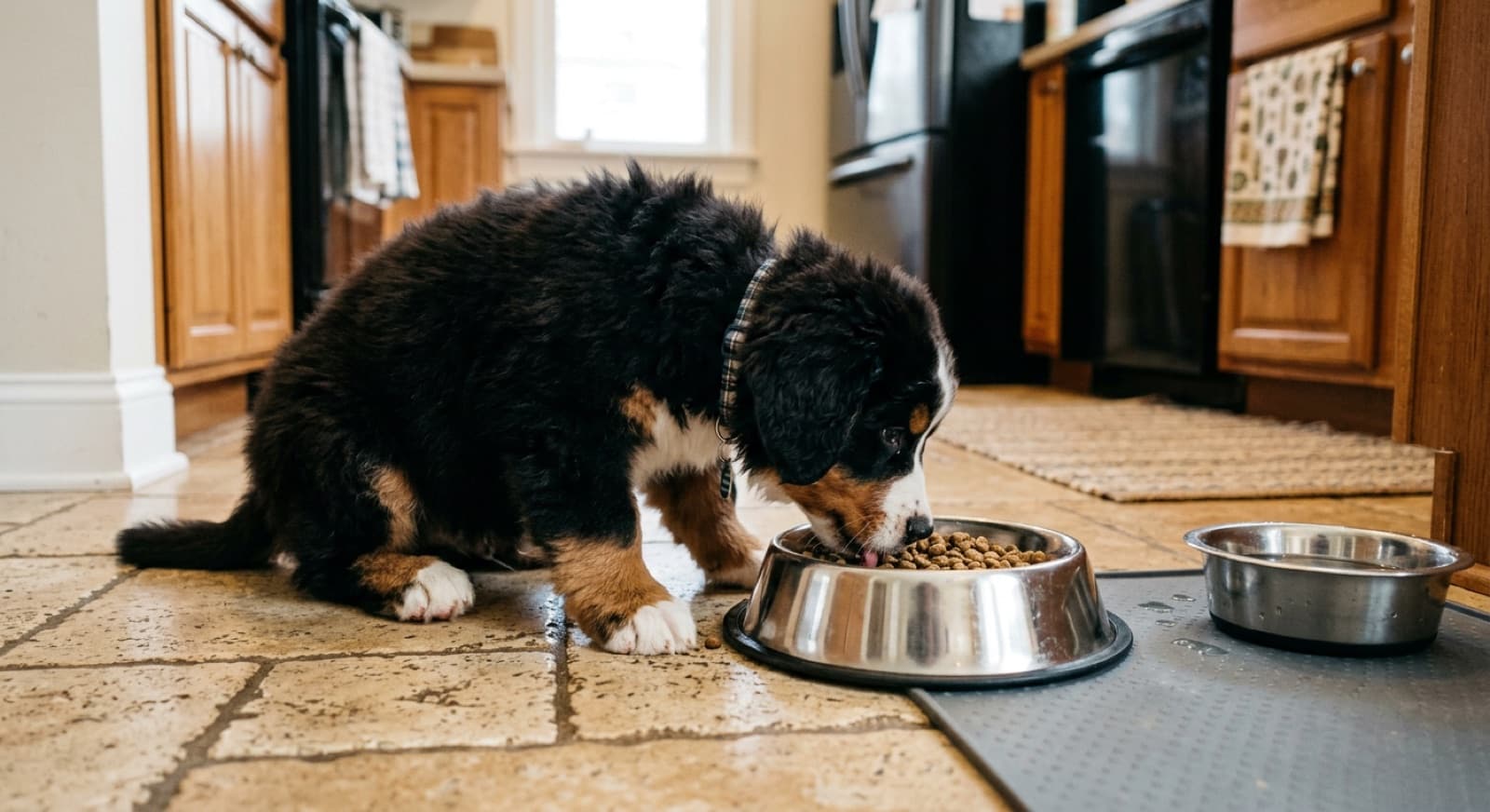
A large-breed puppy formula, not regular puppy food. This is the single most important feeding decision for a giant-breed puppy, and a lot of new owners miss it.
Regular puppy foods are built to fuel fast growth with more calories, calcium, and phosphorus. For a Berner, fast growth is the danger, not the goal. Growing too quickly loads soft, developing joints and raises the odds of lifelong orthopedic trouble. A large-breed or giant-breed puppy formula, like these large-breed puppy diets, controls those levels so the puppy grows slowly and evenly.
Stay on a large-breed puppy formula until roughly 12 to 24 months, then transition to a large-breed adult food. Exact calcium targets and timing vary between sources, which is exactly why this is a conversation to have with your vet rather than a number to chase off a forum. And do not add a calcium supplement to a complete puppy food: a giant-breed puppy cannot regulate the extra, and too much calcium does real harm.
Feeding to lower bloat risk
Bloat (gastric dilatation-volvulus) is a leading killer of deep-chested large breeds and is a true emergency. A swollen belly, unproductive retching, restlessness, or distress means go to an emergency vet immediately.
You cannot feed bloat away entirely, but a few feeding habits lower the risk. Feed two or more smaller meals a day instead of one large one. Slow down a fast eater with a slow-feeder bowl. Avoid hard exercise for about an hour before and after meals.
One piece of old advice has flipped: raised or elevated bowls were once recommended to reduce bloat, but research now suggests they may increase the risk in large and giant breeds, so feed from the floor. The American Kennel Club's bloat overview is a good primer. The most reliable protection is not a feeding trick at all: ask your vet whether a preventive gastropexy, often done at spay or neuter, makes sense for your dog.
Can diet do anything about the breed's cancer risk?
No food, supplement, or diet prevents the cancers Bernese Mountain Dogs are genetically prone to. Any page that tells you otherwise is overpromising.
This is the question almost every Berner owner eventually asks, because the breed has a high cancer rate, with histiocytic sarcoma especially common, and a shorter average lifespan than most dogs. It is an honest, painful question, and it deserves an honest answer.
The cancers the breed faces are driven mainly by genetics. PetMD's breed overview describes the genetic basis of histiocytic sarcoma in the breed. Despite what some breed blogs claim, no antioxidant, omega-3, lean diet, or special food has been shown to prevent these cancers. Repeating that claim does real harm, because it sells false reassurance.
Here is what is true and worth doing. Keeping your Berner at a lean, healthy weight supports its joints, its comfort, and its general health, and good nutrition from a complete diet gives the body what it needs. Those are real benefits. They are just not cancer prevention. If your dog is ever facing a cancer diagnosis, the diet decisions belong with your vet or a veterinary oncologist. For the bigger picture on the breed's health and lifespan, see our Bernese cancer and lifespan guide.
Should I feed my Berner grain-free?
Not unless your vet diagnoses a grain allergy. Grain-free is a marketing trend, not a Berner need.
The FDA has been investigating a possible link between grain-free diets built on peas, lentils, and potatoes and a serious heart condition called dilated cardiomyopathy. Large breeds may be more vulnerable, so most vets now skip grain-free in a dog without a diagnosed grain allergy. A complete diet from a nutritionist-backed brand is the safer default.
Foods to avoid
Keep these away from a Bernese Mountain Dog completely:
- Chocolate (darker is worse)
- Grapes and raisins (can cause kidney failure, even a few)
- Xylitol (in sugar-free gum, some peanut butters, and baking), which is rapidly fatal to dogs
- Onions, garlic, leeks, and chives
- Macadamia nuts
- Alcohol and caffeine
- Cooked bones (they splinter)
- Fatty table scraps, which can trigger pancreatitis
A Berner's size means it can reach counters a smaller dog cannot, so keep food pushed back and the bin lidded. If your dog does eat something on this list, call your vet, the nearest emergency clinic, or a pet poison helpline right away.
Should I feed my Bernese Mountain Dog a raw diet?
Only with a vet or veterinary nutritionist involved, and the cost is a real factor at this size. Some Berners do well on a properly built raw diet, but raw meat carries a pathogen risk for the dog and the household, and a homemade raw diet without a professional recipe routinely runs short on calcium and other nutrients. For a growing giant-breed puppy, getting calcium wrong is especially damaging.
There is also the practical wall: feeding a 70 to 115 pound dog raw is expensive, and many owners abandon it on cost alone. For most Berners, a complete cooked or kibble diet from a nutritionist-backed brand matches raw on the outcomes that show up at the vet. If you still want to go raw, use a complete commercial product or a vet-formulated recipe and loop in your vet.
Looking to adopt a Bernese Mountain Dog?
Plan the food budget and the puppy growth plan before day one. Browse Berners and Bernese mixes available now from the rescues we track.
See Available Bernese Mountain Dogs →Where to buy Bernese Mountain Dog food
Every brand worth feeding a Berner is easy to find in store and online:
- Pet specialty chains (Pet Planet, Tail Blazers, Tisol, and similar). Carry Pro Plan, Royal Canin, and most large-breed lines.
- Pet Valu and PetSmart. National chains that stock the major large-breed puppy and adult formulas.
- Your vet clinic. The place for prescription diets that need authorization, and the best source for giant-breed feeding guidance.
- Costco. Kirkland Signature large-breed is a cheaper everyday option for a dog that eats this much.
For a dog this size, buying the largest bag your Berner finishes before it goes stale, stored sealed in a bin, is the cheapest way to feed premium. The major large-breed formulas are easy to set on a recurring delivery.
Frequently Asked Questions
What is the best food for a Bernese Mountain Dog?
For an adult, a complete large-breed formula from a brand that employs a veterinary nutritionist and runs feeding trials, like Purina Pro Plan, Royal Canin, or Hill’s Science Diet. For a puppy, a large-breed puppy formula specifically, because controlling calcium and growth rate is the single most important feeding choice you make for a giant breed. The brand matters less than the formula being right for the life stage and letting you keep the dog lean. Start with whatever the breeder or rescue was feeding, then transition over seven to ten days.
How much should I feed a Bernese Mountain Dog?
Less than you would guess, and to body condition rather than a cup number. Adult Berners are frequently overweight, and the bag charts tend to overfeed. A common adult range is roughly 4 to 6 cups a day split into two meals, but the real answer is what keeps the dog lean: you should be able to feel the ribs under a light cover and see a waist from above. Keeping a Berner lean is one of the most useful things you can do for its joints and overall health.
My Berner puppy looks too skinny, even though I feed plenty. Is that normal?
Usually yes, and it is the goal, not a problem. For a giant-breed puppy, lean is protective: a slightly ribby look means the puppy is growing slowly, which is exactly what protects developing joints. If you have to dig to find the ribs, the puppy is carrying too much weight. People will tell you the dog looks underfed; trust body condition and your vet over the comments. Overfeeding a Berner puppy to fill it out is one of the most common and damaging mistakes.
Do I need large-breed puppy food for a Bernese Mountain Dog?
Yes. Regular puppy foods are too calorie-, calcium-, and phosphorus-dense for a giant breed and push growth too fast, which loads soft joints and raises the risk of orthopedic problems. A large-breed (or giant-breed) puppy formula controls those levels so the puppy grows slowly and evenly. Stay on it until roughly 12 to 24 months, then transition to a large-breed adult food. Exact calcium targets vary between sources, so confirm the right formula and timing with your vet.
Can diet or supplements prevent cancer in a Bernese Mountain Dog?
No, and this is important to be honest about. Bernese Mountain Dogs have a high rate of cancer, especially histiocytic sarcoma, and the main driver is genetic. No food, supplement, antioxidant, or omega-3 has been shown to prevent the cancers the breed is predisposed to, despite what some breed blogs claim. What good nutrition and a lean body weight genuinely do is support overall health, joints, and quality of life. Any cancer-and-diet decision belongs with your vet or a veterinary oncologist, not a marketing page.
How do I prevent bloat when feeding my Berner?
Bloat (gastric dilatation-volvulus) is a real risk in deep-chested large breeds and is a true emergency. Feeding practices that help: feed two or more smaller meals a day instead of one big one, slow down a fast eater with a slow-feeder bowl, and avoid hard exercise for an hour or so around meals. Skip raised or elevated bowls, since current research suggests they may increase bloat risk rather than reduce it. If your dog has a swollen belly, unproductive retching, restlessness, or distress, go to an emergency vet immediately. Ask your vet whether a preventive stomach-tacking surgery (gastropexy) makes sense.
Should I feed my Bernese Mountain Dog grain-free?
Not unless your vet diagnoses a grain allergy. The FDA has been investigating a possible link between grain-free diets built on peas, lentils, and potatoes and a heart condition called dilated cardiomyopathy, and large breeds may be more vulnerable, so most vets take the cautious line. A complete diet from a nutritionist-backed brand is the safer default. If your Berner has skin or stomach issues, that is a vet conversation rather than a reason to grab the grain-free bag.
How much does it cost to feed a Bernese Mountain Dog?
More than most first-time giant-breed owners expect. A 70 to 115 pound dog eats a lot, so budget for a real monthly food bill, often over $100 for premium large-breed kibble and considerably more for fresh or raw. This is worth planning for before you adopt: many owners abandon raw purely on the cost of feeding a dog this size. Buying the largest bag your dog finishes before it goes stale, stored sealed, is the cheapest way to feed premium.
Bernese Cancer & Lifespan
The honest picture on the breed's cancer risk and lifespan, and what actually helps.
Bernese Health Issues
Hips, elbows, bloat, and the conditions diet and lean weight can affect.
Bernese Adoption Guide
Where to find Berners and Bernese mixes, real costs, and what to expect.
Bernese Mountain Dogs for Adoption
Live listings of Berners and Bernese mixes from the rescues we track.