The short answer
Never shave a Berner, brush the whole coat to the skin two to three times a week, and expect it to take real time on a dog this big. The tricolor double coat sheds heavily plus two coat blows, so deshed with an undercoat rake and a high-velocity dryer, and always dry to the skin to prevent hot spots. The feathering on the legs and britches mats like a Golden's. Keep the white markings wiped clean of drool and dirt, and tidy rather than clip.
Never shave the double coat
Shaving a Bernese does not cool it and does not reduce shedding. It removes the coat's insulation and sun protection and grows back patchy and coarse, sometimes never fully recovering. Brush and tidy, never shave.
It is tempting, with a coat this big and a hot summer coming, but shaving a Berner is the mistake owners regret most. The Bernese has a large tricolor double coat, a dense wooly undercoat under a longer, thick, silky guard coat, and both layers are functional. As the American Kennel Club explains, shaving a double-coated dog removes both the undercoat and the topcoat, taking away the airflow that cools the dog in heat and the insulation that warms it in cold, and increasing the chance of sunburn and skin issues.
It does not reduce shedding either, and the coat pays a lasting price: regrowth after a shave is commonly patchy and coarse, and it sometimes never fully recovers its original texture. The only justification for clipping a Berner close is a genuine medical need or a coat so severely matted it cannot be saved, and that is a professional's call. For everything else, the coat is brushed and lightly tidied, not shaved.
Size means time: brushing a giant coat to the skin
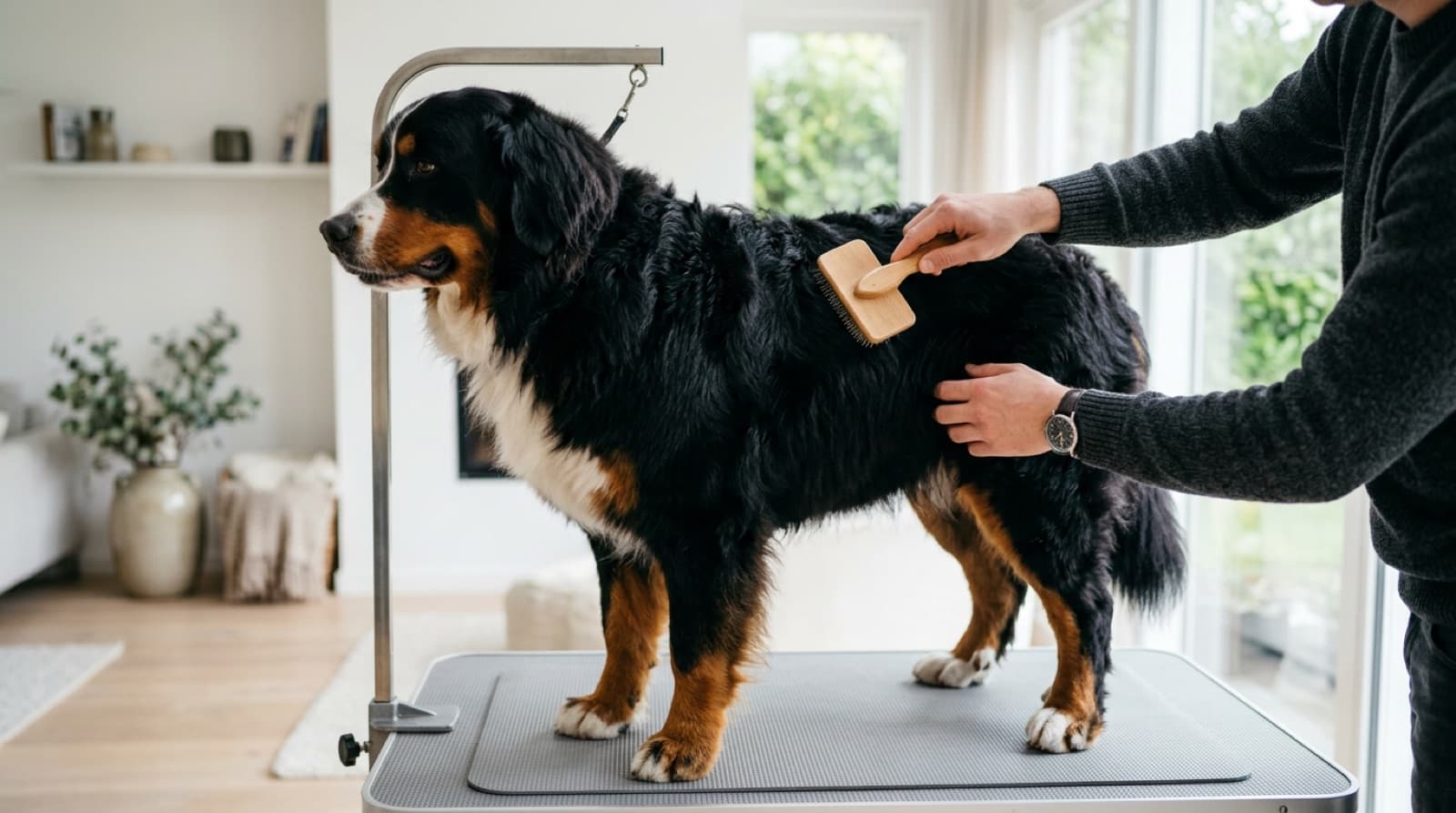
The honest reality-check for a new Berner owner is that a full brush-out is not a ten-minute job. This is a large dog with a lot of coat, and doing it properly, all the way to the skin, takes real time, especially during a coat blow. It helps to work in sections and to accept that thorough grooming is part of the deal with the breed.
The technique that matters is brushing to the skin, not just over the top. The most common error is surface brushing, where the guard coat looks tidy while the dense undercoat mats underneath against the skin. Work through the coat with an undercoat rake to pull the dead undercoat, finish with a slicker brush, and then confirm with a steel comb: if the comb passes cleanly to the skin, the section is done, and if it catches, there is a mat the brush missed. Brush before bathing, since water tightens tangles into locked mats.
Some of the product links in this section are Amazon affiliate links — we may earn a small commission at no extra cost to you. It never changes which products we recommend.
The feathering: a Golden-level matting workload
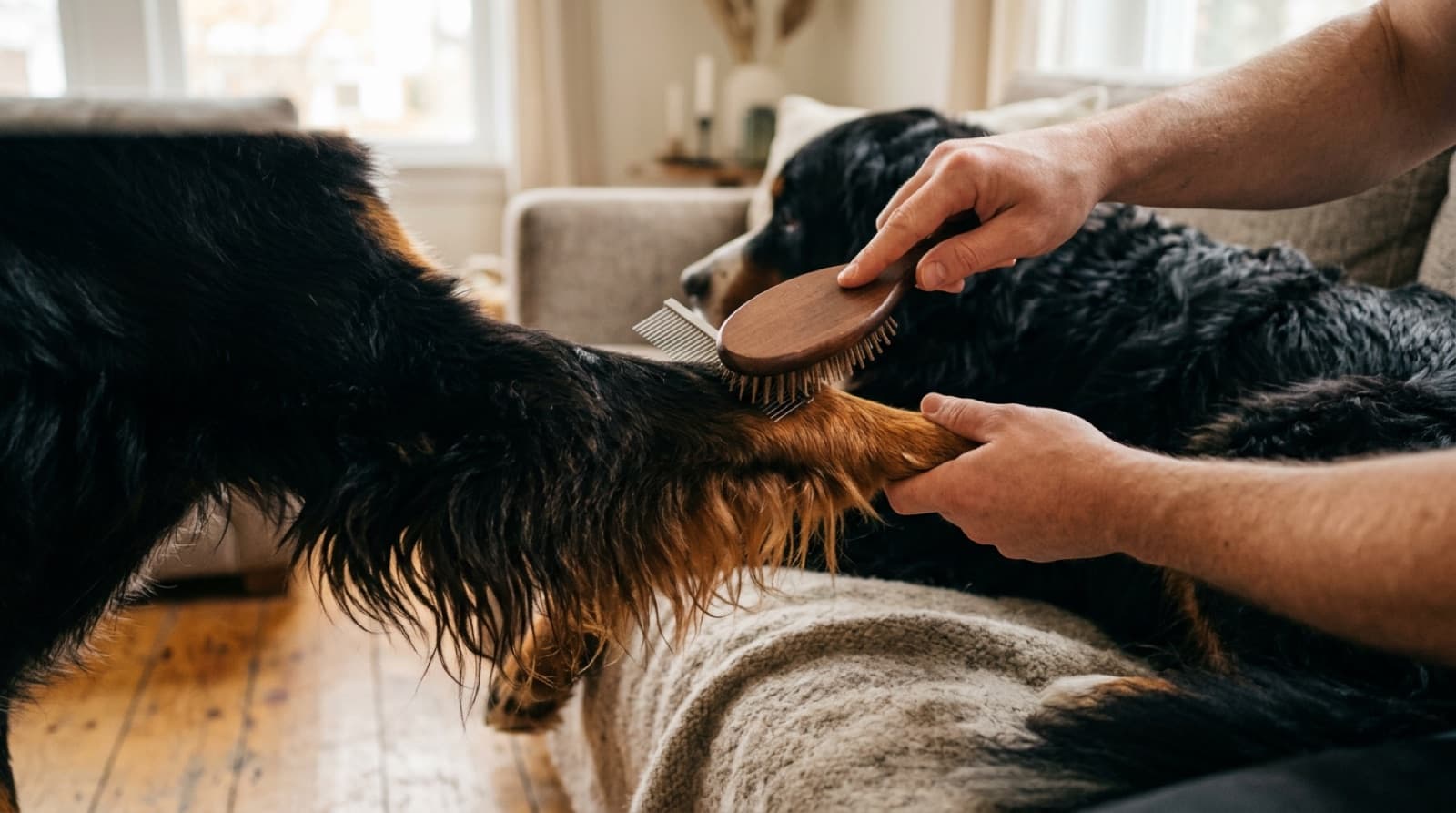
Generic advice about big shedding dogs misses that a Berner feathers, and the feathering is where the real matting lives. The legs, the tail, and the britches at the back of the thighs carry longer, finer hair, just like a Golden Retriever, and those areas mat in the high-friction spots faster than the body coat does. Behind the ears and in the armpits belong on the same list.
So treat the feathering as its own task. Line brush it to the skin, work any tangles apart from the edges with the comb before they tighten, and keep it neat with thinning shears rather than letting it overgrow. A mat left in the feathering pulls on the skin and traps moisture, which is uncomfortable and can lead to a hot spot, so the feathering earns a check every time you groom, even on a quick session.
White markings, drool, bathing, and drying
The tricolor coat has a cleaning problem the guides skip: the white chest, blaze, and paws show every bit of dirt and staining, and a Berner's moderate drool crusts into the white face fur if it is left. The habit that keeps it looking good is a quick daily wipe of drool and dirt off the white before it dries, and a whitening shampoo on the markings at bath time.
Bathe a Berner every several weeks or when dirty, always after a full brush-out, and then dry all the way to the skin. This is not optional on this breed: the dense undercoat traps moisture against the skin for hours after a bath or a swim, which is exactly how hot spots and skin infections start, so a high-velocity dryer to blow the coat dry is the safe way to finish. Never leave a wet Berner to air-dry unattended. Keep nails short with a nail grinder, since a big dog grows thick nails.
The honest cost: groomer versus doing it yourself
A Bernese costs more to groom than an average dog, simply because of size and coat volume: a deshedding bath, a full force-dry, and a light tidy is a long appointment on a giant coat, and giant-breed up-charges are common. Expect the higher end of large-dog grooming, more during coat-blow season, and Canadian grooming cost surveys such as Dogster's give a sense of the ranges. Many owners do maintenance at home and book a professional deshedding groom two or three times a year, especially at the blows.
The at-home investment pays back, though it is a real commitment of time as well as money. The core kit is an undercoat rake, a slicker, a steel comb, and thinning shears, and the big-ticket item is a high-velocity dryer, which for a dense coat this size earns its keep quickly, both for deshedding and for the mandatory dry-to-the-skin step. Add a whitening shampoo and a nail grinder and you have most of what a Berner needs, with the honest caveat that doing it yourself means committing the hours a giant coat demands.
Thinking about adopting a Bernese Mountain Dog?
Go in ready for the brushing, skip the clippers, and that tricolor coat stays gorgeous. Browse Bernese Mountain Dogs and Berner mixes available now from the rescues we track across Canada.
See Available Bernese Mountain Dogs →Frequently Asked Questions
Should you shave a Bernese Mountain Dog in summer?
No. The double coat insulates against heat as well as cold and shields the skin from the sun, so shaving a Berner can make it hotter, not cooler, and expose the skin to sunburn. It also does not reduce shedding, and it commonly grows back patchy and coarse, sometimes never fully recovering its texture. Manage summer heat with shade, cool water, air conditioning, and avoiding midday exercise instead of reaching for clippers.
Do Bernese Mountain Dogs shed a lot?
Yes, heavily and year-round, with two major coat blows in spring and fall when the dense undercoat sheds in bulk. On a dog this size, the sheer volume of coat means the shedding is substantial, and regular brushing is the only thing that keeps it under control. A high-velocity dryer during the blows makes a big difference.
How often should you brush a Bernese Mountain Dog?
Two to three times a week normally, and daily during the spring and fall coat blows. Because the coat is large and dense, a thorough brush-out is a genuine time commitment rather than a quick pass, so it helps to work in sections. Give particular attention to the feathering and the mat-prone spots behind the ears, in the armpits, and in the britches.
Where do Bernese Mountain Dogs mat the most?
Behind the ears first, then under the collar and ruff, in the armpits, on the feathered legs and tail, in the britches at the back of the thighs, and along the undercarriage. These are the high-friction spots, and they need a comb worked down to the skin, not just a surface brush over the top. Left a week without brushing, tangles form here first and tighten into mats.
Can you trim a Bernese Mountain Dog's coat?
You can lightly tidy the feet and the fur between the pads, the ear-flap hair, the sanitary area, and stray or overgrown feathering with thinning shears, but you should never clip the body short. The goal is a neat, natural outline rather than a haircut. Clipping the body removes the protective, temperature-regulating coat and damages how it grows back, the same as a full shave.
How do you keep the white markings on a Bernese clean?
Wipe drool and dirt off the white chest, muzzle, and paws before it dries and stains, since dried drool is much harder to remove, and use a whitening or brightening dog shampoo on the markings at bath time. Drying the coat all the way to the skin afterward matters too, both to prevent staining and because a damp dense undercoat can cause hot spots. Berners drool moderately, most when hot or after drinking, so a quick face wipe becomes a daily habit.
What is the best brush for a Bernese Mountain Dog?
An undercoat rake to pull the dead undercoat, a slicker brush for the outer coat and the feathering, and a steel comb to finish and confirm you reached the skin. A high-velocity dryer is the biggest upgrade, both for blowing out the undercoat during a coat blow and for drying the dense coat to the skin. Use a Furminator-style deshedding blade only sparingly, since heavy use can cut and thin the guard coat.
How much does it cost to groom a Bernese Mountain Dog?
Professional grooming runs higher than average because of the dog's size and the volume of coat, since a deshedding bath, a full force-dry, and a light tidy is a long appointment, and giant-breed up-charges are common. Many owners do home maintenance and book a professional deshedding groom a few times a year, especially at coat-blow season. A home high-velocity dryer is the investment that most reduces the recurring cost.
How to Groom a Golden Retriever
The same feathering-and-shedding job, and the same tidy-not-clip rule.
How to Groom a Samoyed
Another big, never-shave coat where drying to the skin is non-negotiable.
What to Feed a Bernese Mountain Dog
The other half of Berner care: giant-breed growth, joints, and portions.
Bernese Mountain Dogs for Adoption
Live listings of Bernese Mountain Dogs and Berner mixes from the rescues we track.