The short answer
Never shave a Samoyed. The double coat keeps the dog cool and protects its skin, and shaving can ruin it permanently. Instead, line brush to the skin three to five times a week, and daily during the twice-yearly coat blow, using an undercoat rake and, above all, a high-velocity dryer to blow the loose undercoat out. Brush out fully before bathing, dry to the skin, and be honest that a proper brush-out on this coat takes real time. The white coat is partly self-cleaning, but it still needs the routine.
Never shave the double coat
A Samoyed's double coat is a cooling system, not just insulation. Shaving it makes the dog hotter and sunburn-prone, does not reduce shedding, and can leave the coat patchy or permanently changed. Brush it, never shave it.
This is the rule that matters most, and it is worth understanding rather than just obeying. A Samoyed has a true Arctic double coat: a dense, soft undercoat under a longer, harsh, straight guard coat that stands off the body. As the Samoyed Club of America and the American Kennel Club explain, that coat regulates heat as well as cold. The air pocket trapped between the two layers keeps the dog cooler in summer than shaved skin would, and the guard hairs reflect heat and shield the pink skin from the sun.
So shaving a Samoyed for summer does the opposite of what people intend. It removes the cooling system and the sun protection, leaving the dog hotter and prone to sunburn, and it does not reduce shedding, since the same volume of hair is still there, just shorter. On top of that, the coat often grows back wrong: the undercoat returns faster than the guard coat, so the regrowth can be patchy, wiry, or permanently altered. Reputable groomers decline cosmetic shaves for exactly these reasons. The only legitimate reason to clip a Samoyed close is a specific medical or surgical need on a vet's advice, or a coat so severely matted to the skin that it cannot be saved, which is a welfare decision, not a haircut. Because a coat that will not regrow can signal a health problem, that situation deserves a veterinary workup rather than waiting it out.
What to do instead: line brush to the skin
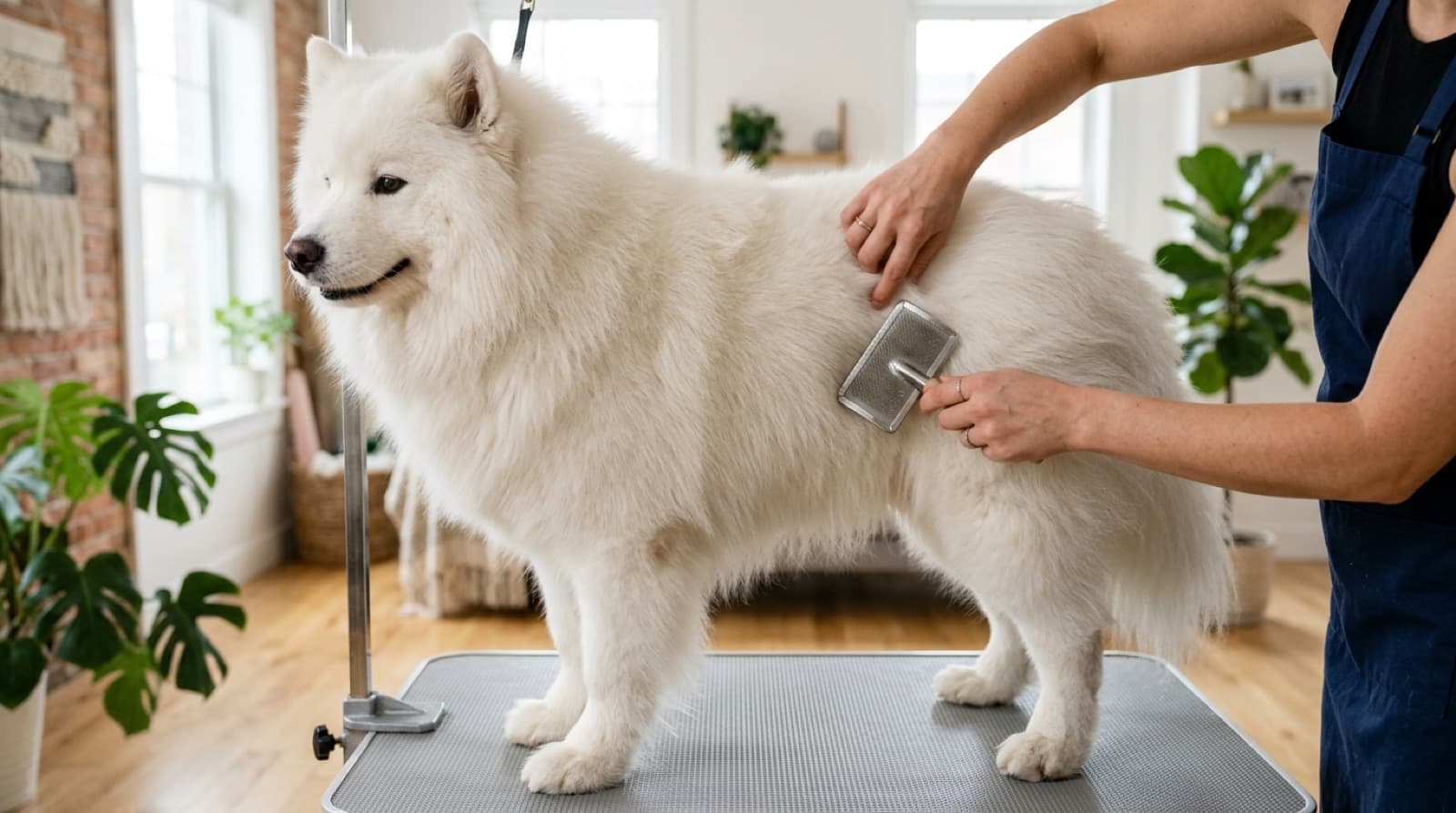
With shaving off the table, the whole job is brushing the dense coat properly. The mistake, as with any double coat, is surface brushing: you brush the top of that fluffy coat while the soft undercoat felts solid against the skin underneath, and you would never know until a groomer found it or a comb stopped dead.
The method is line brushing. Part the coat in a section down to the skin, hold the hair above the part out of the way, and brush the exposed layer from the skin outward with a firm slicker brush, then move along and repeat. Reach the deep loose down with an undercoat rake, and verify with a metal comb: if it snags before the skin, there is packed undercoat still there. A detangling spray eases the tougher spots. Mats concentrate behind the ears, in the armpits, and in the rear britches, so give those the most attention, and be realistic that a thorough brush-out takes thirty minutes to an hour on a coat this dense.
Some of the product links in this section are Amazon affiliate links — we may earn a small commission at no extra cost to you. It never changes which products we recommend.
Surviving the coat blow
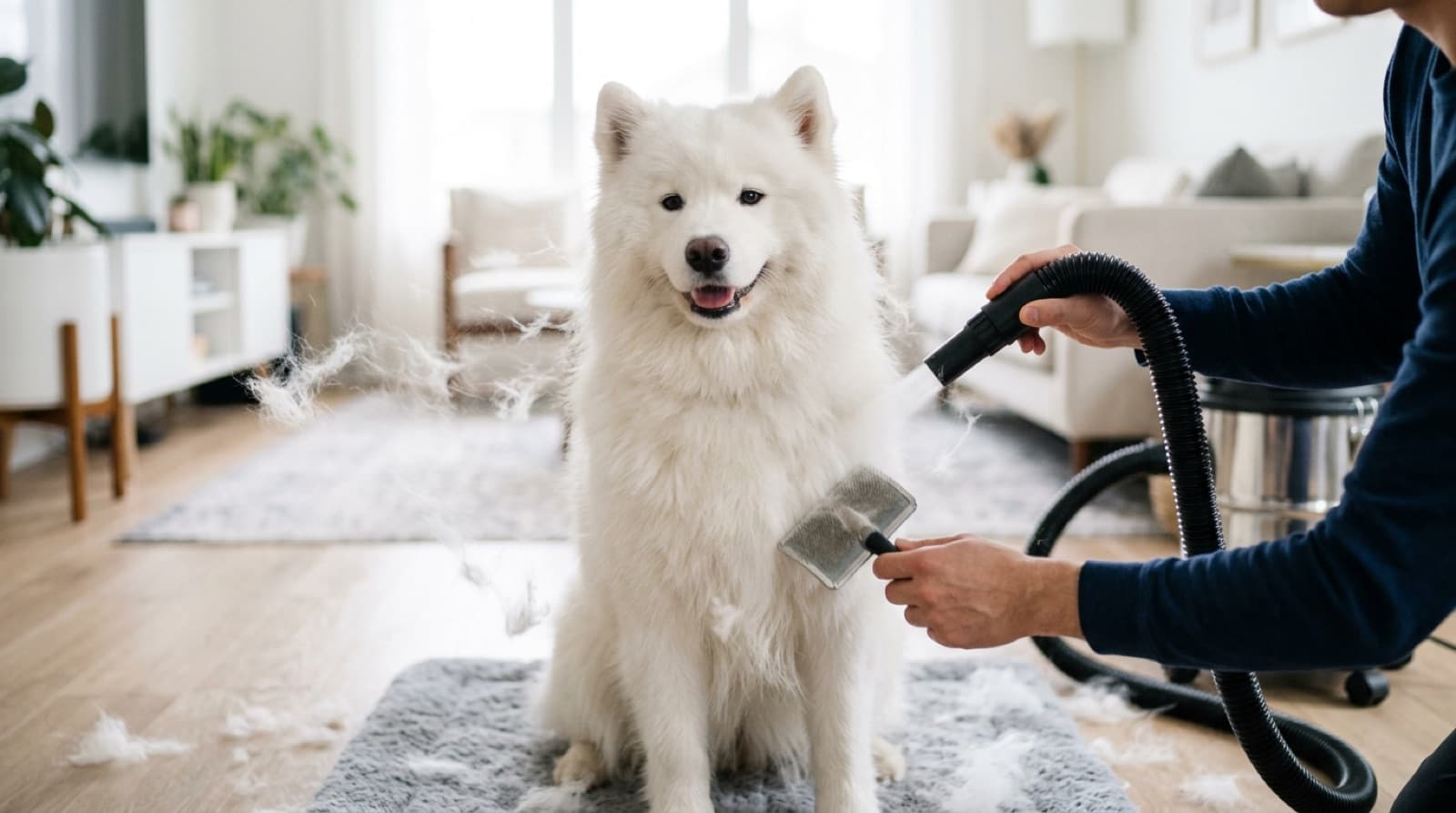
Twice a year, a Samoyed blows its coat, shedding the dense undercoat in dramatic volume. The spring blow is the heavier one, as the thick winter undercoat comes out, and the fall blow is lighter, each lasting about three to four weeks. Owners are genuinely stunned by how much fur comes off, often describing bags of it a week, and the temptation to reach for clippers is real. Do not.
The tool that makes the coat blow manageable is a high-velocity dryer. Bathe the dog, then use the dryer to blast the loosened undercoat out of the coat, which clears in minutes what would take days of hand brushing, and finish by line brushing the rest. During the blow, move to daily brushing with the rake and slicker to keep the loose down from packing into mats. It is a busy few weeks twice a year, and then it passes and the coat settles back to its normal routine.
The white coat, bathing, and the details
The Samoyed's famous white coat is partly self-cleaning: it repels a good deal of dirt, and much of what does get in brushes out once the coat is fully dry. That is real, but it is not the same as no maintenance. They still get dirty and still need bathing, just not constantly, and a quality conditioning shampoo, rather than a cheap detergent one, keeps the coat and skin healthy. Bathe only after a full brush-out, and always dry to the skin, since a damp dense undercoat traps moisture and can lead to hot spots.
For the details, trim the hair under the paw pads level with the pads so the dog does not slip and to protect the pasterns, keep nails short with a nail grinder, which suits a large breed better than clippers, and check the ears at bath time. Beyond the feet tidy, a Samoyed is not a clipped or scissored breed at all: the whole job is deep, regular brushing of the coat it already has.
The honest cost: groomer versus doing it yourself
A Samoyed is one of the more expensive and time-consuming dogs to have groomed professionally, because a full service is a pre-brush-out, bath, full force-dry, deshed, and mat check that runs two to four hours of hands-on time. Canadian pricing lands toward the high end of large-double-coat grooming, and it is worth knowing that many groomers charge extra for, or will decline outright, a heavily matted double coat. Canadian grooming cost surveys such as Dogster's give a sense of the ranges, which vary a lot with coat condition and city.
Because of that cost and frequency, a lot of Samoyed owners learn to do it themselves. The starter kit, a firm slicker, an undercoat rake, a metal comb, a pin brush, and a conditioning shampoo, is modest, and the one big-ticket item is a high-velocity dryer, which for a coat this dense genuinely earns its keep and pays for itself over time. The honest caveat is the time: doing a Samoyed well is a real, recurring commitment measured in hours, not minutes, and the reward is a comfortable, mat-free dog whose coat is doing the job it was built for.
Thinking about adopting a Samoyed?
Commit to the brushing, skip the clippers, and that gorgeous coat stays healthy. Browse Samoyeds and Samoyed mixes available now from the rescues we track across Canada.
See Available Samoyeds →Frequently Asked Questions
Should I ever shave my Samoyed?
No. The Samoyed double coat is an active cooling system: the air layer between the guard coat and the undercoat keeps the dog cooler in summer than bare skin would, and the guard hairs shield the pink skin from sunburn. Shaving makes the dog hotter, not cooler, and it does not reduce shedding, because you still have the same volume of hair. It also risks the coat growing back patchy or permanently altered. The only exception is a specific medical or surgical reason on your vet's advice.
Will a shaved Samoyed coat grow back?
Sometimes, but often not the way it was. The soft undercoat regrows faster than the harsh guard coat, so the regrowth can come back uneven, wiry, or a different texture, and it can take a year or more, occasionally never fully recovering. A Samoyed whose coat will not regrow properly after a shave should be seen by a veterinarian, since it can point to an underlying issue rather than simply slow growth.
How often do I brush a Samoyed?
Three to five times a week normally, and daily during the twice-yearly coat blow, always line brushing down to the skin rather than just over the surface. The coat is dense enough that a thorough brush-out takes real time, thirty minutes to an hour, but consistent shorter sessions prevent the mats and packed undercoat that make it a chore. A metal comb passed to the skin tells you whether you have actually reached it.
What is the coat blow and how often does it happen?
The coat blow is when a Samoyed sheds its dense undercoat heavily, and it happens about twice a year, a heavier blow in spring as the thick winter undercoat drops and a lighter one in fall, each lasting roughly three to four weeks. The volume is dramatic, owners describe grocery bags of fur, and the way through it is daily brushing plus a high-velocity dryer to blow the loosened undercoat out, which does in minutes what days of hand brushing cannot.
Are Samoyeds really self-cleaning?
Partly. The white coat repels a fair amount of dirt, and much of what does get in brushes out once the coat is completely dry, which is where the self-cleaning reputation comes from. But they still get dirty, still need regular baths, and the marketing that says they are no-maintenance is wrong. The coat stays white through regular brushing and occasional bathing, not on its own.
Why does my Samoyed keep matting even though I brush him?
You are most likely brushing the surface while the soft undercoat felts against the skin underneath, where the brush never reaches. Mats form first behind the ears, in the armpits, and in the rear britches, the soft, high-friction, undercoat-heavy zones. Line brushing, parting the coat and brushing each layer from the skin outward, plus a metal-comb check to the skin, is what actually clears it.
Can I just bathe him instead of brushing so much?
No. Bathing a coat that has not been brushed out first tightens any tangles into mats, and a dense double coat that is not dried all the way to the skin can trap moisture against the skin and develop hot spots. The order is fixed: brush out completely, then bathe, then dry to the skin with a high-velocity dryer. Bathing is not a shortcut around brushing on this breed.
How much does it cost to groom a Samoyed?
Professional grooming is expensive for the breed because a full service means a pre-brush-out, bath, full force-dry, deshed, and mat check, running two to four hours of hands-on time. Canadian figures point toward the higher end of large-double-coat pricing, and many groomers charge extra for, or decline outright, heavily matted double coats. Many Samoyed owners groom at home for exactly this reason, with a high-velocity dryer as the big-ticket tool that pays for itself.
How to Groom a Pomeranian
The same never-shave, line-brush rules on the pocket-sized spitz cousin.
Samoyed Shedding & Coat Blow
A closer look at deshedding tools and surviving the twice-yearly blow.
What to Feed a Samoyed
The other half of Samoyed care: portions, coat-supporting nutrition, and treats.
Samoyeds for Adoption
Live listings of Samoyeds and Samoyed mixes from the rescues we track.