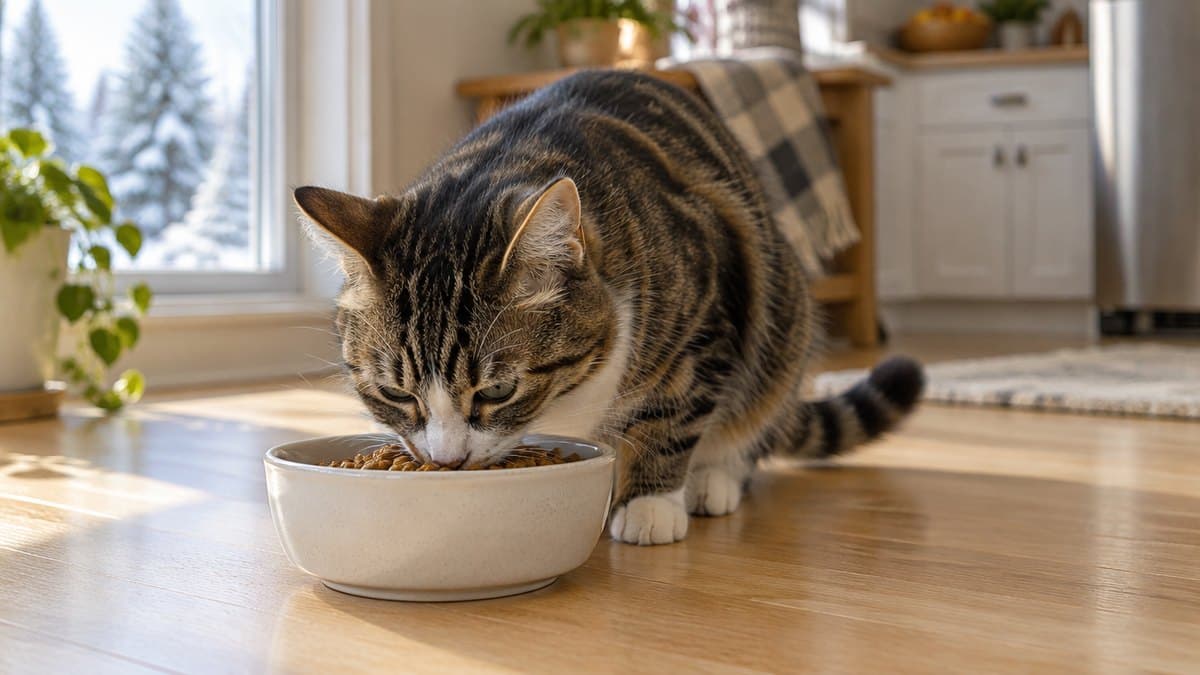
The short answer
For most Canadian cats it comes down to Purina Pro Plan Complete Essentials, Royal Canin Indoor, or Hill's Science Diet. Choose Royal Canin Indoor if your cat never goes outside, a weight-management formula if they are carrying extra, and the general Pro Plan bag for everyone else. Check the label says complete and balanced for your cat's life stage, feed measured meals rather than a permanently full bowl, and add a wet meal a day — that last one matters more than which of the three you buy.
The three cat foods worth buying
This decision is smaller than the shelf makes it look. Three makers supply most Canadian vet clinics, all three employ qualified nutritionists and run feeding trials, and all three are sold on Amazon.ca and in Canadian pet shops. They split cleanly by the kind of cat you have rather than by quality.
Purina Pro Plan Complete Essentials — the default
Pro Plan Complete Essentials is the bag to buy if nothing about your cat is unusual: an adult cat, reasonable weight, some outdoor access or a busy indoor life. Real chicken leads the recipe, it is complete and balanced for adult maintenance, and the 7.26 kg bag brings the cost per kilogram down a long way if you have more than one cat. Purina is the brand a lot of vets feed their own animals, which is a reasonable signal given they see the results.
Royal Canin Indoor — for the cat that never goes out
Royal Canin Indoor is the pick for the majority of Canadian cats, because most of them are indoor-only — and an indoor cat burns meaningfully fewer calories than one that patrols a neighbourhood. The formula runs lower in calories and higher in fibre, which helps with both weight and the hairballs that come with all that spare time for grooming. It is the one place where a lifestyle-specific formula is doing real work rather than marketing.
Hill's Science Diet — the clinic staple
Hill's Science Diet is the other brand you will see behind the counter at the vet, and the range is where Hill's earns its place: there is a formula built around most of the specific problems a cat develops, including the Perfect Weight line for an overweight cat. If your vet has flagged something specific, Hill's usually has the matching bag.
Canadian-made options exist and are good: Acana and Orijen are made in Alberta by Champion Petfoods, with high animal-protein recipes at a premium price. Buy them if you want that and the budget allows — but “made in Canada” is a manufacturing fact, not a nutritional credential, and it should not outrank the basics.
Some links on this page are Amazon affiliate links — we may earn a small commission at no extra cost to you. It never changes which foods we recommend.
The habit worth changing, and the one to skip
If you change one thing after reading this, make it the water, not the brand. Cats have a low thirst drive and a dry-food-only diet leaves many of them quietly under-hydrated. Grain-free, meanwhile, solves a problem most cats do not have.
Do not feed dry food only
This is the one genuinely worth acting on. Cats descend from desert animals and, as Cornell's Feline Health Center explains, they have a weak thirst drive: in the wild they take most of their water from prey rather than from drinking. A cat eating only dry food often does not make that water up at the bowl. Adding a wet meal a day is the simplest fix, and it matters most for male cats and for any cat with a history of urinary trouble, where hydration is part of the management rather than a nicety.
You do not have to choose a camp. The arrangement that works in most Canadian households is a quality dry food in measured portions plus one wet meal, which keeps the cost sane and the cat drinking.
Skip grain-free, unless your vet asked for it
Grain-free is the most heavily marketed shelf in the aisle and the least necessary for most cats. True grain allergies in cats are uncommon; where a cat genuinely reacts to a food, the protein is the more likely trigger. Grain-free recipes typically swap grain for peas, lentils or potatoes, which is not more species-appropriate, and you pay a premium for the swap. Unless there is a specific reason from your vet, a grain-inclusive formula from an established maker is the simpler and cheaper choice.
And stop free-feeding a full bowl
Feline obesity is common, and it is a real health problem rather than a cosmetic one — Cornell links it to diabetes and joint disease among others. A permanently topped-up bowl is the usual cause. Measured meals, and a look at the feeding guide on the bag for your cat's target weight rather than their current one, fixes most of it without a special diet.
What it costs, and where to buy it in Canada
For a single adult cat on a quality dry food, budget roughly $25 to $45 a month. A large bag of a vet-clinic brand runs from the high thirties into the seventies in Canadian dollars and lasts one cat somewhere between one and three months depending on bag size. A daily wet pouch or can adds roughly $20 to $40 a month on top, which is the honest price of the hydration advice above.
Two things are worth knowing before the first bag. Cost per kilogram drops sharply with bag size, but kibble fat oxidises once the bag is open, so buy the largest bag your cat will finish in about six weeks rather than the largest bag on the shelf. And if you have settled on a food, Amazon.ca's Subscribe & Save takes a percentage off recurring deliveries of exactly the kind of heavy, repeat item you would otherwise be carrying home.
One Canadian-specific warning about the rest of the internet: a great many “best cat food” lists are written for American readers and recommend brands with no Canadian distribution, or quote US prices that do not survive the exchange rate and the border. Buying on Amazon.ca keeps pricing in Canadian dollars with taxes settled at checkout. Canadian pet retailers are competitive on the vet-clinic brands too, and worth a look if you would rather talk it through with someone in person.
Wet food is the one category where it is often worth buying locally rather than online: cans and pouches are heavy for their value, and Canadian grocery and pet chains frequently beat the delivered price. If you would rather compare, the wet cat food range on Amazon.ca is a reasonable baseline.
Frequently Asked Questions
What is the best cat food in Canada?
For most adult cats, a complete-and-balanced formula from one of the three established makers is the sensible answer: Purina Pro Plan Complete Essentials, Royal Canin Indoor, or Hill’s Science Diet. They differ less than the marketing suggests, and the more useful question is which one matches your cat. Indoor-only cat that is putting on weight? Royal Canin Indoor or a weight-management formula. Otherwise the general adult formula from any of the three is a sound bag. Whichever you pick, the label must carry a statement that it is complete and balanced for your cat’s life stage.
Is dry cat food bad for cats?
Not bad, but dry food alone is worth rethinking. Cats descend from desert animals and have a famously low thirst drive, so they do not reliably drink enough to make up the water they would have got from prey. Cornell’s Feline Health Center and most vets suggest including wet food for that reason, particularly for male cats and any cat with a history of urinary trouble. The practical version for most Canadian households is a good dry food free-fed in measured portions plus a wet meal a day, rather than choosing one camp.
How much does cat food cost per month in Canada?
For a single adult cat on a quality dry food, budget roughly $25 to $45 a month, depending on the brand and bag size you buy. A large bag of a vet-clinic brand runs from the high thirties into the seventies in Canadian dollars and lasts a single cat one to three months. Adding a daily wet pouch or can typically adds $20 to $40 a month. Buying the larger bag lowers cost per kilogram substantially, but only buy a size your cat will finish within about six weeks.
Is grain-free cat food better?
Generally no, and grain is rarely the problem for a cat. True grain allergies in cats are uncommon; when a cat genuinely reacts to a food, the protein is the far more likely culprit. Grain-free formulas usually swap grain for peas, lentils or potatoes, which does not make the food more species-appropriate, and it costs more. Unless your vet has asked for it, a grain-inclusive formula from an established maker is the simpler choice.
Do indoor cats need special food?
Often, yes, and it is one of the few places the marketing matches reality. An indoor cat burns fewer calories than one that roams, so indoor formulas run lower in calories and higher in fibre to help with weight and hairballs. Given how common feline obesity is, and that it is a genuine health risk rather than a cosmetic one, an indoor formula fed in measured meals is a reasonable default for a Canadian cat that never goes out.
Are Canadian-made cat foods better?
Not automatically, though there are good ones. Champion Petfoods makes Acana and Orijen in Alberta, and they are genuinely high animal-protein recipes at a premium price. But "made in Canada" is a manufacturing fact, not a nutritional one. The more useful signals are whether the company employs qualified nutritionists, runs feeding trials, and has a long track record — which is why the three picks above are the vet-clinic staples they are.
How do I switch my cat to a new food?
Slowly, over about a week to ten days, and more slowly than you would for a dog. Cats form strong food preferences and a sudden switch often ends in a hunger strike or an upset stomach. Start with roughly a quarter new food to three quarters old, and shift the ratio every couple of days. If your cat refuses outright, go back a step rather than waiting them out: a cat that stops eating entirely for more than a day or two is a genuine medical concern, not stubbornness.
Cats for Adoption in Canada
Rescue cats from shelters and foster networks across the country.
Spay & Neuter Cost in Canada
What the surgery costs by province, and where the subsidised clinics are.
Feeding a Sensitive Stomach
The same question for dogs, and how to tell food trouble from a vet problem.
Explore Cat Breeds
Care, temperament and what to expect, breed by breed.