The short answer
Never shave a Border Collie, know whether you have a rough or smooth coat, and focus your brushing on the feathering. The medium double coat sheds year-round plus two coat blows, so deshed with an undercoat rake and a high-velocity dryer and dry to the skin. A rough coat's feathering (ears, britches, legs, tail) is the matting workload; a smooth coat mats little but sheds just as much. Light tidies are fine, but the body is never clipped short.
Never shave the double coat
Shaving a Border Collie does not cool it and does not reduce shedding. It removes the coat's insulation and sun protection and can grow back patchy and velvety. Deshed and tidy, never shave.
Start with the mistake owners regret most. A Border Collie has a medium double coat, a dense insulating undercoat under a weather-resistant guard coat, and both layers do a job. The coat cools the dog by circulating air to the skin and shields the skin from the sun, so as the American Kennel Club explains, shaving a double-coated dog tends to make it hotter, not cooler, and exposes the skin to sunburn.
It also does not reduce shedding, since the dog sheds the same volume of hair regardless of length, and it risks lasting damage to the coat. On a shaved Border Collie the undercoat commonly grows back faster than the guard coat and tangles into a patchy, velvety texture that some dogs never fully recover from. The only reason to ever clip a Border Collie close is a genuine medical need, on a vet's advice. For heat and for shedding, the answer is brushing the undercoat out.
Rough coat or smooth coat: know which you have
Here is the distinction most Border Collie grooming articles skip, and it decides how much work you are in for. Border Collies come in two coat types, and they groom quite differently.
The rough coat is the classic medium-length coat with feathering on the legs, britches, chest, tail, and ears. That feathering is soft and fine, it tangles in the high-friction spots, and it is essentially the entire matting workload, so a rough coat needs regular line-brushing of the feathered areas. The smooth coat is shorter and coarser all over with minimal feathering, so it barely mats and is basically wash-and-brush. The catch, and the myth worth busting, is that a smooth coat sheds exactly as much as a rough coat. People assume the shorter smooth coat is lower-maintenance across the board, but both are double coats that shed year-round and both blow their coat twice a year. The smooth coat just saves you the matting work, not the vacuuming. So the coat you have flips your job from mat-and-shed management to mostly shed management.
The feathering is the job, and the tools that do it
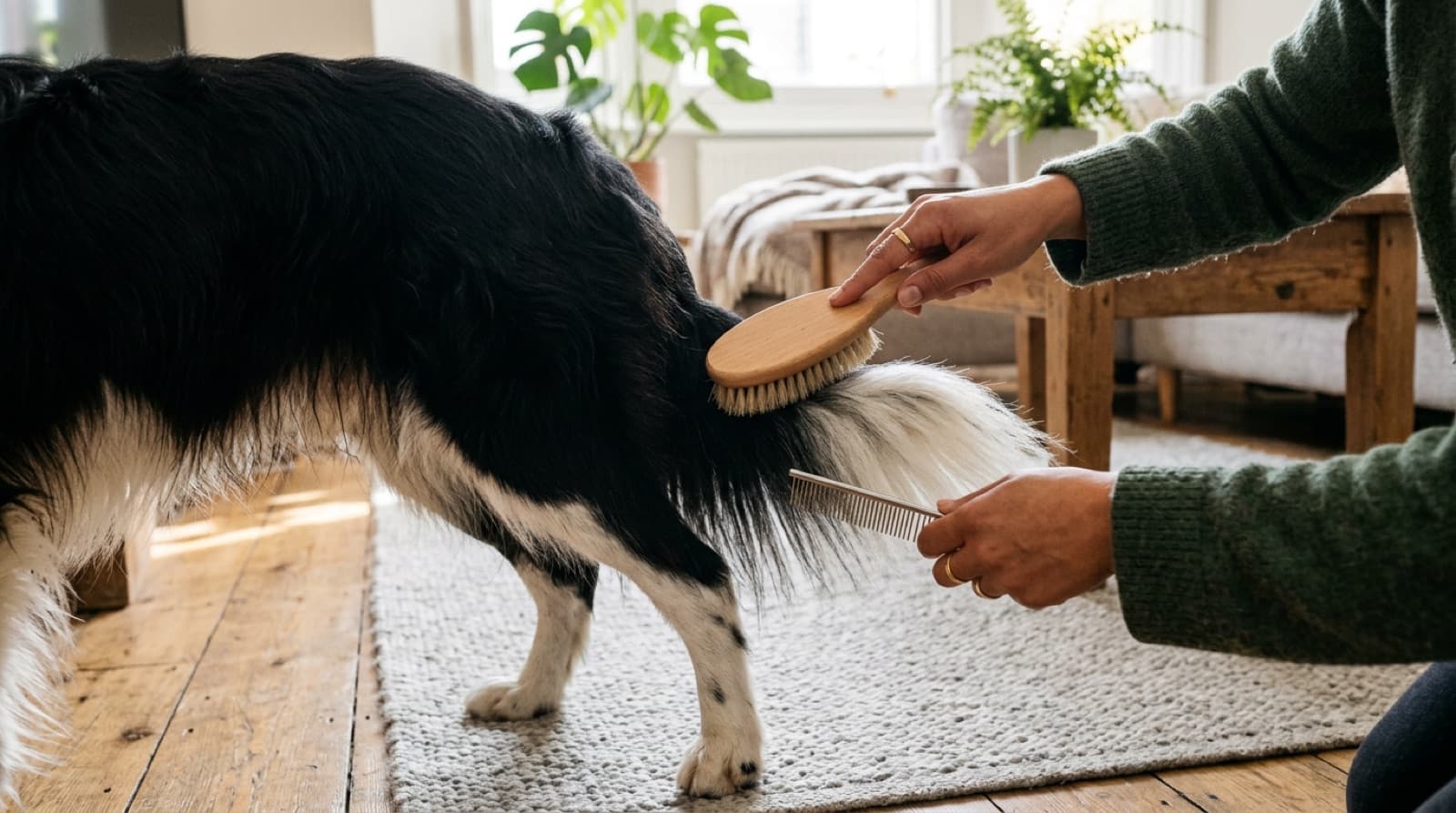
On a rough coat, the flat body is the easy part, and almost all the matting lives in the feathering, so map your attention there: behind and under the ears, the armpits, the britches, the leg feathering, and the tail. Owners who brush the body and skip the feathering end up cutting solid lumps out from behind the ears, which is avoidable with a comb-check each session.
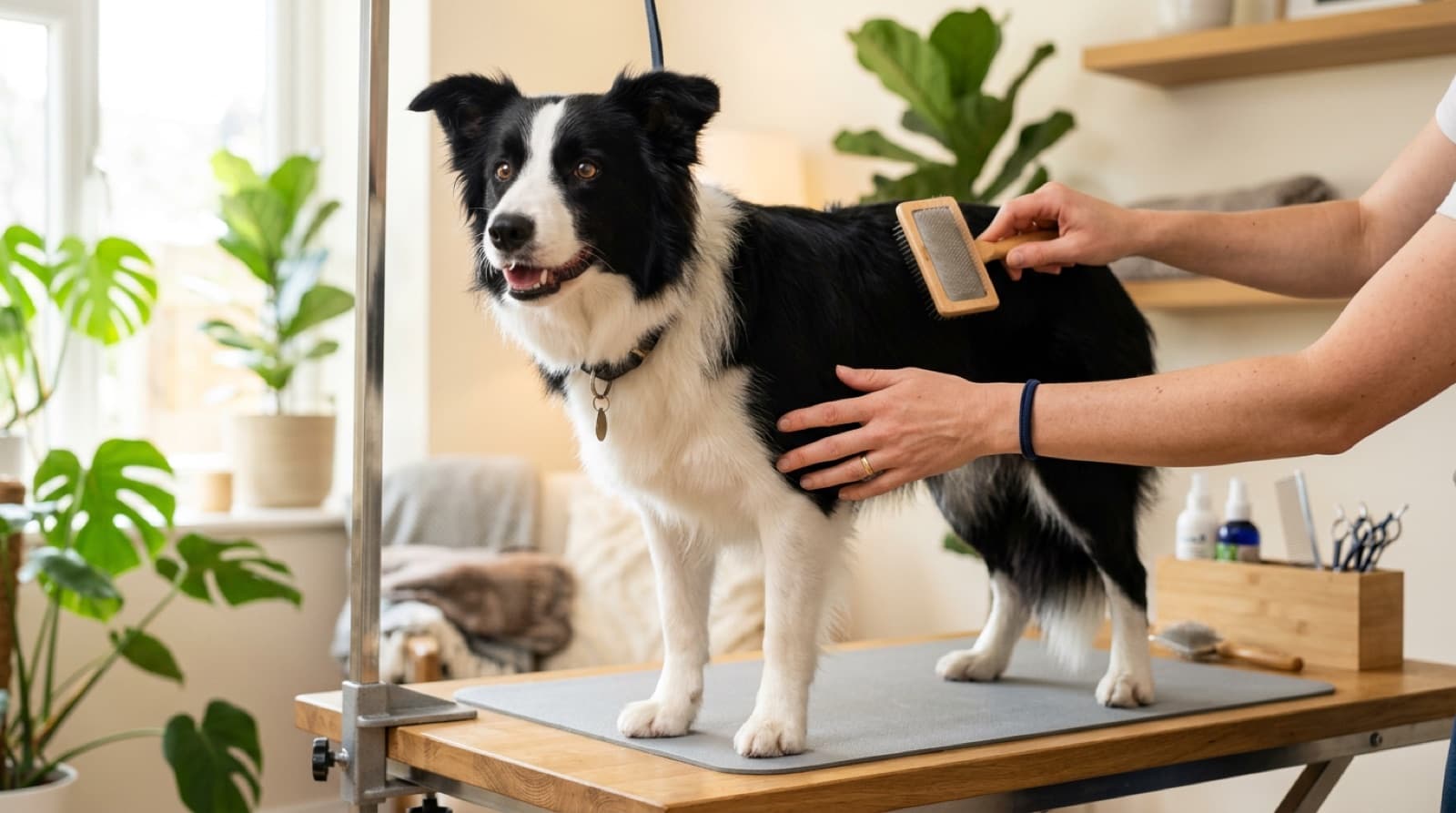
The order that works is rake, then slicker, then comb. Start with an undercoat rake to pull the dead undercoat, follow with a slicker brush to smooth the coat and work the feathering, and finish with a metal comb as your check: if it passes cleanly to the skin, the section is done, and if it catches, there is a mat the brush missed. Keep the feathering neat with thinning shears rather than letting it overgrow.
Some of the product links in this section are Amazon affiliate links — we may earn a small commission at no extra cost to you. It never changes which products we recommend.
The coat blow and the low-fuss reality
The reputation of the Border Collie as a low-maintenance working dog is half right and half a trap. It is genuinely low-fuss day to day, there is no haircut and no styling, but it is a real shedder, and twice a year, in spring and fall, it blows its undercoat over several weeks. New owners are often blindsided by the first coat blow, which is normal, not a problem. The plan is to move to daily raking during the blow and, ideally, give the dog a bath and a blow-out.
The biggest upgrade for the blow is a high-velocity dryer, which blasts the loose undercoat out during a bath and dries the coat to the skin, and a deshedding shampoo loosens the undercoat first to make the blow-out more effective. Between blows, the day-to-day really is easy.
The honest cost: groomer versus doing it yourself
A Border Collie groom is a deshedding bath, a force-dry, and a light tidy, not a haircut, priced as a medium-dog groom with a deshedding add-on that scales with coat density. Canadian grooming cost surveys such as Dogster's give a sense of the ranges, which climb during coat-blow season, so a local quote is worth getting. Owners who use a groomer tend to book every six to eight weeks, tightening to every few weeks during the blow.
The at-home tradeoff is favourable, especially for a smooth coat, which many owners never take to a groomer at all. The core kit, an undercoat rake, a slicker, and a metal comb, is inexpensive, and the meaningful upgrade is a high-velocity dryer, which does at home what the groomer's deshedding fee covers and handles the coat blow. For a rough coat, add thinning shears for the feathering, and you have most of what the breed needs.
Thinking about adopting a Border Collie?
Be ready for the shedding, keep the feathering brushed, and skip the clippers. Browse Border Collies and Border Collie mixes available now from the rescues we track across Canada.
See Available Border Collies →Frequently Asked Questions
Should you shave a Border Collie in summer?
No. The double coat cools the dog as well as it warms it, by circulating air to the skin, and it shields the skin from sunburn, so shaving raises the risk of overheating rather than lowering it, and it does not reduce shedding. Worse, a shaved Border Collie coat often grows back damaged: the undercoat regrows faster than the guard coat and tangles into a patchy, velvety texture that can be permanent. Brush the undercoat out to keep the dog cool, do not clip it.
Do smooth-coat Border Collies shed less than rough coats?
No, they shed just as much. This is one of the most common Border Collie misconceptions. A smooth coat is shorter and coarser with little feathering, so it mats less and dries faster, but it is still a double coat that sheds moderately year-round and blows out twice a year. The difference between rough and smooth is how much matting and brushing work you sign up for, not how much hair ends up on your floor.
What is the difference between a rough coat and a smooth coat Border Collie for grooming?
A rough coat is medium-length with feathering on the legs, britches, chest, tail, and ears, and that feathering is the matting workload, so a rough coat needs regular line-brushing of the feathered areas. A smooth coat is shorter and coarser with minimal feathering, so it rarely mats and is essentially wash-and-brush. Both are double coats that shed the same and both blow their coat twice a year, so knowing which coat your dog has tells you how much mat-management to expect.
How often should I brush a Border Collie?
Two to three times a week normally, and daily during the spring and fall coat blows, always brushing down to the skin rather than just over the top. On a rough coat, pay particular attention to the feathering behind the ears, in the armpits, in the britches, and on the tail, where mats form first. A smooth coat needs less, but still benefits from a weekly deshedding brush.
Where do Border Collies mat the most?
On a rough coat, behind and under the ears first, then the armpits, the britches at the back of the thighs, the leg feathering, and under the tail. These feathered, high-friction areas are where the fine hair tangles, while the flat body coat rarely mats. Owners who brush the body but skip the feathering end up with solid lumps of matted fur behind the ears, so the feathering earns a dedicated comb-through every session.
Can you trim a Border Collie at all?
Yes, light tidies only. It is fine to neaten the hair between the paw pads for traction on slick floors, tidy the feet and hocks, trim the sanitary area, and thin any overgrown or stray feathering with thinning shears. But the body coat is never clipped short, since that removes the temperature-regulating double coat and risks damaged regrowth. The goal is a neat, natural outline, not a haircut.
How often should I bathe a Border Collie?
Only when the dog is genuinely dirty, roughly every eight to twelve weeks. The double coat has natural weather-proofing oils, and over-bathing strips them, drying the skin and making it itchy and flaky. Always brush the coat out before a bath, and dry it to the skin afterward, ideally with a dryer, since a damp undercoat left to air-dry can mat and cause hot spots.
What is the best brush for a Border Collie?
An undercoat rake used first to pull the dead undercoat, a slicker brush second to smooth the coat and work the feathering, and a metal comb to check for hidden mats behind the ears and in the britches. A high-velocity dryer is the biggest upgrade for managing the coat blow at home. Use a Furminator-style deshedding blade sparingly, if at all, since overuse can cut the guard coat.
How to Groom an Australian Shepherd
The same feathering-is-the-workload and light-tidy-not-clip rules on a close cousin.
How to Groom a Golden Retriever
Another feathered coat where the behind-the-ears feathering is the first to mat.
What to Feed a Border Collie
The other half of Border Collie care: fueling a high-drive working dog, and portions.
Border Collies for Adoption
Live listings of Border Collies and Border Collie mixes from the rescues we track.