The short answer
For most cats, buy unscented, fine-grained clumping clay and keep it two to three inches deep, scooped daily. It is what cats prefer and the cheapest to run. Choose an eco litter (tofu, corn, wood, walnut) if you want low dust, lighter bags, or flushable convenience, or a crystal litter if low-maintenance odour control matters more than clump-scooping. Whatever you pick, switch gradually over a week or two. Some links here are Amazon affiliate links; we may earn a small commission at no extra cost to you, and it never changes what we recommend.
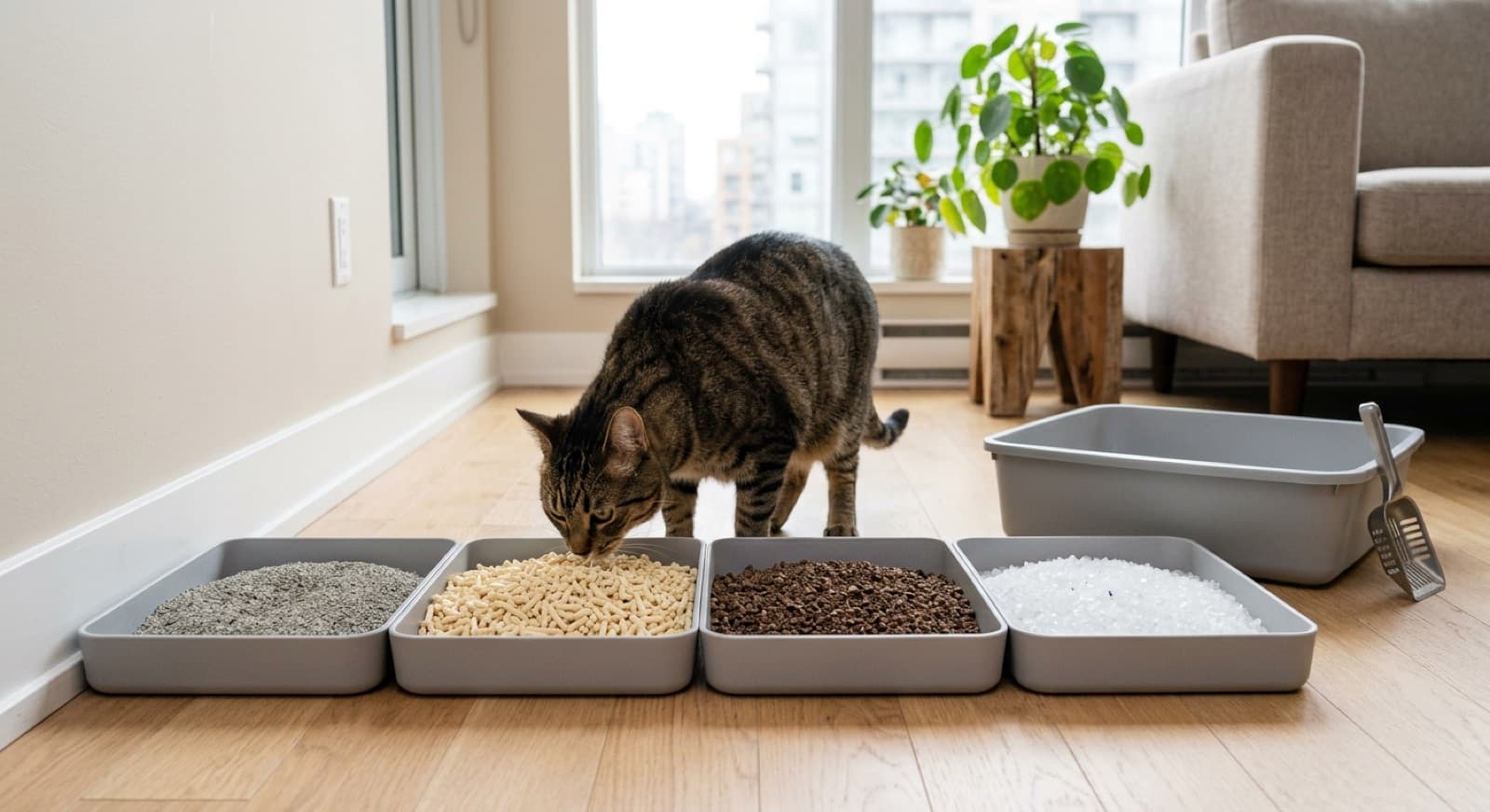
Litter is the most-used object a cat owns, and the wrong choice is a leading reason cats start eliminating outside the box. The good news is that feline preferences are well studied and fairly consistent. Get the texture, scent, depth, and cleanliness right and the rest is mostly about what suits your home and budget. This guide is about choosing and buying litter. If your cat is already avoiding the box, start with our cat litter box problems guide instead, which works through medical causes first.
Before you blame the litter: a sudden change in litter-box habits can be a medical emergency
A cat that suddenly stops using the box, strains, cries in the box, or pees more often is not always being fussy about litter. The Cornell Feline Health Center notes that feline lower urinary tract disease (FLUTD) is one of the top reasons cats see a vet, and an older cat may simply find the box hard to climb into because of arthritis. Rule out a medical cause with your vet before you start swapping litters. The one true emergency: a male (or neutered-male) cat straining in the box with little or no urine coming out, crying, or making repeated failed attempts may have a urethral blockage. This is life-threatening and can be fatal within 24 to 48 hours. Get to an emergency vet immediately, do not wait to see if a new litter helps.
What cats actually prefer
Across behaviour research summarised by groups like the American Association of Feline Practitioners and the Cornell Feline Health Center, the same preferences come up again and again:
- Fine, sand-like texture. Cats evolved covering waste in soft soil. A finer grain is gentler on the paws and easier to dig, which is why fine clumping clay and tofu litters win acceptance tests over coarse pellets for most cats.
- Unscented. A cat's sense of smell dwarfs ours. The floral or “fresh linen” perfume that sells a bag to a human can drive a cat away from the box.
- Two to three inches deep. Enough to dig and cover. Too shallow and the cat cannot bury; too deep and it spills and tracks.
- Clean. The single biggest factor. A daily-scooped box of mediocre litter beats a fancy litter left dirty every time.
- Uncovered, in a large box. Not a litter property exactly, but it pairs with all of the above. Covered boxes trap odour against the cat's nose.
The litter types, compared
Clumping clay (bentonite)
The default for good reason. Bentonite clay swells and binds urine into a firm clump you lift out, so the box stays cleaner between full changes and it is the cheapest option per month. Vet clinics frequently recommend a fine, hard-clumping, unscented clay such as Dr. Elsey's Ultra. The downsides: clay is heavy to carry, the lightweight versions can be dusty, and it is strip-mined rather than renewable. Avoid clumping clay for kittens under roughly eight to ten weeks, who sometimes eat litter while exploring.
Eco and biodegradable (tofu, corn, wood, walnut, paper)
This is the fastest-growing category, and the better plant-based litters now perform close to clay. The validated demand for eco-friendly litter is real, and the options each have a niche:
- Tofu (soybean fibre). Clumps firmly, very low dust, light to carry, and many brands are flushable in small amounts (never on a septic system). A strong all-rounder.
- Corn. Clumps well and controls odour naturally; corn-based litters are a popular flushable choice. Store it sealed and dry, since corn can attract pantry pests or grow mould if it gets damp.
- Wood and paper pellets. The lowest dust and lowest tracking of any litter, which makes them the go-to for asthmatic cats and people, and for post-surgery cats who should avoid fine granules. They absorb rather than clump, so you scoop solids and change the bed more often.
- Walnut shell. Strong natural odour control and a dark colour that hides waste; it can stain light flooring if tracked while damp.
Crystal (silica gel)
Silica crystal litter absorbs moisture and locks odour exceptionally well, is very low dust, and lasts longer between changes, which suits a low-maintenance single-cat home. It does not clump, so you scoop solids and stir the crystals, then replace the whole bed every few weeks. Some cats dislike the firmer feel underfoot. Health-indicator versions like PrettyLitter change colour to flag possible urinary issues, which is a genuinely useful early-warning tool, though it is not a substitute for a vet visit if your cat shows symptoms.
How to choose for your situation
- New adopter, no strong preference: start with whatever the rescue or foster used, then move to unscented clumping clay or tofu. Switching too fast is a classic first-week mistake; our first week with a rescue cat guide covers the settling-in timeline.
- New kitten: non-clumping or paper litter until about ten weeks, then transition to clumping. The new kitten checklist has the full supply list.
- Multi-cat home: unscented clumping clay or tofu, more boxes (one per cat plus one extra), scooped twice daily. Odour control is mostly a scooping-frequency problem, not a litter problem.
- Dust or asthma concern: wood or paper pellets, or a quality tofu litter. Skip lightweight clay.
- Low-maintenance, single cat: crystal, or a health-indicator crystal litter.
- Indoor-only cat (most rescue cats): the box is their whole bathroom, so prioritise their preference over yours; see indoor vs outdoor cats for why indoor living is the standard.
Switching litter without an accident
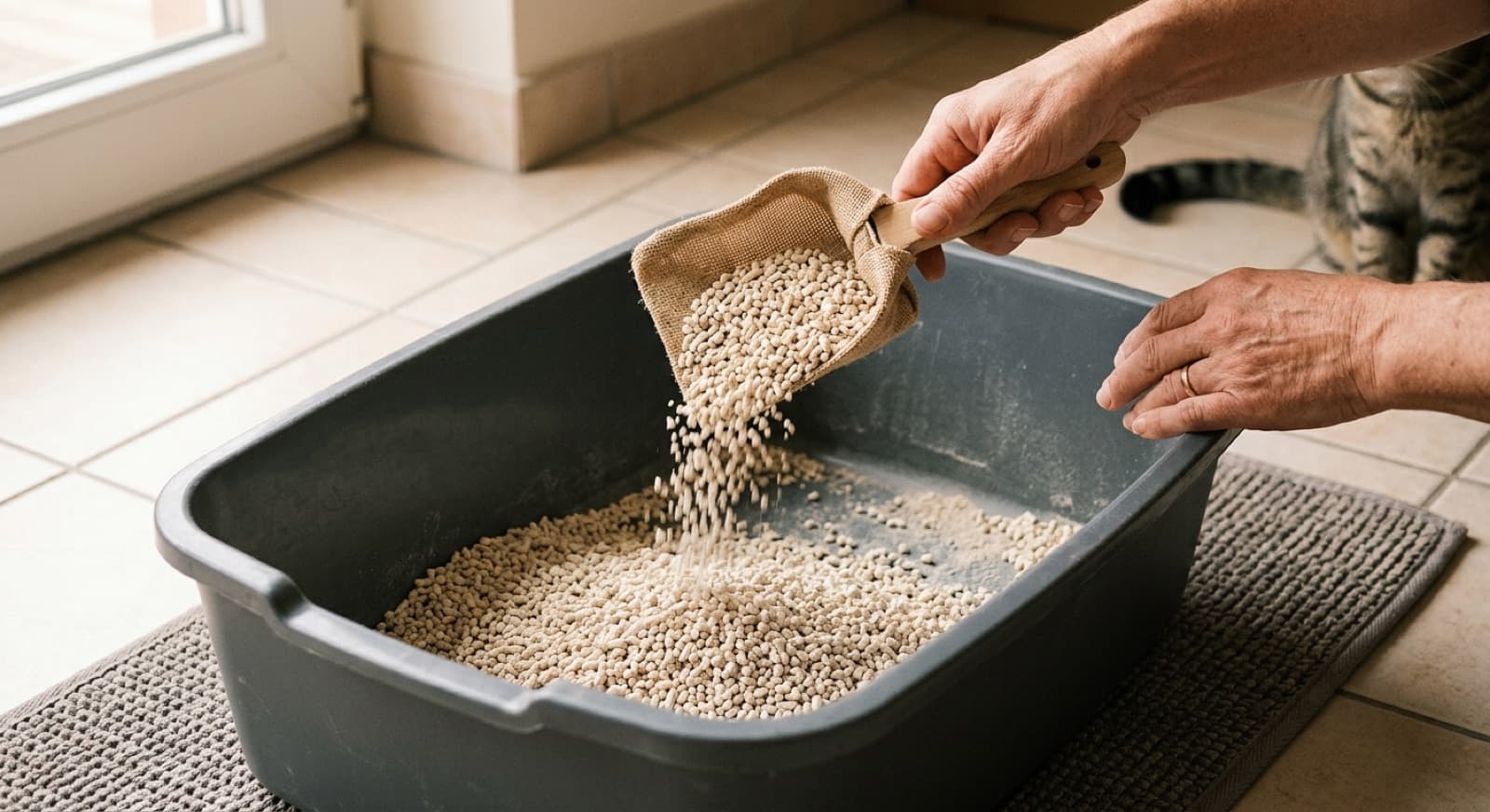
Cats are neophobic about their toilet substrate, so never swap brands overnight. Transition over seven to fourteen days: start with mostly old litter and a small amount of new, then shift the ratio toward the new litter every few days. If the cat hesitates at any stage, slow down. A sudden full swap is one of the most common triggers for a previously reliable cat to start going outside the box. If an accident does happen, clean it with an enzyme cleaner made for pet urine, because ordinary cleaners leave a scent the cat returns to.
The accessories that actually help
- Litter mat. A textured mat at the box mouth catches granules off the paws and cuts tracking more than any other single change.
- A large, high-sided box. Most store boxes are too small. Aim for roughly one and a half times the cat's body length; a storage tote works.
- A sturdy metal scoop. Outlasts plastic and sifts clumps cleanly.
- Good ventilation, not air freshener. Manage odour with airflow and daily scooping, not perfume the cat has to live beside.
Cat litter and pregnancy: the toxoplasmosis question
This question comes up often enough to answer directly. The concern is toxoplasmosis, a parasite that cats can shed in their feces. According to the U.S. Centers for Disease Control and Prevention, you do not have to rehome a cat during pregnancy. Sensible precautions handle the risk:
- If possible, have someone else change the litter box while you are pregnant.
- If you must do it yourself, wear disposable gloves and wash your hands thoroughly afterward.
- Scoop daily. The parasite in fresh feces is not infectious for the first one to several days, so removing waste promptly meaningfully lowers risk.
- Keep your cat indoors and feed commercial food, which keeps a cat's own exposure very low.
For context, most human toxoplasmosis infections come from undercooked meat, unwashed produce, and gardening in contaminated soil, not from cat litter. Always discuss your own situation with your doctor. This is general information, not medical advice.
Find your match
Rescue cats arrive litter trained. Browse adoptable cats from rescues across Canada.
Browse Adoptable Cats →Frequently asked questions
What is the best cat litter for most cats?
Unscented clumping clay litter suits most cats. The fine, sand-like texture is closest to the soil cats evolved to dig in, it clumps firmly for daily scooping, and the lack of perfume matches feline preference because cats find added scents overwhelming. It is also the cheapest option per month. Eco litters (tofu, corn, wood, walnut) are worth choosing if low dust, lighter weight, or flushability matter to you, but introduce any new litter gradually.
Is clumping or non-clumping litter better?
Clumping is better for daily hygiene because urine forms a solid clump you scoop out, so the box stays cleaner between full changes and odour is easier to control. Non-clumping (traditional clay, most crystal) absorbs urine into the whole bed, so you scoop solids daily but must change the entire box more often. Clumping is the default recommendation for adult cats. The one exception is kittens under eight to ten weeks, who may eat litter while exploring, so a non-clumping or paper litter is safer until they outgrow the habit.
Is eco-friendly or biodegradable cat litter any good?
Yes, the better plant-based litters perform close to clay. Tofu (soybean fibre) and corn litters clump well, are very low dust, and many are flushable in small amounts. Wood and paper pellets are excellent for dust-sensitive cats and very low tracking, though they clump less firmly. Walnut-shell litter controls odour well and is darker, which hides waste. The trade-offs are price (eco litters cost more per bag) and that some cats dislike a sudden texture change, so transition slowly. Avoid flushing any litter if you have a septic system.
Why does unscented litter matter?
A cat experiences smell far more intensely than we do, so a perfume that reads as fresh to a person can read as overwhelming to the cat, and some cats will avoid a scented box entirely. Scent also masks the early-warning smell that tells you something is medically wrong, such as the strong ammonia of a urinary infection. Pick unscented litter and control odour through daily scooping, enough boxes, and good ventilation instead.
Is cat litter safe to handle during pregnancy?
It can be, with sensible precautions. The concern is toxoplasmosis, a parasite cats can shed in their feces. Per the CDC, the safest approach is to have someone else scoop the box during pregnancy. If that is not possible, wear disposable gloves, scoop daily (the parasite in fresh feces is not infectious for the first one to several days, so daily removal lowers risk), and wash your hands thoroughly afterward. Indoor-only cats fed commercial food are very low risk, and most human toxoplasmosis cases actually come from undercooked meat and unwashed produce, not litter. Discuss your situation with your doctor.
How much litter should I put in the box, and how often do I change it?
Keep the bed two to three inches deep so the cat can dig and cover, and the clumps form properly. Scoop at least once a day, twice in a multi-cat home. For clumping litter, top up the level as you scoop and do a full empty-and-wash every two to four weeks. For non-clumping or crystal, change the whole box more often, usually weekly. A box that is scooped daily is the single biggest factor in whether a cat keeps using it.
How do I switch litter without causing accidents?
Transition gradually over seven to fourteen days. Start with mostly the old litter and a little of the new, then shift the ratio a bit more toward the new litter every few days. A sudden full swap is one of the most common reasons a previously reliable cat starts going outside the box. If you have just adopted, ask the rescue or foster what litter the cat was using and start with that, then transition later if you want to change.
How do I deal with litter tracking and dust?
For tracking, use a litter mat outside the box to catch granules off the paws, choose a larger-particle litter (wood or paper pellets track the least), and a high-sided or top-entry box helps too. For dust, plant-based litters (tofu, corn) and pellets are far lower dust than lightweight clay, which matters for cats and people with asthma. Pour litter slowly to limit airborne dust, and avoid the cheapest lightweight clays if dust is a concern.