The short answer
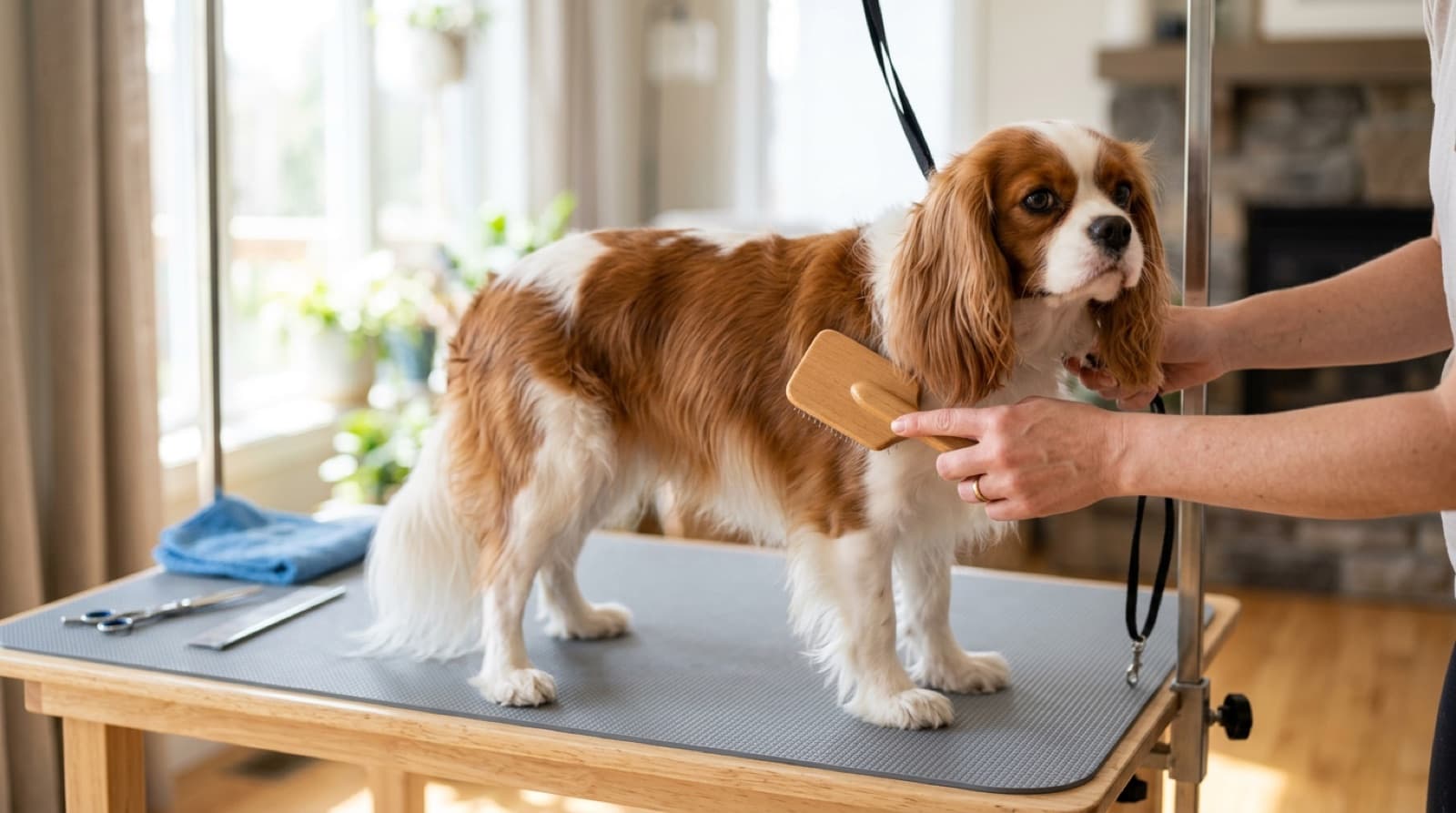
Brush the ear feathering daily, tidy the hair between the paw pads, and keep the ears clean and dry. The Cavalier's silky feathered coat sheds only moderately, so matting, not shedding, is the job, and the long ear feathering is the number one mat spot. The coat is meant to be kept natural, not shaved; a puppy cut is a reasonable easier-maintenance choice, but a full shave-down is a last resort. Bathe about monthly so you do not strip the silky coat.
The ear feathering is the whole game
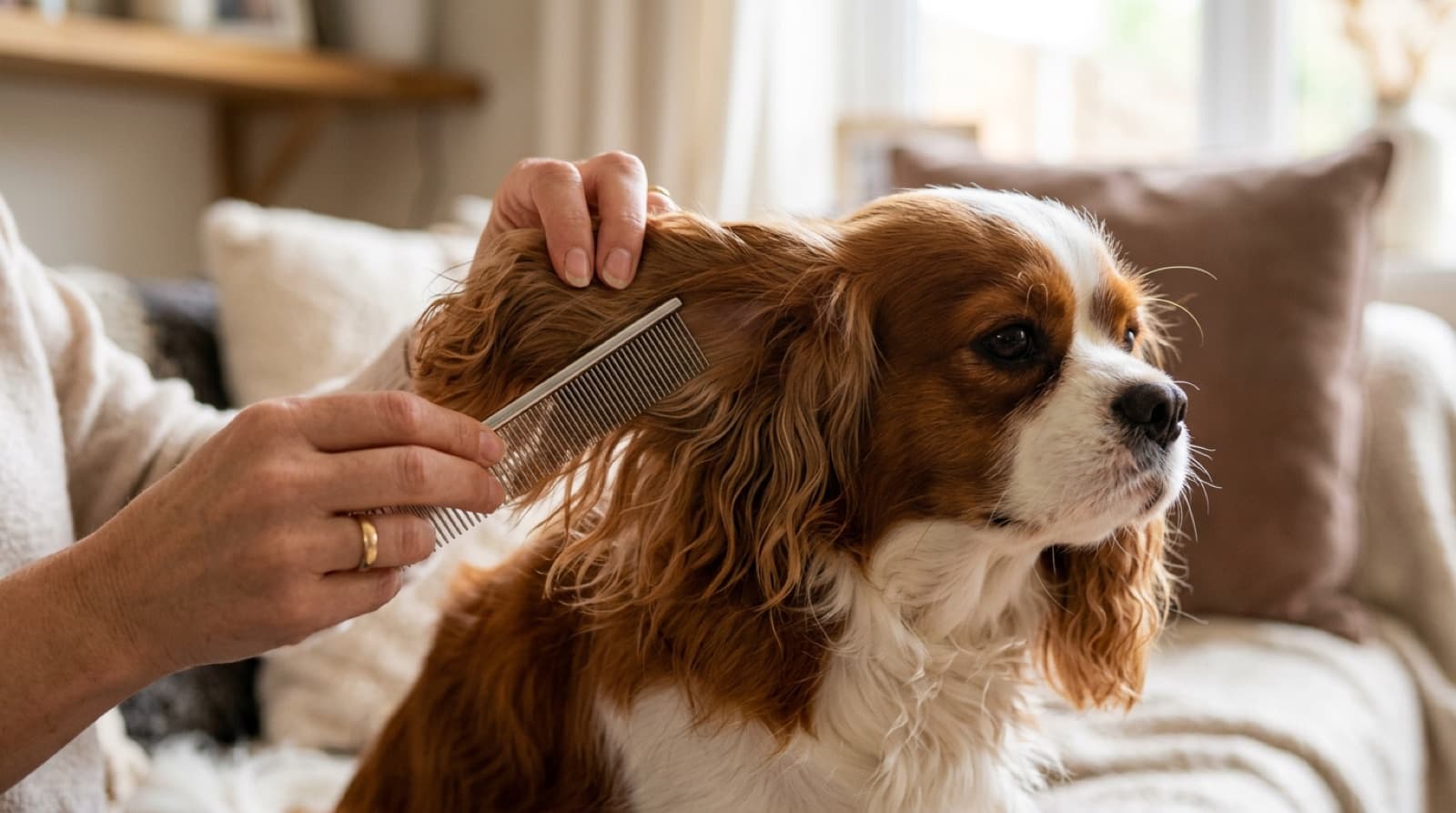
If you learn one thing about grooming a Cavalier, make it this: the long feathering on the ears is the number one place the coat mats, and it mats fast. Most grooming articles fold the ears into a general “brush your dog” line, which is exactly why so many owners find solid mats behind and under the ear flaps despite brushing the body faithfully.
The fix is a specific, quick technique rather than just brushing more. Once a day, flip each ear up and comb the underside and the area behind the ear down to the skin with a metal comb, working out any tangle from its edge before it tightens. It takes about a minute for both ears. A slicker brush handles the body and the length of the feathering, but it is the comb on the underside of the ears that actually prevents the mats. A light mist of detangler spray on a stubborn spot lets you ease it apart instead of ripping it.
Some of the product links in this section are Amazon affiliate links — we may earn a small commission at no extra cost to you. It never changes which products we recommend.
Keep it natural or a puppy cut: the honest version
This is the most-argued question in the Cavalier world, and it deserves a straight answer rather than a rule. Here is the honest framing.
The Cavalier is meant to be kept natural. The breed standard describes an untrimmed dog and, as the American Kennel Club notes, the feathering is a feature of the breed. So if you love the long feathered silhouette and you will genuinely brush the ears daily, keep the coat natural, tidied only lightly. But if daily brushing is not realistic for your life, a puppy cut, which shortens the feathering while keeping a soft natural shape, is a perfectly legitimate choice. It makes maintenance dramatically easier, and it is far kinder to the dog than letting the coat mat and then having to shave it out. What you want to avoid is the third path: skipping the brushing, letting the feathering felt, and forcing a groomer to clip the whole dog to the skin, which both loses the coat and costs you a dematting fee. A full shave-down is discouraged because the silky coat can grow back thicker, curlier, or patchy, so reserve it for a coat that is genuinely past saving.
The paw tidy: the one sanctioned trim
Even the show world, which keeps the Cavalier otherwise untrimmed, agrees on one trim: the hair between the paw pads. It grows long enough to trap debris and moisture and, more visibly, to make the dog slip on hardwood and tile, so it is trimmed with blunt-nosed curved scissors for traction and hygiene. If your Cavalier scrabbles for grip on smooth floors, the foot hair is usually the culprit.
Keep the distinction clear, because it is easy to overdo: you trim the hair on the underside between the pads, but you leave the feathering on the top of the feet alone, since that is part of the breed's look. Round out the routine with nails every three to four weeks using a nail grinder or clippers, trimmed when you hear them click on the floor, and a light thinning of any straggly feathering with thinning shears if you are keeping the coat natural.
Bathing, ear care, and the honest cost
Bathe a Cavalier about monthly, and no more often than every couple of weeks, since the silky coat's oils are what keep it soft and tangle-resistant, and over-bathing dries it out and makes it mat more. Brush the coat out fully first, use a gentle shampoo and a detangling conditioner to keep the feathering soft, and dry thoroughly, paying special attention to the ears. Those long, heavy ears trap warmth and moisture, so wiping them with a dog ear cleaner and drying them after every bath, swim, or rainy walk is genuinely part of grooming a Cavalier. Recurrent odour, redness, or head-shaking is a vet matter, not something to clean harder.
On cost, a Cavalier is small-dog priced. A groom of a bath, tidy, feet and sanitary trim, ear clean, and nails sits at the small-dog rate, with a full puppy cut costing more, and Canadian grooming cost surveys such as Dogster's give a sense of the ranges. Owners who use a groomer book every four to six weeks; owners who brush at home may only book a few baths and tidies a year. The at-home kit, a slicker, a comb, detangler, blunt scissors, an ear cleaner, and a nail tool, is inexpensive and covers most of what the breed needs.
Thinking about adopting a Cavalier?
Commit to the daily ear-comb, keep the ears clean and dry, and this gentle little spaniel is easy to keep looking lovely. Browse Cavaliers and Cavalier mixes available now from the rescues we track across Canada.
See Available Cavaliers →Frequently Asked Questions
Where do Cavaliers mat the most?
The long ear feathering, behind and under the ear flaps, is the number one mat spot by a wide margin, followed by the armpits, the chest, the backs of the legs, the tail, and the belly. The flat body coat rarely mats; it is the feathering that tangles. The habit that prevents most problems is flipping each ear up and combing the underside daily, which takes about a minute and heads off the mats before they form.
Should you shave a Cavalier King Charles Spaniel?
Shaving to the skin is discouraged. The silky coat can grow back thicker, curlier, or patchy and lose its texture, and the coat helps regulate temperature, so a shave changes the dog's look and coat quality, sometimes permanently in older dogs. If daily brushing is genuinely not realistic for you, a "puppy cut" that shortens the feathering while leaving a natural shape is a legitimate middle ground, but a full shave-down is a last resort, usually only when a coat is too matted to save.
Should I get my Cavalier a puppy cut?
It is a reasonable choice for a pet owner who cannot commit to daily brushing, and it is the breed community's most-argued grooming question. The honest framing: the Cavalier is meant to be kept natural and untrimmed per the breed standard, and a puppy cut removes the signature feathered silhouette, but it genuinely makes maintenance easier and is far kinder than letting the coat mat and then shaving it. If you love the long feathered look and will brush daily, keep it natural; if you will not, a puppy cut beats a matted coat.
Do you trim the hair between a Cavalier's paw pads?
Yes, and it is the one trim that everyone, including show people, agrees on. The hair that grows between and under the paw pads is trimmed with blunt-nosed curved scissors for traction on slick floors and for hygiene, since it traps debris and moisture. Note the distinction: you trim the hair on the underside between the pads, but you do not trim the feathering on the top of the feet, which is a feature of the breed.
How often should I brush a Cavalier?
Daily is ideal, and three to four times a week is the realistic minimum, always finishing with a metal comb to the skin to catch the mats a slicker brush glides over. Focus on the feathering, especially the underside of the ears, and mist a little detangler or water on any tangles before combing so you work them out rather than ripping them. Under-brushing is what leads to the matted coat that forces a clip-down.
How often should I bathe a Cavalier?
Roughly monthly, or somewhere between every two and six weeks depending on the dog's lifestyle. Bathing more often than about every two weeks strips the silky coat's natural oils, which dries it out and, counterintuitively, makes it mat more. Brush the coat out fully before a bath, and dry the feathering and especially the ears thoroughly afterward, since a damp coat tangles and damp ears invite trouble.
How do I clean a Cavalier's ears?
Wipe the ear flap and the visible part of the ear with a dog ear cleaner, never pushing anything down into the canal, and dry the ears thoroughly after every bath, swim, or rainy walk. Cavaliers have long, heavy, pendulous ears that trap warmth and moisture, so keeping them clean and dry is genuinely part of grooming, not just health. If you notice odour, discharge, redness, or head-shaking, see your vet, since recurrent ear problems need veterinary care rather than more cleaning.
Do Cavaliers shed a lot?
They shed moderately and steadily year-round, without the dramatic seasonal coat blow of a double-coated breed. They are not a non-shedding or hypoallergenic breed, which surprises some owners, but the shedding is light and manageable with regular brushing. The feathering is the maintenance story for a Cavalier, not the shedding.
How to Groom a Cocker Spaniel
A fellow spaniel where the long ear feathering is likewise the maintenance story.
How to Groom a Golden Retriever
Another feathered coat where behind-the-ears is the first place to mat.
What to Feed a Cavalier
The other half of Cavalier care: keeping a lapdog trim, and portions.
Cavaliers for Adoption
Live listings of Cavalier King Charles Spaniels and mixes from the rescues we track.