The short answer
Chow Chows are a relatively short-lived non-giant breed at roughly 8 to 12 years. The Chow-specific health concerns Calgary owners should ask their vet about:
- Hip and elbow dysplasia: documented breed concern, OFA screening for breeding dogs
- Entropion: eyelids roll inward, lashes irritate the cornea; surgical correction is common
- Other eye disease: glaucoma, cataracts, chronic dry eye
- Autoimmune skin disease: pemphigus foliaceus particularly documented in the breed
- Bloat / GDV awareness in deep-chested individuals
- Heat sensitivity: thick double coat plus a slightly shortened muzzle in some lines
- Skin and ear infections under the dense coat (hot spots, otitis)
- Hypothyroidism and senior-onset cancers
- Dental crowding from a smaller jaw, leading to more frequent dental work
This article is directional only. Every diagnosis, medication, dose, and surgical decision belongs with a licensed Calgary veterinarian. If your Chow shows any new symptom, talk to your vet rather than self-treating from the internet.
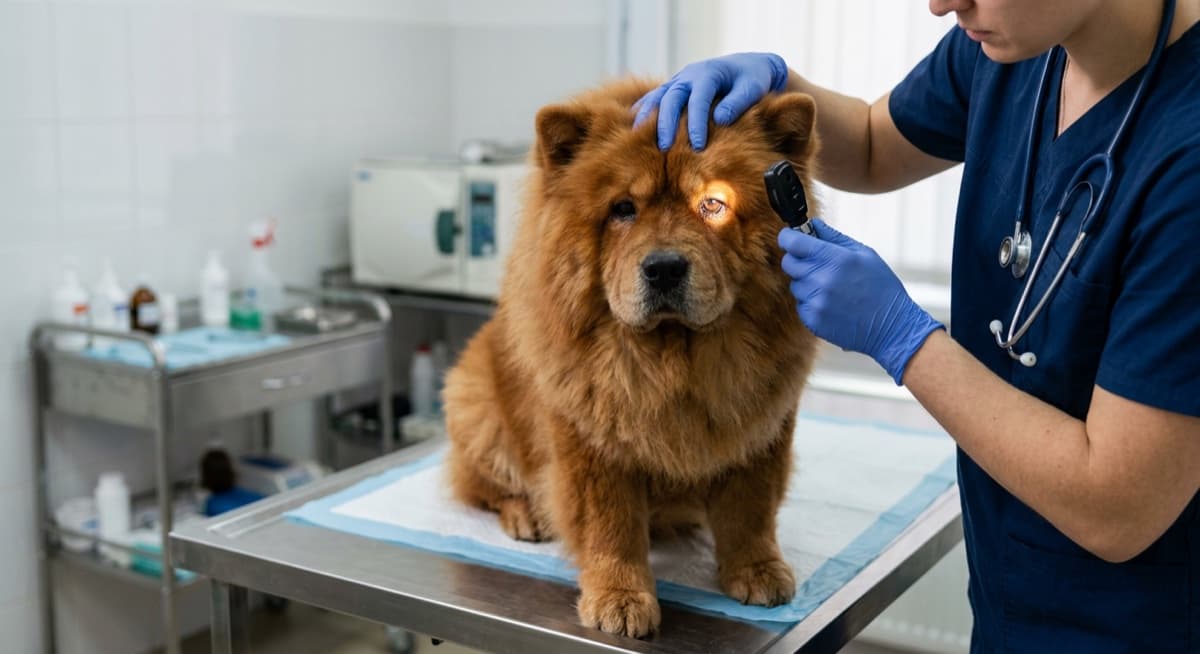
Chow Chows are striking, dignified, fiercely loyal dogs with a body plan that comes with real health trade-offs. The American Kennel Club and the Chow Chow Club Inc (the AKC parent club) both publish breed-specific health guidance highlighting joint, eye, and autoimmune concerns. The combination of a heavy frame, deep-set eyes inside heavy facial folds, a dense double coat, and (in some lines) a slightly shortened muzzle creates a health profile that overlaps with both medium working breeds and brachycephalic breeds. This article walks Calgary owners through what to ask your vet about, what to watch for at home, and what belongs in the hands of a veterinarian rather than the internet.
Hip and elbow dysplasia in Chow Chows
Documented breed concern. The OFA hip dysplasia breed statistics consistently list the Chow Chow among breeds with elevated rates compared to the average dog. Elbow dysplasia is also reported in the breed. Responsible breeders screen breeding stock through OFA or PennHIP; adopters of an adult Chow can ask the rescue whether hips have been assessed.
Hip dysplasia is a developmental malformation of the hip joint where the ball and socket do not fit together correctly. Over time, the joint develops painful arthritis. Elbow dysplasia is the front-end equivalent and is also reported in the breed. Both are influenced by genetics, growth rate, body weight, and exercise pattern during the growth phase.
Symptoms to discuss with your Calgary vet:
- Bunny-hopping gait when running, where both rear legs push off together rather than alternating
- Reluctance to climb stairs, jump into the car, or get up onto the couch
- Hindlimb stiffness after rest that improves with movement
- Front-limb lameness or shifting limb favouring (elbow dysplasia)
- Visible muscle wasting in the hindquarters or shoulders
- A measurable drop in willingness to walk far on Calgary winter sidewalks or up the off-leash hills at Nose Hill Park
Diagnosis is by X-ray imaging scored against OFA or PennHIP standards, read by your Calgary vet or referral radiologist. Treatment ranges from conservative management (weight control, joint support recommended by your vet, physiotherapy, pain control your vet selects) through to surgical options for severe cases. Surgical decisions, the type of procedure, and the post-op rehabilitation plan all belong with the surgical team at a Calgary specialty centre such as Western Veterinary Specialist and Emergency Centre or another specialty hospital recommended by your regular vet.
The most important owner-controllable factor is body weight. An overweight Chow puts dramatically more load through hips and elbows than a lean Chow of the same height. Body condition scoring (the 1 to 9 AVMA/WSAVA scale) by your vet at every visit is more useful than the scale alone. Lean Chow Chows do better on every orthopedic measure across their lifespan.
Entropion: the breed-defining eye concern
Entropion is widely cited as the most common eye condition in Chow Chows and is the one Calgary owners are most likely to encounter. The eyelid rolls inward, eyelashes and fur scrape the cornea, and chronic irritation causes squinting, tearing, mucus discharge, and over time corneal ulceration or scarring. Surgical correction is a routine ophthalmic procedure for clinically affected Chows.
The Chow body plan creates the predisposition. Deep-set eyes inside heavy facial folds, the breed's characteristic eye-socket shape, and the weight of the surrounding skin combine to roll the eyelid (usually the lower lid) inward against the eyeball. Both lids can be affected. Severity ranges from mild intermittent irritation to a fully rolled lid that drags eyelashes constantly across the cornea.
Signs to watch for and discuss with your Calgary vet:
- Squinting, especially in bright Calgary sunlight or wind
- Excessive tearing or wet fur under the eye
- Mucus or pus-like discharge in the inner corner of the eye
- Pawing or rubbing at the face
- Visible redness, cloudiness, or a film over the cornea
- The third eyelid appearing more prominently than usual
Same-day vet visit signs are sudden cloudiness, persistent squinting, a visible film, blue-grey corneal change, or an eye that looks painful. Untreated entropion can lead to corneal ulceration, which is itself an emergency. Calgary's 24-hour emergency veterinary clinics handle after-hours eye emergencies; your regular vet handles the daytime work-up.
Surgical correction is the standard treatment for clinically affected dogs. The procedure removes a small strip of tissue to roll the eyelid back to its correct position. It is typically performed once the dog is past the growth phase so the result is stable, but the timing and the specific technique belong with your veterinarian or referral ophthalmologist. Multiple revisions are occasionally needed. Cost varies depending on whether one or both lids are corrected and whether a Calgary general practice or specialty ophthalmologist handles it. Pet insurance generally covers entropion correction when the policy is active before symptoms appear.
Other eye conditions in Chow Chows
Beyond entropion, the Chow Chow is reported to have above-average rates of glaucoma, juvenile and senior cataracts, and distichiasis (an extra row of eyelashes that rubs the cornea). Annual eye exams are reasonable, and any new eye change is a same-day vet visit.
Glaucoma is a sudden increase in intraocular pressure that is painful and can cause permanent blindness within hours if untreated. Emergency signs include a red eye, squinting, cloudy cornea, a visibly enlarged eyeball, or the dog pulling away when the head is touched near the eye. Glaucoma is a same-day Calgary emergency vet trip, not a wait-until-Monday situation.
Cataracts are opacities in the lens that progress over months or years. Juvenile cataracts can appear in young adults; senior cataracts are common in older Chows. Diagnosis is by your vet or a referral ophthalmologist; surgical correction is performed at Calgary specialty centres when appropriate. Many Chows adapt well to gradual vision loss in familiar home environments.
Distichiasis is an inherited condition where extra eyelashes emerge from the meibomian glands and rub against the cornea, causing irritation similar to mild entropion. It is sometimes managed with cryotherapy or epilation by a referral ophthalmologist.
Calgary owners can access veterinary ophthalmology through specialty practices such as VCA Canada West Veterinary Specialists and Western Veterinary Specialist Centre. Your regular Calgary vet decides whether referral is appropriate and when. The OFA Eye Certification Registry (formerly CERF) is a useful adoption signal if a rescue can provide documentation.
Autoimmune disorders: pemphigus foliaceus and beyond
Pemphigus foliaceus is particularly documented in the Chow Chow, alongside other autoimmune conditions reported in the breed. The presentation can mimic skin infections or allergies, which is why many Chow owners report a long diagnostic journey before the correct condition is identified. Treatment is generally lifelong and belongs with your Calgary vet, often in consultation with a veterinary dermatologist.
Pemphigus foliaceus is a skin-targeting autoimmune disease in which the body's immune system attacks the connections between skin cells. The result is crusty, scabby lesions that typically appear first around the face, ears, foot pads, and nose, sometimes with hair loss and depigmentation. The breed predisposition is well-documented; the AVMA and veterinary dermatology literature flag the Chow Chow alongside the Akita and other northern breeds as commonly affected.
Signs that should prompt a vet visit:
- Crusts, scabs, or pustules on the bridge of the nose, around the eyes, on the ear flaps, or on the foot pads
- Hair loss in symmetrical patterns on the face or limbs
- Depigmentation of the nose, lips, or eye margins
- Skin lesions that have not responded to courses of antibiotics or routine allergy treatment
- Lethargy or appetite changes accompanying skin disease
Diagnosis requires a skin biopsy and supporting bloodwork ordered by your Calgary vet, sometimes with a referral to a veterinary dermatologist. The diagnosis is not made from a glance: pemphigus foliaceus, bacterial skin infection, fungal disease, and allergy can look similar on the surface. Treatment is generally lifelong immunosuppressive therapy, with the specific medication, dose, and recheck schedule chosen and monitored by your veterinarian. Self-medication, dose adjustment, or stopping treatment when the dog “looks better” can trigger relapses that are harder to manage than the original presentation.
Other autoimmune and immune-mediated conditions reported in the breed include immune-mediated hemolytic anemia and immune-mediated thrombocytopenia. These are not common but are worth your vet knowing the breed has elevated rates when they work up a presentation. If your Chow develops unusual lethargy, pale gums, or unexplained bruising, that is a same-day vet visit.
Bloat (GDV) awareness
Lower lifetime risk than giant breeds, but still a true emergency when it happens. Chow Chows are deep-chested in proportion to their height, which is the body-shape risk factor that underlies all bloat risk. The AVMA owner reference on Gastric Dilatation and Volvulus describes the condition and the warning signs in detail.
Bloat (Gastric Dilatation and Volvulus, or GDV) is a medical emergency in which the stomach fills with gas and can twist on itself. Without emergency surgical treatment within hours, GDV is usually fatal. The Chow Chow is not among the very highest-risk breeds (those are typically the Great Dane, Standard Poodle, and Weimaraner), but the deep-chested body plan means bloat awareness still belongs in every Chow owner's playbook.
Warning signs that need a Calgary emergency vet immediately:
- Unproductive retching: the dog tries to vomit but nothing comes up
- Distended, swollen, or drum-tight abdomen
- Restlessness, pacing, or inability to settle
- Excessive drooling and hunched posture
- Late signs of shock: pale gums, weak pulse, collapse
Practical prevention measures to discuss with your vet: two or three smaller meals daily rather than one large meal, a slow-feeder bowl to reduce rapid eating, quiet rest for one to two hours after meals, and a calm feeding area. Whether prophylactic gastropexy (preventive stomach-tacking surgery) makes sense for an individual Chow is a vet-by-vet conversation, often discussed at the time of spay or neuter so one anesthesia event covers both procedures. For the dedicated bloat playbook, see our Great Dane bloat (GDV) safety guide; the symptom recognition transfers directly.
Heat sensitivity in Calgary summer
Chow Chows are one of the more heat-sensitive medium breeds. The dense double coat that protects them in Calgary winter also traps heat in summer, and many Chows have a slightly shortened muzzle that makes panting (the dog's primary cooling mechanism) less efficient. Summer-afternoon Calgary humidity plus a chinook can be genuinely dangerous for a Chow.
The Chow is not a fully brachycephalic breed in the way that French Bulldogs and Pugs are, but the muzzle is shorter than a wolf-shaped breed's, and within the breed there is meaningful variation. Some Chow lines are bred more heavily for the “teddy bear” head and have notably shortened muzzles; those individuals lean closer to the brachycephalic risk profile. If your Chow has a noticeably flatter face, treat heat exposure with extra caution and ask your vet to assess airway anatomy at routine exams.
Practical Calgary summer practices to discuss with your vet:
- Shift walks to early morning (before 8 a.m.) or after sunset on warm days. The temperature at 10 p.m. in July is often 10 degrees cooler than at 2 p.m.
- Above roughly 22 to 25 degrees Celsius, restrict intense exercise. Above 28 degrees, keep activity short and shaded.
- Use the back-of-hand pavement test before walks: if you cannot hold the back of your hand on the sidewalk for seven seconds, it is too hot for paw pads.
- Provide constant shade and water access in the yard. Calgary backyard temperatures climb fast on still summer days.
- Avoid the hottest hours at off-leash parks like Sue Higgins, Nose Hill, or the Bow River pathways. Choose shaded river walks instead.
- Never leave a Chow in a parked car, even briefly, even with windows cracked. Calgary cabin temperatures climb faster than the outside air.
Heat distress warning signs that need a same-day Calgary emergency vet: excessive panting that does not settle, drooling thicker than usual, bright red or pale gums, weakness, vomiting, disorientation, collapse. Heat stroke can be fatal within hours; the Calgary 24-hour emergency clinics handle it. While transporting, cool the dog with wet towels and the car's air conditioning, but do not delay leaving the house to do anything elaborate. Treatment decisions belong with the vet.
Never shave a Chow Chow flat to the skin to keep them cool. The double coat insulates against heat as well as cold, and shaving can damage the regrowth permanently, leaving patchy, slow-growing coat for years. Brushing out the dense undercoat regularly during shedding seasons does more for heat tolerance than shaving ever does, and the coat itself does part of the cooling work.
Skin and coat issues under a dense double coat
The dense Chow Chow double coat traps moisture, debris, and skin oils against the skin, which creates conditions favourable to hot spots, bacterial skin infections, ear infections (otitis), and yeast overgrowth in skin folds. Regular grooming and skin checks are the prevention; recurrent infections deserve a vet work-up because they often point at an underlying cause.
Hot spots (acute moist dermatitis) appear as suddenly developing red, wet, raw patches of skin, often after the dog has been scratching or licking. They can develop within hours and are commonly triggered by an underlying itch source: allergies, flea bites, ear infection, or trapped moisture from swimming or rain. Calgary's chinook windstorms blow dust and pollen against the coat, and warm humid mornings after rain set the stage for hot-spot development. A new hot spot warrants a vet visit because untreated lesions can spread and become bacterial infections that need oral antibiotics chosen by your vet.
Ear infections (otitis externa) are common in any breed with a heavy coat near the ear canal. Signs include head shaking, scratching at the ear, head tilt, a notable smell, dark or yellow discharge, redness inside the ear flap, and visible pain when the ear is touched. Diagnosis and ear-cleaner choice belong with your vet; over-the-counter ear flushes can do more harm than good when the eardrum status is unknown. Recurrent ear infections often point at an underlying allergy that needs a separate work-up.
Allergies and food sensitivities are reported in the breed and present as chronic itching, paw chewing, recurrent ear infections, and gastrointestinal upset. Diagnosis is a multi-step elimination process led by your vet, sometimes with a referral to a veterinary dermatologist. Self-diagnosed food-trial diets purchased from the internet rarely produce a clean result; the test belongs with your vet.
The grooming side of skin care is non-negotiable for a Chow. Weekly brushing to the skin, undercoat-rake work during shedding season (typically spring and fall in Calgary), regular checks of skin folds, and routine ear checks all reduce the rate at which small problems become bigger ones. A professional Calgary groomer who has worked with Chow Chows specifically is worth the search for the deeper coat-blow seasons.
Dental concerns and anesthesia notes
Chow Chows have a relatively smaller jaw for their body size and a notably crowded tooth arrangement. The breed's distinctive blue-black tongue is unrelated to dental disease, but the crowded jaw is associated with faster periodontal disease, more frequent dental cleanings under anesthesia, and the occasional need for extractions of crowded or rotated teeth.
Periodontal disease is the most common health condition seen across all dog breeds, and crowded jaws accelerate it. Plaque accumulates faster between tightly packed teeth, and the gum line is harder to reach with home brushing. The American Animal Hospital Association dental care guidelines recommend regular dental exams and professional cleanings under anesthesia as needed, with the cadence chosen by your veterinarian based on the individual dog's mouth.
Home dental care matters more in this breed than in many. Daily tooth brushing with a dog-formulated toothpaste (never human toothpaste, which can contain xylitol) is the gold standard. Dental chews approved by the Veterinary Oral Health Council are a useful supplement, not a replacement. Your vet is the right source for specific product recommendations.
Anesthesia for a Chow Chow. Standard veterinary anesthesia protocols are routinely used in Chows, but several breed considerations are worth flagging to the surgical team for any anesthetic event, whether dental, entropion correction, or orthopedic. First, the shortened-muzzle individuals (the more brachycephalic-leaning Chows) need careful airway monitoring and the same intubation and recovery vigilance that brachycephalic breeds get. Second, the dense coat can make thermoregulation during long surgeries more variable, so warming and cooling protocols matter. Third, asymptomatic hypothyroidism is reported in the breed, and a pre-anesthetic thyroid screen alongside standard bloodwork is reasonable to discuss with your vet, especially in middle-aged and older Chows. Final anesthesia decisions, monitoring choices, and surgical plans belong with your veterinary team.
Hypothyroidism and other endocrine concerns
Hypothyroidism (underactive thyroid) is reported in the Chow Chow alongside other northern double-coated breeds. The AVMA owner reference on canine hypothyroidism describes the typical middle-age-onset presentation.
Symptoms to discuss with your Calgary vet:
- Unexplained weight gain on a normal diet
- Lethargy and reduced exercise tolerance
- Dry or flaky skin and a coat that loses shine
- Symmetrical hair loss, especially on the flanks and tail
- Recurrent skin and ear infections that respond temporarily then return
- Cold intolerance, notable even in a cold-adapted breed
- Slow heart rate
- New anxiety, reactivity, or behavioural change
Diagnosis is by a full thyroid panel bloodwork ordered by your Calgary vet. Treatment is typically a daily oral thyroid hormone replacement, with formulation, dose, and recheck cadence chosen by your veterinarian. Treatment is usually lifelong. Do not start, stop, or adjust thyroid medication without vet direction. If your Chow is gaining weight or slowing down in mid-life more than typical aging would explain, ask your vet for a thyroid panel before assuming it is age.
Diabetes mellitus and insulin resistance are also reported in the breed, particularly in overweight middle-aged dogs. Signs that warrant a vet visit include excessive thirst, excessive urination, weight loss despite a normal appetite, and lethargy. Diagnosis and management (insulin choice, dosing, and monitoring) belong entirely with your veterinarian. Weight management is the single most useful prevention measure under owner control.
Lifespan and senior-stage considerations
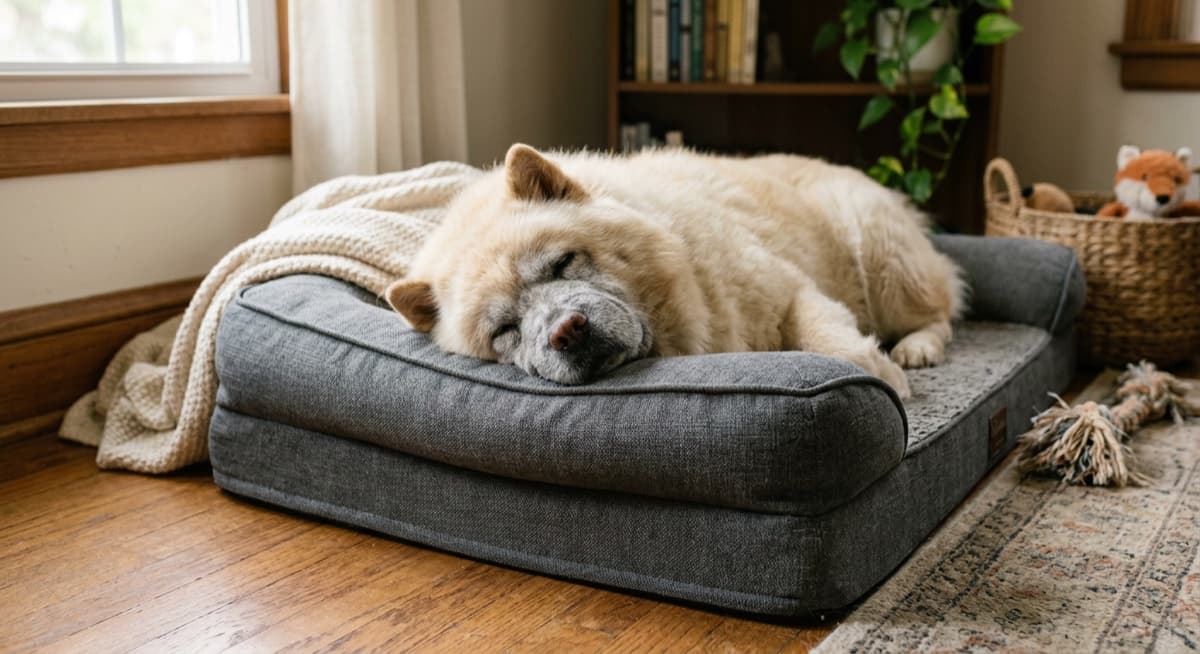
Chow Chow lifespan is typically cited at roughly 8 to 12 years, which is shorter than many similarly sized breeds. Senior planning usually begins around age six rather than eight, with joint support, eye rechecks, dental care, and cancer screening conversations all in play earlier than for longer-lived medium breeds.
Adopters considering a Chow Chow should set their companionship horizon honestly. A Chow adopted at age four is statistically a 4 to 8 year companion; a Chow adopted at age six is a 2 to 6 year companion. That is not a reason not to adopt — senior Chows often make wonderful, calmer companions — but it is a reason to plan for senior-stage costs sooner than many other breeds. Pet insurance enrolled while the Chow is symptom-free is the single biggest financial lever, because every Canadian provider excludes pre-existing conditions.
Reasonable senior protocol to discuss with your Calgary vet:
- Twice-yearly vet exams once the dog passes age six
- Full annual bloodwork including thyroid panel
- Annual ophthalmic recheck (entropion outcomes hold for life, but cataracts and glaucoma can develop in seniors)
- Routine dental cleanings under anesthesia as your vet recommends
- Joint support and mobility aids: orthopedic bed, traction rugs on hardwood, ramps for stairs and the car
- Body condition scoring at every visit (overweight seniors do worse on every front)
- Cancer screening conversations as a Chow enters the back half of life. Lumps, lameness that does not resolve, sudden weight loss, or new lethargy in a senior Chow are all worth a same-day vet conversation.
- Climate comfort: a warm bed for Calgary winter, cooling and shade access for summer (senior dogs thermoregulate less efficiently)
- End-of-life and quality-of-life conversations, started long before they feel needed. Calgary veterinarians are experienced with these discussions; bringing them up early is part of good ownership, not a sign of giving up.
Senior-onset cancers are part of the Chow lifespan picture. The breed is not at the same lifetime cancer rate as the Bernese Mountain Dog or the Boxer, but cancer becomes a real consideration in the second half of life. Specific cancer types, screening protocols, and treatment decisions are entirely a vet conversation. For the framing on adopting a breed where cancer is part of the lifespan reality, our Bernese Mountain Dog cancer and lifespan guide covers the emotional preparation that applies in any shorter-lived breed.
Considering a Chow Chow in Calgary?
The health profile above is the conversation every Chow adopter should have with their vet at the first visit, not the third. If you are still in the decision phase, walk through the temperament and family-fit picture as carefully as the health picture. Browse adoptable Chow Chows in Calgary and read the matching breed-fit guides before you bring the dog home.
See Calgary Chow Chows available now →Calgary veterinary access and what to plan before you need it
The single most useful thing a new Chow Chow owner can do in the first week is build a Calgary veterinary plan before the dog has a problem. That means identifying a regular vet you trust, knowing which 24-hour emergency clinic is closest to your home, and saving both numbers in your phone with names you will recognize at 2 a.m.
Calgary planning checklist:
- Regular vet: Choose a Calgary clinic with experience in medium double-coated breeds. Ask whether the practice has worked with Chows specifically; entropion, autoimmune skin disease, and dental crowding are not every clinic's daily caseload. Use the Canadian Veterinary Medical Association directory if you need a starting point.
- 24-hour emergency clinic: Calgary has several, distributed across the city. Identify the closest one to your home, save the address with the label DOG ER, and drive the route once in daylight so the path is in your head.
- Specialty referral options: Calgary's specialty centres (such as Western Veterinary Specialist and Emergency Centre and VCA Canada West Veterinary Specialists) handle ophthalmology, dermatology, orthopedic surgery, and oncology. You do not need to choose one in advance, but knowing they exist and that your regular vet can refer is useful.
- Pet insurance: Enrol while the Chow is young and symptom-free. Compare Canadian providers on deductible, reimbursement, per-condition limits, and whether bilateral conditions (both lids for entropion, both hips for dysplasia) are covered as one claim or two.
- Microchip and ID: Standard for any dog, especially relevant if a Chow ever bolts during a chinook windstorm or a fireworks event near Stampede.
- Calgary-specific seasonal preparation: Winter paw protection for ice melt, summer paw protection from hot pavement, and a coat-care kit (slicker brush, undercoat rake) for the spring and fall shedding seasons.
Frequently Asked Questions
What are the most common Chow Chow health problems?↓
What is entropion and why is it common in Chow Chows?↓
How long do Chow Chows live?↓
Are Chow Chows prone to hip dysplasia?↓
Do Chow Chows have autoimmune disorders?↓
Can Chow Chows handle Calgary summer heat?↓
Is pet insurance worth it for a Chow Chow?↓
What is the typical Chow Chow vet cost in Calgary?↓
Continue reading
Chow Chow adoption Calgary
The full Calgary Chow Chow adoption guide: rescues, costs, lifespan reality, why Chows end up in rescue, and where to apply.
Is a Chow Chow right for you?
Honest Calgary self-assessment: independence, aloofness with strangers, exercise needs, climate fit, and who the breed is genuinely for.
Chow Chow temperament and aggression
Honest Calgary read on Chow guardian temperament, stranger reactivity, dog-dog tolerance, and the force-free training requirement.
Browse Calgary Chow Chows
Currently available Chow Chows and Chow mixes across Calgary rescues, refreshed regularly.
New dog? Start with these care guides
Everything a new adopter needs to set up a safe, happy home.