The honest short answer: aloof is not aggressive
Most of what gets called “Chow Chow aggression” online is misread aloofness. The Chow is a reserved, dignified, cat-like breed that bonds to its small family and politely declines uninvited touch from strangers. That is the breed standard, not a defect.
What is NOT aggression
- Walking away from a stranger reaching to pet
- Declining hugs, lap sitting, or fussing
- Standing apart from a crowd of dogs at the park
- Watching new people quietly without approaching
- Choosing one or two humans over the household
What IS real aggression risk
- Poor early socialization (missed 6 to 16 week window)
- Resource guarding (food, toys, bed, owner)
- Fear-based reactivity in under-socialized adults
- Strangers or children forcing physical contact
- Undiagnosed pain (hips, eyes, teeth)
- Aversive or alpha-style training escalation
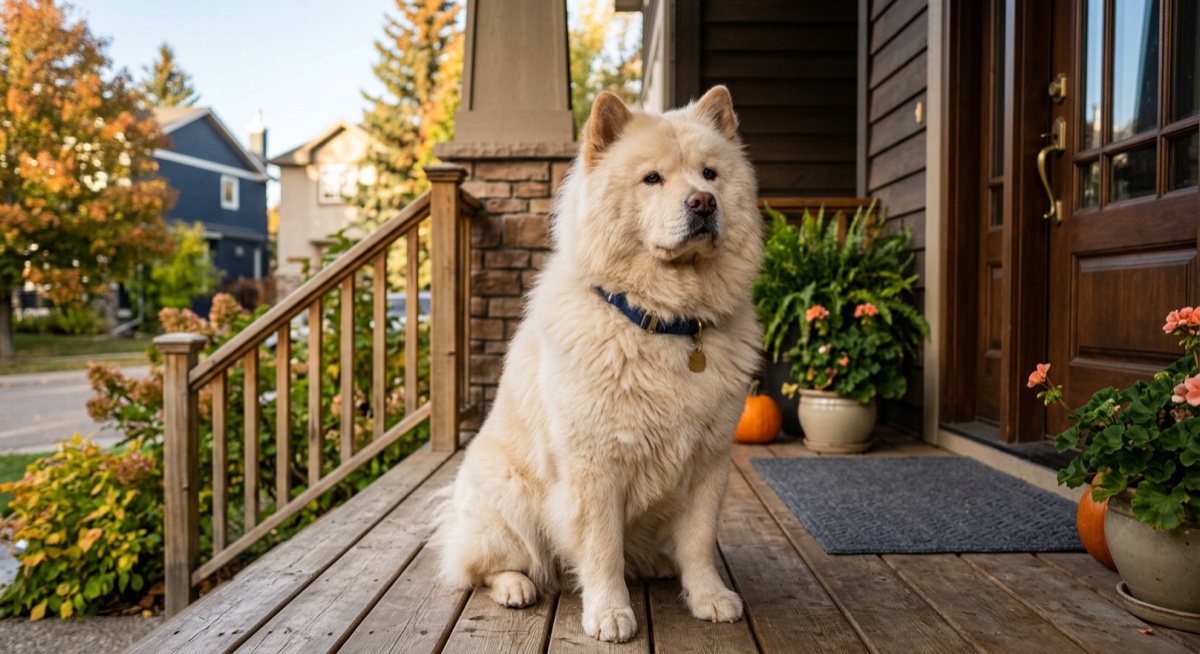
Temperament truth vs aggression myth
The Chow Chow Club Inc breed standard describes the Chow as “dignified, aloof, discerning.” The American Kennel Club (AKC) breed profile uses the same vocabulary. Reserved with strangers. Loyal to family. Independent. Cat-like.
This breed was developed in northern China over centuries for guardian, hunting, and working roles. The temperament that emerged is steady, watchful, and selective about who it lets in. A Chow does not greet strangers because Chow Chows were not bred to greet strangers. The neighbour visiting from Bridgeland for the first time is not a friend to a Chow yet, and the Chow will say so by quietly retreating to the other side of the room.
That same Chow, with the people they have chosen, is a different dog — affectionate in their own reserved way, deeply loyal, and usually content to share quiet time on the same couch in the same Inglewood living room every evening. Owners often describe the bond as “quiet but absolute.”
The aggression confusion happens when adopters mistake aloofness for danger. The Chow that turns away from a child reaching to hug them is not warning of a bite — the Chow is communicating, politely, that the interaction is not welcome. Pushing past that signal is what creates aggression incidents. A Chow that has been ignored when it says “no” quietly enough times will eventually say it more loudly. That is on the human, not the breed.
When aggression IS a real risk
The Chow is not aggression-proof. Several specific situations can produce a genuinely aggressive Chow, and Calgary adopters should understand them.
- A poorly socialized puppy. A Chow whose 6 to 16 week socialization window was missed often grows into an adult who reads novelty as threat. Backyard breeders, accidental litters raised in basements, and puppies kept in single-environment kennels are the typical sources. The behavioural cost shows up at 9 to 18 months and is hard to reverse.
- Resource guarding. Chows can guard food, high-value chews, toys, sleeping spots, and sometimes their primary person. This is genetic and common across guardian breeds. Catch it early; prevent rehearsal by managing the environment; do not punish guarding (punishment escalates it).
- Fear-based reactivity. Under-socialized adult Chows, or Chows who have had a frightening single-event experience, may default to defensive aggression in new situations. This presents as barking, lunging, or snapping toward strangers or unfamiliar dogs.
- Inappropriate handling by strangers or children. Hugs, face-kisses, hover-petting, restraint for grooming, vet handling without acclimation, and children climbing on the dog are the most common bite-incident contexts for Chows. The breed does not tolerate uninvited touch the way a Labrador might.
- Pain-driven aggression. Covered in its own section below — this is the most under-diagnosed cause in the breed.
- Aversive training escalation. Alpha rolls, leash corrections, prong collars, and e-collar work tend to manufacture defensive aggression in Chows faster than in most breeds. See the force-free section.
The throughline: most Chow aggression is environmental and preventable. The breed gives a handler something to work with if the handler reads the dog honestly and respects the temperament.
The critical 6 to 16 week socialization window
If you are bringing home a Chow puppy in Calgary, treat the 6 to 16 week window as the single most important investment you will make in this dog. The AVSAB position statement on puppy socialization is unambiguous: socialization starts before the vaccine series finishes, in carefully chosen low-risk settings.
What “socialization” actually means for a Chow puppy. Not a flood of strangers. Not a busy off-leash park. Not every dog in the neighbourhood greeting your puppy. The goal is structured, positive, choice-based exposure so the adult Chow is confident enough to be calmly aloof rather than fearful.
What to expose the puppy to between 8 and 14 weeks:
- People who look and sound different: tall, short, kids, seniors, hats, beards, sunglasses, hoods, mobility aids, deeper voices, higher voices
- Surfaces: gravel, grass, tile, metal grates, wood decking, snow once it lands
- Sounds: Chinook wind gusts, transit noise, kitchen appliances, vacuums, doorbells, fireworks recordings at low volume
- Calm, vaccinated adult dogs (vetted by the foster home or a force-free trainer) — not free-for-all dog park interactions
- Calm car rides — not just trips to the vet
- Brief, friendly vet visits with no procedures (counter visit, treat, leave)
- Handling: paw touches, mouth touches, ear touches, collar grabs, brushing — all paired with food
What to NOT do: let strangers hover-pet or hug the puppy, force interaction the puppy is declining, take the puppy to a busy off-leash park before the vaccine series is complete, allow uninvited dogs to charge or crowd the puppy, punish the puppy for moving away.
Calgary winter timing matters. If your puppy's 8 to 14 week window falls during a minus 25 stretch in January or February, outdoor exposure is limited. Creative indoor socialization: pet store off-hours visits, parking garage walks, friends' homes, a calm visit to a Calgary force-free puppy class. The window does not pause for Chinooks.
A Chow whose socialization window is missed cannot be fully rebuilt later. Behaviour work after 16 weeks is rehabilitation rather than foundation, and the prognosis is meaningfully worse.
Reading Chow Chow body language
Chows have notoriously subtle body language compared with breeds like Labradors or Border Collies. Heavy coat, small dark eyes, stoic face, curled tail held high — the early signals that are obvious on other dogs are easy to miss on a Chow.
EARLY warnings (add distance)
- Slow blink while staring
- Head turn or full body turn away
- Freezing in place
- Closed mouth (Chows are relaxed with mouth open)
- Stiff “at-attention” posture
- Ears pinned slightly back
- Lip licks outside of meal context
- Yawning that is not sleepy
LATE warnings (act now)
- Low growl
- Hard direct stare
- Lifted lip
- Stiffening with weight shifted forward
- Snapping the air
- Whale eye (whites visible)
The job of the human is to add distance or end the interaction at the EARLY-warning stage so the dog never needs to escalate to growling or snapping. Every late-warning event in a Chow's life is a near miss that should have been prevented at an earlier signal.
Never punish a growl. Growling is information. A Chow that has been punished for growling does not stop being uncomfortable; it stops giving the warning. The next bite arrives without the audible signal a handler could read. This is one of the most common ways a manageable Chow becomes labelled an “aggressive” Chow.
Calgary force-free trainers offer body language workshops that pair video clips with live observation. For any guardian or primitive breed adopter, the investment pays back the first time you read a signal in real time and add the distance the dog asked for.
Force-free training only — not optional for Chows
Aversive methods on a Chow Chow are the single fastest way to manufacture a defensively aggressive dog. This is not a soft opinion. It is the formal position of AVSAB, AVMA, and IAABC across the entire field of canine behaviour, and it applies with extra weight to guardian breeds.
What “aversive” means in this context: alpha rolls, dominance theory, leash pops, prong collars, e-collars, choke chains, pin-downs, hitting, yelling-as-correction, finger-jab corrections. Any method whose mechanism is “the dog learns to avoid the punishment.”
Why this is uniquely bad for Chows. Most dogs respond to pressure with some combination of avoidance, appeasement, and shut-down. Chows respond to pressure with escalating defensiveness, and because their body language is subtle, the warning signals get missed, and the eventual bite arrives without the visible build-up a handler could read on a Labrador. Trainers who do not know the breed apply the same correction logic they would on any other dog, the Chow shuts the warnings down further (because growling got punished), and the next incident is a real bite with no growl.
What force-free training looks like. Reward-based marker training. Setting the environment up so the dog can succeed. Building behaviours by reinforcement rather than punishing alternatives. Operant counter-conditioning for reactivity rather than collar corrections. The AVSAB position statement on humane dog training is the canonical reference.
Vetting a Calgary trainer for a Chow. Ask three questions before booking: (1) Do you ever use prong, choke, or e-collars? (correct answer: no.) (2) Have you worked with primitive or guardian breeds — Chows, Akitas, Shibas, Caucasian Shepherds? (correct answer: yes, with examples.) (3) What is your approach when a dog growls at you in a session? (correct answer: I add distance and reassess; I do not correct the growl.) If the trainer fails any of these, leave. There are enough force-free options in Calgary that there is no reason to compromise on a Chow.
Pain-driven aggression: the most under-diagnosed cause
Chow Chows are stoic. They do not limp, whine, or slow down the way a Labrador does when something hurts. They keep going, and they keep their dignity, and then they snap at the toddler who reached for them and everyone calls it “aggression.” The right question almost always is: was that dog in pain?
Why pain is under-diagnosed in Chows. The stoic temperament suppresses the visible cues most owners and even some vets rely on. Combined with the heavy coat that hides muscle wasting and posture changes, a Chow can be in significant chronic pain for months before anyone notices. The behaviour change — new reactivity, new resource guarding, new intolerance of handling — is often the first symptom.
The breed's common pain sources. Three orthopedic and ocular issues are over-represented in Chows and all of them are pain-relevant:
- Entropion — the breed's heavy facial folds can roll eyelashes inward against the cornea. Chronic pain. Often missed because the dog does not paw at the eye dramatically.
- Hip dysplasia — common in the breed. A stoic Chow with hip pain may not visibly limp; they will just become “grumpier” about being touched or moved.
- Elbow dysplasia and patella issues — same pattern. Pain that does not present as obvious lameness in this breed.
- Dental disease — jaw and mouth pain can drive food guarding and bite-the-toddler-near-the-food-bowl incidents.
- Skin infections under heavy coat — hot spots and fold dermatitis hide under fur and the dog stops tolerating brushing or touching.
The rule for Calgary Chow owners: any sudden behaviour change in an adult Chow is medical until proven otherwise. Get a thorough vet workup before working with a trainer or behaviourist on the “aggression.” This is not optional. Treating a behaviour problem in a dog who is actually in pain is both ineffective and unkind, and the AVMA position on behaviour cases explicitly recommends ruling out medical contributors first.
For older Chows showing any of the above signs, a Calgary specialty vet with orthopedic or ophthalmology capability is worth the referral. Pain control alone often resolves the “aggression” without behaviour work.
When to involve a veterinary behaviourist
A force-free trainer is the right starting point for most Chow behaviour work. A board-certified veterinary behaviourist (DACVB) or an IAABC clinical animal behaviour consultant is the right escalation when the situation crosses certain lines.
Specific escalation criteria. Call a veterinary behaviourist if any of these apply:
- The dog has bitten with skin contact, punctures, or multiple bites in one incident (not just an air-snap)
- Aggression has appeared or worsened suddenly in an adult dog (after a thorough medical workup has ruled out, or identified, pain)
- Aggression is generalized rather than tied to a single predictable trigger
- The dog is showing aggression toward primary household members — not just strangers
- Rapidly escalating fear, panic, or resource guarding that is not responding to early force-free intervention
- Children are in the household and the situation feels unsafe for them
- Two or more force-free trainers have flagged the case as out of their scope
What a veterinary behaviourist actually does. A DACVB is a licensed veterinarian with post-graduate specialty training in behaviour medicine. They can rule out and treat medical contributors, they can co-manage cases with your force-free trainer, and where appropriate they can prescribe behaviour-supporting medications as part of an integrated plan. We do not recommend any specific medication in this article — medication decisions belong with the prescribing clinician who has examined the dog.
How to get a referral in Calgary. Start with your regular vet, who can refer to a DACVB (in Alberta the nearest specialists are typically based in larger centres and some offer remote-consultation models for Calgary cases). An IAABC certified consultant can also be approached directly without a vet referral, though for a true aggression case the integrated medical-and-behaviour model is preferable.
Do not wait for a serious incident. The earlier the escalation, the better the prognosis. A Chow that air-snapped once at a visiting child is the right time to escalate, not the time to dismiss.
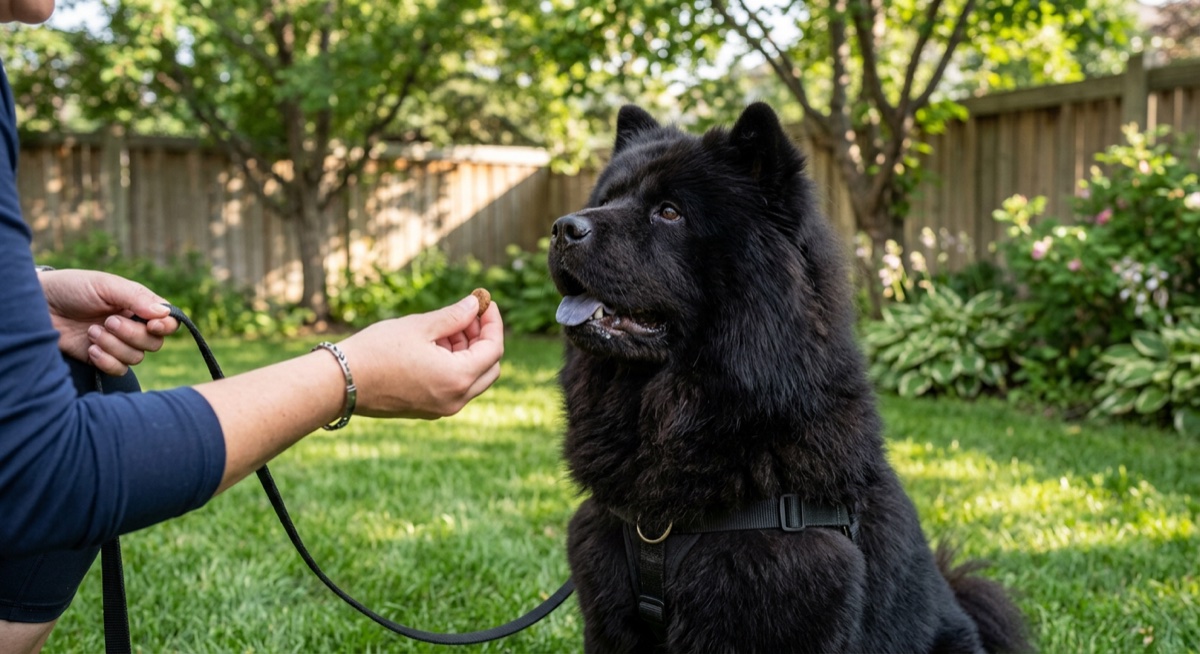
Considering a Chow Chow from a Calgary rescue?
Adopting a Chow through a Calgary rescue gives you a temperament-tested adult, foster-home context on socialization history, and ongoing rescue support — the strongest possible foundation for the breed.
What Calgary rescues screen for
Calgary rescues that handle Chow Chows — Calgary Humane Society, AARCS, and breed-aware foster networks — screen adopters carefully because the wrong placement creates the “aggressive Chow” incidents that hurt the breed's reputation. The screening is not gatekeeping; it is matchmaking.
What rescues are typically looking at:
- Household composition. Many Chows are not appropriate for homes with toddlers or very young children. The breed's low tolerance for uninvited touch and limited body-language readability create a higher bite risk in toddler households. Most Calgary rescues will not place an unknown-history Chow into a home with a child under roughly six unless the specific dog has been temperament-tested with kids.
- History of bite incidents. Adult Chows in rescue often arrive with some history. The foster home documents it. Adopters should expect honest disclosure and should expect higher-bite-history dogs to be placed in adult-only, no-revolving-door households.
- First-time owner status. Many rescues will not place a Chow with a first-time dog owner, particularly an unknown-history adult Chow. The breed is not a starter dog. Owners with prior guardian-breed, primitive-breed, or behaviourally-complex-dog experience are favoured.
- Housing and insurance. Calgary tenants need landlord written approval; Calgary homeowners need to confirm their insurer writes the breed. See the insurance section below.
- Training commitment. Expect a rescue to ask about training plans — specifically force-free training. A stated intention to use a balanced or aversive trainer is typically a disqualifier.
- Lifestyle fit. A Chow does not want to be in a constantly busy, social, dog-park-every-day, kids-in-and-out-of-the-house lifestyle. Rescues are matching the breed to the right life.
If a Calgary rescue declines a Chow placement to your household, the answer is usually not “try harder.” The answer is usually “they are right.” Different breed, different dog, different timing.
Insurance restrictions: the Calgary context
The Chow Chow sits on the restricted or excluded breed list of most major Canadian home insurance carriers. This is a Canadian liability and underwriting reality, not a Calgary bylaw reality. Understand it before you adopt, not after.
Calgary's legal context. The City of Calgary does not have breed-specific legislation. The Responsible Pet Ownership Bylaw is breed-neutral — any dog of any breed is licensed, expected to behave, and held to the same off-leash and bite-incident standards. Calgary is widely considered one of the better Canadian cities for guardian-breed and bully-breed owners specifically because of this neutrality.
But insurance is a different system. Your home or tenant insurer is a private business making underwriting decisions, and many of them carve out or refuse coverage for Chows, Akitas, Pit-types, Rottweilers, German Shepherds, Dobermans, and other guardian and large-breed dogs. The decision is liability-driven, not regulatory.
What this means in practice:
- Your current insurer may refuse to write the policy at all once they know you have a Chow
- Some insurers will write the policy but exclude dog-bite liability — meaning you have no coverage if your dog bites someone
- Some insurers will write the policy at a higher premium
- Tenants face the same set of decisions plus a landlord who may also refuse
The Calgary playbook before you adopt:
- Get the breed-restriction question answered in writing from your current insurer or broker before adoption
- If your current carrier refuses, ask a broker who specializes in pet-inclusive home policies
- Confirm whether liability is included or excluded — do not assume
- If you rent, get landlord written approval before the adoption, not after
- If you live in a condo, check the condo bylaws — some Calgary buildings restrict guardian breeds
The restriction is real but manageable. Adopters in Calgary routinely find coverage for Chows. Do the paperwork first. A Chow returned to rescue three months after adoption because the insurance fell through is a preventable failure.
Putting it all together: the steady Calgary Chow
A Chow Chow living well in Calgary is a quiet presence. They sit at the window and watch Bridgeland or Bowness go by. They walk dignifiedly along the Bow River pathway without straining at the leash. They decline the stranger who reaches to pet them at the off-leash perimeter of Tom Campbell's Hill, and the owner respects the decline and keeps walking. They tolerate the polite child who waits to be invited and pulls back when the dog turns away. They share the couch with their chosen one or two humans in the evening.
That dog is the breed standard. That dog is also the product of a household that did the work: structured early socialization, force-free training, body language reading, regular vet workups including for pain, and an insurance and housing setup that lets the dog stay.
The aggressive Chow stereotype is almost always traceable to a failure somewhere in that list — a missed socialization window, an aversive trainer, an undiagnosed orthopedic issue, a household that did not respect the dog's no. The breed gives a thoughtful adopter a tremendous amount to work with. The breed does not give a careless one any room.
If you are weighing a Chow Chow adoption in Calgary, the honest path is to plan for the work this guide describes — not to hope you will be the exception. The dogs who end up at Calgary Humane or AARCS for behaviour reasons are very often dogs whose adopters hoped to be the exception.
Sources and further reading
- American Kennel Club — Chow Chow breed profile
- Chow Chow Club Inc — breed standard and owner resources
- American Veterinary Society of Animal Behavior (AVSAB) — position statements on puppy socialization and humane training
- American Veterinary Medical Association (AVMA) — canine aggression and behaviour position policies
- International Association of Animal Behaviour Consultants (IAABC) — clinical animal behaviour consultant directory
This article is informational. It is not behavioural or veterinary advice for an individual dog. For specific aggression, fear, or pain concerns, work with your Calgary veterinarian, a force-free trainer experienced with guardian breeds, and where appropriate a board-certified veterinary behaviourist.
Frequently Asked Questions
Are Chow Chows aggressive?
Not inherently. Most so-called Chow aggression online is misread aloofness — the breed is reserved with strangers and politely declines uninvited touch. Real aggression risk exists, but usually traces back to missed early socialization, resource guarding, fear-based reactivity, inappropriate handling, undiagnosed pain, or aversive training, not the breed itself.
Why are Chow Chows so aloof?
It is the breed standard. The AKC and the Chow Chow Club Inc both describe Chows as dignified, aloof, and discerning. Developed in northern China as guardians and working dogs, they bond deeply with one or two people and remain polite but reserved with everyone else. Often called cat-like. Aloofness is not a defect to train out — it is the dog.
How do I socialize a Chow Chow puppy?
Structured exposure during the 6 to 16 week window, following AVSAB guidance. Diverse people, surfaces, sounds, calm vaccinated dogs — always paired with food and the puppy's choice to retreat. No flooding, no forced strangers, no busy off-leash parks before vaccines are complete. The goal is calm confidence, not friendliness.
Can I use alpha or dominance training on a Chow Chow?
No. Aversive methods on a Chow are the fastest way to manufacture defensive aggression. AVSAB, AVMA, and IAABC all formally recommend force-free, reward-based training. Use a Calgary force-free trainer experienced with primitive or guardian breeds. If a trainer mentions prong collars, alpha rolls, or leash corrections, leave.
What is the critical socialization window for a Chow Chow?
Roughly 6 to 16 weeks, with the heaviest weight on 8 to 14 weeks. AVSAB position statement consensus across breeds. For Chows, missing this window has higher consequences because the adult dog defaults to defensive aloofness rather than calm aloofness. Calgary winter timing matters — if the window falls in a deep cold snap, plan indoor socialization.
How do I read Chow Chow body language?
Watch the early signals: slow blink while staring, head turn, freeze, closed mouth, stiff posture, ears pinned back, lip licks outside meals, non-sleepy yawns. Late signals (act now): low growl, hard stare, lifted lip, stiffening with weight forward, snapping the air. Add distance at the early signals. Never punish a growl — it removes the warning, it does not fix the discomfort.
When should I call a veterinary behaviourist for my Chow Chow?
Escalate if the dog has bitten with skin contact, if aggression has appeared or worsened suddenly in an adult (medical workup first), if it is generalized rather than tied to a specific trigger, if it is directed at primary household members, if it is rapidly escalating and not responding to early intervention, or if children in the home are unsafe. A DACVB or qualified IAABC clinician is the right escalation. Ask your vet for a referral.
Why is my Chow Chow restricted by insurance?
Most major Canadian home insurance carriers restrict or exclude Chow Chows alongside several other guardian breeds. This is private underwriting, not a Calgary bylaw — the City of Calgary has no breed-specific legislation. Shop carriers before adopting, get answers in writing, confirm liability is included not just excluded, and use a broker if your current carrier refuses. Coverage is available; do the paperwork first.
Chow Chow Adoption Calgary
Where to find Chow Chows in Calgary, rescue vs breeder costs, the breed-aware foster network, what adoption screening looks like.
Is a Chow Chow Right for You?
Honest self-assessment for Calgary households: experience, kids, housing, lifestyle, time and budget commitment for a guardian-breed adoption.
Chow Chow Health Issues
Entropion, hip and elbow dysplasia, patella issues, skin and coat problems, dental disease — the pain sources that drive behaviour change in stoic Chows.
Chow Chows for Adoption in Calgary
Current Chow Chow and Chow-mix listings from Calgary Humane, AARCS, and the partner rescue network. Updated regularly.
New dog? Start with these care guides
Everything a new adopter needs to set up a safe, happy home.