The short answer
Chow Chows are uncommon in Calgary rescues but they do appear. Apply to Calgary Humane Society, AARCS, BARCS Rescue, Pawsitive Match, ARF Alberta, Cochrane Humane Society, and Heaven Can Wait. Adoption fees for an adult dog are typically $400 to $700; breeder puppies are commonly $1,500 to $3,500. Before you adopt, check with your home insurance broker: many Canadian insurers restrict or deny coverage for the breed. Chows handle Calgary winters well but struggle in summer heat above 22°C. Lifespan averages 8 to 12 years.
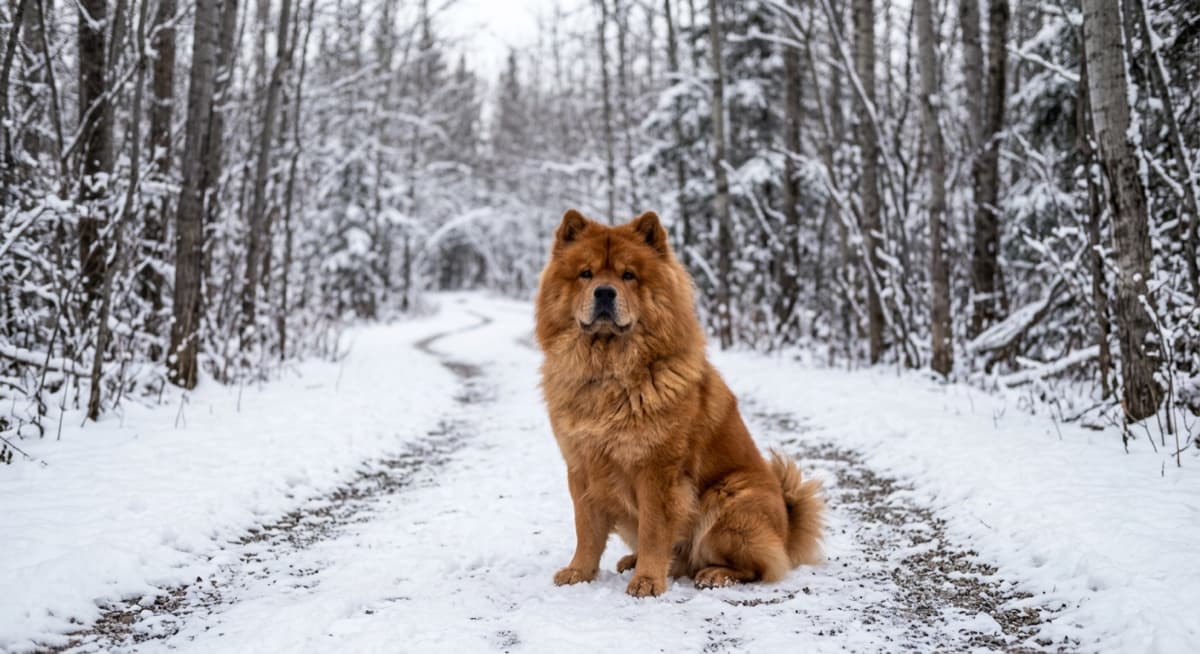
The Chow Chow is one of the world's oldest dog breeds, with roots in northern China going back at least 2,000 years. The lion-like ruff, the blue-black tongue, and the famously aloof personality make Chows instantly recognizable. They are also one of the most misunderstood breeds in Calgary rescue. This guide covers what most breed pages skip: the realistic places to find a Chow in Calgary, what they cost, why Canadian home insurance complicates the adoption decision, how the dense double coat handles Alberta weather, and whether a rescue or a reputable breeder is the right path for your household.
The Chow Chow at a glance
Chows are a compact, powerful, square-built breed with a distinctive stilted gait that comes from straight rear legs. They are not designed for endurance running but they are surprisingly athletic on short, steady walks. According to the American Kennel Club and the Canadian Kennel Club, breed standards are consistent across both registries.
| Trait | Typical range |
|---|---|
| Adult weight | 45 to 70 lbs (20 to 32 kg) |
| Adult height (shoulder) | 17 to 20 inches (43 to 51 cm) |
| Lifespan | 8 to 12 years |
| Coat varieties | Rough (long, mane) and smooth (short) |
| Colours | Red, black, blue, cinnamon, cream |
| Energy level | Low to moderate; steady, not sporty |
| Exercise needs | 30 to 45 min daily; cool-weather walks preferred |
Chows are not a giant breed, but they have presence. A 60-pound Chow with a full mane looks larger than a 60-pound Labrador. Calgary apartment buildings sometimes treat them as a large breed for that reason, so verify your building's rules before adopting.
The blue-black tongue
The blue-black tongue is the breed's most famous physical trait. Chows are born with pink tongues; the pigment darkens between 8 and 10 weeks. By adulthood, the tongue should be blue, slate, or purplish-black. The trait is shared with only one other dog breed (the Chinese Shar-Pei) and a handful of unrelated species. The Chow Chow Club Inc. uses tongue pigmentation as part of the breed standard.
For Calgary adopters, the trait is also a useful cross-check. A Chow mix listed on a Calgary rescue site without any tongue pigment is more likely Chow-adjacent than half-Chow. Ask the rescue for a clear photo of the inside of the mouth if breed accuracy matters for housing or insurance reasons.
Temperament: aloof, independent, loyal
Chows are often described as “cat-like.” They are loyal to their families but reserved with strangers, slow to bond, and not interested in pleasing people they don't know. They do not greet visitors at the door; they assess from across the room. They tolerate gentle children in their own household but are usually not the social butterfly some adopters expect from a fluffy breed.
A well-socialized Chow is calm, dignified, and devoted to one or two people. An under-socialized Chow can be wary or reactive with strangers, dogs, or handling. The gap between those two outcomes is set largely in puppyhood, which is why many Calgary rescues prioritize placing Chows with experienced households.
Bite and aggression risk is real if a Chow is mismatched with the wrong owner, the wrong household setup, or the wrong handler. We cover the temperament + aggression conversation in detail in our dedicated guide: Chow Chow temperament and aggression in Calgary. Read it before applying.
Where to adopt a Chow Chow in Calgary
Chow Chows are rare in Calgary rescues, but they do come through. The strategy is the same as any in-demand breed: apply broadly, set up alerts, and be ready to move quickly when a listing appears.
Calgary-area rescues to monitor:
- Calgary Humane Society: the largest local shelter, occasional Chow or Chow-mix intakes.
- AARCS: foster-based; structured “good with” evaluations are especially useful for an aloof breed.
- BARCS Rescue: Calgary foster network; medium dogs frequently.
- Pawsitive Match: Calgary foster-based; primitive breeds appear from time to time.
- ARF Alberta: Calgary foster network; broad mix of medium dogs.
- Cochrane Humane Society: Cochrane-based, serves the Calgary region.
- Heaven Can Wait: Calgary rescue; mixed breed inventory.
- Calgary Animal Services: municipal facility, occasional stray Chows.
Set up notifications on the LocalPetFinder Chow Chow breed page. Live listings from all 15+ Calgary rescues land there as they appear, so you will catch a new arrival before most adopters.
What does a Chow Chow cost in Calgary?
Calgary fees vary by rescue and what is included. The realistic ranges are directional, not quotes:
| Source | Fee range | Typically includes |
|---|---|---|
| Calgary Humane Society | $405 adult (1 to 6 years), $270 senior | Spay or neuter, vaccinations, microchip, vet exam |
| AARCS | $425 adult, $150 senior | Spay or neuter, vaccinations, microchip, foster history |
| BARCS / Pawsitive Match | BARCS $650 / Pawsitive Match $475 (adult) | Spay or neuter, vaccinations, microchip |
| Breed-specific specialty rescue | $400 to $700 | Transport, foster-based temperament evaluation |
| CKC-registered breeder puppy | $1,500 to $3,500 | Health screening, contract, breeder support |
Beyond the adoption fee, budget roughly $1,500 to $3,000 in first-year costs across vet visits, training, food, grooming tools, and pet insurance. Calgary requires a city dog licence for every dog three months and older under the Responsible Pet Ownership Bylaw (calgary.ca/bylaws-standards), which is a small annual fee.
For a full breakdown of lifetime ownership costs in Calgary, see our Calgary adoption costs guide.
Rescue versus breeder: how to decide
For most Calgary households, rescue is the right starting point. The math is straightforward: a $400 to $700 adult adoption fee versus a $1,500 to $3,500 breeder puppy, with the rescue dog already spayed or neutered, vaccinated, microchipped, and (when foster-based) temperament-evaluated by someone who lived with the dog for weeks.
The case for rescue is strongest when:
- You want a known adult temperament rather than rolling the dice on a puppy.
- You can accept “Chow-mix” rather than “pure Chow Chow.” Most Calgary rescue Chows are mixes.
- You want to keep one more dog out of the surrender cycle that hits this breed hard.
- Insurance is a question mark and you need to confirm coverage before committing. Rescues are usually flexible on timing while you confirm.
The case for a reputable breeder is real but narrow. It applies when:
- You need a puppy raised with documented early socialization in a household with children, other dogs, or specific exposure goals.
- You need verifiable health screening on both parents (hip and elbow OFA scores, eye certifications, thyroid panels).
- You are prepared to wait 6 to 18 months and pay $1,500 to $3,500.
How to vet a Chow breeder in Canada (paraphrased from the Canadian Kennel Club guidance):
- Verify Canadian Kennel Club registration on the breeder's end, not just the puppy's.
- Ask for parent health clearances in writing: OFA hips and elbows, CERF or OFA eye clearances, thyroid.
- Visit the home or request a live video tour of where the puppies are raised.
- Expect the breeder to interview you. Breeders who don't ask questions are a red flag.
- Confirm a take-back contract. Reputable breeders take their dogs back at any age, for any reason.
- Skip anyone offering “mini Chows,” “teacup Chows,” or “rare blue” Chows at a premium. Blue is in the standard; mini is not a recognized variation.
Avoid Kijiji, Facebook Marketplace, and pet-store Chow puppies. Most are backyard-bred or commercial-bred with no health testing and minimal socialization. These are exactly the dogs who end up in Calgary rescue four years later.
The Canadian home insurance question
This is the part most Chow articles skip and most Calgary adopters discover too late. Many Canadian home insurance providers maintain a restricted or denied breed list, and the Chow Chow appears on those lists across multiple insurers. Some carriers will refuse to bind a new policy if a Chow lives in the home. Others will quote with reduced liability or require an exclusion endorsement.
Practical steps before you adopt:
- Call your home or tenant insurance broker first. Ask for the current restricted breed list in writing.
- Ask whether your existing policy excludes liability for Chow-related incidents. Some policies have blanket exclusions even when the breed is “allowed.”
- Request a quote at your full liability limit ($1M to $2M). If the answer changes when the breed is disclosed, you need that in writing.
- Get the rescue's policy on insurance confirmation. Most Calgary rescues will hold a dog for a few business days while you sort out coverage.
- If you are a renter, ask your landlord directly. Restricted breed lists from insurers often flow through into rental agreements.
Insurance restrictions are a significant reason Chows end up surrendered. Owners adopt without checking, lose coverage at renewal, and feel forced to rehome. Verifying coverage in writing before adoption protects the dog from being part of that cycle. Veterinary safety guidance from the American Veterinary Medical Association emphasizes that breed-based insurance restrictions reflect actuarial data on bite claims, not necessarily individual dog behaviour. The barrier is real either way, so confirm coverage before you commit.
Calgary climate: cold-built, heat-sensitive
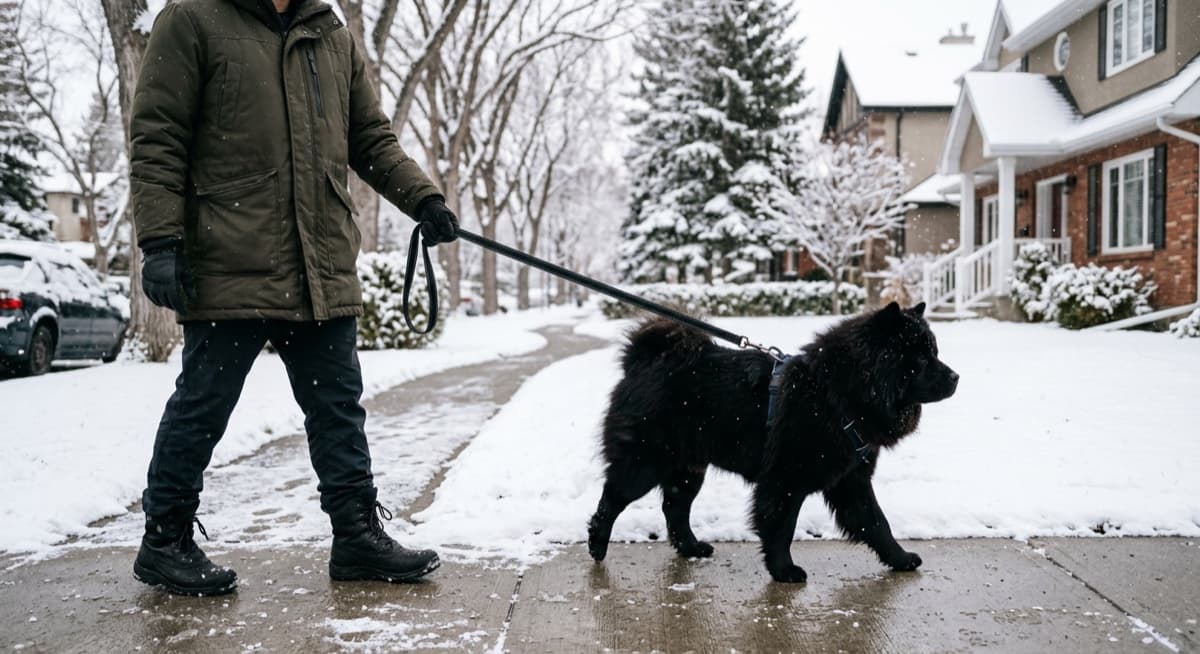
The Chow Chow was developed in the cold uplands of northern China. The thick double coat is built for winter and handles Calgary's climate genuinely well. A Chow in good condition is comfortable on routine winter walks below -20°C, and a rough-coated Chow will often choose to lie down in fresh snow rather than come inside.
Summer is a different story. Above roughly 22°C, a Chow in full coat starts to overheat fast. The double coat traps insulation in both directions, which is why owners who shave a Chow “to keep it cool” almost always make the situation worse. The undercoat becomes the insulator and the guard coat is what reflects heat. Practical Calgary summer routine:
- Walk early morning or late evening. Skip midday walks during the July and August heat dome stretches.
- Check pavement temperature with the five-second rule before walking on it.
- Brush the undercoat out thoroughly during spring shed so the coat insulates correctly.
- Provide shade and water on patios. Chows will not always self-regulate.
- Watch for early heatstroke signs: heavy panting, brick-red gums, stumbling, lethargy. Bow River wading is fine for cooling, but supervise; Chows are not natural swimmers.
On the upside, Chows enjoy Calgary winters more than most breeds. Off-leash time at Nose Hill Park, Bowmont Park, Edworthy Park, and Tom Campbell's Hill works well during the colder months, when other breeds are wearing booties.
Why Chows end up in Calgary rescue
Understanding why Chows are surrendered helps you set up a household where this doesn't happen to your dog. The patterns reported by Calgary rescues and the Chow Chow Club Inc. are consistent year over year:
- Aloofness mismatched with adopter expectations. Owners who wanted a fluffy social dog discover an aloof one and rehome within the first year.
- Bite or aggression incident. Often the dog was undersocialized or set up for failure. Many of these dogs do well in the right next home.
- Home insurance refused or cancelled at renewal. The owner is forced to choose between coverage and the dog.
- Owner medical issues or move. Calgary's rental market and family life changes are common drivers across all breeds.
- Allergies in the family. The dense double coat sheds heavily and triggers reactions in sensitive household members.
- Underestimated grooming. Rough-coated Chows need 20 to 30 minutes of brushing weekly outside of seasonal shed, and 30 to 45 minutes daily during spring blow.
- Behaviour issues from skipped socialization. The 6 to 16 week window is critical for this breed; if it was missed, the adult behaviour can be difficult to reshape.
None of these are problems with the breed. They are problems with the match. Calgary rescues with foster-based programs (AARCS, Pawsitive Match, ARF Alberta, BARCS) are the best resource for finding a Chow whose temperament is already known, which avoids most of the patterns above.
Adult versus puppy: which is the right Chow for you?
For most Calgary adopters, an adult Chow with a known temperament from a foster home is the safer and better-fit choice. Puppy adoption is a strong option only when you can commit to extensive structured socialization and you already have experience with independent or primitive breeds.
Why the socialization window matters for this breed:
- 6 to 16 weeks is the critical socialization window. What a Chow puppy meets, hears, smells, walks on, and learns to enjoy during this window shapes the adult dog for life.
- Chows are slow to bond with new people by default. Without deliberate, force-free socialization, that default can harden into wariness or reactivity that follows the dog into adulthood.
- Calgary winters complicate puppy socialization. A January puppy needs creative indoor exposure plans: friends' homes, pet-friendly stores, controlled meet-ups with vaccinated adult dogs. Puppy classes with a force-free trainer matter more here than for most breeds.
- Surgery and recovery timing. A puppy who needs entropion surgery or whose hips show early dysplasia signs adds substantial early-life cost. Adults from foster have those things already documented.
If you adopt a Chow puppy, plan immediate puppy socialization with a Calgary force-free trainer experienced with primitive breeds. If you adopt an adult, follow the standard 3-3-3 decompression timeline (three days, three weeks, three months) and read our first week with a rescue dog guide before pickup.
Browse Chow Chows in Calgary
See current Chow Chows and Chow mixes across 15+ Calgary rescues in one place. Live listings refresh regularly, so set up notifications and apply quickly when one appears.
See Calgary Chow Chows available now →Frequently Asked Questions
Where can I adopt a Chow Chow in Calgary?↓
How much does a Chow Chow cost to adopt?↓
Are Chow Chows restricted by Calgary home insurance?↓
Why do Chow Chows end up in rescue?↓
Are Chow Chows good first-time dogs?↓
How long do Chow Chows live?↓
What is the difference between a smooth and rough Chow Chow?↓
Should I adopt a puppy or adult Chow Chow?↓
Continue reading
Is a Chow Chow right for you?
Household honesty test, lifestyle fit, and the questions every Calgary adopter should answer before applying.
Chow Chow health issues
Hip and elbow dysplasia, entropion, cancers, and the screening priorities every Calgary Chow owner should know.
Temperament and aggression
The aloofness, bite-risk, and socialization conversation Calgary Chow adopters need before pickup day.
Browse Calgary Chow Chows
Currently available Chows and Chow mixes across all 15+ Calgary rescues, refreshed regularly.
New dog? Start with these care guides
Everything a new adopter needs to set up a safe, happy home.