The short answer
Feed a Collie a complete diet, keep it lean, and judge weight by feel under the coat. Collies are naturally lean dogs, so feeling the ribs is normal, not a sign to feed more, and the coat hides the body, so score by hand. Feed two meals from the floor, never raised, and grow a larger puppy slowly on controlled calcium. The breed's defining trait, the MDR1 mutation, is a drug-sensitivity issue, not a diet one, so DNA-test for it and tell every vet, but do not let it drive food choices. Of the breed's health conditions, only hip dysplasia is meaningfully diet-influenced, through weight.
MDR1: a drug issue, not a diet one
MDR1 is about medications, not food. DNA-test your Collie and tell every vet its status before any drug or anaesthesia. Do not skip heartworm prevention; the parasite preventives are safe at normal doses.
No Collie feeding guide is complete without addressing MDR1, because owners constantly, and understandably, tangle it up with diet. So let us be clear: it is a drug issue. Washington State University, the lab that discovered the mutation, reports that approximately three of every four Collies in the United States carry the mutant MDR1 gene, the highest rate of any breed. The gene normally makes a pump that clears drugs out of the brain; when it fails, certain medications build up and cause serious neurologic toxicity.
That matters enormously for veterinary care and anaesthesia, and not at all for the food bowl. As VCA explains, the affected drugs include loperamide (the anti-diarrheal Imodium, which should be avoided) and high doses of ivermectin, among others. The one place MDR1 brushes against anything you buy for your dog is parasite prevention: some heartworm and deworming products contain ivermectin-class drugs, but WSU confirms they are safe at the normal prevention doses, so an MDR1 Collie should still be on heartworm prevention. Two things to do: get your Collie DNA-tested through WSU or a consumer panel, and make sure every vet knows its status. And ignore the old “white feet, don't treat” rhyme; it is unreliable folklore that DNA testing has replaced.
A lean dog hidden under a big coat
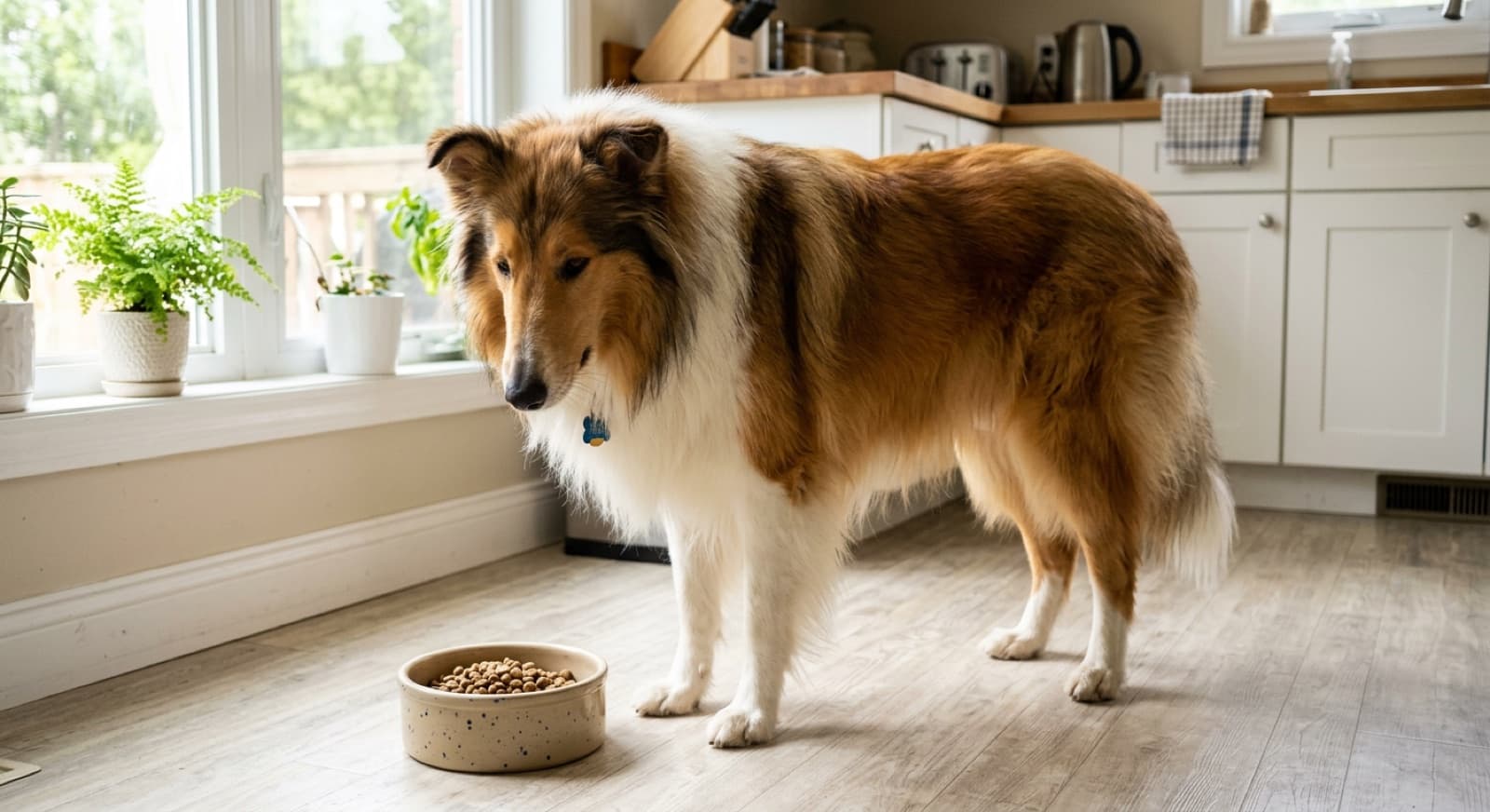
The most common genuine feeding anxiety with a Collie is “is my dog too thin?”, and the answer is almost always no. Collies are naturally lean, lanky herding dogs, and feeling the ribs under a thin layer of fat is exactly right. The complication is the double coat, which hides the body completely, so you cannot judge condition by sight.
Score by feel instead. Against the WSAVA body condition scale, aim for a 4 to 5 out of 9: ribs easily felt like the back of your hand, a visible waist from above, and a tuck at the belly. A fluffy Collie can look full while carrying extra weight underneath, or look momentarily bony when it shakes while being perfectly lean. Run your hands over the dog every few weeks. Keeping a Collie lean is the single most valuable diet-controlled thing you can do for its joints, since, as you will see, weight is the main lever on hip dysplasia.
Growing a Collie puppy
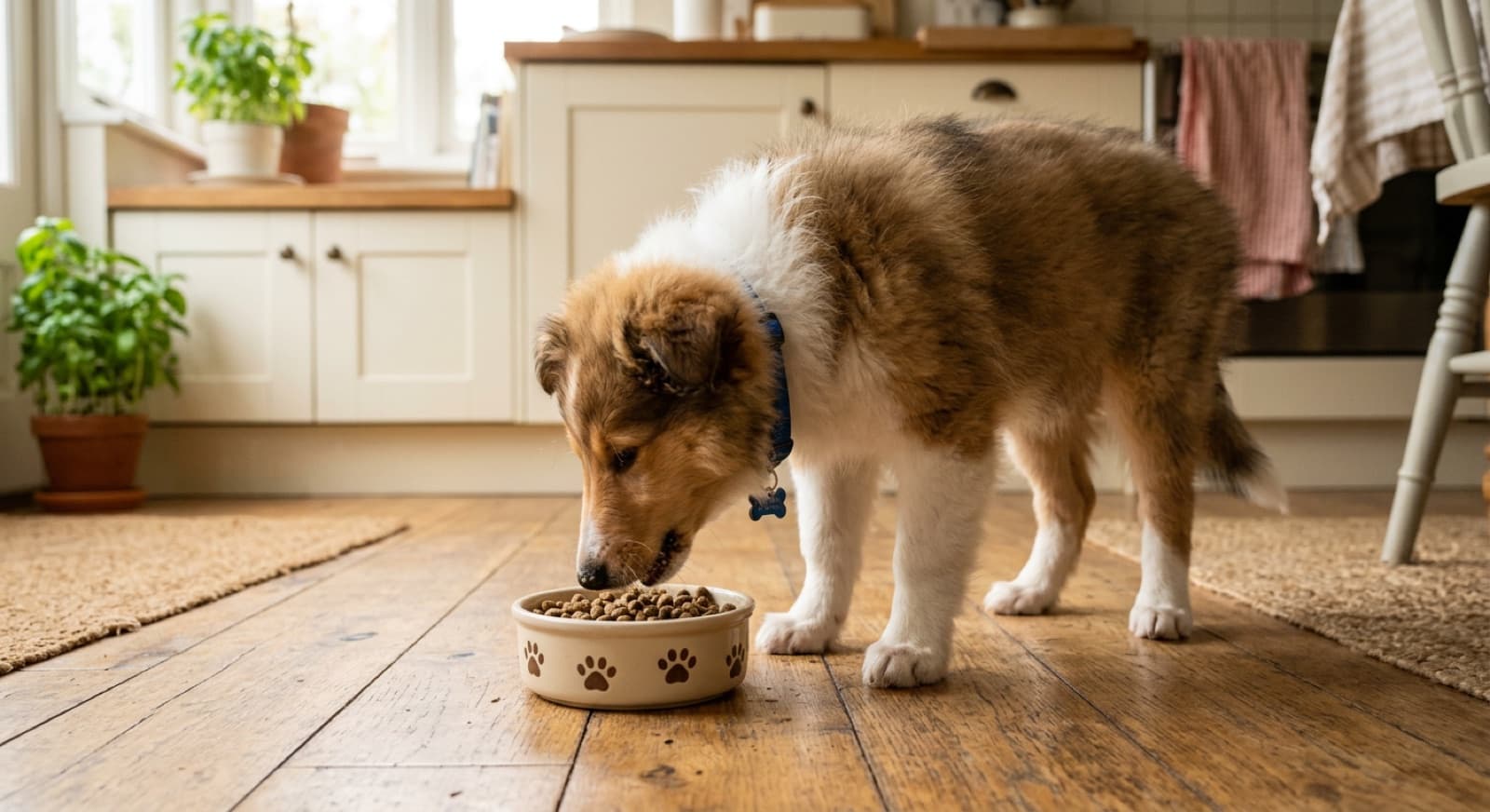
A Collie sits right on the borderline of the large-breed cutoff, so for a puppy expected to mature toward the upper end, around 60 to 75 pounds, a large-breed puppy formula with controlled calcium is the safe choice. As the AKC explains, these foods control calcium and calories to keep growth steady, because a growing dog cannot down-regulate the calcium it absorbs and excess calcium causes developmental joint disease.
So do not add a calcium supplement to a complete puppy food, and do not overfeed for fast growth, since rapid growth is itself a risk factor for joint problems. Keep the puppy lean rather than chunky, and transition to adult food around 12 months, earlier than a giant breed needs. Feeding lean from the start pays off for life: the landmark Purina lifetime study found dogs kept lean lived longer and developed arthritis later than their overfed littermates.
Bloat, and the raised-bowl myth
Raised or elevated bowls do not prevent bloat. The leading study linked them to an increased risk. Feed a Collie from the floor.
Bloat, or gastric dilatation-volvulus, is when the stomach fills with gas and twists, and it is a rapidly fatal emergency. The Collie is moderately deep-chested and carries some elevated risk, though it is not in the top giant-breed tier like the Great Dane. The myth worth correcting is the raised bowl: the research the AKC cites found that elevated feeders were associated with an increased risk, reversing the old advice, so feed a Collie from the floor.
The habits that genuinely lower risk: feed two or more smaller meals a day rather than one large one, slow a fast eater with a slow-feeder bowl, and avoid hard exercise for about an hour around meals. Learn the emergency signs now, per VCA: a distended, hard belly, unproductive retching, restlessness, and drooling mean the emergency vet immediately.
Which Collie health issues are about diet?
Collie owners often hope to manage a health problem through food, so it helps to be clear: of the breed's signature conditions, only one is meaningfully diet-influenced.
- Hip dysplasia (diet matters, via weight): the cause is genetic, but the OFA notes severity is affected by factors like caloric intake. Keeping the dog lean is the main thing you control.
- Collie eye anomaly (not diet): an inherited eye condition present at birth, with a DNA test. No food causes or fixes it.
- Dermatomyositis (not diet): a genetic, immune-mediated skin and muscle disease that owners sometimes mistake for a food allergy. Diet does not cause it; if your Collie has odd skin lesions, see your vet rather than swapping foods.
- Epilepsy (not caused by diet): as the AKC Canine Health Foundation notes, a vet-directed MCT supplement can help reduce seizures alongside medication, but it is an add-on, not a cure or a replacement for prescribed drugs.
- MDR1, progressive retinal atrophy, degenerative myelopathy (not diet): all genetic, with DNA tests, and unrelated to food.
Sensitive stomachs, picky eating, and grain-free
Some Collies have soft appetites or sensitive stomachs, especially when food is switched too fast, so transition any new food gradually over seven to ten days. For pickiness, the fixes are structure rather than variety: rule out a medical cause first, avoid free-feeding, keep treats modest, and resist constantly switching foods, which worsens both fussiness and loose stools.
If a true food allergy is suspected behind itchy skin or chronic GI upset, the only reliable diagnosis is a vet-supervised elimination diet using a novel or hydrolyzed protein for eight to twelve weeks, then a re-challenge, as VCA describes; over-the-counter limited-ingredient foods are not reliable for this. And on grain-free, the FDA has investigated a possible link between legume-heavy grain-free diets and heart disease without proving it, so an established, nutritionist-backed brand is the cautious default.
What the coat actually needs
Collie owners reach for coat supplements, but the honest picture is modest. A complete, balanced diet already supplies the fats, fatty acids, protein, and minerals a healthy double coat needs, so most Collies do not need anything extra. Omega-3 fish oil, as VCA notes, helps mildly with itchy or inflamed skin and works gradually, but it will not fix an underlying problem.
A few myths to retire, per Tufts: a shiny coat does not prove the food is good, because even a poor-quality high-fat food produces shine; over-supplementing can actually be harmful; and plant-based omega-3 like flaxseed is not effective in dogs, so if you supplement, use marine fish oil. Seasonal heavy shedding is normal for a double-coated breed and not by itself a sign of a diet problem.
Foods to avoid
Keep these away from a Collie completely:
- Chocolate (darker is worse)
- Grapes and raisins (can cause kidney failure, even a few)
- Xylitol (in sugar-free gum, some peanut butters, and baking), which is rapidly fatal to dogs
- Onions, garlic, leeks, and chives
- Macadamia nuts
- Alcohol and caffeine
- Cooked bones (they splinter)
If your Collie eats something on this list, call your vet, the nearest emergency clinic, or a pet poison helpline right away. And given the breed's drug sensitivity, never give any human medication without veterinary advice.
Looking to adopt a Collie?
Plan to feed lean and DNA-test for MDR1 before day one. Browse Collies and Collie mixes available now from the rescues we track across Canada.
See Available Collies →Where to buy Collie food
Every brand worth feeding a Collie is easy to find:
- Pet specialty chains (Pet Planet, Tail Blazers, Tisol). Carry the established, nutritionist-backed formulas and large-breed puppy lines.
- Pet Valu and PetSmart. Stock the major puppy and adult formulas.
- Your vet clinic. The best source for any therapeutic diet and for the MDR1 test and parasite-prevention plan.
A quality complete formula from an established brand is the foundation, and a marine omega-3 supplement is a sensible add only if your dog has a skin issue. Both are easy to set on a recurring delivery.
Frequently Asked Questions
Does MDR1 affect what I should feed my Collie?
No, and this is the key thing to understand. MDR1, the gene mutation that around three of every four Collies carry, is a drug-sensitivity issue, not a diet one. It means certain medications build up dangerously in the brain, so it matters enormously for vet drugs and anaesthesia, but it has nothing to do with food or nutrition. The one place it brushes against the shelf is parasite prevention: some heartworm and dewormer products contain ivermectin-class drugs, but these are safe at normal prevention doses, so an MDR1 Collie should not skip heartworm prevention. Get your Collie DNA-tested and tell every vet its MDR1 status.
Is my Collie too thin? I can feel its ribs.
Probably not. Collies are naturally lean, lanky dogs, and feeling the ribs under a thin layer of fat is exactly right. The thick double coat hides the body, so you cannot judge weight by sight; you have to use your hands. The target is a 4 to 5 on the 9-point body condition scale: ribs easily felt like the back of your hand, a visible waist from above, and a tuck from the side. A fluffy Collie can look full while being overweight underneath, or look bony when it shakes while being perfectly lean. Score by feel, not by eye, and keeping the dog lean is the biggest diet-controlled thing you can do for its joints.
How much should I feed a Collie?
Less than the bag suggests, usually, because feeding charts tend to over-recommend and Collies are lean dogs that do not need to be filled out. There is no fixed cup number: it depends on the food's calorie density and the dog's activity. Start from the label for the dog's ideal weight, split it into two meals, and adjust to hold a lean body condition you check by feeling the ribs. Re-weigh and re-score every few weeks rather than locking in a number. Keep treats under about 10 percent of daily calories so they do not quietly add up.
Do I feed a Collie puppy large-breed puppy food?
A Collie sits on the borderline of the large-breed cutoff, so for a pup expected to mature toward the upper end, around 60 to 75 pounds, a large-breed puppy formula with controlled calcium is the safe choice. The point is steady, not rapid, growth: a growing dog cannot regulate the calcium it absorbs, and excess calcium causes developmental joint problems, so do not add a calcium supplement to a complete puppy food. Keep the puppy lean rather than chunky, and transition to adult food around 12 months. Confirm the right formula and timing with your vet based on your puppy's projected size.
Are Collies prone to bloat, and do raised bowls help?
Collies are moderately deep-chested and carry some elevated bloat risk, though they are not in the top giant-breed tier. Raised bowls do not help: the leading research found elevated feeders were associated with an increased risk of bloat, so feed a Collie from the floor. The habits that genuinely lower risk are feeding two or more smaller meals a day rather than one large one, slowing a fast eater with a slow-feeder bowl, and avoiding hard exercise right around meals. Learn the emergency signs, because a swollen, drum-tight belly with unproductive retching means the emergency vet immediately.
Can diet fix my Collie's skin or eye problems?
Usually not, because most of the breed's signature conditions are genetic, not dietary. Collie eye anomaly is an inherited eye condition present at birth, and dermatomyositis is a genetic, immune-mediated skin and muscle disease that owners sometimes mistake for a food allergy. No diet causes or cures either. The one major Collie condition diet genuinely influences is hip dysplasia, and only through weight: keeping the dog lean reduces the load on the joints. For epilepsy, diet is not a cause or a cure, though a vet-directed MCT supplement is sometimes used as an add-on to medication, never a replacement.
Does my Collie need a coat supplement for its fur?
Usually not. A complete, balanced diet already supplies the fats, fatty acids, protein, and minerals a healthy double coat needs, so most Collies do not need a supplement. Omega-3 fish oil can help mildly with itchy or inflamed skin, but it works gradually and will not fix an underlying problem, and a shiny coat does not prove the food is good, because even a poor-quality high-fat food produces shine. Over-supplementing can actually be harmful. Plant-based omega-3 like flaxseed is not effective in dogs; if you supplement, use marine fish oil, and ideally on your vet's advice.
What to Feed an Australian Shepherd
Another MDR1-carrying herding breed, fed lean and active.
What to Feed a Border Collie
Fueling another high-drive, lean-built herding dog.
What to Feed a German Shepherd
Large-breed growth, sensitive stomachs, and bloat for another working breed.
Collies for Adoption
Live listings of Collies and Collie mixes from the rescues we track.