The short answer
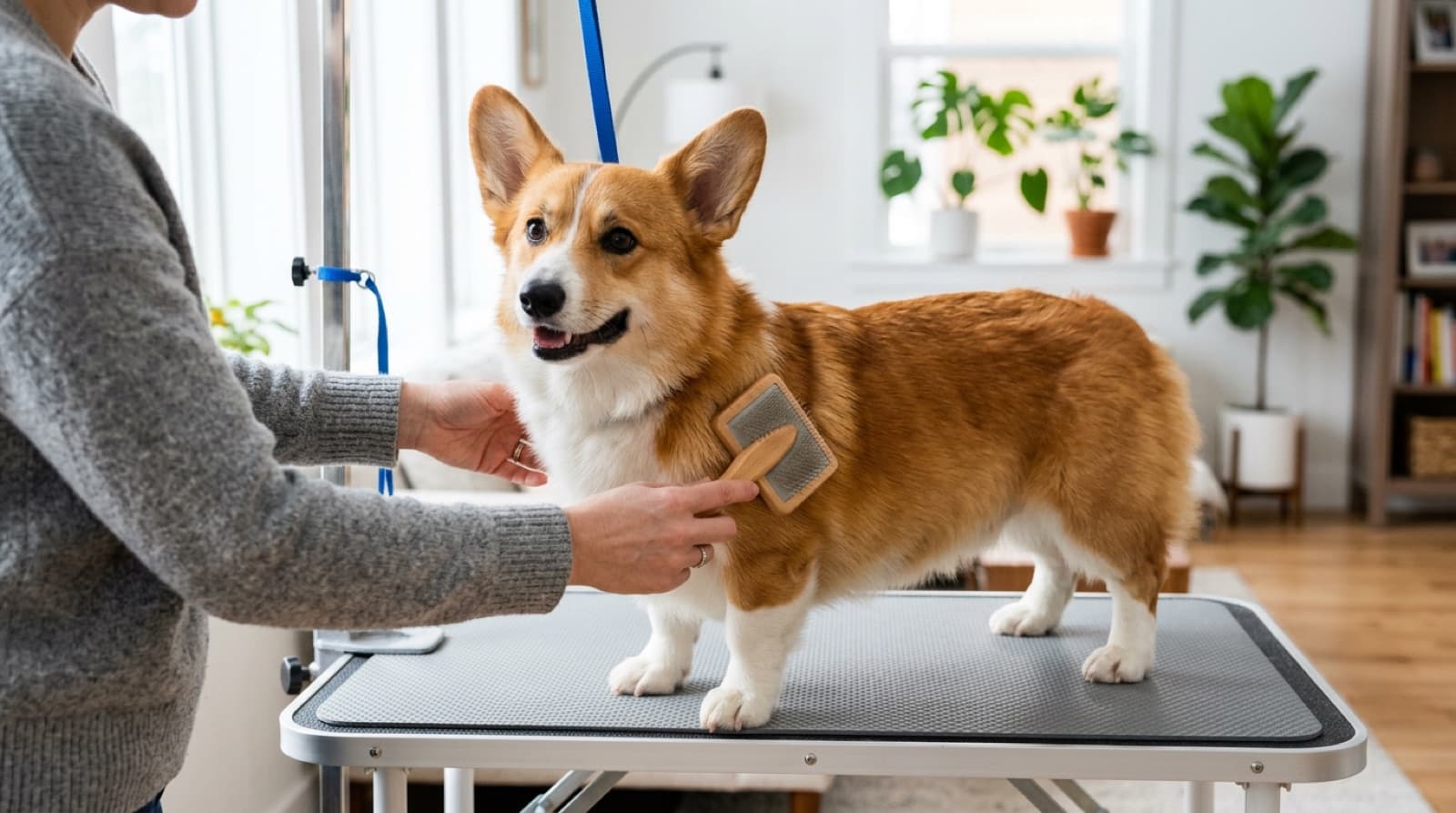
A Corgi is a small dog with a big double coat, so expect heavy shedding, and never shave it. Brush three to four times a week with an undercoat rake, daily during the twice-yearly coat blow, and use a high-velocity dryer to blow the loose undercoat out. Do not believe the “it's a short coat so shaving is fine” myth; it is a double coat and shaving can ruin it. And know which coat you have: a standard Corgi is shed management, a fluffy Corgi is mat management.
The shock: a small dog that sheds like a big one
If there is one thing every Corgi owner learns fast, it is that this small dog sheds an astonishing amount. Owners describe fur tumbleweeds rolling across the floor, a pile of hair a foot high after five minutes of brushing, and enough undercoat to clog a bathtub drain. It is genuinely startling the first time, and it is worth knowing before you adopt one.
The reason is simple once you understand the coat. A Corgi has a full, dense double coat, the same kind of coat a much larger working breed carries, packed onto a small body. So the density of hair is out of all proportion to the size of the dog, and the shed volume reflects the coat, not the frame. This is the honest expectation to set: a Corgi is not a low-shedding dog because it is small, it is a heavy-shedding dog that happens to be small. Everything else in this guide follows from that one fact, and the good news is that the shed is very manageable once you have the right routine and tools.
Never shave the double coat
A Corgi's coat being short does not make it safe to shave. It is a double coat, and shaving it does not reduce shedding, does not cool the dog, and can leave the coat patchy or permanently changed. Brush it, never shave it.
Because a Corgi's coat is not long, owners often assume shaving is harmless, and that is the specific myth to bust. Length is irrelevant. What matters is that it is a double coat, a dense insulating undercoat under a weather-resistant guard coat, and as the American Kennel Club explains, that coat regulates temperature in both directions and shields the skin. Shaving it removes the dog's cooling system as well as its warmth, exposes the skin to sunburn, and does not reduce the amount the dog sheds.
The lasting damage is to the coat itself. Shaving a double coat can trigger post-clipping alopecia, where the coat grows back patchy, discoloured, or with a changed texture, and Corgi owners who have done it report the coat taking one to three years to recover, sometimes never looking the same. The only reason to ever clip a Corgi close is a genuine medical or severe-matting necessity, handled by a professional. For heat and for shedding, brushing is the answer.
Standard or fluffy: know which coat you have
Here is the distinction most Corgi grooming articles skip, and it flips the whole routine. Not all Corgis have the same coat. The standard Corgi has the normal medium double coat, and it is essentially wash-and-brush: it barely mats, and the entire job is managing the shed with a rake, a slicker, and the occasional deshedding bath.
The fluffy Corgi is a long-coat variant, and it grooms completely differently. Fluffies carry longer feathering on the ears, legs, chest, and britches, and that feathering mats readily, especially under and behind the elbows and along the neck under a collar, and the softer the coat, the faster it mats. A fluffy needs regular line brushing and mat-checking with a comb, plus a conditioner to help the comb glide. The trade is real: a fluffy Corgi actually sheds a bit less year-round, but it asks for far more mat management. So the coat you have decides your job. A standard Corgi is a shedding dog you brush to control the fur, while a fluffy is a matting coat you line-brush to keep tangle-free. A rolled leather collar rather than a flat one helps a fluffy avoid neck mats.
The tools and the technique
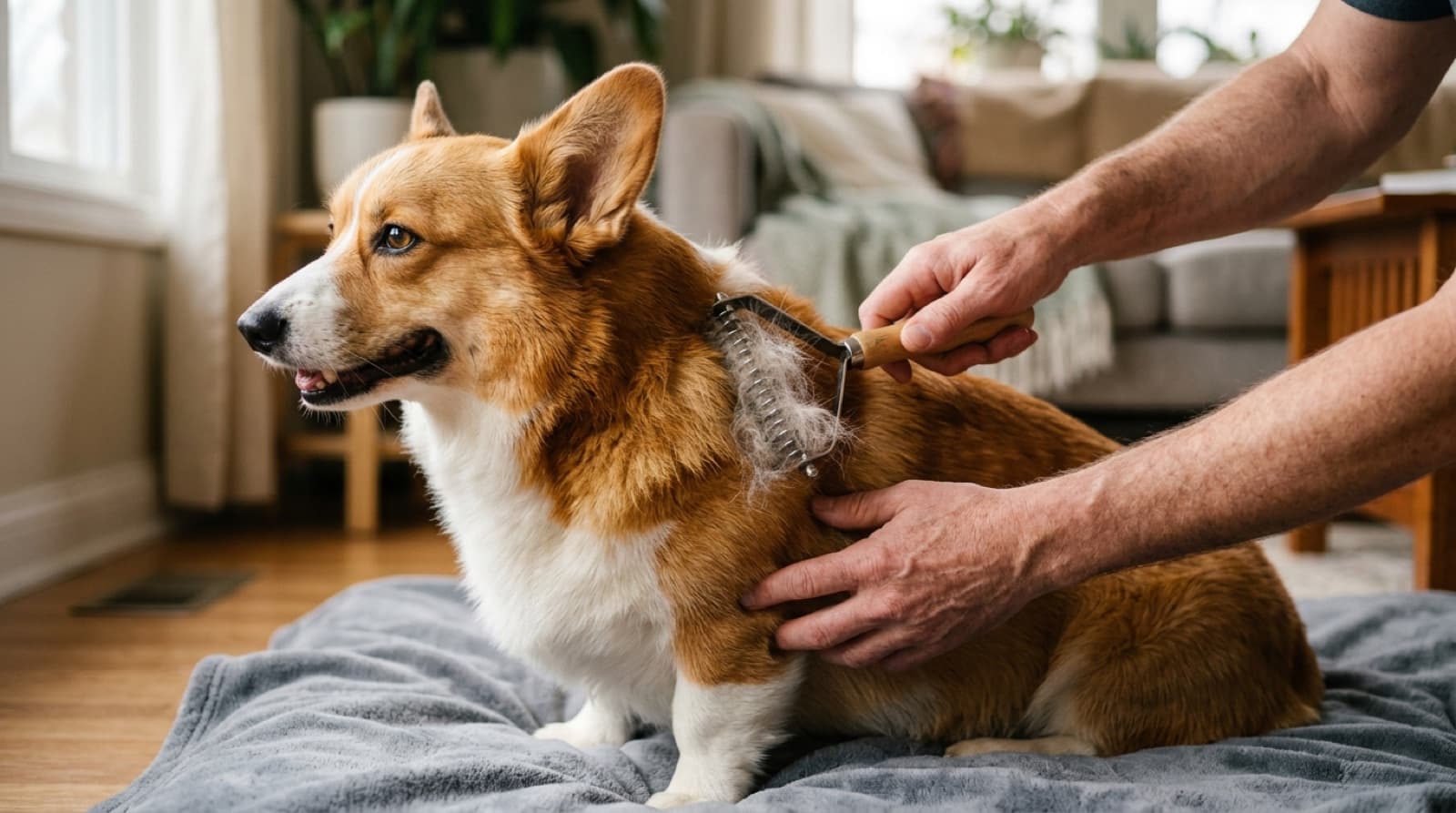
The mistake that leaves fur everywhere is surface brushing, running a brush over the guard coat while the dead undercoat stays packed against the skin. The fix is an undercoat rake, which reaches the undercoat and pulls it out, followed by a slicker brush to finish the topcoat. A typical session is a rake pass to the skin, then a slicker to smooth. On a fluffy, add a metal comb to check the feathering, because if the comb catches, there is a mat the brush missed.
The single biggest upgrade for the shed is a high-velocity dryer, which blows the loose undercoat out during a bath and dries the coat to the skin. It is exactly what a groomer's deshedding fee pays for, and a deshedding shampoo loosens the undercoat first to make it faster.
Some of the product links in this section are Amazon affiliate links — we may earn a small commission at no extra cost to you. It never changes which products we recommend.
The coat blow and the light tidy
On top of the year-round shedding, a Corgi blows its coat twice a year, in spring and fall, over roughly two to four weeks, dropping the undercoat in bulk. The way through it is daily raking plus a deshedding bath and a blow-out, which sends the loose undercoat into the dryer's airflow instead of all over your house. Skipping the deshedding during the blow is what lets the fur take over.
A Corgi is not clipped, but a light tidy is fine and useful. Neaten the feet and the fur between the pads, tidy the hocks, and trim the sanitary area under the tail, which matters more on a fluffy, with thinning shears or a small paw trimmer. That is the extent of the scissoring; the body coat stays as it is.
The honest cost: groomer versus doing it yourself
Because there is no haircut, plenty of Corgi owners do everything at home. Where owners do book a groomer, the service is a deshedding bath with a high-velocity blow-out, priced as a small-to-medium groom with a deshedding add-on that scales with how thick the coat is, and Canadian grooming cost surveys such as Dogster's give a sense of the ranges. It is worth calling a local salon for a Corgi-specific quote, since the deshed add-on is the variable.
The at-home math is favourable. The core kit, an undercoat rake, a slicker, and a comb, is inexpensive, and the one meaningful upgrade is a high-velocity dryer, which does at home exactly what the groomer's deshedding fee covers. For a brush-and-bathe breed with no haircut, a modest one-time tool spend covers most of a Corgi's grooming for life, with an optional pro deshed at coat-blow season if you want the help.
Thinking about adopting a Corgi?
Be ready for the shedding, skip the clippers, and the coat is very manageable. Browse Corgis and Corgi mixes available now from the rescues we track across Canada.
See Available Corgis →Frequently Asked Questions
Do Corgis shed a lot?
Yes, heavily, year-round, plus two big coat blows in spring and fall. It genuinely shocks most owners because the volume is huge for such a small dog. The reason is that a Corgi has a dense double coat packed onto a small frame, so the amount of hair is out of all proportion to the dog's size. Regular brushing with an undercoat rake, and a high-velocity dryer if you can, is the only thing that keeps it under control.
Should I shave my Corgi to stop the shedding or keep it cool in summer?
No. The double coat insulates against heat as well as cold and shields the skin from the sun, so shaving can make a Corgi hotter and sunburn-prone, and it does not reduce shedding, since the same volume of hair is still there. Do not fall for the idea that because it is a shortish coat, shaving is harmless: it is a double coat, and length is irrelevant to the risk. Shaving can trigger post-clipping alopecia, where the coat grows back patchy, discoloured, or a changed texture, sometimes taking one to three years and never fully recovering.
How often should I brush a Corgi?
About three to four times a week normally, and daily during the two-to-four-week coat blow in spring and fall. Reach the dense undercoat with a rake rather than skimming the guard coat on top, since the loose undercoat is what packs against the skin and ends up on your floor. A fluffy (long-coat) Corgi needs more frequent line brushing to keep the longer feathering from matting.
What is the difference between a fluffy Corgi and a standard Corgi for grooming?
A standard Corgi has the normal medium double coat and is essentially wash-and-brush, with little matting; the whole job is managing the shed. A fluffy Corgi is a long-coat variant with longer feathering on the ears, legs, chest, and britches, and that feathering mats readily, so a fluffy needs frequent line brushing and mat-checking with a comb. The trade is that fluffies actually shed a bit less year-round but ask for more mat management, so the coat you have flips the grooming from shed control to mat control.
Will my Corgi's coat grow back if it was shaved?
Often not the way it was. Regrowth after shaving a double coat is commonly patchy, discoloured, or a different texture, and owners report it taking one to three years, with some coats never looking the same. This is why groomers and breed clubs advise against shaving a Corgi except for a genuine medical reason. If a shaved area is not regrowing properly, it is worth a veterinary look.
How often should I bathe a Corgi?
Every four to eight weeks, or when the dog is genuinely dirty. Over-bathing strips the coat's natural oils, dries the skin, and can make shedding worse. Always brush the coat out before a bath, and dry it to the skin afterward, ideally with a dryer, since that also blows out a lot of the loose undercoat.
Do Corgis need professional grooming?
Not strictly, because there is no haircut. A Corgi is a brush-and-bathe breed, not a clipped one, so many owners handle everything at home. The professional service that helps is a deshedding bath with a high-velocity blow-out, especially during a coat blow, plus an optional light tidy of the feet and sanitary area. If you buy a home dryer, you can do the deshed yourself.
What is the best brush for a Corgi?
An undercoat rake is the core tool, because it reaches the dense undercoat and pulls the loose hair a surface brush leaves behind, backed by a slicker brush to finish the topcoat. Add a metal comb to check for mats, which matters more on a fluffy. A high-velocity dryer is the single biggest upgrade for managing the shed at home. Use a Furminator-style deshedding blade only sparingly, since heavy use can cut the guard coat.
How to Groom a Husky
Another never-shave double coat where the whole job is brushing and the coat blow.
How to Groom a German Shepherd
The same year-round-shedding, undercoat-rake routine on a larger double coat.
What to Feed a Corgi
The other half of Corgi care: keeping the weight off a long-backed dog, and portions.
Corgis for Adoption
Live listings of Corgis and Corgi mixes from the rescues we track.