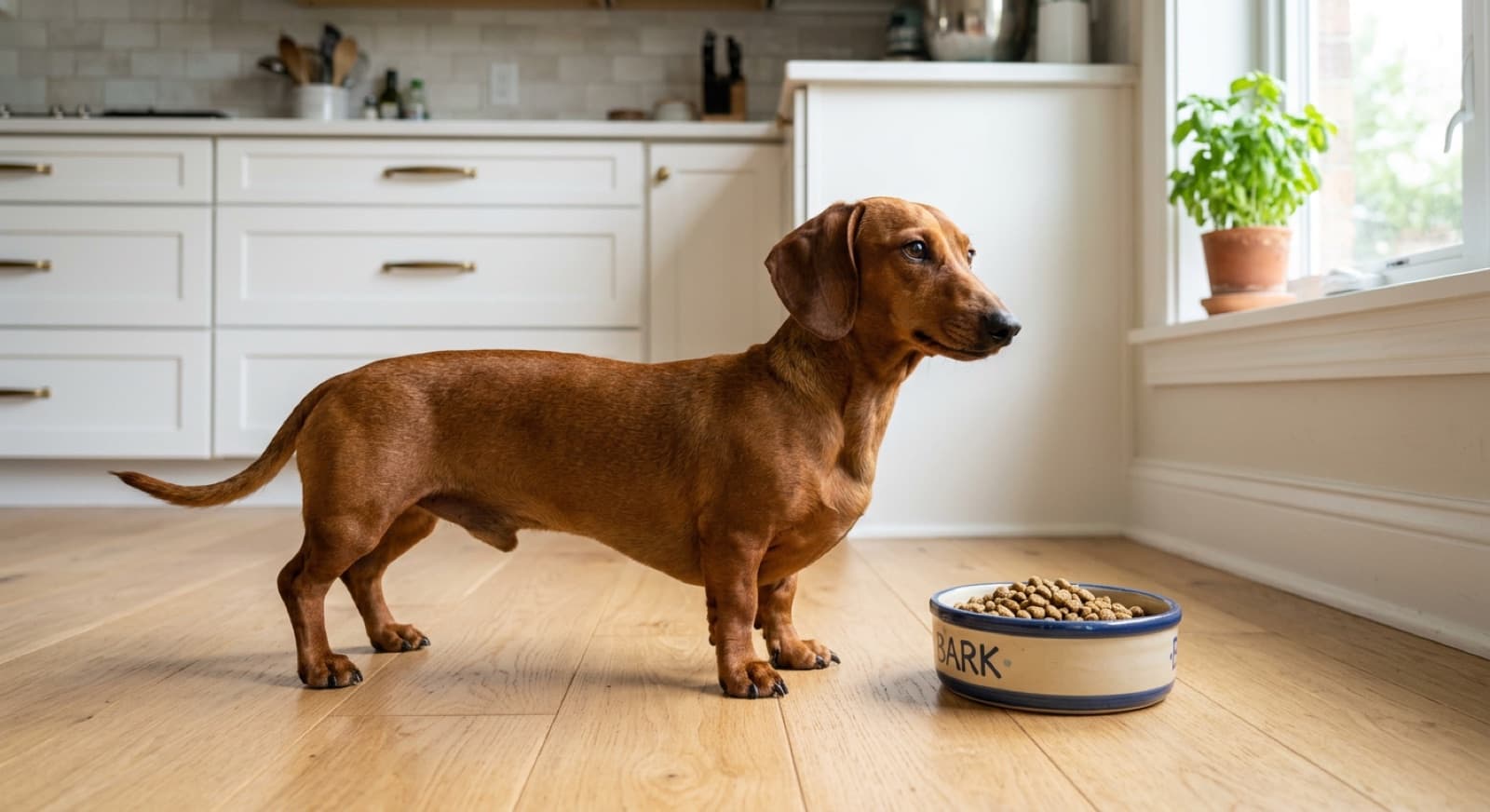
The short answer
Feed a Dachshund a complete food in measured meals, keep it lean and well-muscled, and ruthlessly control the treats. The breed has the highest rate of disc disease of any dog, so reducing load on that long back is the goal, and lean weight is the single most recommended diet step. Dachshunds are intensely food-motivated, so measure with a scale, feed to ideal weight not current weight, and keep treats under 10 percent of calories. Skip gimmicky breed-specific kibble, brush the teeth because kibble does not clean them, and feed standards more than minis.
Lean and strong: the back is the whole point
Keeping a Dachshund lean and well-muscled is the single most recommended dietary step for the breed. A vet tech's blunt version: the most common reason Dachshunds were put down was overfeeding. Thin and strong keeps the back in good shape.
Everything about feeding a Dachshund comes back to the spine. The breed is chondrodystrophic, meaning the long body and short legs come with discs that degenerate early, and Dachshunds have the highest reported rate of intervertebral disc disease (IVDD) of any breed, around 15 percent overall and higher in some varieties. That underlying cause is genetic, not dietary. What you control with food is the load on that back.
Here it is worth being honest, because the breed folklore overshoots. A very large 2025 study found overweight dogs had higher odds of IVDD, but a major Dachshund-specific survey could not confirm body condition as an independent risk factor. So the claim that a couple of extra pounds dramatically raises paralysis risk is not established fact. What is well supported is that the Dachshund breed health authority still recommends keeping dogs lean, both to reduce spinal load and because obesity independently drives heart disease and diabetes. The same Dachshund survey found the strongest protective factor was more daily exercise. Lean and well-muscled, not skinny and inactive, is the target.
How to tell if your Dachshund is lean
The body condition check is the same one vets use. Run your hands along the rib cage: you should feel the ribs easily under a thin layer of fat without having to press, see an obvious waist behind the ribs when you look down, and see a tuck up at the belly from the side. If you have to dig to find the ribs, the dog is overweight. Do this against the standard 9-point body condition score and aim for a lean 4 to 5.
The most powerful single habit, per VCA, is to feed to your dog's ideal weight rather than its current weight. If a Dachshund should be 18 pounds but is 20, feed the amount for 18. And weigh the food with a kitchen scale, because measuring cups are surprisingly inaccurate. If a dog needs to lose, aim for a slow, vet-guided one to two percent of body weight per week rather than a crash diet, which costs muscle the back needs.
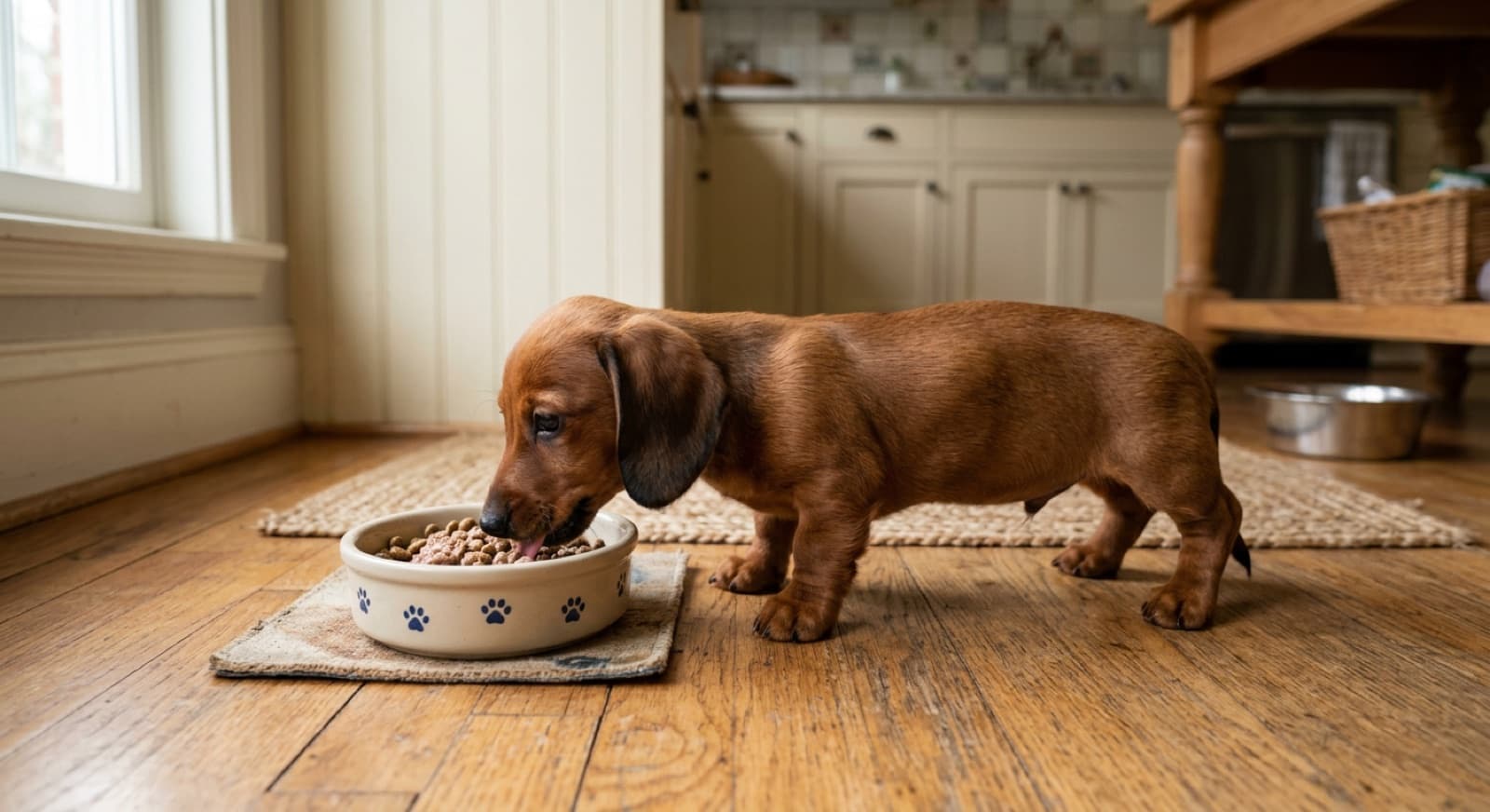
Beating the food obsession
Dachshunds are intensely food-motivated, and the begging eyes are where owner discipline tends to break down. The most common real-world mistake is not the meal size but the constant extras: training treats, table scraps, and a generous pour that quietly becomes nearly double the right amount.
The fix is structure. The AKC rule is to keep treats under 10 percent of daily calories and to count them inside the daily ration, reducing meals to compensate, not adding on top. For a dog that always wants more, low-calorie fillers like green beans, carrots, or a spoon of plain pumpkin add volume without much energy. Feed scheduled meals rather than free-pouring, train with part of the measured kibble allowance, and do not reward the begging. None of this is exotic; it is just applied consistently, which with a Dachshund is the whole challenge.
Standard versus miniature, and the breed-food gimmick
The two sizes have genuinely different needs. A miniature Dachshund, around 11 pounds or under, often eats roughly a quarter to a half cup a day; a standard, about 16 to 32 pounds, roughly a half to one and a half cups, always split into two meals and always adjusted to body condition. Those are starting points from the food's calorie density, not targets to hit regardless of the dog.
One thing you can skip is breed-specific kibble. Some brands sell a Dachshund-named or Dachshund-shaped food at a premium, but experienced owners and vets generally treat it as marketing rather than nutrition. A quality, complete food appropriate to your dog's size and life stage does everything the breed-labelled version does. Spend the attention on the amount and the treats, not the label.
Small-breed teeth, and the kibble myth
Dachshunds, like other small breeds, are prone to periodontal disease, and there is a persistent myth that dry food keeps the teeth clean. It does not. Studies comparing dry-fed and wet-fed dogs found little difference, because dogs do not chew thoroughly and ordinary kibble shatters without scrubbing the gum line, as PetMD summarizes.
What works is daily brushing with a dog toothpaste, dental products carrying the VOHC seal, and professional cleanings. An owner switching off canned food to fix tartar is acting on the myth; the brush is the answer. Small mouths get heavy tartar regardless of food, so build the brushing habit early.
Which Dachshund health issues are about diet?
It helps to separate what diet controls from what it does not.
- Obesity (diet): the central, fully diet-driven issue, and the one that loads the back, heart, and joints.
- IVDD (weight is the lever, not the cause): the genetic disc degeneration is not dietary, but keeping the dog lean and well-muscled is the diet-and-exercise contribution to protecting the spine.
- Pancreatitis (fat matters): small breeds can be prone, and a dog that has had pancreatitis is often moved to a vet-recommended low-fat diet. Keep an eye on high-fat treats and scraps.
- Dental disease (a choice, not the food type): diet brand does not prevent it; brushing and VOHC products do.
- PRA, epilepsy, and Lafora disease (not diet): these are genetic conditions. Lafora in particular affects miniature wire-haired Dachshunds and is inherited, not caused by food.
Foods to avoid
These are dangerous to any dog, and the harmful dose is smaller for a small one, so be strict:
- Xylitol (in sugar-free gum, some peanut butters, and baking), which is rapidly fatal to dogs
- Chocolate (darker is worse)
- Grapes and raisins (can cause kidney failure, even a few)
- Onions, garlic, leeks, and chives
- Macadamia nuts
- Alcohol and caffeine
- Cooked bones (they splinter), and very high-fat scraps that can trigger pancreatitis
A determined Dachshund will hunt out dropped food, so keep counters and bins secured. If your dog eats something on this list, call your vet, the nearest emergency clinic, or a pet poison helpline right away.
Looking to adopt a Dachshund?
Set up the lean-feeding and ramp routine that protects a Dachshund's back before day one. Browse Dachshunds and Doxie mixes available now from the rescues we track across Canada.
See Available Dachshunds →Where to buy Dachshund food
Every brand worth feeding a Dachshund is easy to find:
- Pet specialty chains (Pet Planet, Tail Blazers, Tisol). Carry the small-bite, nutritionist-backed formulas and VOHC dental products.
- Pet Valu and PetSmart. Stock the major small-breed puppy and adult formulas.
- Your vet clinic. The best source for weight-management diets and a low-fat diet if pancreatitis is ever an issue.
An ordinary small-breed formula from a reputable brand is right, plus a gram scale to measure it accurately, which for this breed is genuinely useful gear.
Frequently Asked Questions
Why is keeping a Dachshund lean so important?
Dachshunds have the highest rate of intervertebral disc disease (IVDD) of any breed, a back problem driven by their genetics, and excess weight adds load to that long, vulnerable spine. The evidence on weight is honestly mixed: one very large 2025 study found overweight dogs had higher odds of IVDD, while a big Dachshund-specific survey could not confirm body condition as an independent risk factor. But every vet and the breed health authority still recommends keeping a Dachshund lean, because it reduces spinal load and lowers the risk of obesity-driven heart disease and diabetes. Lean and strong is the goal.
How much should I feed a Dachshund?
It depends on whether you have a miniature or a standard and on the food's calorie density, so treat any cup number as a starting point. A miniature (around 11 pounds or under) often eats roughly a quarter to a half cup a day; a standard (about 16 to 32 pounds) roughly a half to one and a half cups, split into two meals. The key vet-backed method is to feed to your dog's ideal weight, not its current weight, and adjust to a lean body condition. Use a kitchen scale rather than a cup, because eyeballing is how most Dachshunds get overfed.
My Dachshund is always begging. How do I manage the food obsession?
Dachshunds are famously food-motivated, and the most common real mistake owners make is small, steady overfeeding plus treats on top. Keep all treats under about 10 percent of daily calories and count them inside the daily total, not on top of it. Use low-calorie fillers like green beans, carrots, or a little pumpkin for a dog that always wants more, feed scheduled meals rather than free-pouring, and do not reward begging. Measuring every meal with a scale is the single habit that keeps a food-driven Dachshund at a healthy weight.
Does dry kibble clean my Dachshund's teeth?
No, that is a myth, and small breeds like the Dachshund are prone to dental disease, so it matters. Studies have found little difference in dental disease between dry-fed and wet-fed dogs, because dogs do not chew thoroughly and ordinary kibble shatters without scrubbing the gum line. What actually works is daily brushing with a dog toothpaste, dental products carrying the VOHC seal, and professional cleanings. Switching off canned food to fix tartar does not work; brushing does.
Should I buy breed-specific Dachshund food?
You do not need to. Some brands sell a Dachshund-shaped kibble or a breed-named formula, but experienced owners and vets generally consider these a marketing gimmick: you pay more for no real benefit over a quality complete food appropriate to your dog's size and life stage. What genuinely matters is that the food is complete and balanced from a reputable, nutritionist-backed brand, that you feed the right amount for your dog's ideal weight, and that you keep treats in check. The shape of the kibble is not what keeps a Dachshund healthy.
How should I feed a Dachshund puppy?
A Dachshund is a small breed, not a giant one, so it does not carry the controlled-calcium, slow-growth concerns of a large-breed puppy. Feed a complete small-breed or all-life-stages puppy food, starting with around three to four small meals a day and tapering to two by about twelve months. The breed-specific point is to keep the growing puppy lean rather than letting it get roly-poly, because the long back is the structure you are protecting. Build the measuring and treat-counting habits now that will keep the adult lean.
Do ramps and avoiding jumps matter as much as diet?
They are sensible precautions, though the research is messier than the folklore suggests. Studies actually found that Dachshunds who used stairs were not at higher risk, and that the strongest protective factor was more daily exercise, while restricted dogs showed more IVDD partly because already-injured dogs get restricted. So provide ramps to sofas and beds and discourage repeated hard jumping as reasonable caution, but do not treat it as a guaranteed shield. Keeping the dog lean and well-muscled with regular, sensible exercise is the better-supported protection.
What to Feed a Corgi
The other long-backed, food-obsessed breed where lean weight protects the spine.
What to Feed a Basset Hound
Weight control for another long, low, heavy-set hound prone to back strain.
What to Feed a Maltese
Tiny-breed portions and dental care for another small companion dog.
Dachshunds for Adoption
Live listings of Dachshunds and Doxie mixes from the rescues we track.