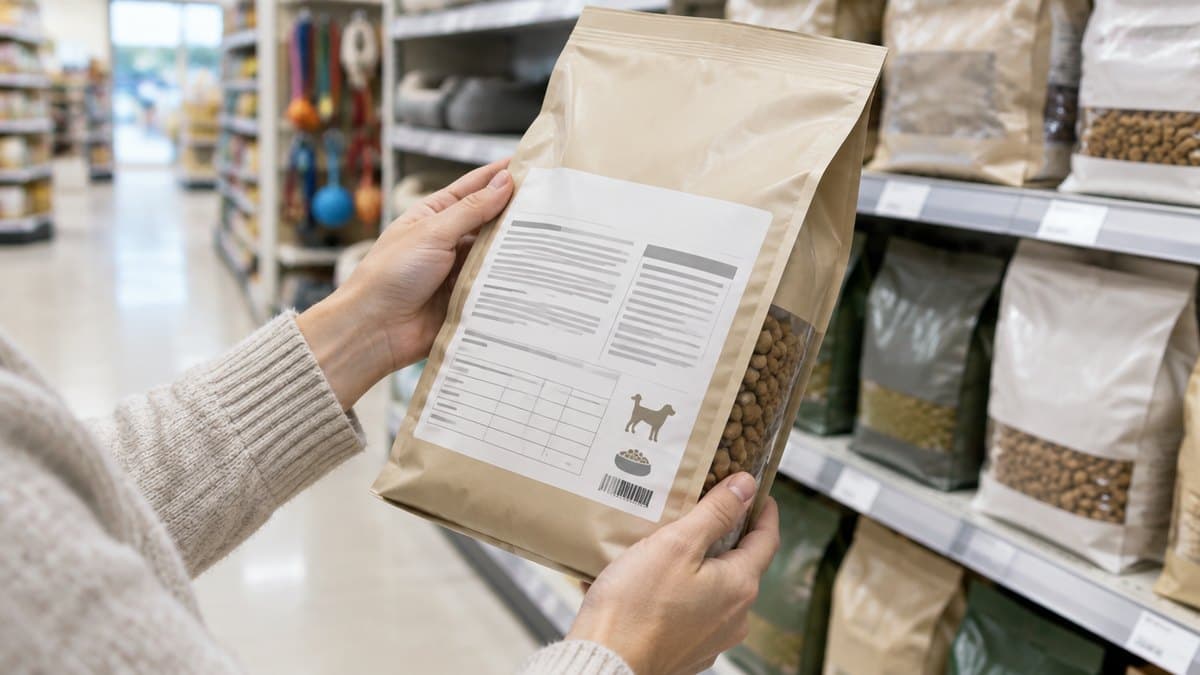
The short answer
Avoid any food whose maker cannot answer three questions: do you employ a qualified nutritionist, do you run feeding trials, and do you own the plant where this is made. Then check the bag says complete and balanced for your dog's life stage, and search the company on Canada's recalls database for a pattern. A food that fails those checks is one to avoid whatever the bag costs and whatever it is called — and several expensive boutique brands fail them while ordinary supermarket brands pass.
Why we will not print a list of names
Every other page ranking for this question hands you a list, so it is worth being straight about why this one does not.
Brands are not stable objects. They get acquired, reformulated, and moved between manufacturing partners, often without the packaging changing much. A list assembled two years ago routinely condemns a food that has since changed recipe and plant, and lets through one that has quietly gone the other way. A name is a poor proxy for a thing that moves.
Most published lists are not built on evidence. The common method is ranking by ingredient panel, which sounds rigorous and is close to meaningless: ingredients are listed by weight before cooking, so fresh chicken that is roughly two-thirds water outranks a dry meal containing far more actual protein. Manufacturers can also split one ingredient across several entries — ground corn, corn gluten, corn bran — so it appears further down. Neither practice is unusual or improper. Both make the panel a marketing surface rather than a quality measure, and a blacklist built on it is sorting brands by their copywriting.
What survives all of that is a set of checks you can run yourself, on any bag, in any year.
The five checks that actually identify a food to avoid
1. No qualified nutritionist on staff
This is the single most useful signal and the one the packaging never mentions. The World Small Animal Veterinary Association suggests asking whether a company employs a full-time qualified nutritionist — a veterinary nutrition specialist or a PhD in animal nutrition. Established makers answer immediately and publish names. A company that cannot answer, or offers a vague “team of experts”, is formulating food without the expertise to know when it has gone wrong. Email and ask; the reply, or the absence of one, is the answer.
2. No feeding trials
There are two ways to claim a food is complete. One is to formulate on paper so the numbers meet a published profile. The other is to feed it to actual dogs over time and measure what happens. The second is expensive and far more informative, because nutrients on a spreadsheet are not the same as nutrients a dog can absorb. A company that only formulates to a standard is doing the cheaper thing, and it is worth knowing which you are buying.
3. No control of manufacturing
Many brands do not make their own food; they buy from a co-packer that produces for dozens of labels. That is not disqualifying on its own, but it means quality control sits with a company whose name is not on the bag, and in a recall it slows down everything about identifying and fixing the cause. Makers who own their plants can answer questions about their own process. Ask where the food is made and see whether you get a straight answer.
4. No complete-and-balanced statement for the right life stage
This is the five-second check and it eliminates a surprising amount. A food meant to be a dog's whole diet must state that it is complete and balanced for a life stage — growth, adult maintenance, or all life stages. Anything without it is a treat, topper or supplemental product, whatever the packaging suggests, and a dog fed on it will be short of nutrients over months. Check the life stage matches your dog too: an all-life-stages food is formulated to puppy requirements, which is more than an inactive adult needs.
5. A pattern of recalls
Search the brand on the Government of Canada's recalls and safety alerts database, which covers pet food. Read the pattern rather than the count. One recall, caught quickly and communicated clearly, is a company's safety process working. Several across a few years, or one the company was slow to acknowledge, is a different signal — and it is public record rather than opinion, which is exactly the kind of evidence worth deciding on.
The Canadian gap nobody mentions
There is no mandatory federal nutritional standard for pet food in Canada. Nutritional adequacy runs on voluntary adherence to American AAFCO guidelines — which means the same words on a bag carry less enforcement here than they do south of the border.
This surprises most Canadian owners, and it changes how much weight the checks above deserve. The Canadian Food Inspection Agency's involvement centres on animal health and imports rather than setting nutrient profiles. The Competition Bureau can act against false or misleading labelling claims, which is a backstop rather than a standard. Nutritional adequacy itself is handled through voluntary adherence to the guidelines of AAFCO, an American body with no Canadian regulatory authority; the Pet Food Association of Canada states that its members follow them, and membership is itself voluntary.
None of that means Canadian pet food is unsafe. The large established makers meet standards well beyond the legal minimum because their businesses depend on it. It does mean that in Canada, a complete-and-balanced claim is worth exactly as much as the company making it — which is the argument for judging the company rather than the bag.
What to buy instead
The foods that pass all five checks are mostly unglamorous, and several sit on ordinary supermarket shelves rather than in the boutique aisle. Our guide to the best dog food in Canada covers which to buy for an average adult, a large breed, and a dog carrying extra weight, with current Canadian prices.
If your dog is not an average adult, the answer differs: puppies need a growth formula sized to their adult weight, senior dogs usually need more protein rather than less, and a dog with a sensitive stomach may need a vet before a new bag.
And if you are changing food because of something you read here, change it slowly — over seven to ten days, mixing progressively more of the new in. An abrupt switch causes the upset stomach people then blame on the new food.
Frequently Asked Questions
Which dog food brands should I avoid in Canada?
We do not publish a named blacklist, and that is a deliberate editorial decision rather than a dodge. Brands are bought and sold, reformulated, and change manufacturing partners, so a list of names goes stale quickly and can be unfair to a company that has since fixed the problem. What does not go stale are the checks: does the maker employ a qualified nutritionist, does it run feeding trials, does it own its plants, does the bag carry a complete-and-balanced statement for your dog’s life stage, and does the company have a pattern of recalls. A food that fails those is one to avoid regardless of what it is called this year.
How do I check if a dog food has been recalled in Canada?
Search the Government of Canada recalls database at recalls-rappels.canada.ca, which covers food including pet food. Search by brand name rather than product, because a recall usually affects specific lots and you want to see whether the company has a pattern rather than a single incident. One recall handled quickly and communicated clearly is not damning; several over a few years, or one the company was slow to acknowledge, tells you something about how they operate.
Is pet food regulated in Canada?
Less than most owners assume. There is no mandatory federal nutritional standard for pet food in Canada comparable to the rules covering human food. The Canadian Food Inspection Agency’s role centres on animal health and imports, the Competition Bureau can act on false or misleading labelling claims, and nutritional adequacy is handled by voluntary adherence to the American AAFCO guidelines — the Pet Food Association of Canada states that its members follow them. That voluntary structure is exactly why the checks in this guide matter more here than a Canadian owner might expect.
Does a "complete and balanced" claim mean the same thing in Canada?
It is still the single most useful thing on the bag, but it carries less enforcement behind it here. In the US, that statement ties to AAFCO nutrient profiles or feeding trials under a regulatory framework. In Canada, adherence is voluntary. A complete-and-balanced claim from an established maker that employs nutritionists and runs feeding trials is meaningful. The same words on a bag from a company that does neither are a claim nobody has verified. Same phrase, different weight.
Are grocery store dog foods bad?
Not inherently, and this is where a lot of internet advice goes wrong. Several of the most research-backed foods available — the ones many vets feed their own dogs — sit on ordinary supermarket and big-box shelves, while some of the most expensive boutique bags come from companies with no nutritionist on staff. Price and shelf position are poor proxies for quality. Apply the five checks instead; some grocery brands pass them comfortably and some premium ones do not.
Is grain-free dog food something to avoid?
It is worth avoiding by default, yes, unless your vet has a specific reason for it. The US FDA investigated a possible link between grain-free diets high in peas, lentils and potatoes and dilated cardiomyopathy, a serious heart condition. Causation was never established and the science is still unsettled — but there is no demonstrated benefit on the other side of the ledger to offset an open question. True grain allergies in dogs are uncommon, and where a dog genuinely reacts to food the protein is the more likely trigger.
What about boutique, exotic-protein and raw diets?
Treat all three with more caution than the marketing invites. Boutique brands frequently lack a staff nutritionist, which is the single most useful quality signal there is. Exotic proteins like kangaroo or venison are worth saving rather than spending — if your dog later develops a genuine food allergy, your vet will want a protein the dog has never eaten, and you will have used them up. Raw diets carry a documented bacterial risk to both the dog and the humans handling the bowl, which is a real trade-off to make deliberately and with your vet rather than because a label looked natural.
Best Dog Food in Canada
The foods that pass all five checks, with current Canadian prices.
Feeding a Sensitive Stomach
How to tell a food problem from a vet problem.
Best Puppy Food in Canada
The size rule that protects a growing dog's joints.
Dogs for Adoption in Canada
Rescue dogs from shelters and foster networks across the country.