The short answer
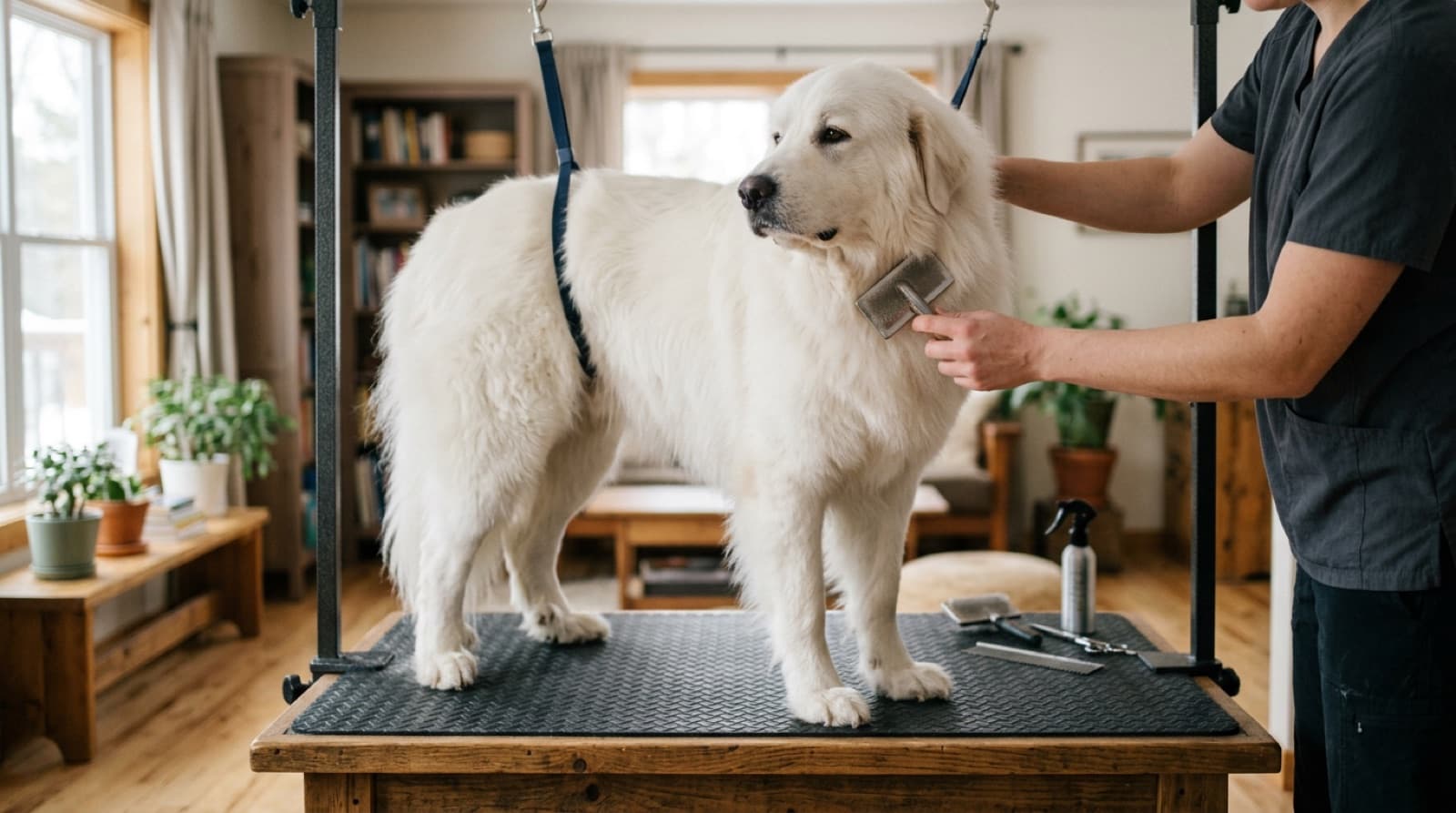
Never shave a Pyr, bathe it only a few times a year, and brush to the skin weekly. The giant white double coat is dirt-resistant and largely self-cleaning, so over-bathing backfires, but it still mats in the friction zones and needs regular line-brushing with a rake and comb, plus a high-velocity dryer during the coat blow. Dry to the skin. Trim the rear double dewclaws, which never wear down. The body is tidied, never clipped.
Never shave the double coat
Shaving a Great Pyrenees does not cool it and does not reduce shedding. It strips the coat's insulation and the protection over pale, sun-sensitive skin, and can grow back sticky, velvety, and patchy. Brush and tidy, never shave.
The temptation is real: a giant white dog panting through a hot afternoon looks like it would be grateful for a shave. It is the trap. The Pyr has a heavy weather-resistant double coat, a dense wooly undercoat under a coarse, medium-long guard coat, and both layers protect the dog in heat and cold. As the American Kennel Club explains, shaving a double-coated dog removes the insulation that keeps it cool as well as warm, and it exposes the skin to the sun, which matters even more on a Pyr because the pale, freckled skin under that white coat is sun-sensitive.
It does not reduce shedding either, and it risks the coat itself: a shaved Pyr commonly regrows a sticky, velvety, patchy coat as the undercoat outpaces the guard hairs, and some dogs never fully recover. The only reasons to clip a Pyr close are surgery or a coat so severely matted it cannot be saved, both a professional's call. To help a hot Pyr, brush the dead undercoat out so air can circulate to the skin, and provide shade, water, and cool floors.
The self-cleaning coat: put the shampoo down
Here is the Pyr fact that surprises every new owner and that most breed guides get backwards: a Great Pyrenees needs far less bathing than you would think, and washing it often makes things worse. The coarse, oily outer coat is genuinely dirt- and tangle-resistant, so mud that would stain another dog dries on a Pyr and then flakes off or brushes out in minutes once it is dry. For a healthy, regularly brushed Pyr, three or four baths a year is normal.
The instinct with a big white dog is to bathe it constantly to keep it looking clean, and that instinct backfires, because over-bathing strips the natural oils that give the coat its self-cleaning, dirt-shedding quality in the first place. So the honest advice is to put the shampoo down: let mud dry and brush it out, spot-clean the legs and rear as needed, and reach for a whitening shampoo only occasionally to brighten the coat. The one caveat worth repeating: self-cleaning applies to dirt, not to tangles. The coat still mats, and no amount of dirt-shedding replaces brushing.
Some of the product links in this section are Amazon affiliate links — we may earn a small commission at no extra cost to you. It never changes which products we recommend.
Brushing a giant coat to the skin
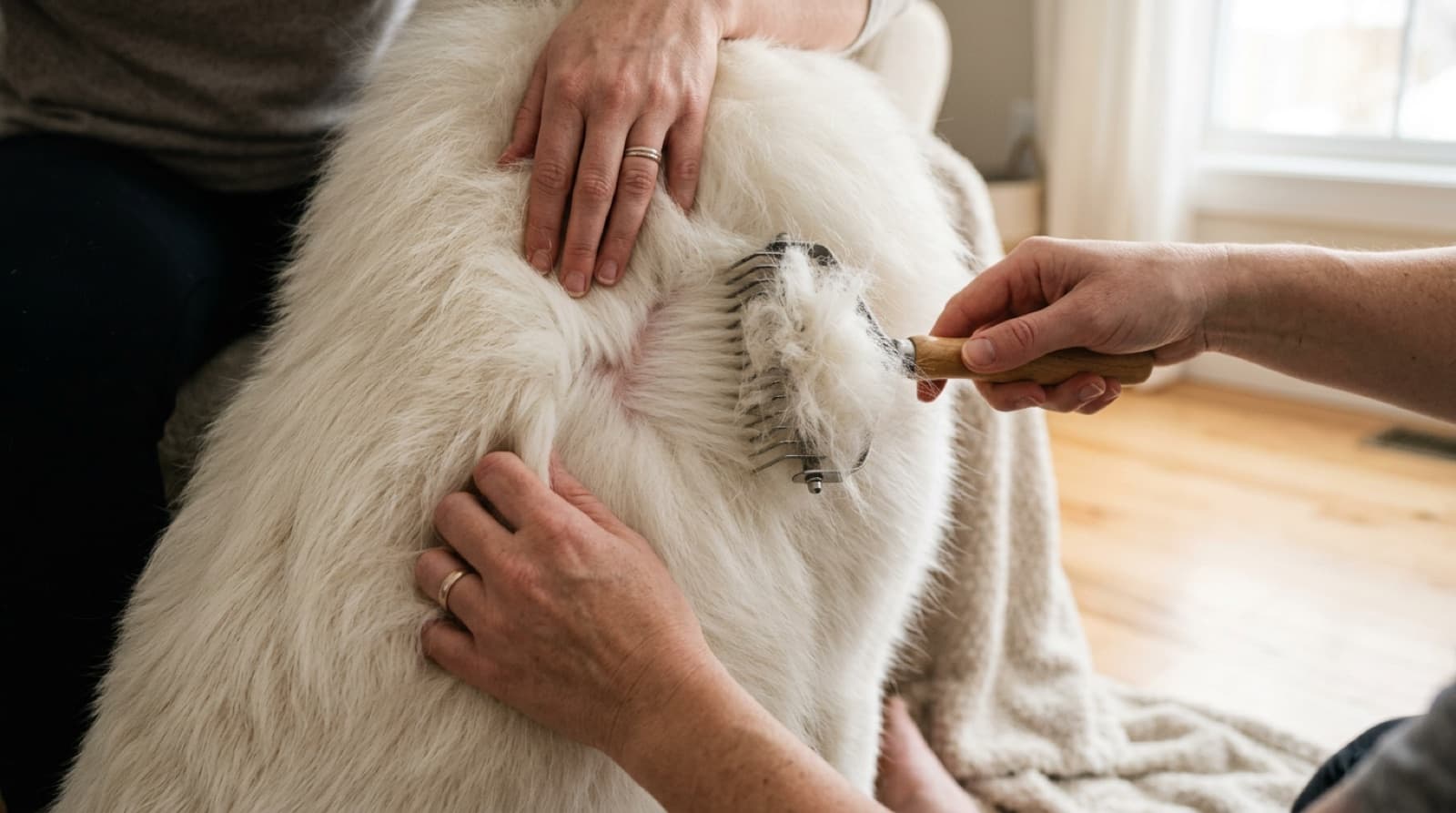
This is where the Pyr earns its keep as a commitment. It is a giant coat, so a real brush-out is thirty minutes or more at a weekly baseline, and during the seasonal coat blow it becomes daily. Setting that expectation before you adopt is the difference between a well-kept Pyr and a matted one.
The technique that matters is brushing to the skin, not over the top. A slicker run across the surface looks done while mats quietly form in the undercoat against the skin, which is how owners discover a solid mat layer under a fluffy-looking coat. Work in sections: start with a long-toothed undercoat rake that reaches both layers, follow with a large slicker brush lifting the coat as you go, and confirm with a wide-tooth comb. Give the friction zones, behind the ears, under the collar, the mane, the elbows, and the britches, the most attention, and a detangler spray helps loosen a mat before you work it apart.
Double dewclaws, drying, and the honest cost
Two details round out Pyr grooming. First, the rear double dewclaws: a hallmark of the breed, functional, and not to be removed, but because they sit up on the leg and never touch the ground, they do not wear down and must be trimmed regularly with the rest of the nails, or they curl and grow into the leg. Check them every time you do nails with a nail grinder or clippers. Second, drying: after the rare bath, dry the dense coat all the way to the skin with a high-velocity dryer, because a wet undercoat traps moisture against the skin and can cause hot spots. Like the other giant double coats, a Pyr is tidied, never clipped, so it is fine to neaten the feet, the sanitary area, and stray feathering with thinning shears, but the body coat stays.
On cost, a Pyr is a giant-breed groom, so a deshedding bath and force-dry is a long, pricier appointment, giant-breed and dematting surcharges are common, and a heavily matted Pyr may be surcharged or turned away. Expect the top of the large-dog range, more at coat-blow season, and Canadian grooming cost surveys such as Dogster's give a sense of the ranges. Because the bathing is infrequent and there is no haircut, many Pyr owners do most of it at home, centred on a high-velocity dryer and a good rake, and book a groomer only occasionally.
Thinking about adopting a Great Pyrenees?
Go in ready for the weekly brush-out, skip the clippers and most of the baths, and this gentle giant mostly keeps itself clean. Browse Great Pyrenees and Pyr mixes available now from the rescues we track across Canada.
See Available Great Pyrenees →Frequently Asked Questions
Should I shave my Great Pyrenees in summer?
No. The double coat insulates against heat as well as cold and protects the pale, sun-sensitive skin from sunburn, so shaving a Pyr can make it hotter, not cooler, and it does not reduce shedding. It also risks lasting damage: the undercoat regrows faster than the guard coat and comes back sticky, velvety, and patchy, sometimes permanently. A big white dog panting in the heat looks like it needs a shave, which is exactly the trap. Brush the undercoat out so air can reach the skin instead.
How often should I bathe a Great Pyrenees?
Far less than most owners expect, roughly three to four times a year for a healthy, regularly brushed dog. The Pyr coat is famously dirt-resistant and largely self-cleaning, and over-bathing strips the natural oils that give it that quality, so washing a white dog often to keep it clean actually backfires. Between baths, let mud dry and brush or flake it out, and use a whitening shampoo occasionally to brighten the coat.
Does the self-cleaning coat really work?
Yes, genuinely. The coarse, oily outer coat resists dirt and mud, so mud that would stain another dog dries on a Pyr and then flakes off or brushes out in minutes once it is dry. This is one of the breed's most distinctive traits and the reason bathing is so infrequent. The catch is that self-cleaning refers to dirt, not tangles: the coat still mats in the friction zones and still needs regular brushing to the skin.
How often should I brush a Great Pyrenees?
At least weekly, and closer to thirty minutes or more given the size of the coat, rising to daily during the big seasonal coat blow. The key is brushing all the way to the skin, not just over the surface, because on a coat this dense the mats form underneath where a surface brush never reaches. Work in sections with a rake first, then a slicker, then a comb to check.
Where do Great Pyrenees mat the most?
Behind the ears, under the collar, in the mane and ruff, at the elbows, in the britches at the back of the thighs, on the plumed tail, and on the belly. These friction zones tangle even when the body looks fine, and a collar left on constantly is a common mat culprit. Work a comb to the skin through these areas every time you groom, and consider removing the collar at home to let the ruff breathe.
What are the double dewclaws and do they need special care?
The double dewclaws are a pair of extra claws on each rear leg, a hallmark of the breed that is required in the standard and should not be removed, since they are functional. Because they sit up on the leg and never touch the ground, they do not wear down, so they need regular trimming just like the other nails, or they can curl around and grow into the leg or pad. Check and trim them whenever you do the rest of the nails.
What is the best brush for a Great Pyrenees?
An undercoat rake with teeth long enough to reach through both coat layers to the skin is the core tool, backed by a large slicker brush to lift and finish the coat and a wide-tooth comb to check for mats in the friction zones. A high-velocity dryer is the biggest upgrade on a coat this size, both for blowing out the undercoat during a blow and for drying to the skin. Use a Furminator-style deshedding blade sparingly, since heavy use can cut the guard coat.
How much does it cost to groom a Great Pyrenees?
Professional grooming is expensive because of the size, since a deshedding bath and a full force-dry on a giant coat is a long appointment, giant-breed and dematting surcharges are common, and some groomers decline heavily matted giants. Expect the top end of large-dog grooming, more during a coat blow, and Canadian grooming cost surveys give a sense of the ranges. Many owners invest in a strong high-velocity dryer and a good rake and do maintenance at home, alternating with occasional professional visits.
How to Groom a Samoyed
Another big white never-shave coat where drying to the skin is non-negotiable.
How to Groom a Newfoundland
The same giant-coat, hours-long brush-out and tidy-not-clip rules.
What to Feed a Great Pyrenees
The other half of Pyr care: giant-breed growth, the light appetite, and portions.
Great Pyrenees for Adoption
Live listings of Great Pyrenees and Pyr mixes from the rescues we track.