The short answer
Never shave a Newf, plan the brush-out in hours, and dry all the way to the skin. The giant, oily, water-resistant double coat sheds heavily plus two coat blows, so line-comb to the skin weekly (daily during a blow) with a rake and comb, and use a high-velocity dryer, both to deshed and to dry to the skin, which prevents hot spots. The drool is a near-daily cleaning job. The body is tidied, never clipped. Expect a serious time and, at the groomer, cost commitment.
Never shave the double coat
Shaving a Newfoundland does not cool it and does not reduce shedding. It strips the coat's insulation, water resistance, and sun protection, and can grow back patchy and damaged. Brush and tidy, never shave.
This is the one with the highest stakes, because the temptation is so understandable. A Newfoundland is a giant, dark, heavily coated dog that genuinely feels the heat, so shaving it for summer feels like the kind thing to do. It is the trap. The heavy double coat, a dense soft undercoat under a coarse, oily, water-resistant outer coat bred for cold-water rescue, regulates temperature in both directions and shields the skin, and as the American Kennel Club explains, shaving a double-coated dog removes that protection and tends to make it hotter, not cooler.
It does not reduce shedding, and it risks lasting damage: the regrowth on a shaved double coat commonly comes back patchy, uneven, and altered in texture, and may never fully recover. The right way to help a hot Newf is to brush the dead undercoat out so air can circulate to the skin, plus the ordinary sense of shade, water, and cool floors. Clipping close is only ever for a genuine medical need, on a vet's advice. For heat and for shedding, brushing is the answer.
Size means hours: line-combing a giant coat to the skin
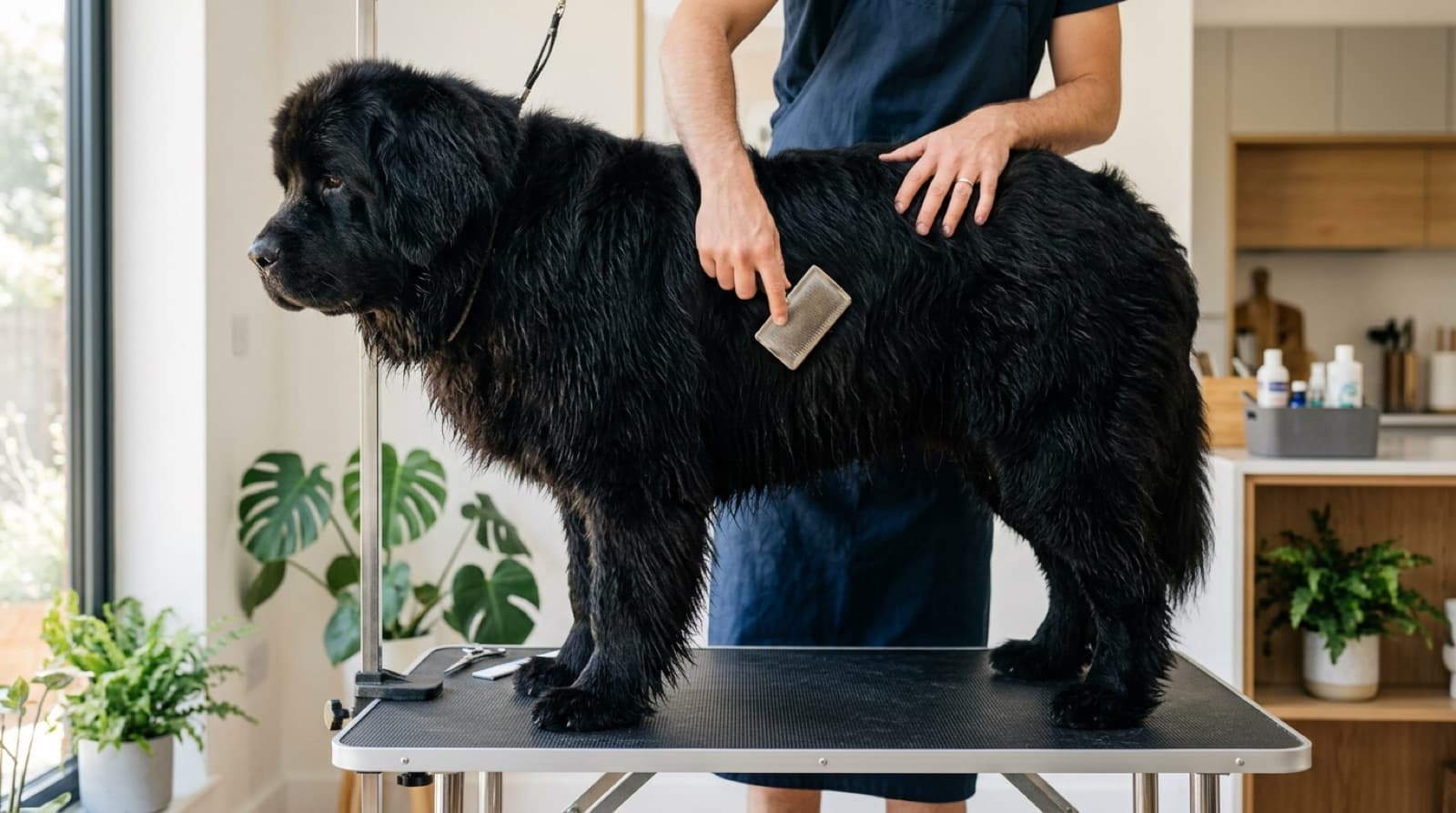
Here is the honest reality-check no one gives new Newf owners: a full brush-out is measured in hours, and drying after a bath alone can run one to two hours or more even with a good dryer. Most breed grooming articles quote “brush weekly” as if it is a fifteen-minute chore. On a coat this size it is a scheduled block of your week. Going in expecting that is the difference between a well-kept Newf and a matted one.
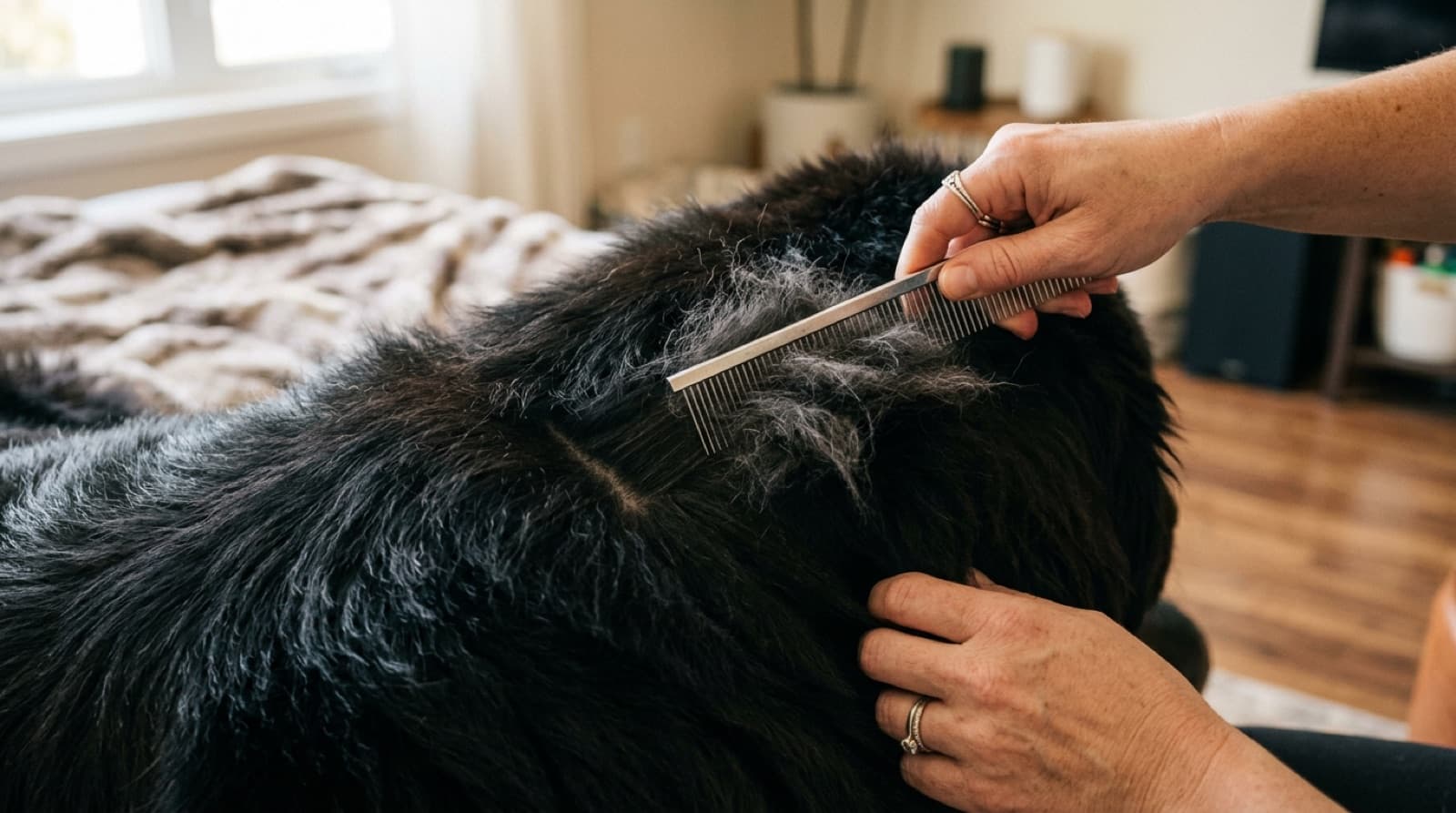
The technique that actually works is line-combing to the skin, not surface brushing. The most common reason a brushed Newf still mats is that the pin brush only touches the top coat while the dense undercoat felts underneath. Instead, lift the coat in sections and comb down to the skin: run a grooming rake and a metal comb through each section, and if the comb reaches the skin cleanly, that part is done. A pin brush is fine for the top coat, but it is the comb that confirms the job. The friction zones behind the ears, in the armpits, in the britches, and at the tail need the most attention.
Some of the product links in this section are Amazon affiliate links — we may earn a small commission at no extra cost to you. It never changes which products we recommend.
The water-resistant coat, bathing, and drying to the skin
The Newf coat is oily and water-resistant by design, and that biology shapes the whole bathing routine. It is genuinely hard to get soaked to the skin, because the coat sheds water, and just when you think the dog is wet enough it shakes and looks dry again. So a bath means working water and shampoo down to the skin in sections, then rinsing thoroughly, because a dense coat holds product.
Then comes the step that matters most for health: dry all the way to the skin with a high-velocity dryer. This is not cosmetic. A dense, oily coat traps moisture against the skin for hours, and that trapped moisture is exactly how hot spots and skin infections start, so drying to the skin is genuinely safety-critical on this breed. A high-velocity dryer is really the only practical tool for it, and it doubles as a deshedding tool during a coat blow. Never use a human hair dryer, which is too hot and risks burning, and too weak to reach the undercoat. A deshedding shampoo during a blow helps loosen the undercoat first.
Drool is a grooming task, and the light tidy
Newfoundlands are heavy droolers, and unlike a personality quirk you can shrug off, the drool is a real grooming job. Saliva dries and crusts into the chin, chest, and front-leg fur, where it mats the coat and turns musty if it is left. So comb those areas almost daily, keep microfiber drool towels around the house and car, and use stainless steel bowls, which build up less slime than plastic. Wiping the face and chest after meals and drinks keeps the drool from felting the coat.
Like the other giant double coats, a Newf is tidied, never clipped. It is fine to neaten the feet and the fur between the pads, tidy the hocks, and clean up the sanitary area with thinning shears, and to keep the nails short with a heavy-duty nail grinder, since a giant dog grows thick nails. But the body coat stays as it is; the shortest a Newf should ever go is a light tidy.
The honest cost: groomer versus doing it yourself
A Newfoundland is one of the more expensive breeds to have groomed, and it is worth being realistic about why. A deshedding bath, a full force-dry, and a light tidy on a giant dog is a long, sometimes multi-hour appointment, giant-breed and dematting surcharges are common, and a heavily matted Newf may draw a two-person handling fee or be turned away entirely. Expect the top end of large-dog grooming, more during coat-blow season, and Canadian grooming cost surveys such as Dogster's give a sense of the ranges. Booked every four to eight weeks, professional grooming for a Newf adds up quickly.
That math is why most committed Newf owners invest in doing it themselves, with the honest caveat that it is a real time commitment. The centre of the home kit is a strong high-velocity dryer, the single most important tool on a coat this size, backed by a grooming rake, a pin brush, a metal comb, and a grooming table. The upfront cost is meaningful, but it pays back fast against repeat giant-breed grooms, and it lets you keep on top of the coat between the deeper sessions rather than letting it mat.
Thinking about adopting a Newfoundland?
Go in ready for the hours of brushing and the drool, skip the clippers, and this Canadian giant stays healthy and gorgeous. Browse Newfoundlands and Newf mixes available now from the rescues we track across Canada.
See Available Newfoundlands →Frequently Asked Questions
Should you ever shave a Newfoundland?
No. The heavy double coat insulates against heat as well as cold, repels water, and shields the skin from the sun, so shaving hurts the dog's temperature regulation, raises the risk of sunburn and overheating, and can cause the coat to grow back damaged and patchy. It is tempting on a big, dark, heavy-coated dog that clearly feels the heat, which is exactly the trap. Manage summer heat with shade, cool water, air conditioning, and brushing out the undercoat so air can circulate, not with clippers.
Will shaving keep my Newfoundland cooler in summer?
It backfires. A shaved Newf loses the insulating layer that actually keeps it cooler in heat and gains a real sunburn and overheating risk, so it ends up worse off, not better. The genuine cooling move is to brush the dead undercoat out thoroughly so the coat can breathe and air can reach the skin. A clean, well-brushed double coat is the dog's own climate control.
How long does it take to groom a Newfoundland?
A thorough brush-out runs into hours on a coat this size, and drying to the skin after a bath alone can take one to two hours or more even with a high-velocity dryer. This is the honest reality-check most grooming articles skip: a Newf is not a quick weekly pass, it is a significant, recurring time commitment. It helps to work in sections and to treat grooming as a scheduled part of the week rather than an afterthought.
How often should I brush a Newfoundland?
Weekly at minimum year-round, and daily during the spring and fall coat blows when the undercoat sheds in bulk. The key is line-combing down to the skin rather than just brushing the top coat, because on a coat this dense the mats form underneath where a surface brush never reaches. Coat blows are triggered by daylight, not temperature, so a heavy shed in late winter is normal.
Why does my Newfoundland mat even though I brush it?
Almost always because the brushing is only reaching the top coat. A pin brush glides over the surface while the dead undercoat mats against the skin, especially in the friction zones behind the ears, in the armpits, in the britches, and at the tail. The fix is line-combing: lift the coat in sections and comb down to the skin with a metal comb, which catches what the brush misses. Drool crusting into the chest and chin fur is another common mat source.
Do I need a high-velocity dryer for a Newfoundland?
For a coat this size, effectively yes. It is the only practical way to dry a dense, oily, water-resistant coat all the way to the skin, and drying to the skin is not cosmetic, it prevents the hot spots and skin infections that trapped moisture causes in a dense coat. It also doubles as a deshedding tool during a coat blow, blowing out loose undercoat. Never use a human hair dryer, which is too hot and risks burning the skin, and too weak to reach the undercoat.
How do I manage all the drooling?
Treat it as part of grooming, not a side quirk. Keep microfiber drool towels within reach, comb the chin, chest, and front legs almost daily so saliva does not dry and crust into mats, and use stainless steel bowls, which accumulate less slime than plastic. A light fifty-fifty white-vinegar-and-water mist after cleaning helps with odour. Drool that is left to dry in the coat is a leading cause of matting and a musty smell.
How much does it cost to groom a Newfoundland?
Professional grooming is expensive because of the size and the coat volume: a deshedding bath, a full force-dry, and a light tidy on a giant dog is a long, sometimes multi-hour appointment, with giant-breed and dematting surcharges common, and some groomers decline heavily matted giants. Expect the top of the large-dog range, more during coat-blow season, and Canadian grooming cost surveys give a sense of the ranges. Many owners invest in a strong high-velocity dryer and do maintenance at home, which pays back quickly against repeat giant-breed grooms.
How to Groom a Bernese Mountain Dog
Another giant double coat with the same never-shave, dry-to-the-skin, tidy-not-clip rules.
How to Groom a Samoyed
A big never-shave coat where drying to the skin is likewise non-negotiable.
What to Feed a Newfoundland
The other half of Newf care: giant-breed growth, joints, bloat risk, and portions.
Newfoundlands for Adoption
Live listings of Newfoundlands and Newf mixes from the rescues we track.