The short answer
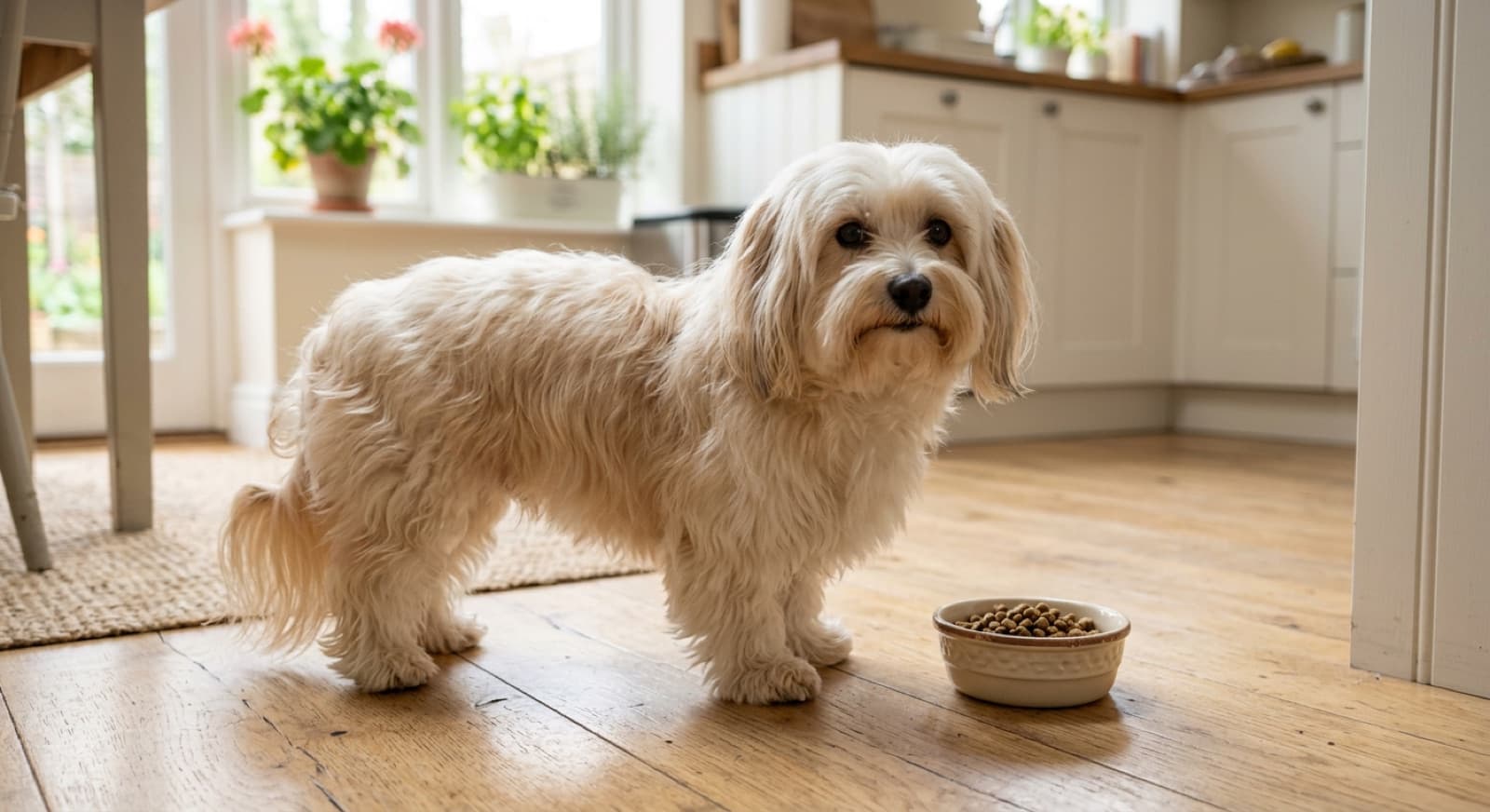
Feed a Havanese a complete small-breed food in measured meals, hold the line on pickiness, and respect the tiny calorie budget. The most common mistake is creating a picky eater by swapping toppers, so commit to one food and feed scheduled meals. Brush the teeth, because toy breeds are prone to dental disease and kibble does not clean them. Keep treats under 10 percent of a very small daily budget. The one genuine breed-specific diet link is liver shunt, which is vet-managed. Tear staining is cosmetic, and no food cures it.
The picky-eater trap
Havanese owners report the same pattern over and over, and it is mostly self-inflicted. The dog hesitates at its kibble, the worried owner adds a tasty topper or switches brands, it works for a few days, and then the dog holds out again for the next upgrade. One owner ran a single six-month-old through six premium kibbles this way. As VCA puts it, owners often inadvertently create a picky eater that holds out for favourites.
The fix is structure, not variety. Pick one good food, put it down for 10 to 30 minutes, then pick it up and offer nothing until the next scheduled meal. The AKC recommends two meals a day for small breeds, partly because little dogs manage their energy and blood sugar better on a split schedule. One firm caveat, though: the “a healthy dog won't starve itself” advice only holds once you have ruled out a medical cause. In a small dog, sudden refusal can mean dental pain, a GI problem, or, in a young puppy, low blood sugar, so a real change in appetite is a vet question, not just a battle of wills.
Small-breed teeth, and the kibble myth
Dental care is not optional for a Havanese. As the Merck Veterinary Manual notes, toy breeds are a clear risk factor for periodontal disease, and most dogs have some gum disease by a young age. Crowded teeth in a small jaw, plus baby teeth that fail to fall out, trap plaque and accelerate the problem, and neglected Havanese sometimes need many extractions while still young.
The myth to drop is that dry kibble cleans the teeth. Ordinary kibble shatters on contact or is swallowed whole, with little scrubbing at the gum line, and a small-bite kibble is about chewability and choking safety, not cleaning. What actually works is daily brushing with a dog toothpaste, never human toothpaste, dental products carrying the VOHC seal, and professional cleanings. Build the brushing habit in puppyhood, because for this breed it is a lifelong need.
Liver shunt: the breed-specific diet link
A liver-shunt diet is a vet-prescribed therapeutic diet, not a do-it-yourself plan. Diet manages the disease; it does not cause or cure it. Surgery is the definitive fix where possible.
If there is one place diet genuinely intersects with a Havanese-specific health issue, it is the liver shunt. The Havanese Club of America lists portosystemic shunt among the breed's hereditary conditions, and the Merck Veterinary Manual covers the condition: blood that should be filtered by the liver bypasses it, so toxins build up.
Diet is central to managing it. As VCA describes, a diagnosed dog goes on a vet-prescribed diet with controlled, highly digestible or plant-based protein and restricted copper, often with a medication like lactulose, to reduce the toxins the liver cannot clear. The definitive fix, where the anatomy allows, is surgery; the diet manages the disease in the meantime or when surgery is not an option. The signs to watch for include poor growth, disorientation or unusual behaviour after meals, and neurologic episodes. If they appear, that is a veterinary diagnosis, and any therapeutic diet comes from your vet, never from guesswork.
Puppy hypoglycemia, in perspective
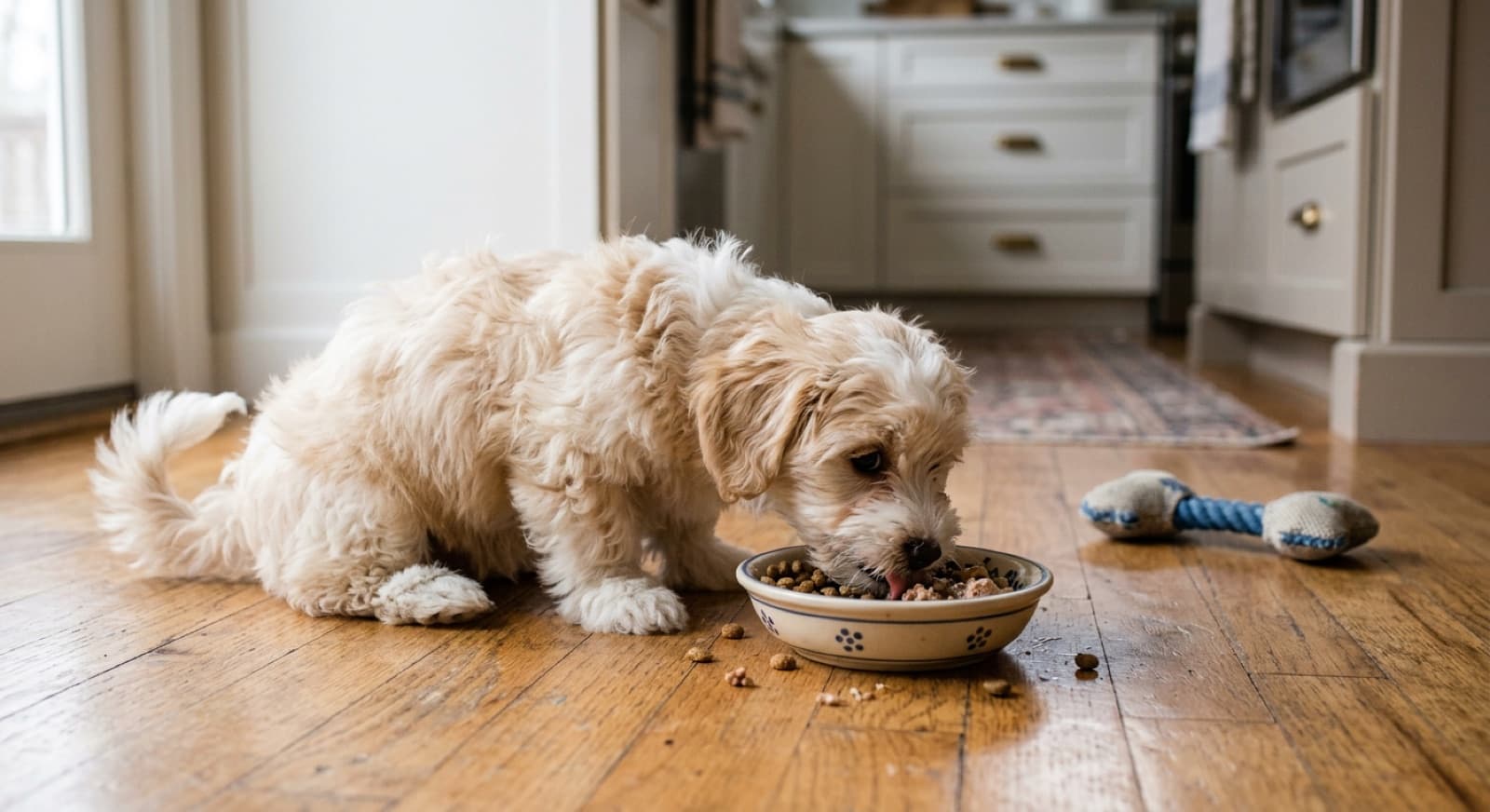
Low blood sugar gets a lot of alarmed attention online, so it is worth putting in perspective for this breed. Hypoglycemia is a genuine risk in very young, very small puppies, under about three months, especially teacup-sized, runt, or recently rehomed and stressed pups, whose immature liver cannot store enough energy. The signs are weakness, wobbliness, trembling, and a glazed look.
But the Havanese is a normal-sized toy at 7 to 13 pounds, and tellingly the breed club does not list hypoglycemia among its health concerns, so for most Havanese it is a short-lived puppy precaution rather than a lifelong danger. The sensible plan: feed a young Havanese puppy three to four small meals a day so it never goes long without food, dropping to two meals around six months. If a puppy ever does crash, the emergency response, per the AKC, is to rub a little corn syrup or honey on the gums, where it absorbs without needing to be swallowed, and then go straight to the vet.
The tiny calorie budget and the treat math
This is where being small changes everything. A Havanese eating only around 250 to 425 calories a day has almost no room for extras. To make it concrete, VCA notes one large dog biscuit can be about 85 calories, which for a Havanese is roughly a fifth to a third of the entire day in a single treat. That is how a small dog quietly becomes overweight without the owner noticing.
So the treat rule matters more here than for any big dog. Keep all treats under about 10 percent of daily calories, and count them inside the daily total rather than on top. Break training treats into tiny pieces, use part of the measured kibble ration for rewards, and lean on low-calorie options like a bit of vegetable. Because a Havanese hides its body under a long coat, judge weight by feeling the ribs and waist rather than by eye, aiming for a lean body condition.
Tear staining: mostly not the food
The pale Havanese coat shows tear stains clearly, so owners chase dietary fixes, but the honest picture is that this is mostly cosmetic. As PetMD explains, the reddish-brown colour comes from porphyrins, pigments in tears, and most dogs with tear stains have no underlying eye disease. The breed's facial hair and tear drainage make it more visible, not a food problem.
Owners swear by removing chicken, switching to fish, parsley, or filtered water, but the veterinary guidance is mostly mechanical: trim the fur around the eyes, keep the area clean and dry, and have a vet rule out a blocked tear duct. A genuine food allergy or very hard water can increase tearing in an individual dog, but for the typical Havanese no food cures staining. One real safety note: avoid tear-stain products containing the antibiotic tylosin, which the FDA flagged as not approved for this use; chronic antibiotics for a cosmetic stain are not appropriate.
Which health issues involve diet, and what the coat needs
Beyond the liver shunt, it helps to separate what diet touches from what it does not.
- Liver shunt (diet-managed): the real breed-specific link, covered above, and strictly vet-directed.
- Patellar luxation (weight only): the slipping kneecap common in toy breeds is not caused by diet, but keeping the dog lean is part of managing it.
- Legg-Calvé-Perthes, chondrodysplasia, cataracts, and heart conditions (not diet): these are genetic or structural, with no dietary cause or cure.
On the famous silky coat, diet helps the skin but does not change the coat type. As VCA notes, omega-6 and omega-3 fatty acids support a healthy coat and can help dull, itchy, or inflamed skin, but the Havanese coat is a genetic trait maintained by grooming. A complete diet already supplies what a healthy coat needs, so think of omega-3 as a tool for compromised skin, not a silkiness upgrade, and do not over-supplement.
Foods to avoid
These are dangerous to any dog, and the harmful dose is smaller for one this size, so be strict:
- Xylitol (in sugar-free gum, some peanut butters, and baking), which is rapidly fatal to dogs
- Chocolate (darker is worse)
- Grapes and raisins (can cause kidney failure, even a few)
- Onions, garlic, leeks, and chives
- Macadamia nuts
- Alcohol and caffeine
- Cooked bones (they splinter)
Because a Havanese is so small, even a little of these goes a long way. If your dog eats something on this list, call your vet, the nearest emergency clinic, or a pet poison helpline right away.
Looking to adopt a Havanese?
Set up the meal schedule and a brushing routine before day one. Browse Havanese and Havanese mixes available now from the rescues we track across Canada.
See Available Havanese →Where to buy Havanese food
Every brand worth feeding a Havanese is easy to find:
- Pet specialty chains (Pet Planet, Tail Blazers, Tisol). Carry the small-bite, nutritionist-backed formulas and VOHC dental products.
- Pet Valu and PetSmart. Stock the major small-breed puppy and adult formulas.
- Your vet clinic. The essential source for the prescription liver diet if a shunt is ever diagnosed.
An ordinary small-breed formula from an established brand is right for a healthy Havanese, plus a set of VOHC dental products and a toothbrush. Both are easy to set on a recurring delivery.
Frequently Asked Questions
How much should I feed a Havanese?
Not much, because a Havanese is a small dog of about 7 to 13 pounds with a tiny calorie budget, often only around 250 to 425 calories a day at maintenance, which is frequently just half a cup to one cup of food. Feed adults two meals a day, measure with a scale or cup rather than eyeballing, and adjust to keep a lean body condition. Because the budget is so small, treats and extras add up fast, so count them in. These are starting points: individual needs vary widely, so feed to the dog's waist and rib cover, and let your vet set a target.
My Havanese is a picky eater. How do I fix it?
Most Havanese pickiness is created, not inborn. The classic trap is adding a topper or switching foods every time the dog hesitates, which teaches it to hold out for something better; one owner ran a single puppy through six premium kibbles this way. The fix is structure: pick one good food, put it down for 10 to 30 minutes, then pick it up and offer nothing until the next meal. A healthy adult adjusts in a day or two. One firm caveat: rule out a medical cause first, because in a small dog a sudden refusal can mean dental pain, a stomach problem, or, in a tiny puppy, low blood sugar. Pickiness and illness are not the same thing.
Does my Havanese really need its teeth brushed?
Yes, more than most breeds. Toy breeds like the Havanese are prone to periodontal disease because crowded teeth in a small jaw, plus retained baby teeth, trap plaque, and most dogs have some gum disease by a young age. Dry kibble does not clean the teeth, despite the common belief; ordinary kibble shatters or is swallowed with little gum contact. What works is daily brushing with a dog toothpaste, dental products carrying the VOHC seal, and professional cleanings. Some Havanese need multiple extractions young if dental care is neglected, so build a brushing habit from puppyhood.
Is a liver shunt in a Havanese related to diet?
Yes, in management. The Havanese is a breed predisposed to portosystemic shunt, a liver condition where blood bypasses the liver, and diet is central to managing it, though not to causing or curing it. A diagnosed dog is put on a vet-prescribed diet with controlled, highly digestible or plant-based protein and restricted copper, often with medication like lactulose, to limit the toxins the liver cannot clear. Surgery is the definitive fix where possible; the diet manages the disease. So if a Havanese shows signs like poor growth, disorientation after meals, or unusual neurologic episodes, that is a vet diagnosis, and the diet comes from your vet.
How worried should I be about hypoglycemia in a Havanese puppy?
Less than the internet suggests, but be sensible. Low blood sugar is a real risk in very young, very small puppies under about three months, especially teacup-sized, runt, or recently rehomed stressed pups, whose immature systems cannot store enough energy. But the Havanese is a normal-sized toy at 7 to 13 pounds, and the breed club does not list hypoglycemia as a breed health concern, so it is a short-lived puppy precaution, not a lifelong danger. Feed a young puppy three to four small meals a day, and if one ever goes weak, wobbly, or glazed, rub a little corn syrup or honey on the gums and go to the vet.
Why is one biscuit such a big deal for a Havanese?
Because the dog is tiny. A Havanese eating only around 250 to 425 calories a day has very little room for extras, and one large dog biscuit can be roughly 85 calories, which is a fifth to a third of the entire daily budget in a single treat. That is how a small dog quietly becomes overweight. Keep all treats under about 10 percent of daily calories and count them inside the daily total, not on top. Break training treats into tiny pieces, use part of the measured kibble ration, and reach for low-calorie options like a bit of vegetable. With a toy breed, treat math matters more than with any big dog.
Can changing food cure my Havanese's tear stains?
Probably not. Tear stains are reddish-brown marks from porphyrins, pigments in tears, made more visible by the Havanese's light coat and by facial anatomy that lets tears overflow. Owners swear by removing chicken, switching to fish, or using filtered water, but the veterinary guidance is mostly mechanical: trim the fur, keep the area clean and dry, and have a vet check for a blocked tear duct. A genuine food allergy or very hard water can increase tearing in an individual dog, but for most Havanese staining is cosmetic and no food cures it. Avoid tear-stain products containing the antibiotic tylosin, which the FDA flagged as unapproved for this use.
What to Feed a Maltese
The same toy-companion picky-eating, dental, and tear-stain playbook.
What to Feed a Toy Poodle
Tiny-dog portion precision, hypoglycemia, and dental care.
What to Feed a Bichon Frise
Another small white companion breed, with tear staining and dental care.
Havanese for Adoption
Live listings of Havanese and Havanese mixes from the rescues we track.