The short answer
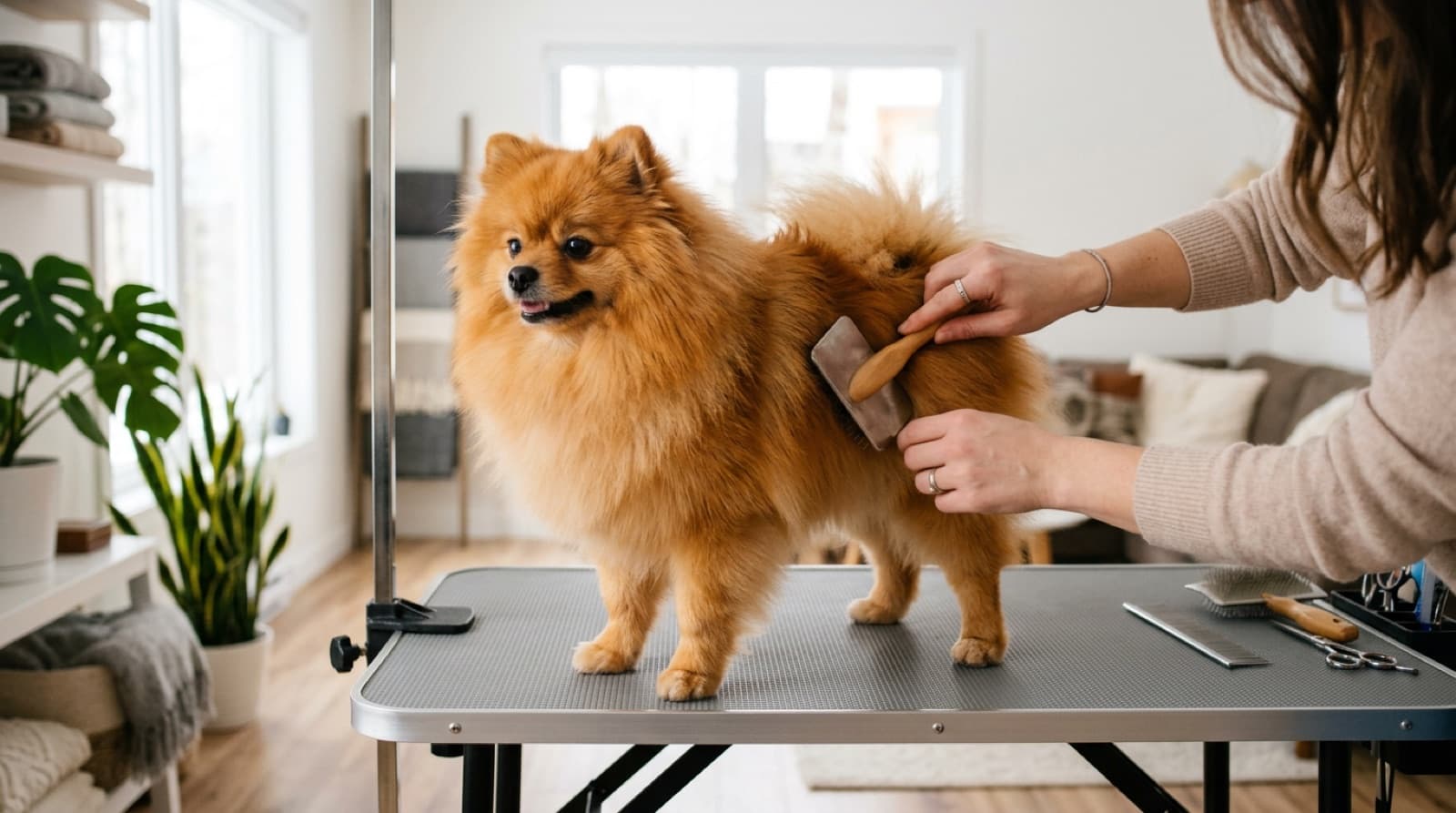
Never shave a Pomeranian's double coat. It does not cool the dog, it does not reduce shedding, and it can grow back patchy or never fully return. Instead, line brush to the skin two to three times a week, and daily during the twice-yearly coat blow, to clear the undercoat. If you want a tidier look, ask for a scissored teddy-bear trim that never goes down to the skin. The only reason to ever clip close is severe matting, and that is a groomer or vet decision, not a cosmetic one.
Why you should never shave a Pomeranian
Shaving a Pomeranian's double coat can trigger post-clipping alopecia, where the coat grows back patchy, fuzzy, or not at all. It does not cool the dog and it does not reduce shedding. Brush the coat, do not shave it.
This is the part that makes grooming a Pomeranian different from grooming a Poodle or a Labrador, and it is the thing most articles bury in a list of haircut styles. A Pomeranian is a double-coated spitz, with a harsh outer guard coat over a soft, dense undercoat that regulates both heat and cold. When you shave that coat down, two things go wrong.
First, it often does not grow back properly. The undercoat regrows faster than the guard coat, so the regrowth comes in soft, fuzzy, cottony, uneven, or patchy, and in some dogs, particularly older ones, the coat never fully returns. This is post-clipping alopecia, and the breed is also prone to a condition called Alopecia X, sometimes called black skin disease, so shaving can trigger or unmask longer-term hair loss. Second, shaving does not do the thing people shave for. It does not keep the dog cooler, because the double coat is what insulates against heat as well as cold, and it does not reduce shedding, since you still have the same volume of hair, just shorter. Groomer and breed sources such as Pomeranian.org are consistent on this. The only legitimate reason to clip a Pom close is a coat so severely matted to the skin that it cannot be brushed out, which is a welfare call made with your groomer or vet, not a summer haircut. Because Alopecia X and post-clipping alopecia are health matters, a coat that will not regrow deserves a veterinary workup rather than home remedies or hormone products.
What to do instead: line brush the double coat
If you are not shaving, the whole job is brushing correctly. The mistake owners make with any double coat is brushing the surface: you run a brush over the top of that fluffy outer coat while the compacted undercoat sits untouched at the skin, forming mats and holding dead hair. It feels like you brushed the dog. You did not.
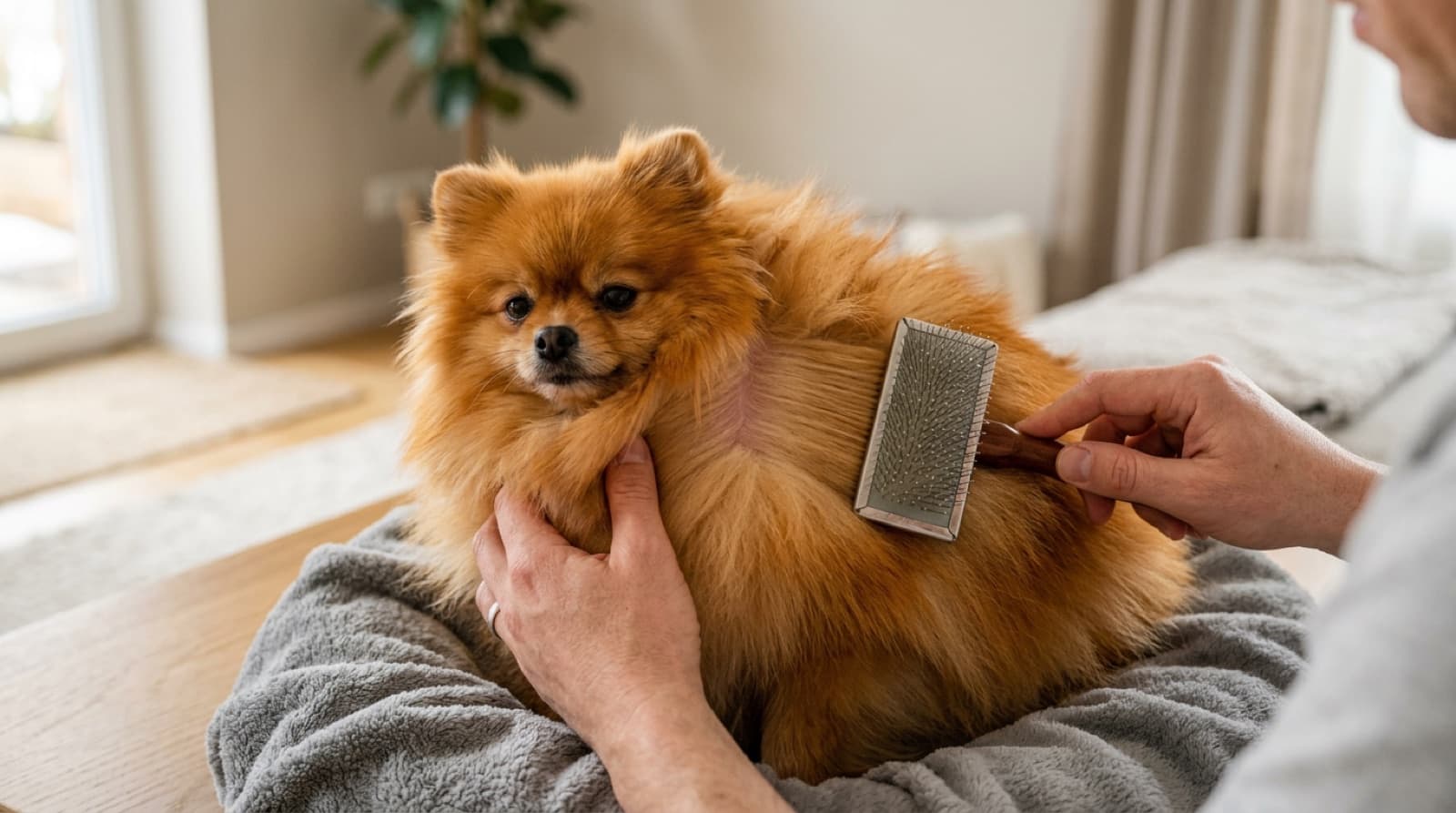
The method that works is line brushing. Part the coat in a section down to the skin, hold the hair above the part out of the way, and brush the exposed layer from the skin outward with a slicker brush, then move the part along and repeat. Confirm with a metal comb: if it glides to the skin the section is clear, and if it snags there is undercoat still packed in. Mist first with a detangling spray, because brushing a bone-dry coat causes breakage and static.
Some of the product links in this section are Amazon affiliate links — we may earn a small commission at no extra cost to you. It never changes which products we recommend.
One tool warning worth stating plainly: use a fixed undercoat rake to reach the undercoat during the coat blow, but avoid the spinning-blade deshedding tools that cut the coat, because on a Pom they thin and damage the guard coat like tiny lawnmowers. Brush two to three times a week normally, and daily during the coat blow.
The coat blow and the puppy uglies
Two coat events surprise Pomeranian owners, and neither is a reason to shave. The first is the coat blow, when an adult Pom drops its dense undercoat heavily about twice a year. It looks alarming, clumps of fluff come out, and the temptation is to clip it all off. Resist it. Instead, increase brushing to daily, use the undercoat rake and a high-velocity dryer to blow the loose undercoat out, and the blow passes in a few weeks with the coat intact.
The second is the puppy uglies, the awkward coat change roughly between four and twelve months when a Pom trades its soft puppy coat for the adult double coat. Most puppies go through a scraggly, patchy, uneven stage, and the colour and markings often shift too. It is completely normal and temporary, the adult coat comes in fuller, and the one thing not to do is shave or heavily cut during this window, since it can interfere with the adult coat developing properly.
Safe tidying, bathing, nails, and feet
You can absolutely neaten a Pom without shaving. A scissored teddy-bear trim rounds the coat and tidies the face, feet, and rear with blunt-tip scissors, leaving the protective coat length in place. Trim the sanitary area and the fur between the paw pads, and keep the face tidy, all with scissors rather than clippers taken to the skin.
Bathe only every few weeks and always after a full brush-out, since water tightens any remaining mats, and dry to the skin with the dryer so the dense undercoat does not stay damp and develop hot spots. Keep nails short with a nail grinder, grinding a little at a time on small-breed nails. Little and often is the whole philosophy with a Pom: frequent brushing and light scissoring, never a reset with a clipper.
The honest cost: groomer versus doing it yourself
A Pomeranian is a moderate grooming commitment. Professional grooms commonly run around $60 to $100 or more per visit in Canada, higher in Toronto and Vancouver, roughly every four to six weeks for a bath, brush-out, and light scissored tidy. Canadian grooming cost surveys such as Dogster's give a sense of the ranges, and a dense double coat plus hand-drying adds time compared with a simple short-haired trim.
One important thing to do at the groomer costs nothing: say clearly, every time, that you do not want the dog shaved, only brushed out and scissored. Groomers sometimes reach for the clippers on a matted or blowing coat, and a shaved Pom is exactly the outcome this guide is about avoiding. Grooming at home cuts the bill, and the core kit is inexpensive, a quality slicker, a metal comb, a detangling spray, an undercoat rake, and blunt scissors, with a high-velocity dryer the one bigger add-on that earns its keep at coat-blow time. The home routine is what keeps the professional bill and the shaving risk down.
Thinking about adopting a Pomeranian?
Commit to regular brushing, skip the clippers, and that double coat stays gorgeous. Browse Pomeranians and Pom mixes available now from the rescues we track across Canada.
See Available Pomeranians →Frequently Asked Questions
Should I shave my Pomeranian in summer?
No. Shaving removes the double coat that actually insulates a Pomeranian from heat as well as cold, so it does not cool the dog down, and it carries a real risk that the coat grows back patchy or does not fully return. The thing that genuinely keeps a Pom cool is brushing out the dead undercoat so air can move through the coat. Shade, water, and avoiding the hottest part of the day do far more than a clipper ever will.
Will my Pomeranian's coat grow back after being shaved?
Sometimes, but often not the way it was. The soft undercoat tends to grow back faster than the harsh guard coat, so the regrowth can come in fuzzy, cottony, uneven, or patchy, and in some dogs, especially older ones, it never fully returns. This is called post-clipping alopecia, and because the breed is also prone to a condition called Alopecia X, shaving can sometimes trigger or unmask longer-term hair loss. It is a risk not worth taking for a cosmetic trim.
What is post-clipping alopecia?
It is hair loss where a clipped or shaved area does not grow back, because the follicles effectively went dormant after the coat was removed. In a double-coated breed the guard hairs are slow to return and the undercoat can dominate, leaving a fuzzy or bald patch. It can also be a sign of an underlying hormonal or metabolic issue, so a Pomeranian with a shaved area that will not regrow should be seen by a veterinarian rather than just waited out.
What is the difference between a teddy bear cut and a lion cut?
A teddy bear cut scissors the coat shorter and rounds the face and legs without shaving down to the skin, which keeps the protective coat intact and is the safe way to tidy a Pom. A lion cut shaves the body close, leaving a mane and a tail plume, which sits much closer to the shaving risk and needs frequent touch-ups. If you want a neater look, ask for a scissored teddy-bear trim and specifically tell the groomer not to shave to the skin.
How often should I brush my Pomeranian?
Two to three times a week at a minimum, and ideally daily during the twice-yearly coat blow when the undercoat drops heavily. The key is to brush all the way down to the skin, not just over the surface, because the dense undercoat mats against the skin where a surface brush never reaches. A consistent brushing habit is what makes shaving unnecessary in the first place.
What is line brushing?
It is the method that actually clears a double coat. You part the coat in a section, hold the hair above the part out of the way, and brush the exposed layer from the skin outward, then move the part and repeat until you have covered the dog. It works because it reaches the compacted undercoat at the skin, which is where mats and dead hair sit, instead of skating over the top of the guard coat and leaving the real problem untouched.
Why is my Pomeranian puppy patchy and shedding in clumps?
That is the normal coat change that owners call the puppy uglies. A Pom is born with a soft single puppy coat, blows it around four months, and grows the adult double coat in by roughly nine to twelve months, and the in-between stage looks scraggly and uneven for most puppies. It is temporary, the adult coat comes in fuller, and the one thing not to do is shave or heavily cut during this stage, since it can interfere with the coat developing properly.
Where do Pomeranians mat the most?
Behind the ears, under the collar and on the chest, in the rear britches, under the legs, and at the base of the tail. These are the friction and movement points where the dense undercoat compacts fastest. Check them every brushing session and line brush them to the skin, because a mat that starts here quickly tightens down against the skin where it is uncomfortable and hard to remove.
How to Groom a Poodle
A very different coat, but the same line-brushing skill for staying mat-free.
How to Groom a Samoyed
The same never-shave, brush-out rules for a bigger double-coated breed.
What to Feed a Pomeranian
The other half of Pom care: tiny-dog portions, dental care, and treats.
Pomeranians for Adoption
Live listings of Pomeranians and Pom mixes from the rescues we track.