The short answer
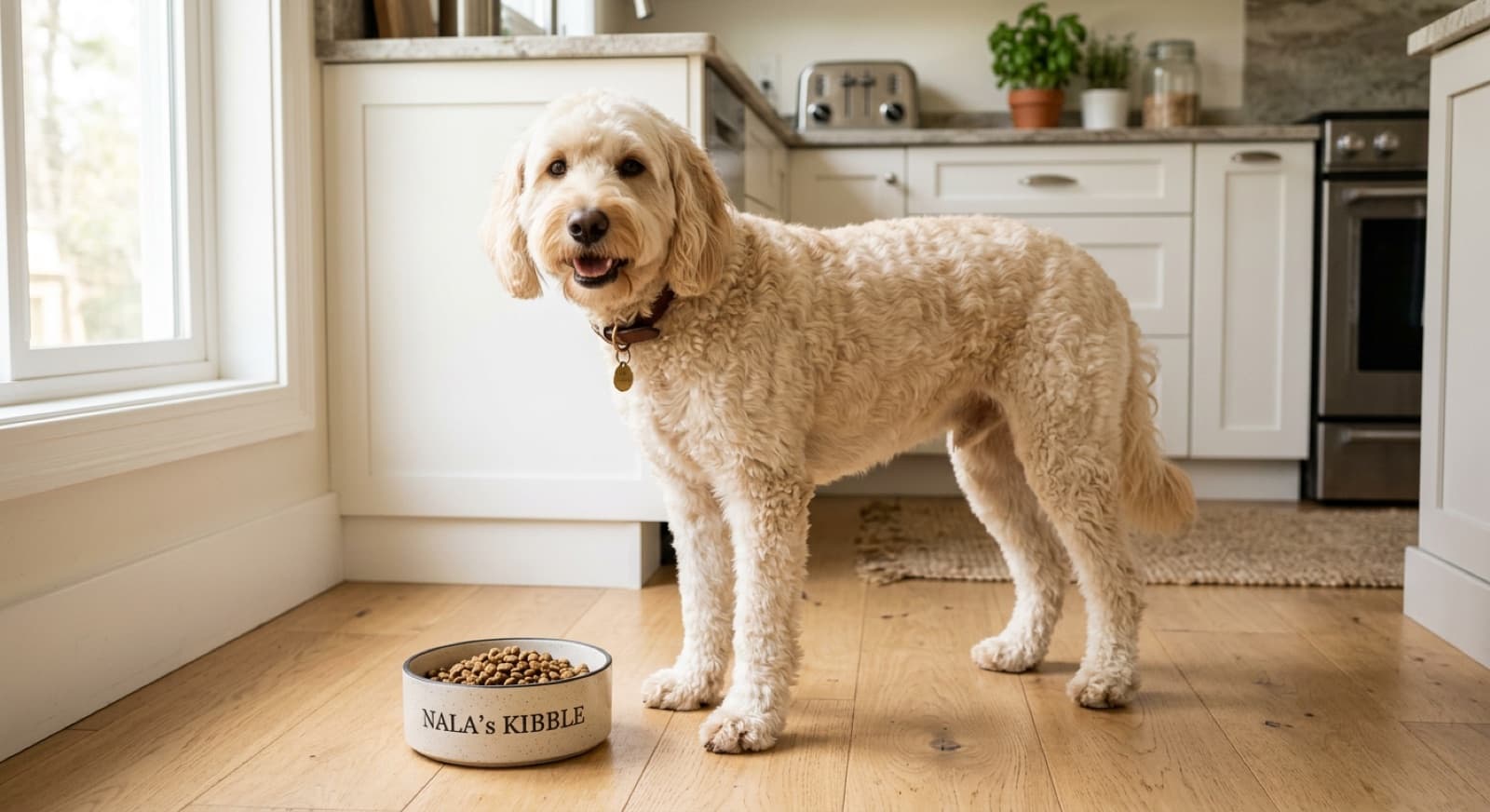
Feed a Labradoodle by its size and body condition, not by the breed name, because the size range is enormous. A standard over about 50 pounds needs large-breed puppy food and large-breed feeding habits; a mini does not. Many doodles inherit the Labrador's strong food drive, so measure meals and keep treats in check. Itchy skin is more often environmental than a food allergy, so do not assume chicken is the problem. Favour an established, grain-inclusive brand given the Lab and Poodle heritage, and grow a standard puppy slowly on controlled calcium.
Size changes everything
This is the section that makes a Labradoodle different from a purebred. The Labradoodle is a crossbreed with no breed standard and no parent club, so the same name is marketed across miniature (roughly 15 to 30 pounds), medium (roughly 30 to 45), and standard (roughly 45 to 90 or more). As one owner put it bluntly in a breed forum, there is a huge spectrum and every mix handles food differently.
That means the very first feeding question is not which brand but how big this dog will be, which depends on its generation and its parents. A standard projected to mature over about 50 pounds should eat a large-breed puppy food and, as an adult, is a deep-chested bloat-risk size. A miniature should eat ordinary small or medium-breed food and is not a bloat concern at all. Throughout this guide, watch for the size split, because the right advice for a 20-pound doodle is often the wrong advice for an 80-pound one. The universal rule is to feed by projected adult weight and body condition, not a breed average.
The Labrador food drive
Many Labradoodles are intensely food-motivated, and there is a genuine genetic reason it can run in them. Labradors commonly carry a genetic change, sometimes called the hungry gene, that the University of Cambridge linked to stronger food motivation and weight gain, found in roughly a quarter of Labradors. A Labradoodle can inherit that drive from the Lab side, though it has not been studied in the crossbreed specifically, so treat it as an inherited risk rather than a certainty. Some doodles will eat anything in reach; others lean Poodle and pick at their food.
If yours is the hungry type, manage it as the real issue it is. Measure every meal, keep treats under about 10 percent of daily calories and counted inside the daily total, do not free-feed, and feed to a lean body condition. This matters beyond the waistline: lean dogs live measurably longer than overweight ones, so the discipline pays off in years.
The chicken-allergy question
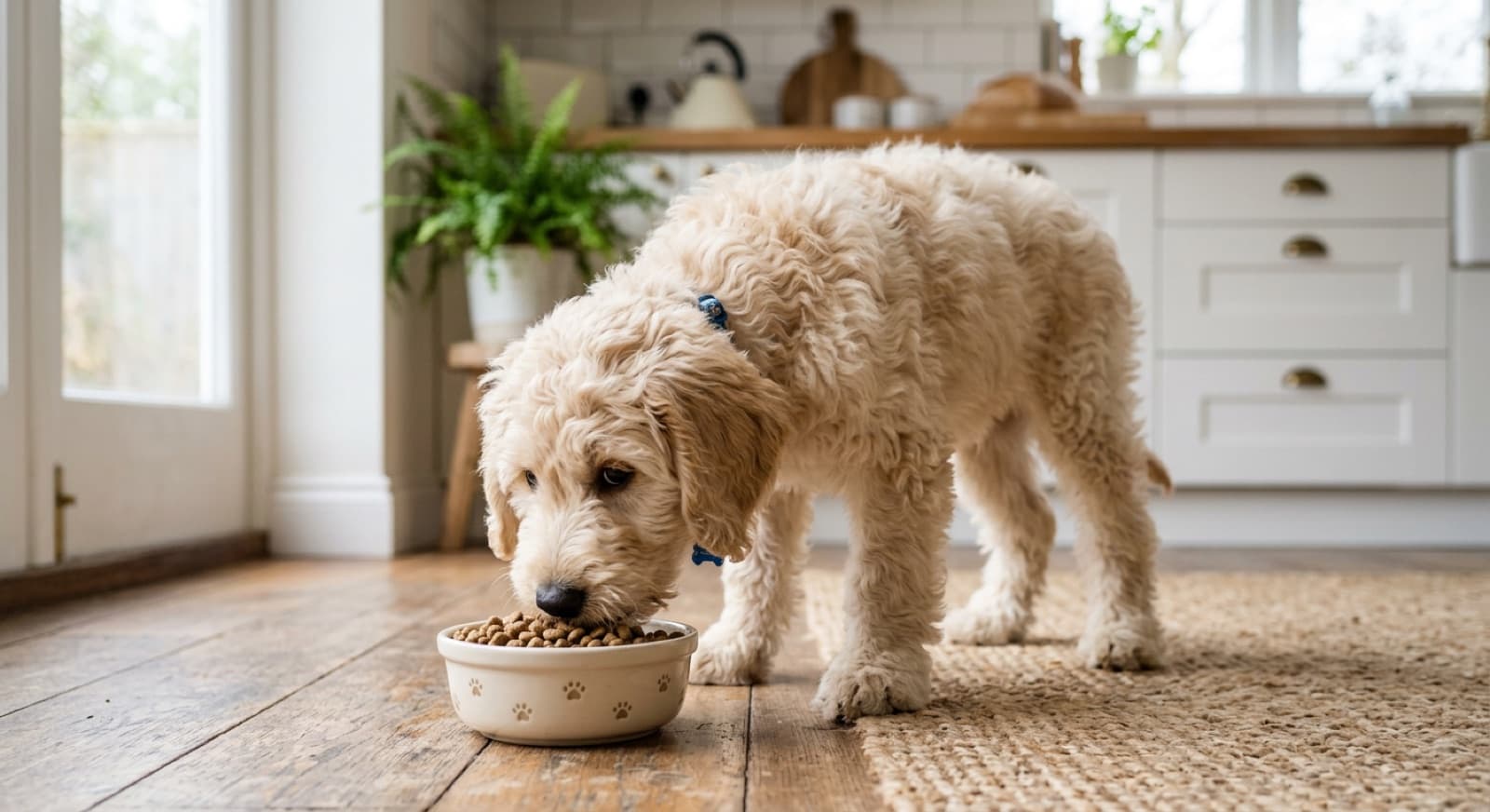
Every new doodle owner hears it: a doodle, so probably a chicken allergy. The belief is far more common than the reality. Plenty of Labradoodles eat chicken without trouble, and itchy skin, foot-chewing, and recurrent ear infections are more often signs of environmental allergy than of food.
When a food allergy genuinely exists, the only reliable way to diagnose it is a vet-supervised elimination diet using a hydrolyzed or novel single protein for eight to twelve weeks, then a deliberate re-challenge, as Cornell describes. Two cautions matter here. The popular hair and saliva “sensitivity” tests are not scientifically valid and should not guide the diet, and over-the-counter limited-ingredient foods are unreliable for a true trial because studies have found undeclared proteins in many of them. So a real elimination trial uses a vet-recommended diet. And the usual food allergens are proteins like beef, dairy, and chicken, not grains, per the Merck Veterinary Manual, so a grain-free switch is usually not the answer.
Grain-free, DCM, and the Labrador heritage
Many owners report their vet or breeder warning them off grain-free for retriever-type dogs, and the caution is reasonable. The FDA has investigated a possible link between grain-free diets high in peas, lentils, and potatoes and dilated cardiomyopathy, a heart disease. The AKC notes the link was never proven and the FDA paused its updates, so it is neither settled nor cleared.
One myth to correct: sweet potato is not the culprit some owners single out. The concern is about pulses, mainly peas and lentils. And “retrievers need grains” is an oversimplification. The defensible position, given a Labradoodle's Labrador and Poodle heritage, is to choose an established, grain-inclusive brand that employs a veterinary nutritionist and runs feeding trials, the questions the WSAVA guidelines tell you to ask, unless your vet recommends otherwise.
Puppy growth and bloat, by size
This is where the size split matters most. A standard Labradoodle projected to mature over about 50 pounds should eat a large-breed puppy food, which controls calcium and calories to slow growth and protect the joints, because a large-breed puppy absorbs excess calcium it cannot regulate. Never add a calcium supplement to a complete food. A miniature or medium doodle does not need large-breed puppy food and should eat an ordinary puppy formula for its size; putting a small doodle on large-breed food is a mismatch. Most dogs switch to adult food near skeletal maturity, roughly 10 to 12 months for small ones and 15 to 18 months for large.
The same split applies to bloat. A standard, deep-chested doodle inherits a real bloat risk from its Lab and Standard Poodle parents, so feed it two to three smaller meals a day from a floor-level bowl, slow a fast eater, and avoid hard exercise around meals, as the Purina Institute advises. Raised bowls do not help and have been linked to higher risk, so keep the bowl on the floor. A miniature doodle is simply not a bloat-risk size, so this concern is for the big ones.
Coat, omega-3, and picky eaters
Owners often link food to that signature doodle coat. Diet does help the skin: omega-3 fatty acids, the EPA and DHA from fish oil, improve coat condition and reduce itch, as the AKC covers. But keep the claim modest: the coat's curl and tendency to mat are a grooming matter, not a nutrition one, so omega-3 supports a healthy, shiny coat but will not prevent tangles.
On the Poodle side, plenty of doodles are picky and will hold out on plain kibble. The fixes that work are warming the food to release its smell, not free-feeding treats so the dog learns to wait for better, rotating to fresh food and checking that a large bag has not gone stale and rancid, and feeding on a schedule. If a picky doodle vomits yellow bile on an empty stomach, that is often bilious vomiting syndrome, eased by smaller, more frequent meals and a small bedtime snack; persistent vomiting deserves a vet visit.
Foods to avoid
Keep these away from a Labradoodle completely:
- Chocolate (darker is worse)
- Grapes and raisins (can cause kidney failure, even a few)
- Xylitol (in sugar-free gum, some peanut butters, and baking), which is rapidly fatal to dogs
- Onions, garlic, leeks, and chives
- Macadamia nuts
- Alcohol and caffeine
- Cooked bones (they splinter)
A food-driven Labradoodle, especially a tall standard, will help itself to anything within reach, so keep counters and bins secured. If your dog eats something on this list, call your vet, the nearest emergency clinic, or a pet poison helpline right away.
Looking to adopt a Labradoodle?
Figure out the projected size and feeding plan before day one. Browse Labradoodles and doodle mixes available now from the rescues we track across Canada.
See Available Labradoodles →Where to buy Labradoodle food
Every brand worth feeding a Labradoodle is easy to find:
- Pet specialty chains (Pet Planet, Tail Blazers, Tisol). Carry the established, grain-inclusive brands plus size-appropriate puppy lines.
- Pet Valu and PetSmart. Stock the major small, medium, and large-breed formulas.
- Your vet clinic. The best source for an elimination diet or any prescription food if allergies are confirmed.
Match the formula to your dog's size: a large-breed formula for a standard, or a small-breed formula for a mini. A quality omega-3 supplement is a sensible add for the coat.
Frequently Asked Questions
How much should I feed a Labradoodle?
It depends heavily on size, because Labradoodles range from a 20-pound mini to a 90-pound standard, and a single answer cannot cover that spectrum. The right method is to feed by your dog's projected adult weight and body condition, not by a breed average. Start from the feeding guide on the food for that weight, feed minis and mediums twice a day and standards once or twice, then adjust to keep a lean body condition you check by feeling the ribs. Weigh the food rather than eyeballing it, and let the dog's waist and rib cover, not a chart, set the amount.
Why does size matter so much for feeding a Labradoodle?
Because the Labradoodle is a crossbreed with no breed standard, so the same name covers a 15-pound miniature, a 40-pound medium, and a 70-plus-pound standard, and they need genuinely different feeding. A standard projected to mature over about 50 pounds should eat a large-breed puppy food and is a bloat-risk size as an adult; a mini should eat ordinary small or medium-breed food and is not a bloat concern. Before you choose a food, the first question is always how big this particular dog will be, which depends on its generation and parents.
Are Labradoodles really allergic to chicken?
Not as a rule, though the belief is everywhere. Many Labradoodles eat chicken with no problem. Food allergy is real but less common than owners assume, and itchy skin is more often environmental than dietary. When a food allergy does exist, the triggers are usually proteins like beef, dairy, or chicken, and it is diagnosed only by a vet-supervised elimination diet over eight to twelve weeks, then a re-challenge. The popular hair and saliva sensitivity tests are not scientifically valid, and over-the-counter limited-ingredient foods are unreliable for a real trial. Work itchy skin or recurrent ear infections up with your vet.
Should I feed my Labradoodle grain-free?
The cautious answer is no, not without a medical reason. The FDA has investigated a possible link between grain-free diets high in peas, lentils, and potatoes and a heart condition called dilated cardiomyopathy, and because a Labradoodle carries Labrador and Poodle heritage, many vets steer these dogs toward established, grain-inclusive brands. The link is not proven and the FDA paused its updates, so it is neither settled nor cleared. One common myth to drop: sweet potato is not the villain. The concern is about pulses like peas and lentils. Favour a brand that employs a veterinary nutritionist and runs feeding trials.
Do I feed a Labradoodle puppy large-breed puppy food?
Only if it is a standard projected to mature over about 50 pounds. This is the key split. A large standard doodle should eat a large-breed puppy formula, which controls calcium and calories to slow growth and protect the joints, because a large-breed puppy cannot regulate the calcium it absorbs. A miniature or medium Labradoodle does not need large-breed puppy food and should eat an ordinary puppy formula for its size. So the answer depends entirely on how big the dog will get. Confirm the projected adult size and the food choice with your vet, and never add calcium supplements to a complete food.
Is my Labradoodle food-obsessed because of the Labrador in it?
Possibly. Labradors carry a common genetic change, sometimes called the hungry gene, that is linked to stronger food motivation and a tendency to gain weight, and a Labradoodle can inherit that drive from the Lab side, though it has not been studied in the crossbreed specifically. Some doodles are relentless about food while others lean Poodle and self-regulate. If yours is always hungry, treat it as a real risk to manage: measure every meal, keep treats under about 10 percent of daily calories, do not free-feed, and feed to a lean body condition. Lean dogs live measurably longer.
My Labradoodle throws up yellow bile in the morning. What does that mean?
That is often bilious vomiting syndrome, where bile irritates an empty stomach after a long overnight gap, and it is common in picky doodles that hold out on meals. It is usually managed by feeding smaller, more frequent meals, including a small bedtime snack so the stomach is not empty as long. For the pickiness behind it, the fixes are warming the food to release the smell, not free-feeding treats so the dog is not holding out for something better, and checking that a large bag has not gone stale and rancid. If the vomiting is frequent or the dog seems unwell, see your vet to rule out other causes.
What to Feed a Goldendoodle
The same size-by-size doodle feeding rules with the Golden side.
What to Feed a Labrador
The food-drive and weight-management playbook from the Lab parent.
What to Feed a Standard Poodle
Large-breed bloat and growth care from the Poodle parent.
Labradoodles for Adoption
Live listings of Labradoodles and doodle mixes from the rescues we track.