The short answer
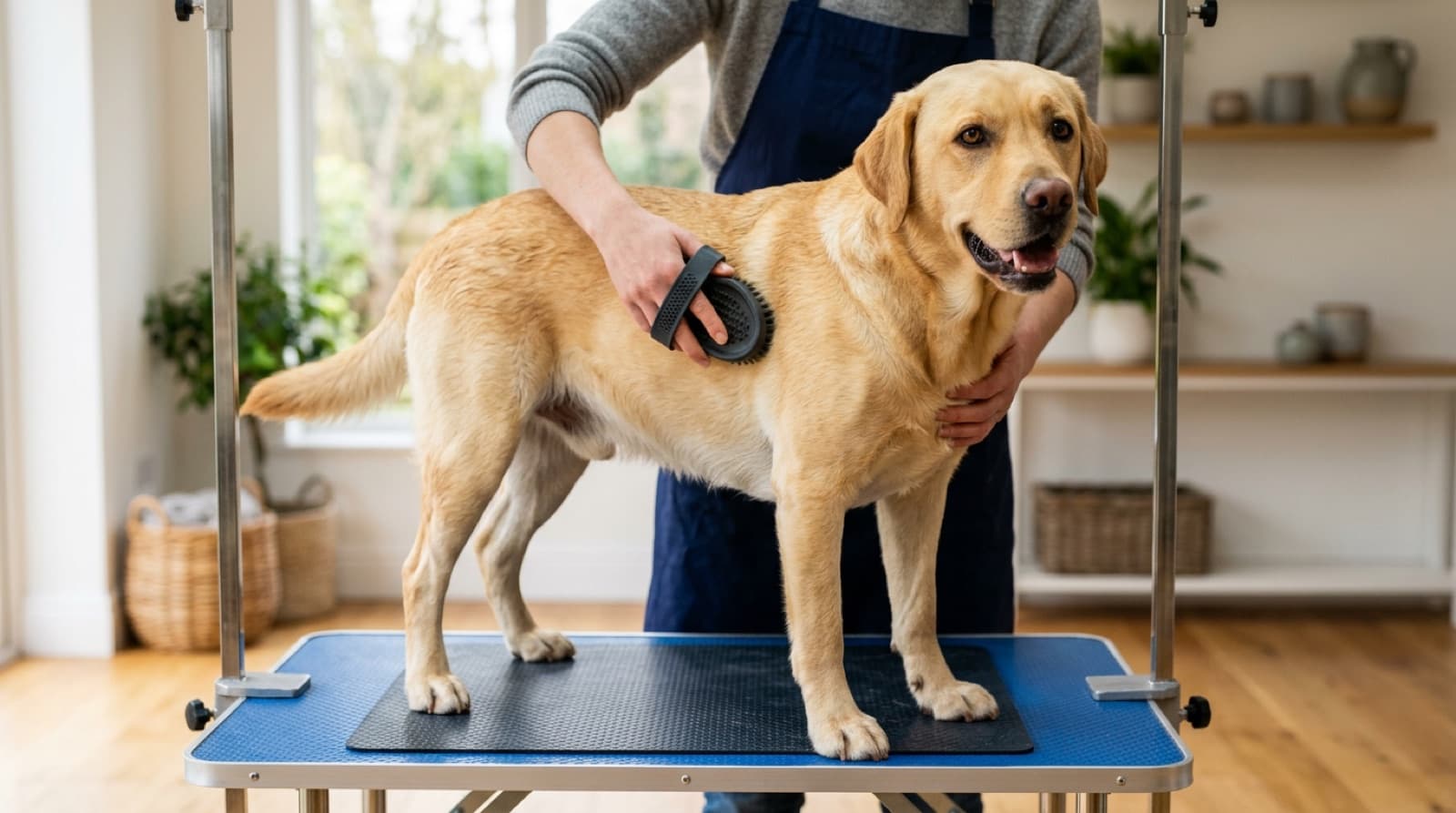
A Lab has a short double coat that sheds heavily, and you never shave it, but otherwise it is one of the easiest breeds to groom. Deshed twice a week with a rubber curry or deshedding tool, daily during the two coat blows, and use a high-velocity dryer after baths to clear loose undercoat. No matting, no feathering, no haircut. Bathe about monthly so you do not strip the oily, water-resistant coat, dry thoroughly, and keep nails and ears in order.
The surprise: a short coat that sheds like a big one
The single most common Lab grooming shock is how much a short-haired dog sheds. It defies the mental shortcut almost everyone carries: short hair equals low shedding. For a Labrador, that shortcut is simply wrong, and it is worth understanding why before you are surprised by it.
A Lab does not have a short single coat like a hound. It has a short double coat: a soft, dense insulating undercoat beneath a short, hard, water-resistant guard coat, built for a dog that retrieves in cold water. That undercoat sheds moderately to heavily all year and then blows out in bulk twice a year, in spring and fall. The hair is short, so it does not look dramatic on the dog, but the volume is real, and it ends up woven into your carpet, your clothes, and your car. One more myth to clear while we are here: coat colour makes no difference, so black, chocolate, and yellow Labs all shed about the same. Once you accept that it is a double coat despite the length, the whole routine makes sense.
Never shave, even though it is short
A Lab's coat being short does not make it safe to shave. It is a double coat, and shaving it does not reduce shedding, does not cool the dog, and can grow back prickly and uneven. Deshed it, never shave it.
Most advice against shaving double coats targets the obviously fluffy breeds, the Huskies and Golden Retrievers, so Lab owners often do not realise the rule applies to them too. It does. Even though the coat is short, it is a temperature-regulating, water-repelling double coat, and as the American Kennel Club explains, shaving a double coat removes the insulation that keeps a dog cool as well as warm and exposes the skin to sunburn.
It also does not reduce shedding, since the dog sheds the same amount of hair regardless of length, and it can damage the coat: the soft undercoat often grows back faster and rougher than the guard hairs, so a shaved Lab can end up with a prickly, uneven, patchy coat. There is no good reason to shave a Lab, and a groomer who offers to should be politely declined. For heat and for shedding, the answer is deshedding.
Deshedding: the whole job, and the right tools
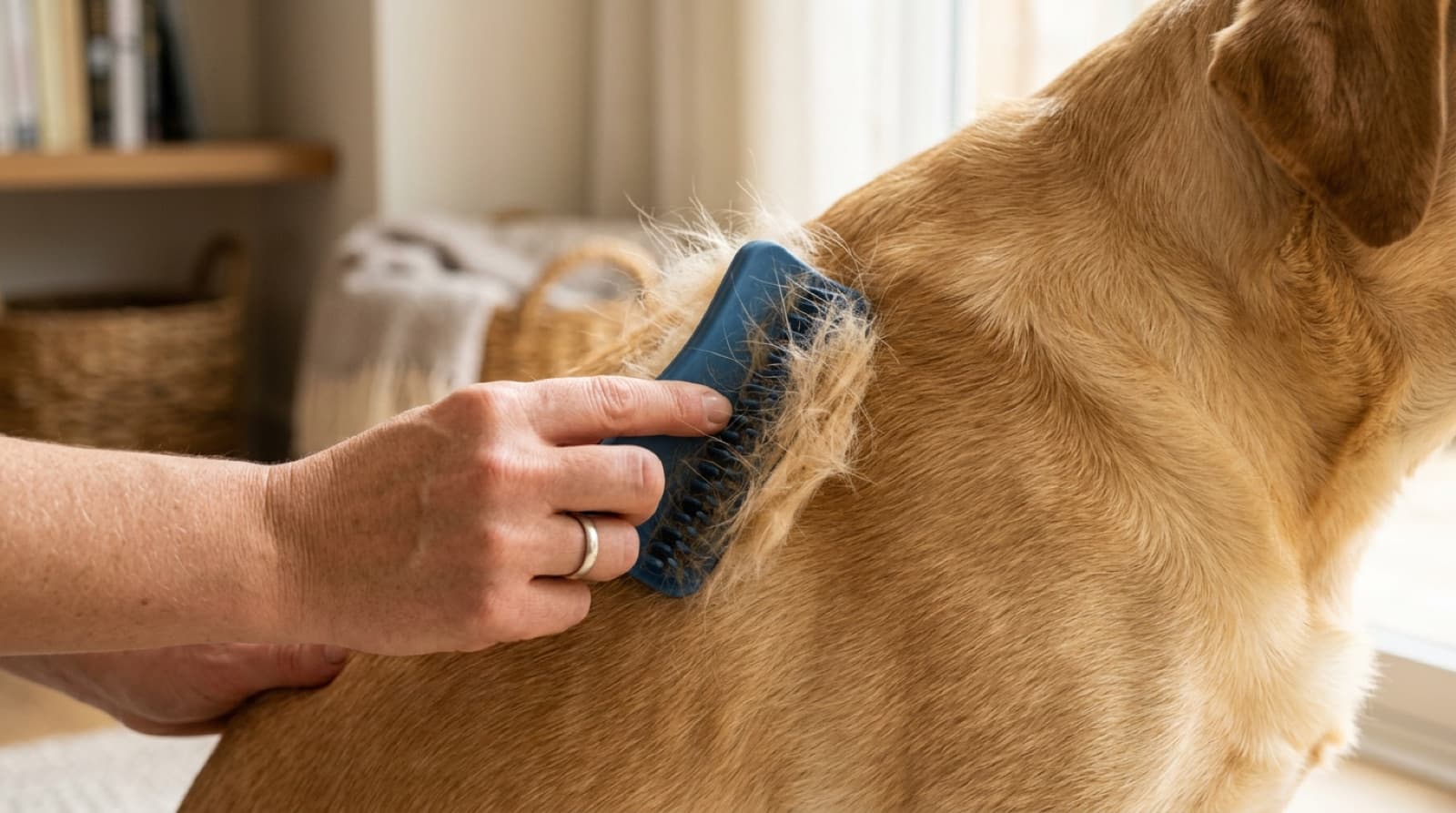
Because a Lab does not mat or need trimming, deshedding is essentially the entire grooming job, and a short double coat responds to slightly different tools than a fluffy one. The everyday workhorse is a rubber curry brush, which is gentle, lifts loose undercoat, spreads the coat's natural oils, and doubles as a massage most Labs lean into. A grooming glove is a low-stress option for the face, ears, and legs, and pulls a surprising amount of hair.
For the twice-a-year coat blow, add an undercoat rake to reach the deep, packed dead undercoat that surface brushing leaves behind. The single biggest upgrade, though, is a high-velocity dryer: a bath followed by a force-dry blows out weeks of loose undercoat in one session and is exactly what a professional deshedding treatment is. A Furminator-style blade works too, but use it lightly on a dry coat, since a heavy hand can irritate the skin or thin the coat.
Some of the product links in this section are Amazon affiliate links — we may earn a small commission at no extra cost to you. It never changes which products we recommend.
The good news: a Lab is genuinely low-maintenance
Here is the reassuring flip side that balances the shedding. Compared with the feathered and long-coated breeds, a Labrador is one of the least demanding dogs to groom. There is no matting to prevent, so no line-brushing. There is no feathering on the legs or ears to comb out. There is no haircut, no clipping, no scissoring, and no styling. Once you have the shedding handled, you are essentially done.
That leaves only the basics every dog needs: keep the nails short with a nail grinder or clippers, and pay attention to the ears. Labs are water dogs with floppy, folded ear canals, so water gets trapped after swims and baths and can lead to ear infections. Dry the ears after the dog gets wet, use a vet-recommended ear cleaner as needed, and see your vet if you notice head-shaking, odour, or redness. That is the whole care list beyond deshedding, which is why so many Lab owners never book a groomer at all.
Bathing, the oily coat, and the honest cost
The Lab coat is deliberately a little oily, because that is what makes it water-resistant for a retrieving dog, so bathe about monthly or when genuinely dirty. Over-bathing strips those protective oils, dries the skin, and can paradoxically worsen the wet-dog smell as the skin overproduces oil to compensate. Brush the loose coat out first, use a gentle or deshedding shampoo during a blow, and dry thoroughly, since a damp undercoat holds smell and can irritate skin.
On cost, a Lab is a bargain to groom because there is no haircut. The professional service is a deshedding bath and a high-velocity blow-out at large-dog pricing, and Canadian grooming cost surveys such as Dogster's give a sense of the ranges, with a deshedding add-on common. Most owners book that only a few times a year, at peak shedding, if at all. The at-home investment is small, a rubber curry and a rake, with a high-velocity dryer as the one higher-ticket item that lets you do the deshedding treatment yourself and skip most groomer visits entirely.
Thinking about adopting a Labrador?
Be ready for the shedding, skip the clippers, and the rest is easy. Browse Labrador Retrievers and Lab mixes available now from the rescues we track across Canada.
See Available Labradors →Frequently Asked Questions
Do Labradors shed a lot?
Yes, heavily and year-round, with two bigger seasonal coat blows. The short coat fools people, but a Lab has a dense double coat, so it often sheds more than many long-haired single-coated dogs. The volume genuinely surprises new owners because short hair reads as low-shedding in most people's minds, and for a double coat that is simply not true. Regular deshedding is what keeps it manageable.
Should I shave my Labrador in summer, and does it reduce shedding?
No on both counts. The double coat insulates against heat as well as cold and its slightly oily guard coat repels water, so shaving can make a Lab hotter, expose the skin to sunburn, and does not reduce how much the dog sheds. Even though the coat is short, it is still a double coat, and shaving can cause the regrowth to come back prickly, uneven, or patchy. The rule against shaving double coats applies to Labs too, which surprises a lot of owners.
How often should I brush a Labrador?
About twice a week normally, and daily during the spring and fall coat blows. Because the coat is short, a rubber curry brush or a deshedding tool does most of the work by lifting the loose undercoat, with an undercoat rake earning its place during the heavy blow. The key is reaching the dead undercoat rather than just skimming the guard coat, which is what leaves hair falling for weeks.
What is the best brush for a Labrador?
For a short double coat, a rubber curry or deshedding tool plus an undercoat rake for coat-blow season covers most owners, and a high-velocity dryer after baths does the heaviest lifting. A rubber curry is gentle, pulls loose undercoat, spreads the coat's natural oils, and most Labs enjoy the massage. Use a Furminator-style deshedding blade with a light touch on a dry coat, since overuse can irritate the skin or create thin patches.
Do Labradors get matted or need haircuts?
Barely, and no. The short coat rarely mats, so there is almost no line-brushing, no feathering to maintain, and no haircut at all, which makes a Lab one of the lower-effort breeds to groom. The whole job is deshedding, bathing, drying, and keeping nails and ears in order. If a groomer offers to give your Lab a haircut, that is a red flag, since Labs are never clipped or trimmed.
How often should I bathe a Labrador?
Roughly once a month, or when the dog is genuinely dirty. The water-resistant coat is naturally a little oily, and over-bathing strips those protective oils, dries the skin, and can actually make the wet-dog smell worse as the skin overproduces oil to compensate. Brush the loose coat out before a bath, and dry thoroughly afterward, especially in the undercoat.
Why does my Lab smell like wet dog or feel oily?
The water-resistant coat is designed to be slightly oily so it repels water, and the smell tends to flare when the coat gets wet and is not dried properly, or when over-bathing throws the oils off balance. Drying the dog thoroughly after swims and baths and not over-bathing usually fixes both the smell and the greasy feel. A Lab that suddenly smells strongly or has irritated, flaky skin is worth a vet check.
Do Labradors need professional grooming?
They never need a haircut, so a Lab can be groomed entirely at home, but many owners book a professional deshedding bath and high-velocity blow-out a few times a year, especially during shedding season. That service condenses weeks of shedding into one appointment and clears an enormous amount of loose undercoat. Beyond that, it is really just nails, ears, and regular brushing at home.
How to Groom a Golden Retriever
The Lab's longer-coated cousin, where the feathering adds a matting workload.
How to Groom a Husky
Another never-shave double coat, with the same coat-blow and deshedding rules.
What to Feed a Labrador
The other half of Lab care: the famous appetite, weight control, and portions.
Labradors for Adoption
Live listings of Labrador Retrievers and Lab mixes from the rescues we track.