The short answer
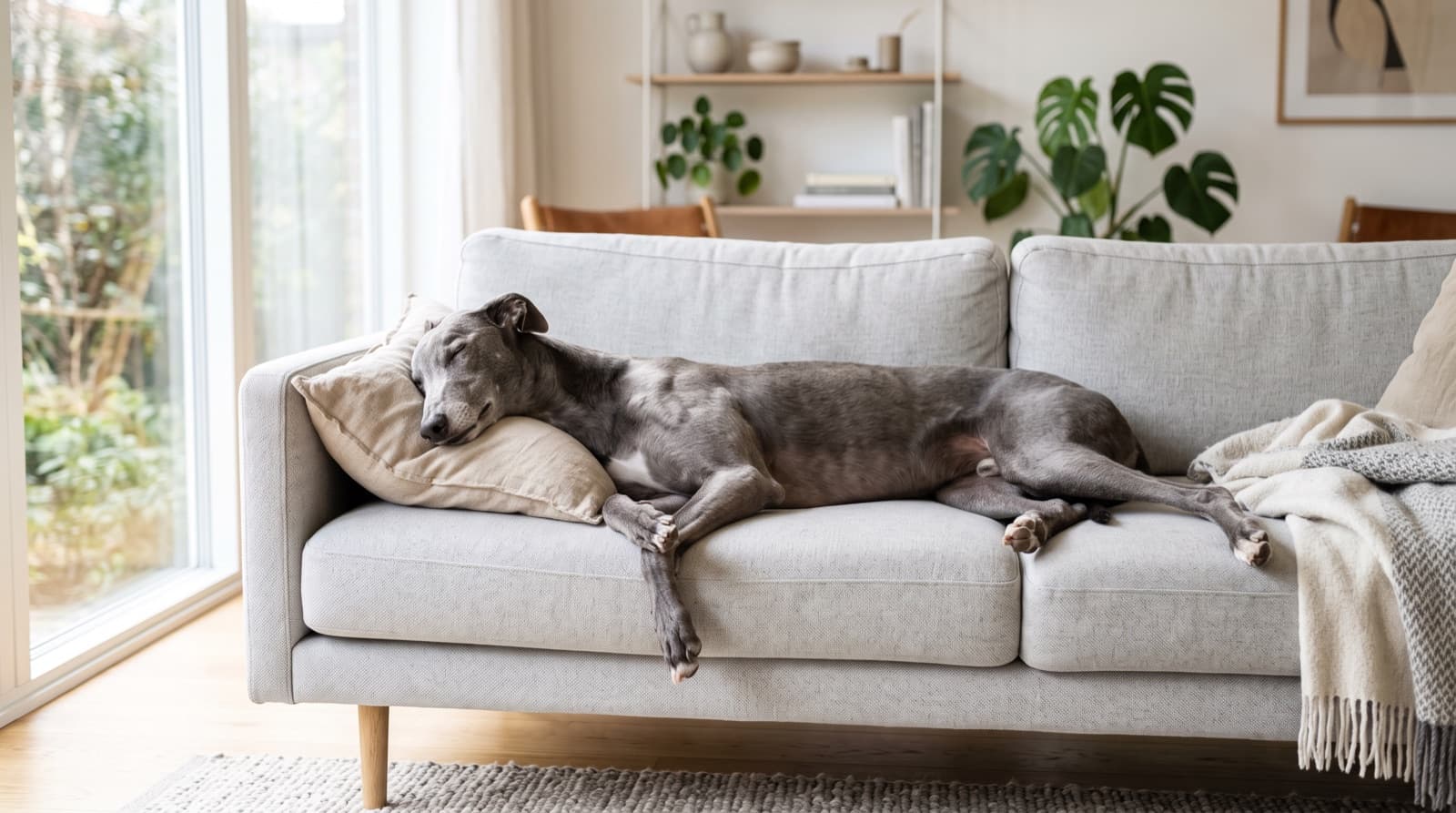
Coat type predicts your workload better than size does. Short-coated breeds that shed little and need under an hour of daily exercise score highest: Chihuahuas, Italian Greyhounds, Boston Terriers and, surprisingly for their size, Greyhounds and Whippets. Dogs sold as non-shedding are usually more work, not less, because the coat mats and needs professional grooming every four to eight weeks. And flat-faced breeds score well only because restricted breathing limits how much exercise they can take. Age beats breed either way: a settled adult rescue is easier than a puppy of any breed on this list.
Almost every low-maintenance breed list has the same problem. It ranks breeds without telling you what was measured, so you cannot tell whether the writer weighted grooming, exercise, cost, or just picked dogs they liked. We built this one the other way round. Every breed in our registry is scored on five factors with published weights, and the numbers come from the same data that powers our breed pages, so the table below updates whenever that data does.
How we score a breed
Each breed gets a score out of 100 built from five weighted factors:
- Grooming and coat care, 30 points. Coat type combined with how often the breed needs a full groom. This carries the most weight because it is the cost people forget to budget for. A curly coat needing a professional every six weeks is a standing bill for the dog's whole life.
- Shedding, 25 points. How much hair ends up on your floors, furniture and clothes, and how much of your week goes to managing it.
- Exercise needs, 25 points. The daily minutes an adult of the breed genuinely needs to stay balanced, not the minimum it will tolerate without complaint.
- Energy and mental stimulation, 10 points. Whether the dog needs a job. A working breed without an outlet creates far more work than a tired one.
- Size and running cost, 10 points. Larger dogs cost more to feed, medicate, board and transport, every year, for life.
We deliberately do not score health. Nearly every breed in our registry carries three flagged conditions, so a health factor would hand almost every dog the same number while looking like it meant something. Vet burden is real, but it is better handled specifically than averaged, so we cover it in the flat-faced section below and on each individual breed page.
The 20 lowest-maintenance dog breeds
Ranked easiest first. Breeds marked as flat-faced score well on exercise for reasons explained below, so read that section before choosing one.
| # | Breed | Score | Size | Exercise | Shedding | Coat |
|---|---|---|---|---|---|---|
| 1 | Chihuahua | 97 | small | 25 min | low | short |
| 2 | Italian Greyhound | 91 | small | 40 min | low | short |
| 3 | Boston Terrierflat-faced | 90 | small | 40 min | low | short |
| 4 | Miniature Pinscher | 88 | small | 40 min | low | short |
| 5 | Greyhound | 87 | large | 45 min | low | short |
| 6 | Whippet | 87 | medium | 45 min | low | short |
| 7 | Brussels Griffonflat-faced | 85 | small | 30 min | low | wire |
| 8 | French Bulldogflat-faced | 84 | small | 30 min | moderate | short |
| 9 | Chinese Crested | 80 | small | 30 min | low | hairless |
| 10 | Chinese Shar-Peiflat-faced | 80 | medium | 45 min | moderate | short |
| 11 | Cairn Terrier | 79 | small | 45 min | low | wire |
| 12 | Scottish Terrier | 78 | small | 45 min | low | wire |
| 13 | Dachshund | 77 | small | 40 min | moderate | short |
| 14 | English Bulldogflat-faced | 76 | medium | 30 min | moderate | short |
| 15 | Pugflat-faced | 76 | small | 30 min | high | short |
| 16 | American Bully | 75 | large | 45 min | moderate | short |
| 17 | Basset Hound | 75 | medium | 45 min | moderate | short |
| 18 | Maltipoo | 75 | small | 30 min | low | curly |
| 19 | Mastiffflat-faced | 74 | giant | 45 min | moderate | short |
| 20 | Miniature Schnauzer | 74 | small | 45 min | low | wire |
The pattern is consistent once you see it. Short coat, low shedding, under an hour of exercise. Size barely features in the top ten, which is why a Greyhound at 87 out of 100 sits above most of the toy group. The Canadian Kennel Club makes the same point in its guide to choosing a breed: match the dog to your routine rather than to how it looks.
Why flat-faced breeds score well, and why that is misleading
11 of the breeds we score are brachycephalic, and several land in the top fifteen. They earn those points because they need very little exercise. That is a consequence of restricted breathing, not a relaxed temperament.
Breeds including the Boston Terrier, Brussels Griffon, French Bulldog, Chinese Shar-Pei, English Bulldog are affected by brachycephalic obstructive airway syndrome. The Merck Veterinary Manual describes the usual combination: narrowed nostrils, an elongated soft palate, and a windpipe that is too narrow for the dog. Many affected dogs need surgical correction, and the condition tends to worsen with age.
The practical consequences stack up. These dogs overheat easily, so summer exercise has to be carefully managed and a hot afternoon can be genuinely dangerous. Facial skin folds need regular cleaning to prevent infection. Eye injuries are more common because the eyes sit more prominently. Anaesthetic carries elevated risk, which matters for every dental cleaning and routine procedure across the dog's life.
None of this makes them bad dogs, and they are among the most affectionate companions you will meet. It does mean that if you chose one because the exercise number looked manageable, you have optimized for the wrong thing. Read the French Bulldog and Pug pages, and budget for the vet rather than the walks.
The non-shedding myth
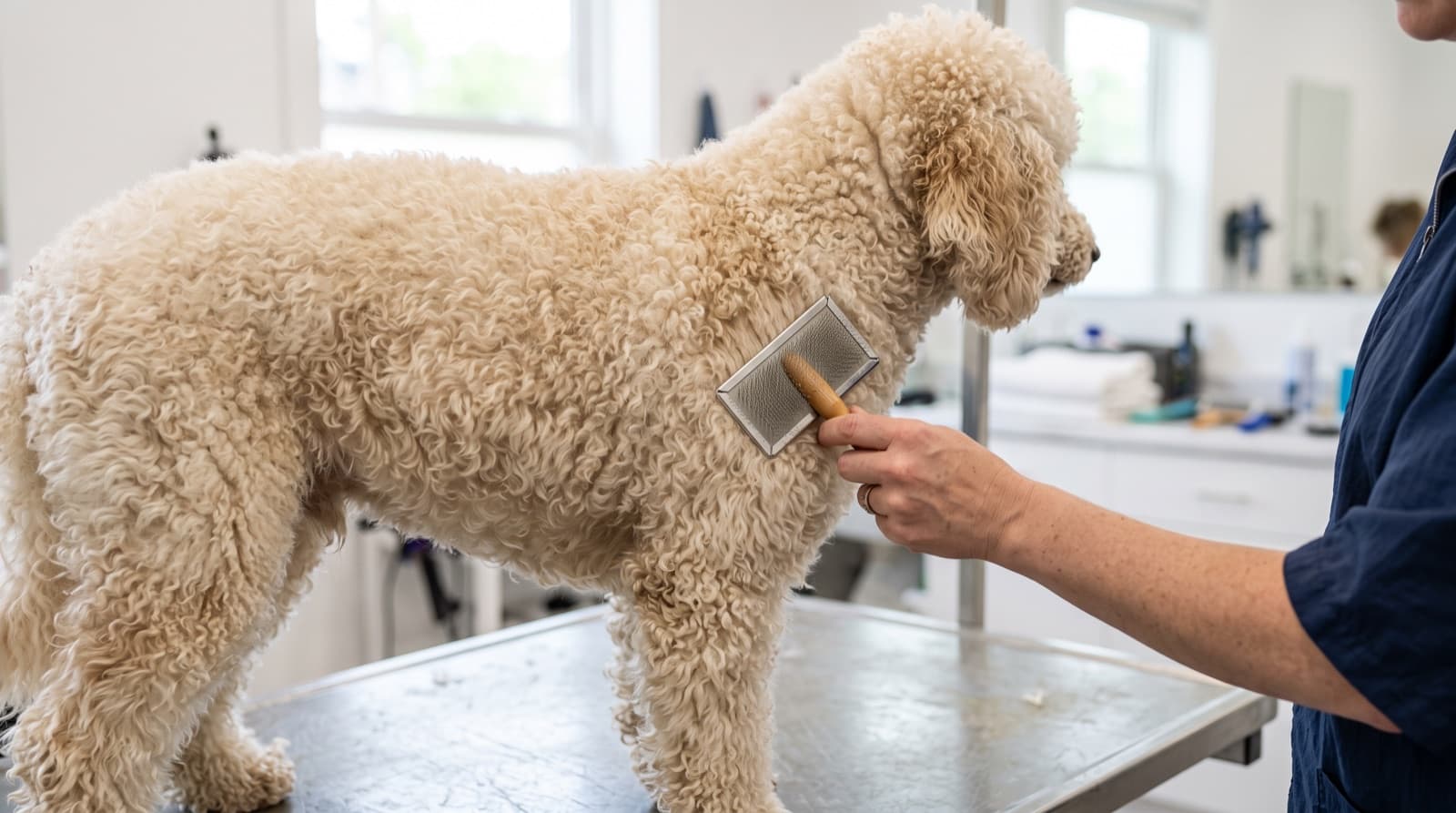
This is where most people go wrong, and it is an expensive mistake. Non-shedding sounds like less work. In practice it means the coat does not release hair on its own, so it keeps growing and tangles against itself. Poodles, doodles, Bichons, Shih Tzus, Maltese and Yorkshire Terriers all fall into this group.
The real cost is a professional groom every four to eight weeks for the life of the dog, plus brushing several times a week to prevent mats. Skip the brushing and the coat felts, at which point the only humane fix is to shave it off and start again. A short-coated dog that sheds is genuinely less work than a curly-coated dog that does not. You are choosing between running a vacuum and keeping a standing appointment.
If allergies are your reason for wanting a non-shedding dog, that is a different question with a different answer. Reactions are driven largely by dander and saliva proteins rather than hair volume, so coat type alone is a poor predictor. Our hypoallergenic and non-shedding dog guide covers how to test your own reaction before committing to a dog.
The easiest breeds by size
Small
Medium
Large and giant
Two things worth knowing before you use this list. Small breeds are prone to dental disease, which is a recurring cost the scoring does not capture, and thin-coated dogs of any size need a proper winter coat in most of Canada. A Greyhound has almost no body fat and will genuinely struggle below about -10C without one.
The highest-maintenance dog breeds
The other end of the same ranking. These are also, not coincidentally, among the breeds most often surrendered to rescue:
| Breed | Score | Exercise | Shedding |
|---|---|---|---|
| Alaskan Malamute | 19 | 90 min | very high |
| Husky | 25 | 75 min | very high |
| Samoyed | 28 | 75 min | very high |
| Border Collie | 28 | 90 min | high |
| Newfoundland | 31 | 60 min | very high |
| Bernese Mountain Dog | 33 | 60 min | very high |
| Australian Shepherd | 33 | 75 min | high |
| German Shepherd | 34 | 75 min | high |
| Belgian Malinois | 34 | 90 min | high |
| Labrador Retriever | 35 | 75 min | high |
The profile repeats: a double coat that blows heavily twice a year, 75 to 90 minutes of real daily exercise, and a working brain that needs a job. Every one of these is a superb dog for a household built around it. The mismatch is what fills rescues, not the breed itself.
Age predicts your workload better than breed
Here is the finding that undercuts this entire page, and it is worth saying plainly. A puppy of the highest-scoring breed on our list will cost you more work in year one than an adult of almost any breed further down it. House training, night waking, chewing, and the socialization window do not care about coat type.
The second advantage of an adult is information. A score on this page is a breed average, and individual dogs vary enormously around it. An adult rescue who has spent six weeks in a foster home comes with something better than an average: someone who has watched him, knows what his coat actually does, whether he settles when left alone, and how he is around cats and children. That certainty is worth more than any number we can compute.
Most rescue dogs are also mixes, which tends to work in your favour here. Mixed-breed dogs often land in the middle on coat and energy rather than at the extremes, and you are assessing the dog in front of you rather than predicting from a chart.
Browse low-maintenance rescue dogs near you
Live listings of easy-care dogs from local rescues, including individually assessed low-energy dogs whose breed label would never show up on a chart like this one.
See available low-maintenance dogs →Frequently Asked Questions
What is the most low-maintenance dog breed?
Scored across grooming, shedding, exercise, energy and running cost, short-coated breeds with modest exercise needs come out on top: Chihuahuas, Italian Greyhounds, Boston Terriers, Greyhounds and Whippets. The Greyhound is the one that surprises people, because a 70-pound dog outscores most toy breeds. A short coat, very low shedding and roughly 45 minutes of daily walking simply create less work than a small dog that needs professional clipping every month.
Are small dogs lower maintenance than big dogs?
Not reliably. Size affects food, medication and boarding costs, which is real, but it is the smallest of the five factors we weight. Coat type matters far more. A short-coated 70-pound Greyhound is less work than an 8-pound Maltese that needs grooming every four to six weeks plus daily brushing. If you are choosing on effort rather than living space, look at the coat before the scale.
Are non-shedding dogs low maintenance?
Usually the opposite, and this is the single most common misconception about low-maintenance dogs. Poodles, doodles, Bichons, Shih Tzus and other so-called non-shedding breeds hold their coat rather than dropping it. That coat mats against itself and needs professional grooming every four to eight weeks, plus brushing between appointments. You are not removing work, you are swapping vacuuming for a recurring bill and a daily brushing habit.
Why do flat-faced breeds like Pugs score well?
Because our exercise factor measures how many minutes a day the breed needs, and flat-faced breeds need few. That is a symptom of restricted breathing, not an easygoing temperament. Brachycephalic obstructive airway syndrome involves narrowed nostrils, an elongated soft palate and a narrow windpipe, often requiring surgery. Combined with heat intolerance, skin-fold care and elevated anesthetic risk, the lifetime vet burden is among the highest of any group. We flag every flat-faced breed in the table for exactly this reason.
What is the lowest-maintenance large dog?
The Greyhound, and it is not close. Retired racers are calm indoors, sleep for much of the day, have a short coat that sheds very little, and are satisfied with two moderate walks plus an occasional sprint. Whippets offer the same profile in a medium-sized package. The trade-offs are a strong prey drive, which means careful off-leash management, and almost no body fat or coat, so they need a proper insulated coat in a Canadian winter.
Which dog breeds are the highest maintenance?
Double-coated northern and working breeds: Alaskan Malamutes, Siberian Huskies, Samoyeds, Border Collies, Bernese Mountain Dogs and Australian Shepherds. They combine heavy seasonal coat blow, 75 to 90 minutes of genuine daily exercise, and high mental stimulation needs. These are excellent dogs in the right home, and they are also among the most commonly surrendered to rescues by owners who underestimated the workload.
How is the low-maintenance score calculated?
Each breed is scored out of 100 across five weighted factors: grooming and coat care (30 points), shedding (25), exercise needs (25), energy and mental stimulation (10), and size and running cost (10). The inputs come from our own breed registry rather than editorial opinion, so the ranking updates whenever the underlying data does. We deliberately do not score health, because nearly every breed in the registry carries three flagged conditions, so a health factor would give almost every dog an identical number while appearing meaningful.
Does a low-maintenance breed mean an easy dog?
No. Low maintenance describes grooming, shedding, exercise and cost, not temperament or trainability. Some of the easiest-care breeds are independent and stubborn, and a few of the highest scorers are prone to barking or wariness with strangers. Every dog needs house training, recall and calm handling regardless of coat type. Judge trainability separately from workload.
Is an adult rescue lower maintenance than a puppy?
Almost always, and by a wider margin than any breed difference. A puppy of the easiest breed on this list still means months of house training, night waking, chewing and socialization work. An adult of a moderately demanding breed can settle into your routine in a couple of weeks. You also get certainty: an assessed adult comes with a known coat, known energy and a foster home that can tell you whether he settles alone, rather than a breed average you are hoping applies.
What is the best low-maintenance dog for a first-time owner?
A calm adult rescue whose temperament has already been assessed, ideally short-coated. The breed matters less than the individual dog and its age. Lower grooming and exercise demands help by freeing up your attention for training and settling in, which is what really determines how the first year goes, but the biggest single advantage a beginner can give themselves is adopting a dog whose personality is already known rather than predicted.
Dog Exercise & Enrichment
How much exercise a dog really needs, and why mental work tires them faster.
Hypoallergenic & Non-Shedding Dogs
What actually triggers allergies, and why non-shedding means more grooming.
What Breed Is My Rescue Dog?
Most rescue dogs are mixes. Here is how to work out what you have.
Explore Dog Breeds
Grooming, exercise and temperament for every breed we cover.