The short answer
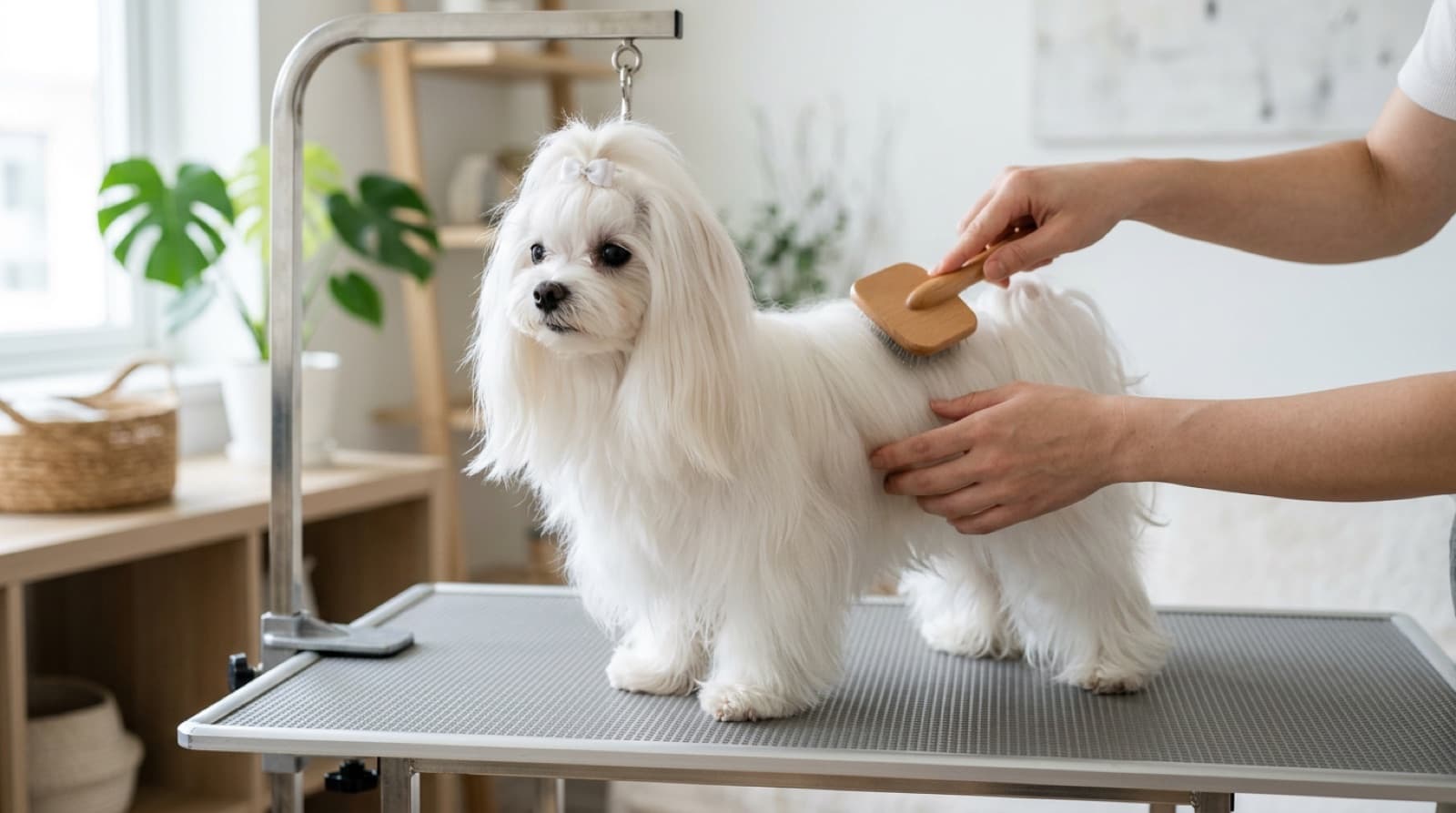
Decide honestly between the floor-length show coat and a practical puppy cut before anything else, because the long coat is a near-daily brushing commitment. The Maltese has one silky, continuously growing coat with no undercoat, so it mats within days from any friction. Brush to the skin daily, confirm with a metal comb, and never bathe a tangled coat. Keep the face hair trimmed and clean for the eyes and tear stains, and see a vet for the cause of any tearing rather than reaching for an antibiotic stain product.
The real decision: show coat or puppy cut
Most Maltese grooming articles show you a dozen cute haircut photos. The honest version starts with one blunt question, because it decides everything downstream: are you going to brush this dog every day, yes or no?
The traditional Maltese look is the floor-length show coat, parted down the spine, and the American Kennel Club is upfront that it is a show-stopping, high-maintenance coat. It needs daily, often twice-daily, line brushing, baths every week or two, and in serious show homes the coat is wrapped to protect it. That is a real time commitment, not a weekend hobby.
The alternative most pet owners choose is the puppy cut, or teddy-bear cut, taken down to roughly a quarter-inch to an inch all over. It still looks like a Maltese, it mats far less, and it brings the brushing down to something a normal household can sustain. The mistake owners regret is keeping the long coat because it is beautiful, falling behind on the brushing, and arriving at the groomer with a matted dog that has to be shaved anyway. Choosing the puppy cut up front is not lazy, it is kind. Pick the coat length you will actually maintain, and everything else in this guide gets easier.
Why it mats, and the brushing that prevents it
Here is the fact that explains the whole routine: a Maltese has a single, silky coat with no undercoat, and it grows continuously like human hair. With no undercoat to give it structure, the fine hair tangles at any friction and, because it is so soft, a surface tangle compacts down to the skin fast. That is why brushing only the top of the coat fails, and why the worst mats hide under the collar, behind the ears, in the armpits, and around the sanitary area.
The technique that works is line brushing. Part the coat in a horizontal line, hold the hair above it out of the way, and brush the exposed layer from the skin outward with a soft slicker brush, then move the line down and repeat. Finish by running a stainless-steel comb through each section. If the comb will not pass cleanly to the skin, that section is not brushed out, full stop. Never brush a bone-dry coat, since it snaps and breaks; a light mist of detangling spray first lets everything glide. And crucially, do not try to rip a mat out, because torn coat often grows back thin or not at all.
Some of the product links in this section are Amazon affiliate links — we may earn a small commission at no extra cost to you. It never changes which products we recommend.
Bathing, drying, and the white coat
The number one bathing mistake is washing a matted dog. Water shrinks and tightens any tangle that is already there, setting a loose mat into felt that is nearly impossible to comb out. So brush the coat completely mat-free first, then bathe. Because there is no undercoat, resist the urge to over-bathe: every one to three weeks suits most Maltese, and washing more often strips the oils and dries the exposed skin.
For the white coat, a gentle whitening or brightening shampoo, the kind that uses optical brighteners rather than bleach, keeps the coat looking clean and bright without harming the skin. Rinse thoroughly, since residue can dull and irritate. Then dry to the skin with a dryer on low heat while you brush, working in sections so the coat dries straight. A well-brushed coat that is left to air-dry will still mat as it dries, so the drying is genuinely half the job.
Tear stains and the face
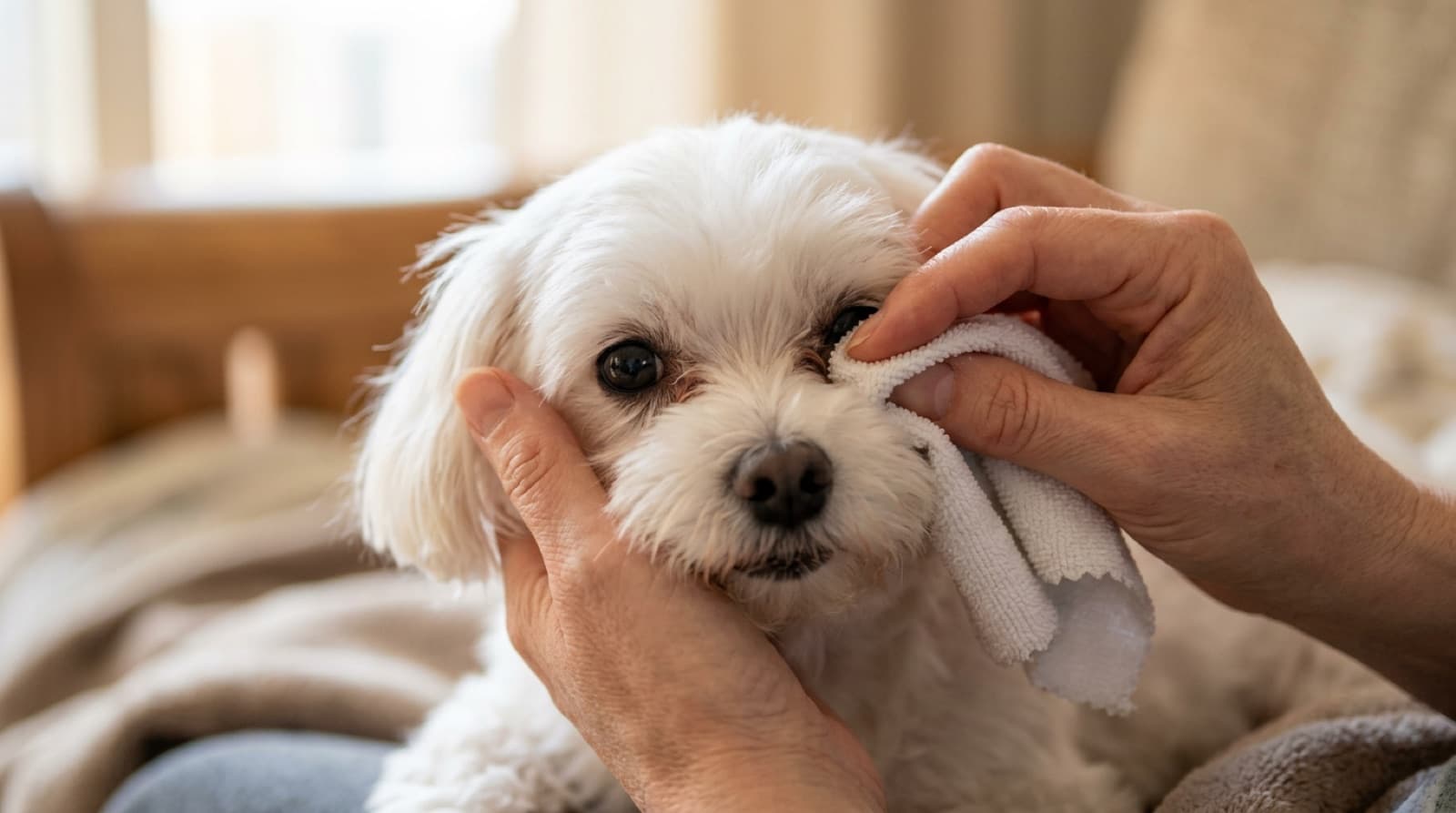
Tear staining is the defining cosmetic issue of the breed, because the reddish-brown marks under the eyes stand out against a white face. The colour comes from porphyrin, an iron pigment excreted in tears that darkens in sunlight, plus yeast growing in the constantly damp hair below the eyes. The Maltese is predisposed because of its short muzzle and narrow tear ducts. Genetics play a role too, which is why littermates can stain differently.
The important move is to separate the stain from the cause. The American Maltese Association is explicit that new or heavy tearing should be checked by a vet first, since blocked ducts, ingrown lashes, infection, and allergies are all fixable medical causes. Day to day, keep the hair at the inner eye corners trimmed short so it does not wick tears across the face, wipe the area gently every day, and try filtered water in a stainless or ceramic bowl. Be wary of antibiotic tear-stain supplements: the original tylosin-based products were pulled by the FDA and are not approved for this use, and feeding antibiotics for a cosmetic stain is not something to do outside veterinary guidance. Clean, dry, trimmed face plus a vet for anything sudden is the honest protocol.
The topknot, ears, and nails
On a coat kept long around the face, the topknot is not just decorative. The hair grows continuously and falls into the eyes, causing irritation and worsening the tear wicking, so a topknot lifts it clear. Use soft latex grooming bands rather than household rubber bands, which snap and break the coat, and change the band daily without tying it tight. During the awkward too-short-for-a-topknot stage, small clips or a face trim do the same job. If you keep a puppy cut, a simple trim above the eyes handles it and the topknot becomes optional.
Keep nails short with a nail grinder or small-dog clipper, taking a little at a time to avoid the quick, and keep styptic powder on hand in case you go too short. Ears and the hair in the ear canal need routine attention to prevent trapped moisture and infection. Ear plucking and nail quicks are the two tasks owners most often botch at home, so it is worth having a groomer or vet show you the first time.
The honest cost: groomer versus doing it yourself
A Maltese is a standing grooming commitment. Professional grooms commonly run in the range of $60 to $100 or more per visit in Canada, higher in cities like Toronto and Vancouver, every four to six weeks. Canadian grooming cost surveys such as Dogster's give a sense of the ranges, though the price swings a lot with coat condition on arrival. A matted coat draws a de-matting surcharge or a shave-down.
A Maltese costs more than a plain small dog because the white coat, the tear-stain face work, and the hand-scissoring of the face and topknot are all skilled, time-consuming labour. Grooming at home cuts the bill, and a starter kit, a soft slicker, a steel comb, a whitening shampoo, detangler, a low-heat dryer, a nail grinder, and topknot bands, is a modest one-time spend that pays back fast. Even committed home groomers usually keep periodic professional visits for the scissoring and sanitary work, and the honest caveat is the familiar one: the tools only help if you brush daily.
Thinking about adopting a Maltese?
Decide on the coat length you will realistically maintain, and you will love the breed. Browse Maltese and Maltese mixes available now from the rescues we track across Canada.
See Available Maltese →Frequently Asked Questions
How often should I brush a Maltese?
Daily is the real answer for anything longer than a short puppy cut, and a long or show coat often needs a twice-daily brush. A puppy cut can stretch to every 2 to 3 days. The reason it is not negotiable is that the Maltese has a single silky coat with no undercoat to hold shape, so friction from a collar or harness turns a loose tangle into a skin-tight mat within days if you skip it.
Should I keep the long coat or get a puppy cut?
Be honest about your time. If you cannot brush thoroughly every day, choose the puppy cut, because it is the humane call. The traditional floor-length show coat is a near-daily grooming commitment, with line brushing, frequent baths, and often wrapping, and an under-maintained long coat ends in a forced shave-down at the groomer. A puppy or teddy-bear cut of a quarter-inch to an inch still looks lovely and is far more manageable for a pet home.
Why does my Maltese mat so fast?
Because the coat is a single layer of long, silky, continuously growing hair with no undercoat, so it has nothing to hold its shape and it tangles at the slightest friction. The worst spots are exactly where things rub: under the collar or harness, behind the ears, in the armpits, and around the sanitary area. And because the hair is so fine, a mat that starts at the surface quickly compacts down to the skin, which is why brushing only the top of the coat misses it.
How do I deal with tear stains?
Start with the cause, not the colour. See a vet first to rule out blocked tear ducts, ingrown lashes, infection, or allergies, since tearing is often a fixable medical issue. Day to day, keep the hair around the eyes trimmed short so it does not wick tears across the face, wipe the area gently every day, and consider filtered water and stainless or ceramic bowls. The reddish-brown colour is porphyrin, an iron pigment in tears, plus yeast in the damp hair, and a clean, dry, trimmed face is what actually keeps it down.
Are tear-stain supplements like Angel Eyes safe?
Be careful. The original antibiotic version of some of these products contained tylosin, which the FDA acted against in 2014 and which is not an approved treatment for tear staining in pets. Feeding low-dose antibiotics to manage a cosmetic stain is not something to do without veterinary direction, since it drives antibiotic resistance. The safer route most owners settle on is a non-antibiotic topical plus daily face cleaning, and a vet visit to rule out a medical cause.
How often should I bathe a Maltese?
Roughly every one to three weeks depending on coat length and lifestyle, always brushing the coat completely mat-free first. Because a Maltese has no undercoat, the skin is more exposed, and over-bathing strips the natural oils faster than the skin replaces them, leaving it dry, flaky, and itchy. Use a gentle or brightening shampoo, rinse well, and dry to the skin while brushing rather than letting the coat air-dry.
Do I have to blow-dry a Maltese?
Yes, and it matters more than owners expect. If you let a silky single coat air-dry, it dries into tangles and mats as it goes. Brush the coat while you blow-dry it on a low-heat setting, working in sections, so it dries straight and mat-free. Keep the heat low to protect the exposed skin. Air-drying is one of the quiet reasons a well-brushed Maltese still ends up matted.
What is the best brush for a Maltese?
A soft slicker brush for the daily first pass, plus a stainless-steel comb, sometimes called a greyhound comb, to confirm you have reached the skin. The comb is the tool that actually prevents mats: after you brush, run it through in sections, and if it will not pass cleanly to the skin, that section is not brushed out no matter how good the top looks.
How to Groom a Bichon Frise
Another small white coat with tear stains and heavy matting needs.
How to Groom a Poodle
The same continuously-growing-hair coat, with line brushing and the same rules.
What to Feed a Maltese
The other half of Maltese care: portions, tiny-dog feeding, and treats.
Maltese for Adoption
Live listings of Maltese and Maltese mixes from the rescues we track.