The short answer
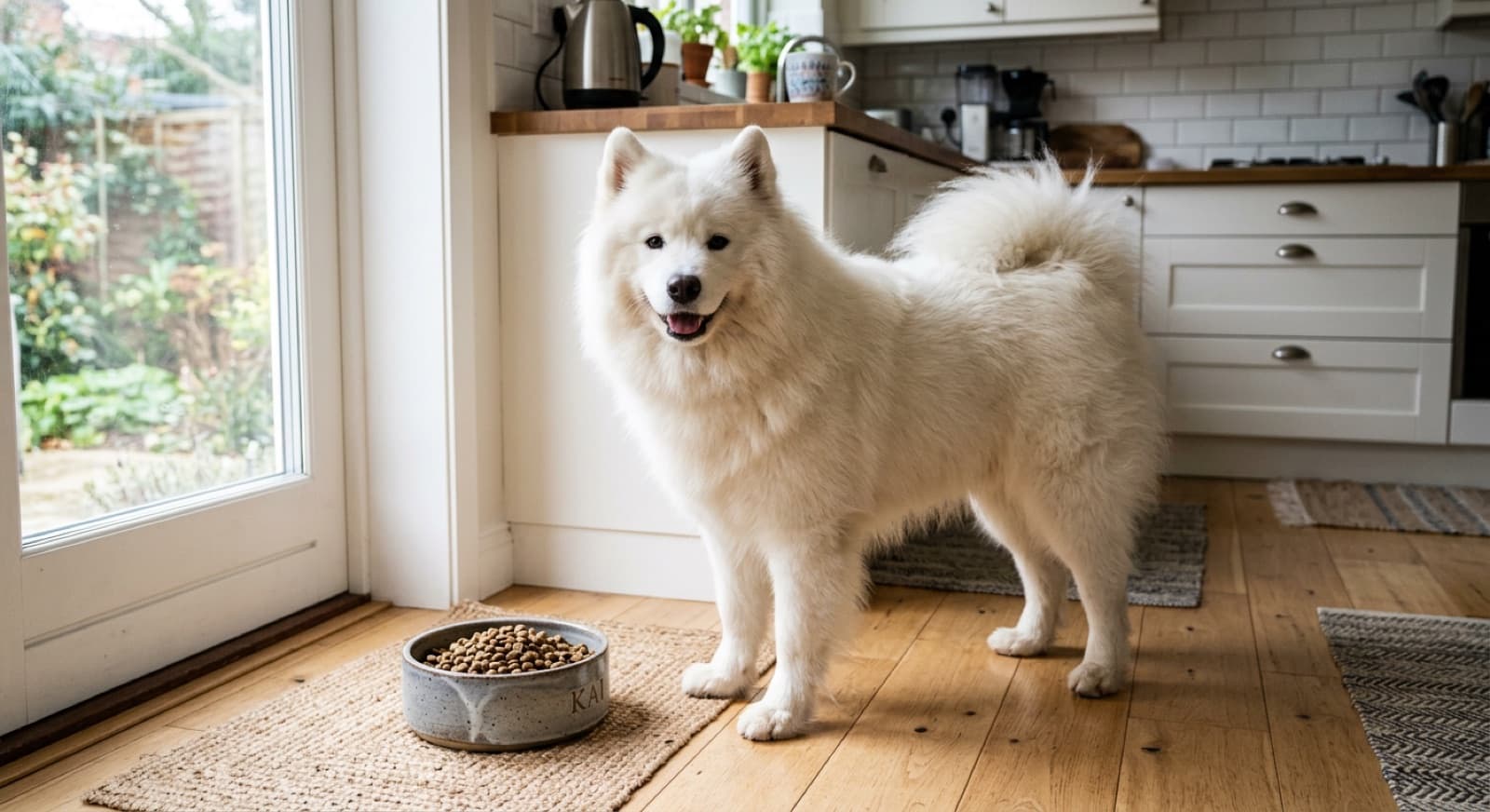
Feed a Samoyed a complete diet, keep it lean, and know the two breed-specific diet angles. Samoyeds are efficient eaters that gain weight easily, so feed to body condition under that coat, judging by feel. The breed carries an inherited zinc-absorption condition that needs vet-supervised zinc, never self-dosing. And Samoyeds are one of the most diabetes-prone breeds, so keeping the dog lean genuinely matters. Feed two meals from the floor, grow the puppy slowly on controlled calcium, and treat the coat with grooming and a balanced diet, not a miracle supplement.
Zinc-responsive dermatosis: the breed-specific diet link
Never self-dose zinc. It is toxic in overdose and blocks copper absorption. Zinc-responsive dermatosis is diagnosed and dosed by a vet, often for life.
This is the standout diet connection for the breed. In Arctic breeds like the Samoyed, a dog eating a complete, balanced diet with plenty of zinc can still fail to absorb enough, because of an inherited defect in zinc absorption. The Purina Institute describes this hereditary form, and the Samoyed Health Foundation calls it a recessive, inherited disorder of Arctic breeds.
The signs, per the Merck Veterinary Manual, are crusting, scaling, and redness around the face, especially around the eyes and muzzle, often with a dull, harsh coat. It is treated with vet-supervised oral zinc, frequently for the dog's life. The reason no responsible guide prints a dose is that, as the Samoyed Health Foundation warns, zinc poisoning can occur if a dog is overdosed, and excess zinc interferes with copper and can cause serious harm. If your Samoyed develops that crusty facial pattern, it is a vet visit, not a supplement-aisle experiment.
Diabetes: a real reason to keep a Samoyed lean
This is the other angle that sets the breed apart, and many owners do not know it. Samoyeds are among the most diabetes-prone breeds in veterinary epidemiology; a large UK diabetes study found the Samoyed had the highest odds of diabetes of any breed studied, many times that of a mixed-breed dog, and the Samoyed Health Foundation reports the breed is roughly twelve times more likely to develop it.
The important nuance is what diet can and cannot do. The Samoyed's diabetes is largely immune-mediated and insulin-dependent, so it is not simply caused by feeding sugar or carbohydrates, and no diet prevents the genetic predisposition. But diet and weight genuinely matter at the margins: obesity drives insulin resistance, so keeping a Samoyed lean supports its metabolic health, which is one more reason the feed-lean rule below is not optional. And a Samoyed that is diagnosed needs a consistent diet and a consistent feeding schedule alongside insulin, as the Merck Veterinary Manual describes, with diet supporting rather than replacing the insulin. Watch for increased thirst, urination, and unexplained weight loss, and see your vet promptly if they appear.
An efficient eater, and a coat that hides everything
Samoyeds were bred to work in the Arctic on modest food, and that efficiency carried into the modern pet, so many owners are surprised how little their dog actually needs and how easily it gains weight. Feed to the dog, not to the bag's chart, which tends to over-recommend.
The challenge is that the dense white double coat completely hides the body, so you cannot see whether a Samoyed is getting heavy. Judge by hand against the WSAVA body condition score: feel the ribs under a light layer of fat, feel for a waist, and feel a tuck at the belly, aiming for a lean 4 to 5 out of 9. If you have to press to find the ribs, the dog is overweight no matter how good the coat looks. Given the diabetes risk above, this hands-on check is one of the most valuable things you do for a Samoyed.
What the coat actually needs
Samoyed owners understandably obsess over the coat, and it is worth being honest about what food can do. That spectacular coat is a genetic trait maintained by grooming and overall health, and a complete, balanced diet already supplies the essential fatty acids a healthy coat needs. No food creates the coat.
Omega-3 fatty acids, the EPA and DHA from fish oil, do genuinely help skin that is itchy, flaky, or inflamed, as VCA describes, but they are a therapeutic tool for compromised skin, not a guaranteed upgrade for a coat that is already healthy. So feed a quality diet, groom regularly, and add omega-3 if your vet recommends it for a skin issue. Staining around the muzzle is a grooming and water matter, not something a diet change fixes.
Growing a Samoyed puppy
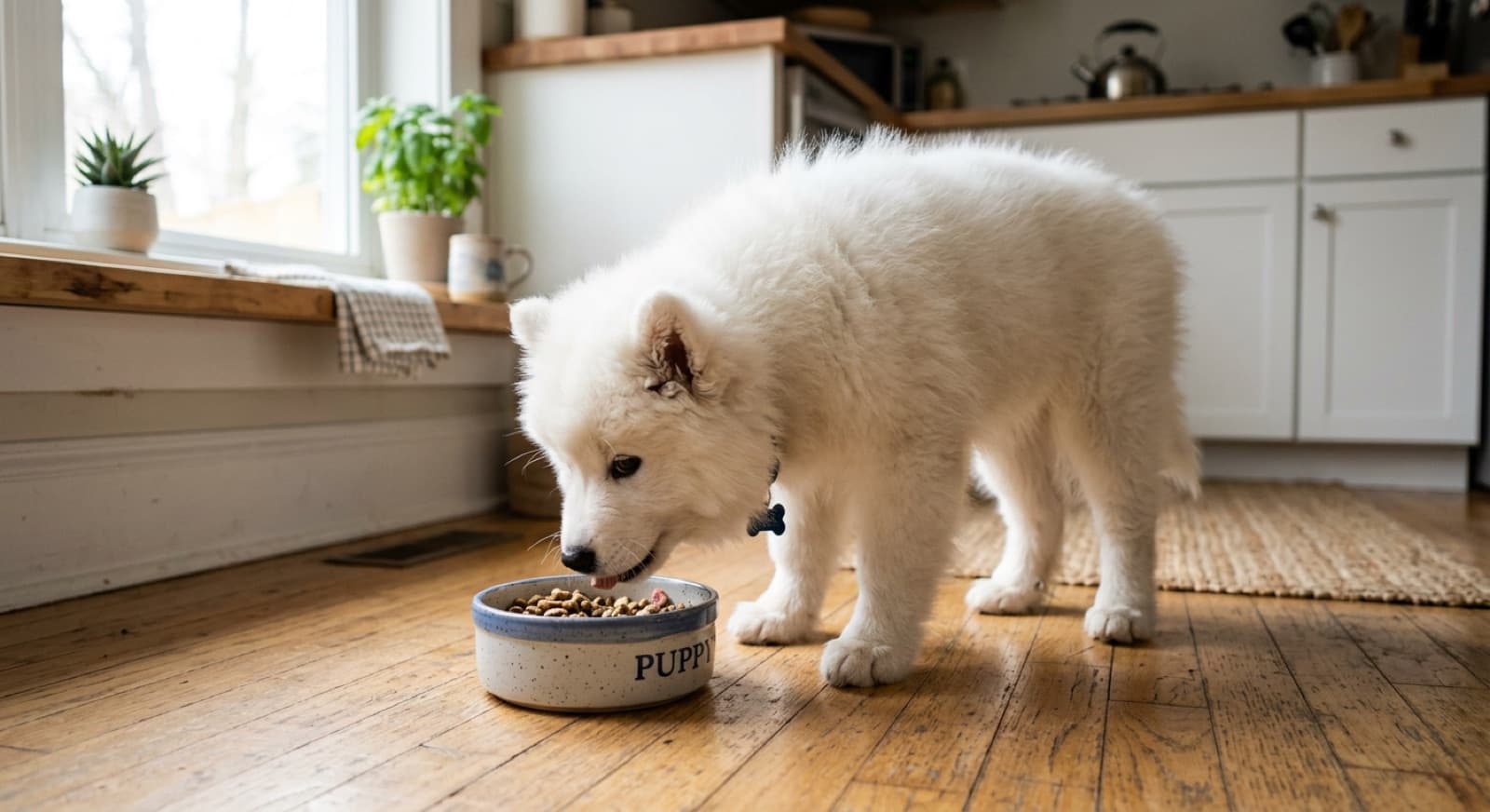
A Samoyed is a medium to medium-large breed, so a food formulated for large-breed growth, or an all-life-stages food carrying the large-size growth statement, is the safe choice. As veterinary nutrition guidance explains, these foods control calcium and calories to keep growth steady and protect developing joints, because a growing dog cannot fully down-regulate the calcium it absorbs.
So the firm rule is to feed a complete puppy food and add nothing to it, since a calcium supplement raises the risk of the skeletal disease you are trying to avoid. Keep the puppy lean throughout, feel for the ribs rather than going by the bag, and transition to adult food on your vet's timing. Building lean-feeding habits now also sets up the weight control that matters so much for a breed prone to diabetes.
Bloat, and the raised-bowl myth
Raised or elevated bowls do not prevent bloat. The leading study linked them to an increased risk. Feed a Samoyed from the floor.
Bloat, or gastric dilatation-volvulus, is when the stomach fills with gas and twists, and it is rapidly fatal without emergency surgery. As a deep-chested breed, the Samoyed carries an elevated risk and the breed club treats it as a real concern, though it is fair to say the Samoyed is not in the top giant-breed tier alongside the Great Dane, and Cornell's list of the highest-risk breeds does not name it. Treat it as a real but moderate risk.
The prevention is worth doing regardless: feed two or more smaller meals a day rather than one large one, slow a fast eater with a slow-feeder bowl, keep the bowl on the floor, and avoid hard exercise for about an hour around meals. The AKC notes that raised bowls were found to increase risk, reversing old advice. A swollen, drum-tight belly with unproductive retching is a go-to-the-emergency-vet-now situation.
Sensitive stomachs and food changes
Some Samoyeds have sensitive stomachs and loose stools when their food changes too quickly, so transition any new food gradually over seven to ten days, and longer for a sensitive dog. A complete diet from an established, nutritionist-backed brand, the kind the WSAVA guidelines describe, is the right foundation.
If a true food allergy is suspected behind itchy skin or chronic GI upset, the only reliable diagnosis is a vet-supervised elimination diet using a novel or hydrolyzed protein for about eight weeks, then a re-challenge, as VCA describes. Over-the-counter limited-ingredient and hypoallergenic labels are not reliable for a real trial. And on grain-free, the FDA has investigated a possible link between legume-heavy grain-free diets and heart disease without proving it, so the cautious default is an established brand.
Foods to avoid
Keep these away from a Samoyed completely:
- Chocolate (darker is worse)
- Grapes and raisins (can cause kidney failure, even a few)
- Xylitol (in sugar-free gum, some peanut butters, and baking), which is rapidly fatal to dogs
- Onions, garlic, leeks, and chives
- Macadamia nuts
- Alcohol and caffeine
- Cooked bones (they splinter)
Given the breed's diabetes risk, also go easy on sugary human treats and high-calorie extras. If your dog eats something on this list, call your vet, the nearest emergency clinic, or a pet poison helpline right away.
Looking to adopt a Samoyed?
Plan the lean-feeding routine that protects against diabetes before day one. Browse Samoyeds and Samoyed mixes available now from the rescues we track across Canada.
See Available Samoyeds →Where to buy Samoyed food
Every brand worth feeding a Samoyed is easy to find:
- Pet specialty chains (Pet Planet, Tail Blazers, Tisol). Carry the established, nutritionist-backed formulas and large-breed puppy lines.
- Pet Valu and PetSmart. Stock the major puppy and adult formulas.
- Your vet clinic. The essential source for any prescription diet if diabetes or a skin condition is diagnosed.
A quality complete formula from an established brand is the foundation, and a vet-recommended omega-3 supplement is a sensible add only if your dog has a skin issue. Both are easy to set on a recurring delivery.
Frequently Asked Questions
How much should I feed a Samoyed?
Less than the fluffy bulk suggests. Samoyeds are northern working dogs bred to do a lot on modest rations, so they tend to be efficient eaters that gain weight easily, and many owners are surprised how little their dog needs. Feed to body condition rather than the bag, which over-recommends, and because the thick coat hides the body, judge weight with your hands: you should feel the ribs easily under a light layer, with a waist and a tuck. Feed adults twice a day. The exact cups depend on the food and the dog, so adjust to hold a lean condition.
What is zinc-responsive dermatosis in Samoyeds?
It is a skin condition seen in Arctic breeds, including the Samoyed, where the dog cannot absorb enough zinc from a normal, complete diet because of an inherited absorption defect. It shows up as crusting, scaling, and hair loss, typically around the eyes, muzzle, ears, and pressure points, often with a dull, harsh coat. It is treated with vet-supervised zinc supplementation, frequently for life. This is strictly a vet-managed condition: zinc is toxic in overdose and interferes with copper absorption, so never guess a dose at home. If your Samoyed develops that pattern, see your vet.
Are Samoyeds really prone to diabetes?
Yes, and it is worth knowing. Samoyeds rank among the most diabetes-prone breeds in veterinary studies, with the risk many times higher than a mixed-breed dog. The breed's diabetes is largely an immune-mediated, insulin-dependent type, so it is not simply caused by diet or sugar, and no food prevents the genetic predisposition. But diet and weight still matter: obesity drives insulin resistance, so keeping a Samoyed lean supports its metabolic health, and a dog that is diagnosed needs a consistent diet and feeding schedule alongside insulin. Watch for increased thirst, urination, and weight loss, and see your vet promptly.
Does diet make a Samoyed's white coat whiter or fluffier?
Not really. The famous Samoyed coat is a genetic trait maintained by grooming and overall health, and a complete, balanced diet already supplies the essential fatty acids a healthy coat needs. Omega-3 supplements genuinely help skin that is itchy, flaky, or inflamed, but they are a therapeutic tool for compromised skin, not a guaranteed upgrade for an already-healthy coat. So feed a quality complete diet, groom regularly, and use omega-3 if your vet recommends it for a skin problem, but do not expect a food to create the coat. Staining around the face is a grooming and water-quality issue, not a diet one.
Do I feed a Samoyed puppy large-breed puppy food?
A Samoyed sits in the medium to medium-large range, so a food formulated for large-breed growth, or an all-life-stages food that carries the large-size growth statement, is the safe choice. The point is controlled calcium and calories to keep growth steady and protect the joints, because a growing dog cannot regulate the calcium it absorbs. Do not add a calcium supplement or multivitamin to a complete puppy food, since excess calcium causes skeletal problems rather than building a sturdier dog. Keep the puppy lean and transition to adult food on your vet's timing.
Are Samoyeds at risk of bloat?
They carry an elevated risk as a deep-chested breed, and the breed club treats bloat as a real concern, though the Samoyed is not in the top giant-breed risk tier like Great Danes. Bloat is when the stomach fills with gas and twists, and it is a rapidly fatal emergency. The habits that lower risk: feed two or more smaller meals a day rather than one large one, slow a fast eater with a slow-feeder bowl, feed from the floor rather than a raised bowl, and avoid hard exercise right around meals. A swollen, drum-tight belly with unproductive retching means the emergency vet immediately.
Is my Samoyed's kidney problem caused by its food?
Not its food. Samoyeds carry an inherited kidney disease called Samoyed hereditary glomerulopathy, which is genetic, passed on the X chromosome, and affects young males most severely. Diet does not cause it and no food prevents it. A special kidney diet is not a preventive and is used only as a palliative measure once a dog has actual kidney disease, alongside veterinary treatment. So if a young Samoyed shows signs of kidney trouble, that is a veterinary diagnosis, and any renal diet comes from your vet, not from guesswork.
What to Feed an Alaskan Malamute
Another northern breed with the same zinc and efficient-metabolism angles.
What to Feed a Husky
The other Arctic breed prone to zinc-responsive skin, fed lean.
What to Feed a Chow Chow
Feeding another aloof, thick-coated spitz with sensitive skin.
Samoyeds for Adoption
Live listings of Samoyeds and Samoyed mixes from the rescues we track.