The short answer
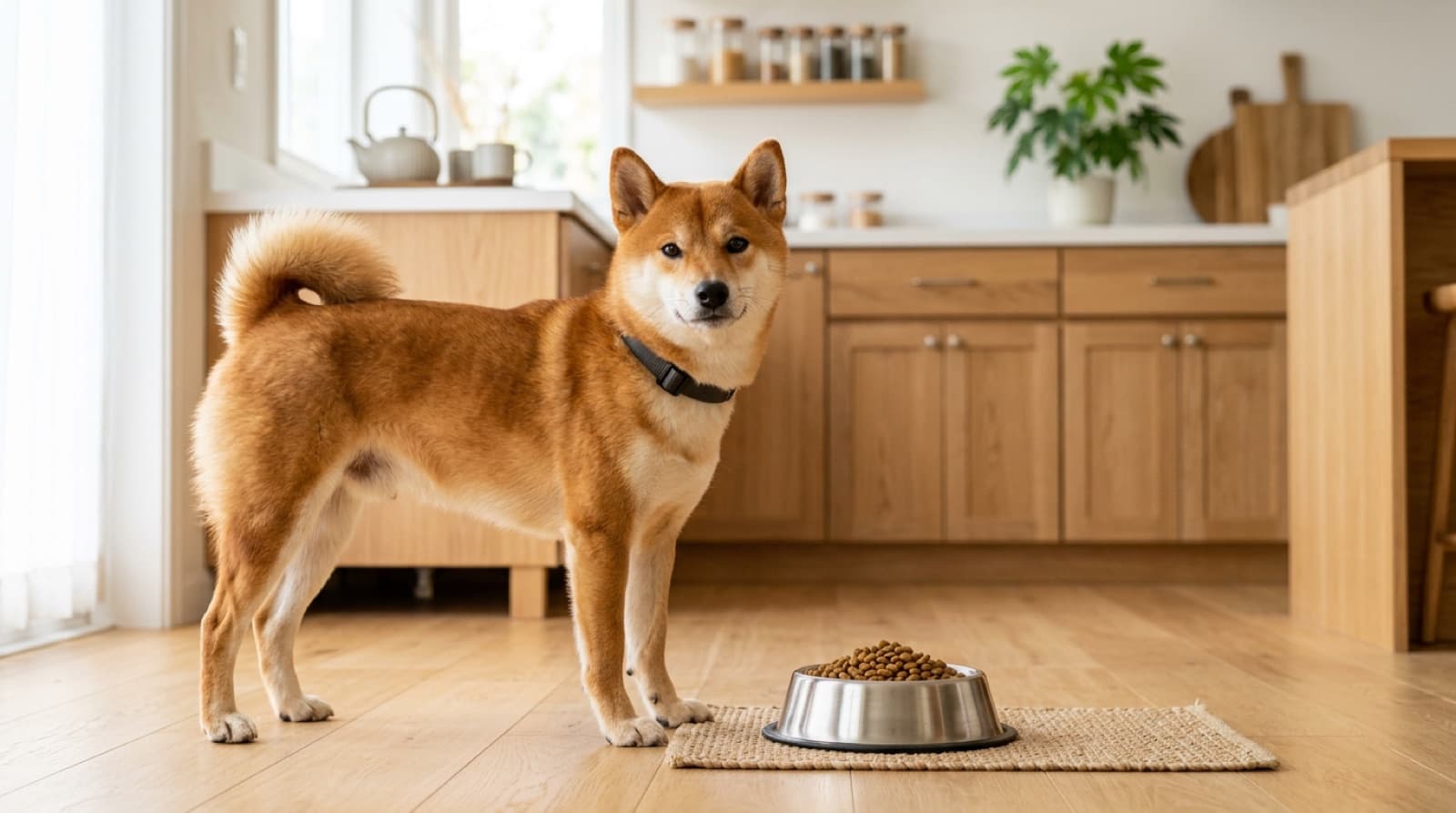
Feed a Shiba Inu a complete diet from a nutritionist-backed brand on a consistent schedule, and keep the dog lean. Most Shiba pickiness is taught: the dog learns that refusing kibble produces something better. The fix is routine, not a fancier bag, and never free-feeding. Keep the breed lean and athletic, because Shibas show extra weight fast. If your Shiba is itchy, work the allergy with a vet rather than swapping bags forever. And if your Shiba guards its bowl, do not take the food away, that makes it worse; build a positive association instead.
What is the best food for a Shiba Inu?
There is no single best bag, and any site that names one is selling something. The standard most vets point to comes from the WSAVA global nutrition guidelines.
Pick a brand that does the science. Ask whether the company employs a full-time, board-certified veterinary nutritionist and runs feeding trials. The safe defaults are Purina Pro Plan, Royal Canin, and Hill's Science Diet, with limited-ingredient and fish-based formulas popular for skin-sensitive Shibas.
Then resist the urge to keep switching. Shibas can be selective, and constant food-changing tends to make pickiness worse, not better. Pick a complete food your dog does well on, judged by firm stool, a glossy coat, steady energy, and a lean body, and stick with it.
Why won't my Shiba eat? The picky-eater truth
Shibas have a reputation as fussy eaters, and most of the time that reputation is earned at the dinner bowl, not in the genes. The breed is intelligent and independent, and a Shiba learns the rules of the house fast. The pattern is almost universal: the dog turns its nose up at kibble, the owner offers a little chicken or a tastier food, the dog eats it, and a clever Shiba concludes that refusing the boring food produces an upgrade. You have not got a broken eater. You have got a quick learner.
The fix is consistency, not a tastier bag. Put the food down for ten to fifteen minutes, pick it up if it is untouched, and offer the same food at the next meal with nothing in between but water. A healthy adult Shiba will eat within a day or two once it understands the rules have changed. The two things that reliably make pickiness worse are free-feeding (leaving food down all day kills appetite and routine) and caving to refusal with toppers and snacks.
One caution: skipping a meal is normal Shiba behaviour, but refusing food for more than about two days, or eating poorly alongside weight loss, lethargy, or vomiting, is a vet visit, not a standoff to win.
Keeping a Shiba lean, and the allergy question
Keep it lean. Shibas are a compact, athletic breed, usually around 15 to 24 pounds, and they show extra weight fast, so a couple of ounces is noticeable. The bag overfeeds, so feed to body condition: feel the ribs easily under a light cover and see a waist from above. Count treats inside the daily total and use meal kibble as training rewards. A lean Shiba moves and looks the way the breed is meant to.
Allergies. Shibas are allergy-prone, with itchy skin, hot spots, paw licking, and ear infections all common. Food can be a trigger, but environmental allergies look identical and are at least as common, so endlessly swapping bags often misses the real cause. The only way to confirm a food allergy is a vet-run elimination diet, eight to twelve weeks on a single novel protein with no other treats. Because skin is a frequent breed issue, this is worth working with your vet rather than guessing. The American Kennel Club breed guide is a good general reference.
Food guarding at the bowl: do not take the food away
Shibas carry a guarding streak, and it often shows up at mealtimes as stiffening, growling, or snapping when someone approaches the bowl. The single most common mistake owners make is to take the bowl away to assert dominance. That backfires, because the dog learns exactly the wrong lesson: people coming near the bowl means losing the food, so guarding harder is what works.
The better approach builds a positive association. As you walk past a Shiba who is eating, toss a high-value treat toward the bowl, so your presence predicts more food, not less. Feed in a quiet, low-traffic spot, give the dog space while it eats, and do not reach into the bowl. For anything beyond mild guarding, especially in a home with children, work with a qualified force-free trainer or veterinary behaviourist. This is a behaviour issue that happens to appear at feeding time, so the fix is training and management, not a different food.
Grain-free, and foods to avoid
Skip grain-free unless your vet diagnoses a grain allergy. True grain allergies are rare, the usual trigger is a protein, and the FDA grain-free investigation is reason for caution.
Keep these away from a Shiba completely: chocolate, grapes and raisins, xylitol (in sugar-free gum, some peanut butters, and baking), onions and garlic, macadamia nuts, alcohol, caffeine, and cooked bones. If your Shiba eats something toxic, call your vet, the nearest emergency clinic, or a pet poison helpline right away.
Should I feed my Shiba Inu a raw diet?
Only with a vet or veterinary nutritionist involved. Some Shiba owners use raw or fresh diets, often to manage skin or stomach sensitivities, and a well-built one can suit the breed. But raw meat carries a pathogen risk for the dog and the household, and a homemade raw diet without a professional recipe routinely runs short on key nutrients. For most Shibas, a complete cooked or kibble diet from a nutritionist-backed brand delivers the same results. If you want to try fresh or raw, use a complete commercial product or a vet-formulated recipe.
Looking to adopt a Shiba Inu?
Sort the food, a feeding routine, and a quiet eating spot before day one. Browse Shibas and Shiba mixes available now from the rescues we track.
See Available Shiba Inus →Where to buy Shiba Inu food
Every brand worth feeding a Shiba is easy to find in store and online:
- Pet specialty chains (Pet Planet, Tail Blazers, Tisol, and similar). Carry Pro Plan, Royal Canin, and limited-ingredient lines.
- Pet Valu and PetSmart. National chains that stock the major formulas, including fish-based and sensitive-skin options.
- Your vet clinic. The place for prescription hydrolyzed diets used in allergy work-ups.
- Online. The same brands ship to your door, easy to set on a recurring delivery.
Once you find a food your Shiba does well on, stick with it rather than rotating. The major adult formulas are all available online.
Frequently Asked Questions
What is the best food for a Shiba Inu?
A complete formula from a brand that employs a veterinary nutritionist and runs feeding trials, like Purina Pro Plan, Royal Canin, or Hill’s Science Diet, with limited-ingredient and fish-based formulas popular among owners managing skin or stomach sensitivities. The brand matters less than the food agreeing with your dog and keeping it lean and athletic. Shibas can be selective, so consistency matters more than chasing the trendiest bag. Start with whatever the rescue was feeding, then transition over seven to ten days.
Why is my Shiba Inu such a picky eater?
Usually because it has been taught to be, and Shibas are smart enough to learn fast. The pattern is familiar: the dog refuses its kibble, the worried owner offers something tastier, the dog eats that, and a clever Shiba learns that holding out produces an upgrade. The fix is consistency, not a fancier food: feed on a schedule, put the bowl down for ten to fifteen minutes, pick it up if untouched, and offer the same food next meal with no extras in between. Most healthy adult Shibas settle within a day or two. Do not free-feed, which makes pickiness and weight gain worse.
My newly adopted Shiba won’t eat. Should I worry?
A new dog often eats poorly for the first few days from stress, and a Shiba in particular may hold out. Give it time, keep the routine calm and consistent, and offer the food the rescue was using. That said, a Shiba that refuses food it normally eats for more than about two days, or shows weight loss, lethargy, vomiting, or a change in thirst, needs a vet to rule out a medical cause. The line is roughly: a day or two of a settled, otherwise-bright dog eating little is usually adjustment; longer than that, or with other symptoms, is a vet call.
How do I keep my Shiba Inu lean?
Measure meals, count treats, and judge by body condition rather than the bag. Shibas are a compact, athletic breed, usually around 15 to 24 pounds, and they show extra weight quickly, so a couple of extra ounces is noticeable. The bag tends to overfeed, so feed to body condition: you should feel the ribs easily under a light cover and see a waist from above. Keep treats under about ten percent of daily calories, and use part of the meal kibble as training rewards so treats do not add to the total. A lean, fit Shiba is the breed at its best.
Is my Shiba’s itchy skin a food allergy?
It might be, but it could just as easily be environmental. Shibas are an allergy-prone breed, with itching, hot spots, paw licking, and ear infections all common, and food can be a trigger. The catch is that environmental allergies to pollen and dust look almost identical, so itching that flares with the seasons points toward the environment. The only reliable way to confirm a food allergy is a vet-run elimination diet, eight to twelve weeks on a single novel or hydrolyzed protein with no other treats. Because the skin is a frequent issue in the breed, work it with your vet rather than guessing through bags.
My Shiba guards his food bowl and growls. What do I do?
Do not take the bowl away to show him who is boss. That is the most common mistake, and it makes resource guarding worse, because the dog learns that people approaching the bowl means losing the food, so guarding harder works. The better approach is to build a positive association: toss a high-value treat toward the bowl as you pass, so your presence predicts more food, not less. Feed in a quiet, low-traffic spot, give him space while he eats, and for anything beyond mild guarding, work with a qualified force-free trainer or behaviourist. This is a behaviour problem, not a feeding one, but it shows up at the bowl.
What should I feed a Shiba Inu puppy?
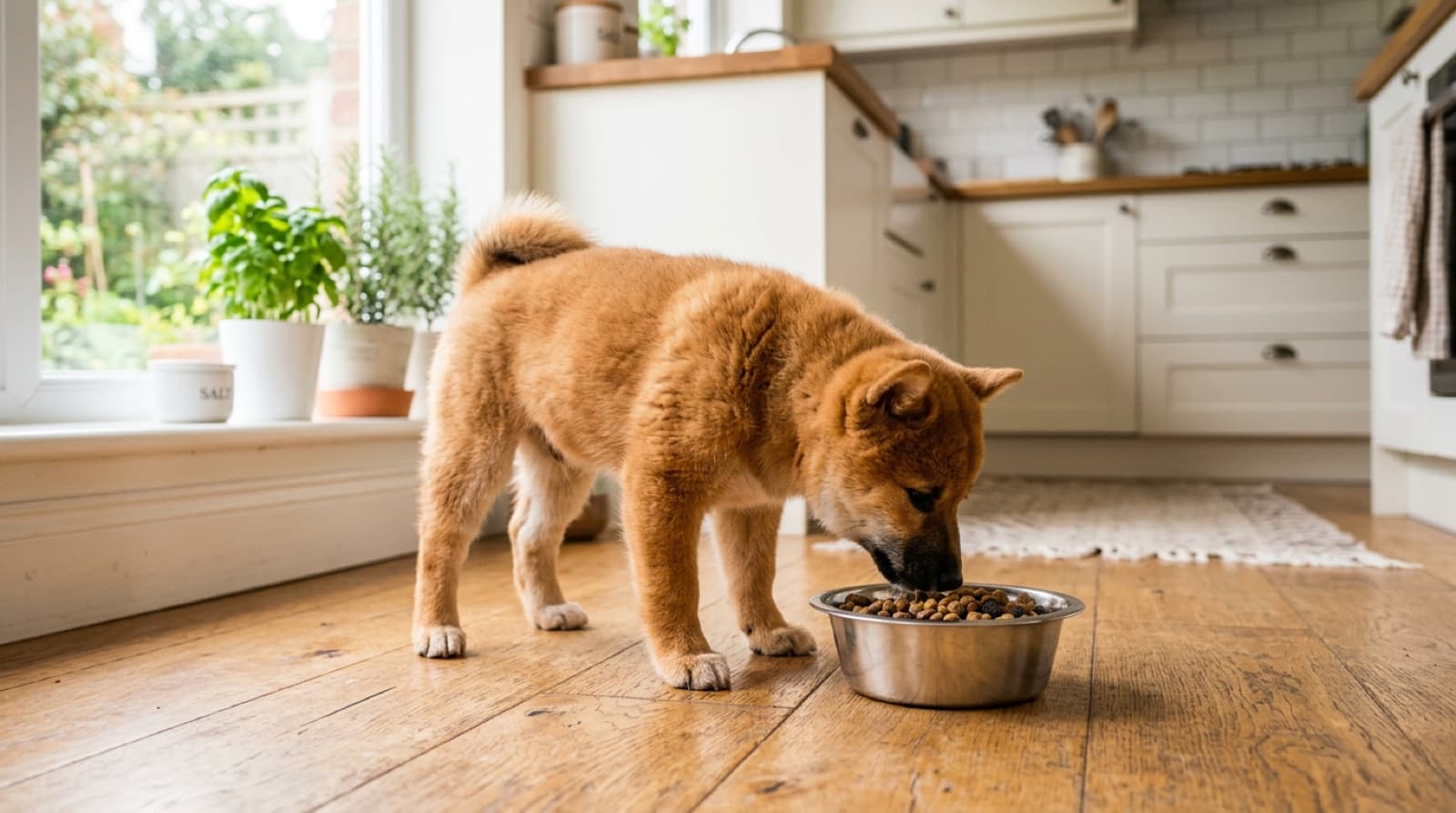
A complete puppy or all-life-stages formula for a small-to-medium breed, fed three to four meals a day as a young puppy, dropping to two by adulthood. Keep the puppy lean, transition foods slowly, and switch to adult food around twelve to fifteen months. Establish good habits early: scheduled meals rather than free-feeding, and a calm, undisturbed eating spot so you never accidentally create a picky eater or a bowl guarder.
Shiba Inu Training & Temperament
The independent streak behind the picky eating and the bowl guarding, and how to work with it.
Shiba Inu Escape & Recall
Why this escape artist needs a secure setup, and the recall work that keeps a Shiba safe.
Shiba Inu Adoption
Where to find Shibas and Shiba mixes, real costs, and what to expect from the breed.
Shiba Inus for Adoption
Live listings of Shiba Inus and Shiba mixes from the rescues we track.