The short answer
Purebred Shiba Inus are rare in Calgary rescue; Shiba mixes appear more often. Apply broadly to Calgary Humane Society, AARCS, BARCS, Pawsitive Match, ARF Alberta, and Heaven Can Wait, and set up notifications so you see new listings quickly. Adult dog adoption fees at the main Calgary rescues run $405 to $650, versus about $3,000 plus tax to $4,500 at the few registered Canadian breeders that publish prices (October 2026, small sample), often with a six month to two year wait. The single most important expectation reset before applying: a Shiba is a cat in a dog suit, not a loyal retriever. Calgary winters suit the breed beautifully; summers above 25°C need planning.
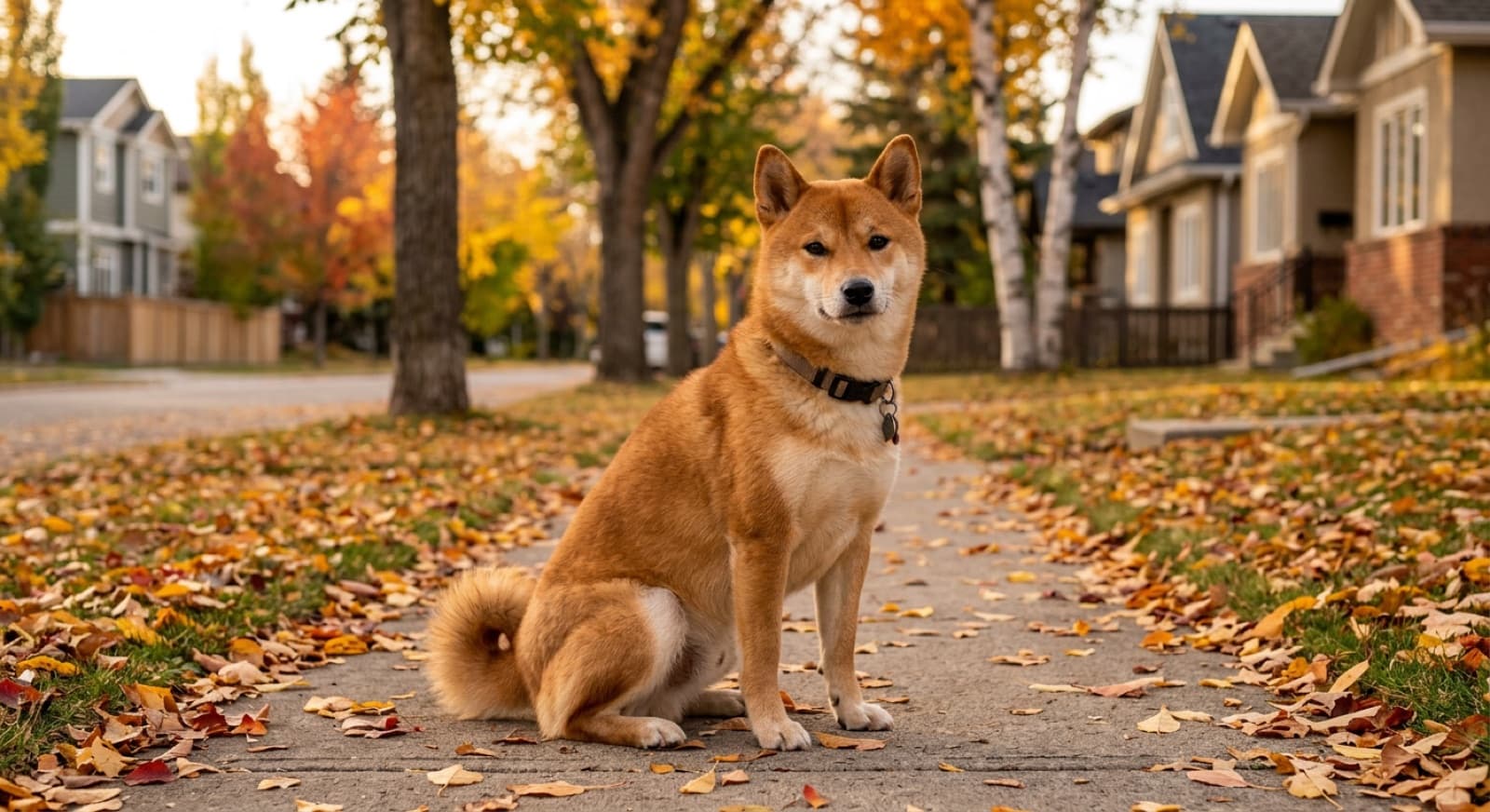
The Shiba Inu is the smallest of Japan's six native spitz breeds, originally developed for small-game hunting in the mountainous terrain of central Japan. The fox-like face, the alert curled tail, and the famously independent temperament make Shibas instantly recognizable. The breed is also one of the most misunderstood ones to bring home in Calgary. Adopters arrive expecting a loyal retriever and meet a dog who behaves more like a cat. Purebreds rarely surface in rescue, ethical breeders carry six month to two year waitlists, and a long list of Kijiji listings claim to sell Shibas at suspiciously low prices. This guide covers where the breed actually appears in Calgary rescue, what a Shiba costs to live with, why so many young Shibas end up surrendered, and how to read the “cheap Shiba puppy” listings honestly.
The Shiba Inu at a glance
Shibas are a small, foxy-built breed with a dense double coat, a tightly curled tail carried over the back, and pricked triangular ears. According to the American Kennel Club and the Canadian Kennel Club, the Shiba is the smallest of the Japanese native breeds and the most numerous companion dog in Japan.
| Trait | Typical range |
|---|---|
| Adult weight | 17 to 23 lbs (8 to 10.5 kg) |
| Adult height (shoulder) | 13.5 to 16.5 inches (34 to 42 cm) |
| Lifespan | 12 to 16 years |
| Coat | Dense double coat; red, sesame, black-and-tan, or cream |
| Energy level | Moderate; bursts of activity, long rests |
| Exercise needs | 45 to 60 minutes daily plus mental enrichment |
| Temperament | Independent, stubborn, alert, fastidious (cat-like) |
Shibas are small enough to live happily in a Calgary condo, but the noise factor (Shiba scream, alert barking) and the escape risk make a fenced yard a significant quality-of-life upgrade. The breed sits near the top of most stubborn-breed rankings, which is the single most important piece of context before applying.
Where to adopt a Shiba Inu in Calgary
Shibas and Shiba mixes are uncommon in Calgary rescue but intake is growing as the internet-meme adoption wave reaches the surrender stage. The strategy is the same as any in-demand breed: apply broadly, set up alerts, and be ready to move quickly when a listing appears. Because purebred Shibas are rare in Calgary rescue, the adopters most likely to land one are those who apply to several rescues before a dog is even listed.
Calgary-area rescues to monitor:
- Calgary Humane Society: the largest local shelter, occasional Shiba or Shiba-mix intakes from owner surrenders.
- AARCS: foster-based; structured “good with” evaluations are useful for a stubborn, escape-prone breed.
- BARCS Rescue: Calgary foster network; small to medium dogs frequently and Shiba mixes from time to time.
- Pawsitive Match: Calgary foster-based; spitz and hunting breeds appear regularly.
- ARF Alberta: Calgary foster network; broad small to medium dog inventory.
- Heaven Can Wait: based in High River, Calgary placement common.
- Calgary Animal Services: the municipal facility, occasional stray or surrendered Shibas (escape artists end up here more than the breed average).
The single best move is to set up notifications on the LocalPetFinder Shiba Inu breed page. Live listings from all 15+ Calgary rescues land there as they appear, and you will catch a new arrival before most adopters do.
There is no Shiba-specific rescue charity we can verify in Canada. The national breed club, Shiba Inu Canada, runs a rescue network that only posts dogs needing new homes, and its own page says: “There are not large numbers of Shiba Inu requiring rescue in Canada.” Check its postings alongside the Calgary rescues above, but expect long gaps between Alberta dogs.
What does a Shiba Inu cost in Calgary?
Calgary fees vary by rescue, age, and what is included. The adult dog fees below were read on each rescue's own fee page in October 2026; puppy and senior fees differ:
| Source | Fee range | Typically includes |
|---|---|---|
| Calgary Humane Society | $405 (adult dog) | Spay or neuter, vaccinations, microchip, vet exam |
| AARCS | $425 (adult dog) | Spay or neuter, vaccinations, microchip, foster history |
| Pawsitive Match / BARCS | $475 / $650 (adult dog) | Spay or neuter, vaccinations, microchip, foster notes |
| Registered breeder puppy | About $3,000 + tax to $4,500 (October 2026, small sample) | Health screening, contract, breeder support, six month to two year waitlist |
The adoption fee is only the entry cost. Annual care for a Shiba in Calgary runs higher than most small breeds because of escape-prevention equipment, double-coat grooming during shedding seasons, and breed-specific health considerations. Plan for:
- Escape-prevention gear: a properly fitted Y-front harness, a back-up martingale collar, a 15 to 30 foot long line, AirTag or GPS tracker, double-door foyer setup, and reinforced fence checks. Budget $200 to $400 in the first month.
- Home grooming tools: a high-quality undercoat rake, slicker brush, and de-shedding tool for the Shiba snow seasons. Budget $100 to $180 once, then replace every few years.
- Professional grooming: $60 to $100 per session every 8 to 12 weeks at Calgary salons if you want help with coat blow. Many Shiba owners groom at home and skip this.
- Food and treats: $40 to $70 per month depending on quality tier. Shibas are smaller eaters than the size suggests.
- Vet and preventive care: roughly $400 to $700 per year for routine wellness, vaccines, parasite prevention, and dental.
- Pet insurance: worth considering for a 12 to 16 year lifespan. Plan for $40 to $70 per month given Shiba-specific eye, allergy, and patellar risks.
- Calgary dog licence: required for every dog three months and older under the Responsible Pet Ownership Bylaw 47M2021. A small annual fee. Licensing also dramatically improves the odds of recovery if your Shiba escapes, which the breed does more than most.
First-year totals typically land between $2,200 and $4,000 once you add gear, training, and licence on top of the adoption fee. For a full breakdown of lifetime ownership cost in Calgary, see our Calgary adoption costs guide.
Why Shiba Inus end up in Calgary rescue
Understanding why this breed gets surrendered helps you build a household where it does not happen to your dog. The patterns we hear from Calgary rescues and from the Shiba owner forums are consistent year over year. Most surrenders are 2 to 5 year old young adults whose owners bought a puppy without fully understanding the temperament.
- Stubbornness mismatch. Owners arrive expecting a Golden Retriever and meet a dog who decides whether the recommended cue is worth their time today. Group obedience class report cards often describe Shibas as “intelligent but uncooperative.” That is the breed working as designed.
- Escape incidents. Door-dashing, fence-jumping, leash-slipping. Shibas are agile, fast, and they treat every open gate as an invitation. One serious escape (lost for hours or recovered by Calgary Animal Services) is often enough for an unprepared family to surrender.
- Shiba scream noise complaints. Beltline and Inglewood adopters in shared-wall buildings discover the scream during the first nail trim and start receiving neighbour complaints within weeks. Landlords sometimes issue notices.
- Internet-meme adopters discovering the cat-like reality. The Shiba is a meme breed (doge, shiba face filters, viral TikTok clips). Owners who bought into the visual reality and not the temperament reality hit a wall when the dog stops cooperating around month four to six.
- Lifestyle changes: babies, moves, divorces, allergies in the family. Common across breeds but particularly hard on a dog who bonds slowly and does not transfer affection easily.
- Resource-guarding and same-sex aggression. Shibas have a strong fastidious streak and can guard food, toys, or beds. Multi-dog households with two same-sex Shibas often see escalating fights once both reach social maturity (18 to 36 months).
None of these are problems with the breed. They are problems with the match. Calgary rescues that run foster-based programs (AARCS, Pawsitive Match, ARF Alberta, BARCS) are the best resource for a Shiba whose adult temperament is already known, which avoids most of the patterns above. Read our companion guide, Is a Shiba Inu right for you?, before applying.
Adult versus puppy: which Shiba Inu is right for you?
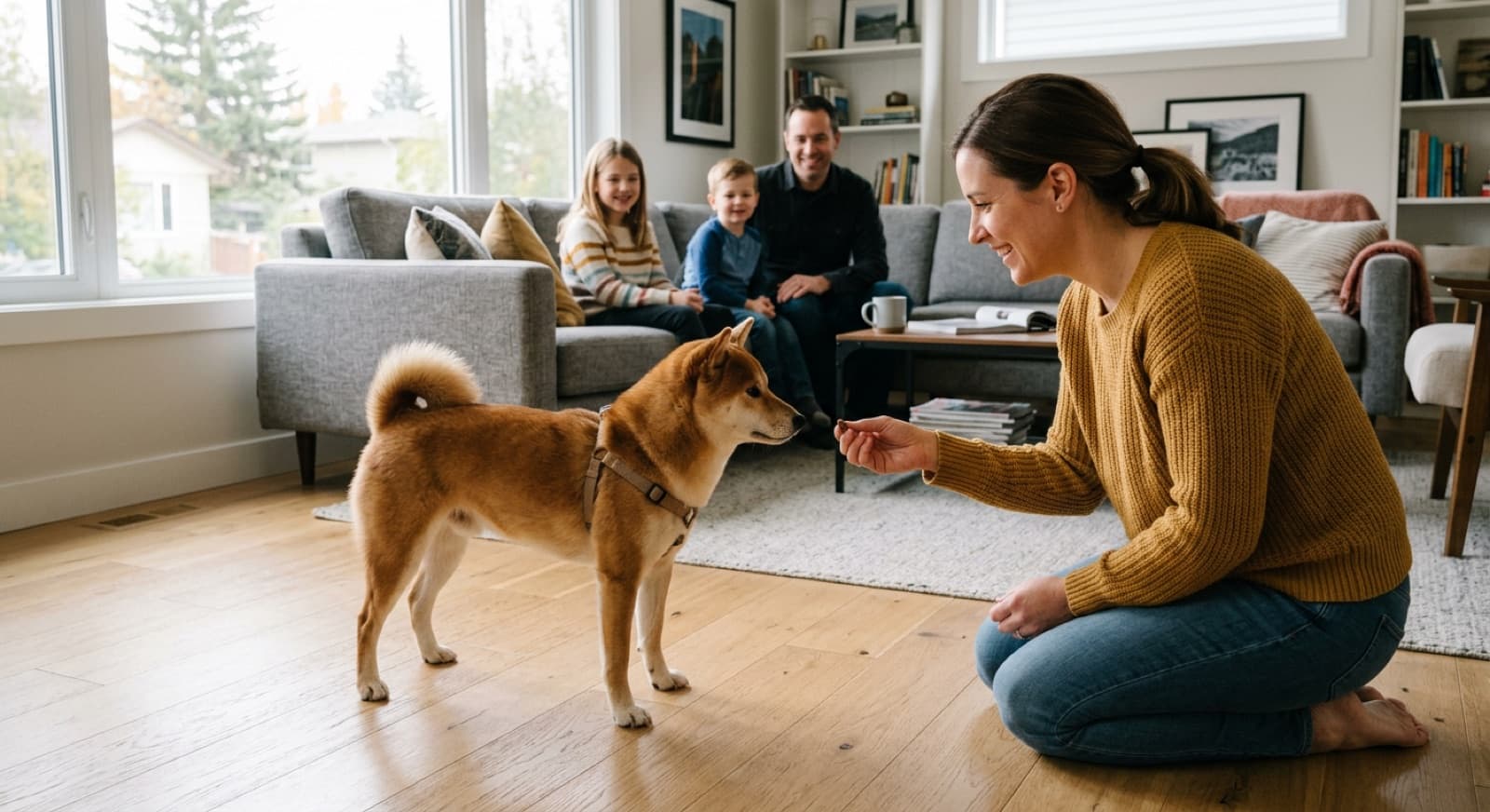
For most Calgary adopters, an adult Shiba with a known temperament from a foster home is the safer fit. Shiba puppies are very rare in Calgary rescue. Most rescue Shibas in Alberta are 2 to 5 year old young adults surrendered by owners who could not keep up with the temperament. These dogs are typically well past the puppy nipping, already house-trained, and have known compatibility with kids, cats, or other dogs from their foster placements.
Why the adult-from-foster path tends to work best:
- Known stubbornness baseline. A 3 year old foster Shiba has revealed their training ceiling already. The foster can tell you what cues are reliable and what cues remain a coin flip.
- Known escape risk. Foster homes know whether the dog door-dashes, fence-jumps, or slips collars, and have already taught the family the daily routine that prevents incidents.
- Known compatibility. The foster knows how the dog handles cats, kids, other dogs, and same-sex Shiba interactions.
- Skip the puppy socialization race. The 6 to 16 week window is the most critical period for any working breed; if it was handled well in the past, the adult dog reflects that work already.
- The Rule of 3s still applies. Three days of overwhelm, three weeks of settling, three months of true adjustment. A 3 year old rescue Shiba follows this arc whether their first family was the rescue or the surrendering home. Plan for the first three months to feel slower than you expected, especially given the breed's slower bonding pattern.
- Lifespan math still favours the adult. A 4 year old Shiba adopted today has 10 to 12 years ahead, which is most of the dog's life.
Puppies make sense if you specifically want to shape socialization from week 8, you have the flexibility for 12 to 18 months of structured training, and you have prior experience with stubborn working breeds. The Shiba puppy waitlists with ethical Canadian breeders run six months to two years, so most Calgary “Shiba puppy” adopters end up either waiting that long or unintentionally buying from a backyard source. For first-week guidance once your dog arrives, lean on the Rule of 3s framework and our training and temperament guide linked at the bottom of this article.
Common Shiba Inu mixes in Calgary rescues
Most Calgary “Shiba” listings are mixes. Be honest about this when you set your expectations. Mixes are still excellent dogs, and in many ways they make better family pets than purebreds, but daily life with each mix is genuinely different.
- Shibadane (Shiba and Great Dane): a striking size contrast. The Dane gentleness moderates Shiba stubbornness, the Shiba alertness moderates Dane mellowness. Usually a 50 to 80 lb dog with a Shiba face. Coat is shorter than a purebred Shiba.
- Shibasky (Shiba and Husky): the most common Calgary Shiba mix, often labelled simply as a Husky mix because the build is similar. Higher prey drive than a purebred Shiba, more escape-prone (which is saying something), more vocal. Best for active households with a secured yard.
- Shiba-Chow (Shiba and Chow Chow): very independent, often aloof with strangers, slow to bond. Coat is denser than a purebred Shiba. Best for experienced owners.
- Shiba-Akita: both Japanese spitz breeds. The Akita size and guarding instinct combined with Shiba stubbornness produces a dog who is significantly more dog than most adopters expect. Typically 40 to 70 lbs. Best for prior spitz owners.
- Pom-Shi (Shiba and Pomeranian): small (10 to 18 lbs), very vocal, fox-like face. Often easier in apartments than a purebred Shiba but louder.
- Shiba-mix of unknown origin: the most common label on Calgary rescue intake. Ask for the foster's temperament notes and read them carefully before applying. The notes matter more than the breed label.
The realistic message: if you want a fox-faced curl-tailed alert dog who behaves cat-like and handles Calgary winters, several mixes deliver almost exactly that experience. Holding out for a purebred can mean waiting six months to two years on a breeder list or paying a premium for a dog whose lineage cannot be verified. The high search volume for “Shiba Inu mix adoption” on Calgary Google reflects this: most adopters who arrive looking for a purebred leave with a mix and are happier for it.
Shiba versus Akita: clarifying the Japanese breeds
Adopters often confuse the Shiba Inu with the Akita Inu. They are different breeds, although both are Japanese spitz types and both share the curled tail, pricked ears, and dense double coat.
- Shiba Inu: small (17 to 23 lbs, 13.5 to 16.5 inches). Originally a small-game hunting breed. Independent, fastidious, and the smallest of Japan's six native breeds.
- Akita Inu: large (70 to 130 lbs, 24 to 28 inches). Originally a large-game and guarding breed. More territorial, more reserved with strangers, and significantly more dog than a Shiba in every dimension.
- Other Japanese spitz cousins: Kai Ken, Kishu Ken, Shikoku, Hokkaido, and the Japanese Spitz (a separate breed, smaller and fluffy white). All six native Japanese breeds are protected as a cultural treasure in Japan by the Japan Kennel Club.
In Calgary rescues, the breeds that get confused most often are Shiba and Husky (similar coat, very different size and drive), Shiba and Pomeranian (Pom-Shi mixes are common), and Shiba and Akita (in rescue listings the size is usually the giveaway). When in doubt, ask the rescue for a foster temperament write-up; that tells you more about daily life with the dog than the breed label ever will.
Adopting a Shiba from Japan: the realistic picture
A small number of Calgary adopters ask about importing a Shiba from a Japanese rescue. Japanese rescue groups for Shibas and other native breeds do exist, and they place dogs both domestically and occasionally internationally.
The realistic picture is heavy:
- International transport cost. Flight, crate, broker, and customs add up to several thousand dollars, on top of the adoption fee.
- Vet and quarantine documentation. Canada requires rabies certification, microchip identification, and a Canadian Food Inspection Agency import permit. The paperwork is straightforward when the source rescue has done it before, less so when they have not.
- Long transit stress. A 13 to 18 hour flight from Tokyo or Osaka to Calgary via Vancouver or Toronto is hard on a Shiba, especially older dogs.
- Language and process barriers. Most Japanese rescues operate in Japanese. Working through the application takes longer than a Calgary placement and the rescue may require a Japanese sponsor.
- Behavioural unknowns. A dog raised in a Japanese household and shelter system arrives in Calgary with unknown English cues, unfamiliar Western dog culture, and the additional decompression of international travel on top of the standard Rule of 3s.
For most Calgary adopters, the realistic conclusion is to focus on local Calgary and Alberta rescue, plus the Shiba Inu Canada rescue network postings, rather than international import. The dogs already in Alberta need homes, the process is faster, and the cost is lower. If you specifically want a Shiba from Japanese bloodlines for cultural or breeding reasons, a CKC breeder with imported parent stock is the more practical path.
Buying versus adopting: reading the Kijiji listings honestly
For most Calgary households, adoption is the right starting point. The math is straightforward: a $405 to $650 adult dog rescue fee with a vetted, spay-neutered, foster-evaluated dog versus about $3,000 plus tax to $4,500 for a registered breeder puppy, often with a six month to two year wait. Our Canadian Shiba Inu puppy price guide explains where that breeder figure comes from (October 2026, small sample).
The case for rescue is strongest when:
- You want a known adult temperament rather than rolling the dice on a puppy.
- You can accept “Shiba mix” rather than “purebred Shiba.” Most rescue Shibas in Calgary are mixes.
- You want to keep one more dog out of the surrender cycle that hits this breed hard between ages 2 and 5.
- You do not want to wait six months to two years on a breeder list.
The case for an ethical breeder is real but narrow. It applies when:
- You need a verifiable health-screened puppy (hip OFA, patellar grades, eye CERF, GM1 gangliosidosis DNA test).
- You are prepared to wait six months to two years and budget about $3,000 plus tax to $4,500.
- You want to shape socialization from week 8 in a household with specific exposure goals (kids, other dogs, busy public spaces).
How to vet a Shiba Inu breeder in Canada:
- Verify Canadian Kennel Club registration on the breeder, not just the puppy.
- Ask for parent health clearances in writing: hip OFA, patellar grades, eye CERF or OFA, plus a GM1 gangliosidosis DNA test on both sire and dam (this is non-negotiable for the breed).
- Visit the home or request a live video tour of where puppies are raised.
- Expect the breeder to interview you. Breeders who do not ask questions are a red flag.
- Confirm a written take-back contract. Ethical breeders take their dogs back at any age, for any reason.
- Reference the breeder against the National Shiba Club of America or the Japan Kennel Club code of ethics where available.
Now the warning. The most common Calgary search for this breed is some version of “Shiba Inu puppy for sale Calgary cheap.” Almost every listing priced well below registered-breeder prices is a problem. The realistic picture:
- A cheap “Shiba Inu” on Facebook or Kijiji: nearly always a scam. The most common patterns are non-refundable deposits on dogs that do not exist, dogs photographed from internet image searches, or sick poorly bred puppies sold by people who collected a deposit and disappeared. If a Shiba is priced like a free-to-good-home dog, it almost certainly is a scam.
- A “Shiba mix” or “Shiba look” puppy for sale: often a backyard breeder selling a Shiba-Husky or Shiba-Eskimo cross at a price the seller hopes adopters will accept without questioning. These dogs are often unsocialized and undocumented.
- A “purebred” with no health clearances: usually a commercial breeder or puppy mill that runs the dogs hard. Often the parents are surrendered to rescue around age 4 to 6 once they stop producing litters.
- About $3,000 plus tax to $4,500 from a registered breeder with documented testing: what the few Canadian breeders that publish prices asked in October 2026 (small sample). Show-line and imported dogs cost more. Yes, the price is high. The math reflects health testing, breeder vet costs, careful pairing, and a take-back lifetime obligation.
- “Mini Shiba” or “Mame Shiba”: Mame Shiba is a marketing term used in Japan for very small Shibas. It is not a separate breed and the dogs are not recognized by the CKC, AKC, or the Japan Kennel Club. Be skeptical of premium pricing on this label.
Many of these “cheap Shiba” dogs end up surrendered to shelters. The dog is the casualty. Skip Kijiji, Facebook Marketplace, and pet-store listings entirely. If a puppy is the only acceptable outcome, wait the six months to two years on a CKC breeder list.
Calgary climate fit: winter ideal, summer demanding
Shibas were developed in the mountainous regions of central Japan with harsh winters. The dense double coat handles Calgary winters beautifully. A well-conditioned Shiba will choose snow over the couch, handle routine winter walks below -20°C without booties on packed surfaces, and run happily on a long line at Nose Hill Park, Fish Creek Park, Bowmont Park, Edworthy Park, or Tom Campbell's Hill through the coldest months. Watch for road salt irritation on Beltline and Inglewood sidewalks; a quick paw rinse on return solves it.
Summer is the harder season. Above 20°C most Shibas start to slow down. Above 25°C the heat-stroke risk is real. The double coat insulates against heat as well as cold, but only when the undercoat is properly maintained. Practical Calgary summer routine:
- Walk before 8am or after 8pm during July and August.
- Check pavement temperature with the five-second rule before walking. If the back of your hand cannot rest on it for five seconds, it is too hot for paws.
- Brush out the undercoat thoroughly during spring blow (the famous “Shiba snow”) so the coat insulates correctly. Never shave a Shiba; the undercoat is the insulator and removing the guard coat increases sunburn risk and worsens heat regulation.
- Provide shade and constant water on patios. Shibas tolerate heat worse than their stoic demeanour suggests.
- Watch for early heat-stroke signs: heavy panting, brick-red gums, stumbling, lethargy. Wading at Sandy Beach on the Elbow River is good for cooling, although most Shibas are not strong water dogs and may need encouragement.
Browse adoptable Shiba Inus in Calgary
See current Shibas and Shiba mixes across 15+ Calgary rescues in one place. Inventory updates regularly, so set up notifications and apply quickly when a listing appears.
See Available Shiba Inus →Frequently Asked Questions
Where can I adopt a Shiba Inu in Calgary?↓
How much does it cost to adopt a Shiba Inu in Calgary?↓
Are Shiba Inus good first-time dogs in Calgary?↓
Why do Shiba Inus end up in Calgary rescue?↓
What is the Shiba scream?↓
Can a Shiba Inu be off-leash in Calgary?↓
How long do Shiba Inus live?↓
What Shiba Inu mixes show up in Calgary rescues?↓
Are Shiba Inus good in Calgary winters?↓
Should I adopt a puppy or adult Shiba Inu?↓
Continue reading
Is a Shiba Inu right for you?
The household honesty test, the cat-like-not-retriever reset, and the questions every Calgary adopter should answer before applying.
Shiba Inu Escapes and Recall
Why Shibas escape and ignore recall: fence-proofing, door-dashing, harness fit and reward-based training.
Shiba Inu training and temperament
Why force-free works and pressure backfires, the Shiba scream, resource guarding, and the realistic training timeline.
Shiba Inu shedding and grooming
The Shiba snow seasons, the daily brushing routine, why you should never shave a Shiba, and Calgary grooming costs.
Adoptable Shiba Inus in Calgary
Live Shiba and Shiba-mix listings across 15+ Calgary rescues, refreshed regularly. Set up notifications for new arrivals.
Calgary dog adoption costs guide
Lifetime ownership cost in Calgary across food, vet, grooming, insurance, training, gear, and emergencies.
New dog? Start with these care guides
Everything a new adopter needs to set up a safe, happy home.