The short answer
Keep hair off the eyes with a topknot, a trim, or a puppy cut, because on a Shih Tzu that is eye protection, not styling. Choose honestly between the long show coat and a manageable puppy cut based on whether you will brush daily. The double coat mats at the skin, so line brush down to the skin and never bathe a matted coat. Clean the beard and muzzle folds every day to prevent skin problems, and treat tear stains with a plain warm cloth, not antibiotic products.
Start with the eyes: grooming as eye care
Hair falling onto a Shih Tzu's large, exposed eyes can cause irritation, tearing, and in some cases contribute to corneal ulcers. Keeping the face hair off the eyes is a health task, not a cosmetic one.
Most Shih Tzu grooming content treats the topknot as a cute accessory. The honest version leads with the eyes, because that is what makes grooming this breed genuinely important. Shih Tzus are brachycephalic, with a short face and large, prominent, exposed eyes that sit forward and unprotected. When the continuously growing face hair falls onto the cornea, it irritates the eye, triggers tearing, and can contribute to ulcers on a surface that is already vulnerable.
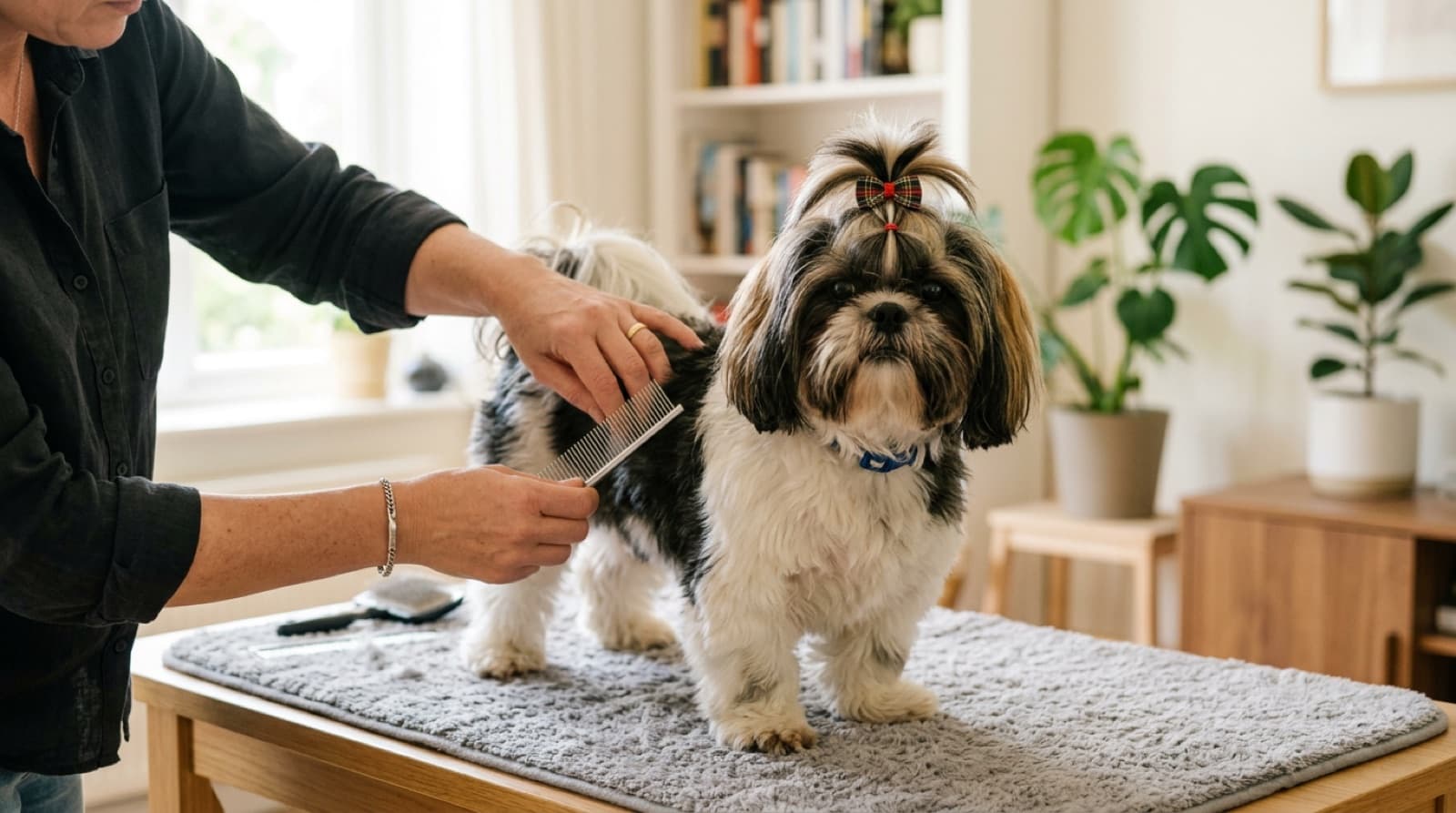
So managing the face hair is the health headline. Keep it off the eyes one of three ways: a topknot that lifts it clear, a regular trim above the eyes, or a puppy cut that keeps the whole coat short. Use a rat-tail comb to part the hair cleanly for a topknot, start once there is enough hair around five months, and use soft latex or silicone grooming bands, never household rubber bands. And treat eye symptoms as veterinary, not cosmetic: squinting, redness, pawing at the face, or a cloudy eye surface all warrant a prompt vet visit, since the American Shih Tzu Club and veterinary sources flag the breed's eyes as a real risk area.
The coat decision: puppy cut or show coat
The Shih Tzu's flowing floor-length coat is stunning, and the American Kennel Club describes it as glamorous for good reason. It is also a near-daily brushing commitment with baths every week or two and a topknot to manage, realistically sustainable only for show homes or very dedicated owners.
The puppy cut, or teddy-bear cut, taken down to about one to two inches, is what most pet owners choose. It still looks like a Shih Tzu, it mats far less, and it needs a professional groom every four to six weeks with easy brushing in between. Neither choice is lazy or wrong. The honest framing is to match the coat to your available time and to your dog, because a dog who dislikes long brushing sessions is genuinely happier in a shorter cut. The common trigger for the decision is the coat change around 10 to 12 months, when the adult double coat comes in and the matting suddenly gets much worse.
Why it mats, and brushing to the skin
The Shih Tzu has a double coat: a long, silky outer coat over a soft, cottony undercoat. The soft undercoat is exactly what mats, and it mats against the skin, which is why the single biggest mistake is brushing only the surface. The top looks done while a dense mat forms underneath at the roots.
The fix is line brushing. Lift the coat in horizontal sections, starting low on the legs and belly and working up, and brush each layer from the skin outward with a pin or slicker brush, then confirm with a steel comb. If the comb snags before it reaches the skin, there is a mat the brush missed. Mist the coat first with a detangling spray, since brushing a bone-dry coat causes static and breakage. For moderate mats a dematting tool can split them, but a coat matted tight to the skin is a groomer's shave-down, not a home job.
Some of the product links in this section are Amazon affiliate links — we may earn a small commission at no extra cost to you. It never changes which products we recommend.
The beard, the folds, bathing, and drying
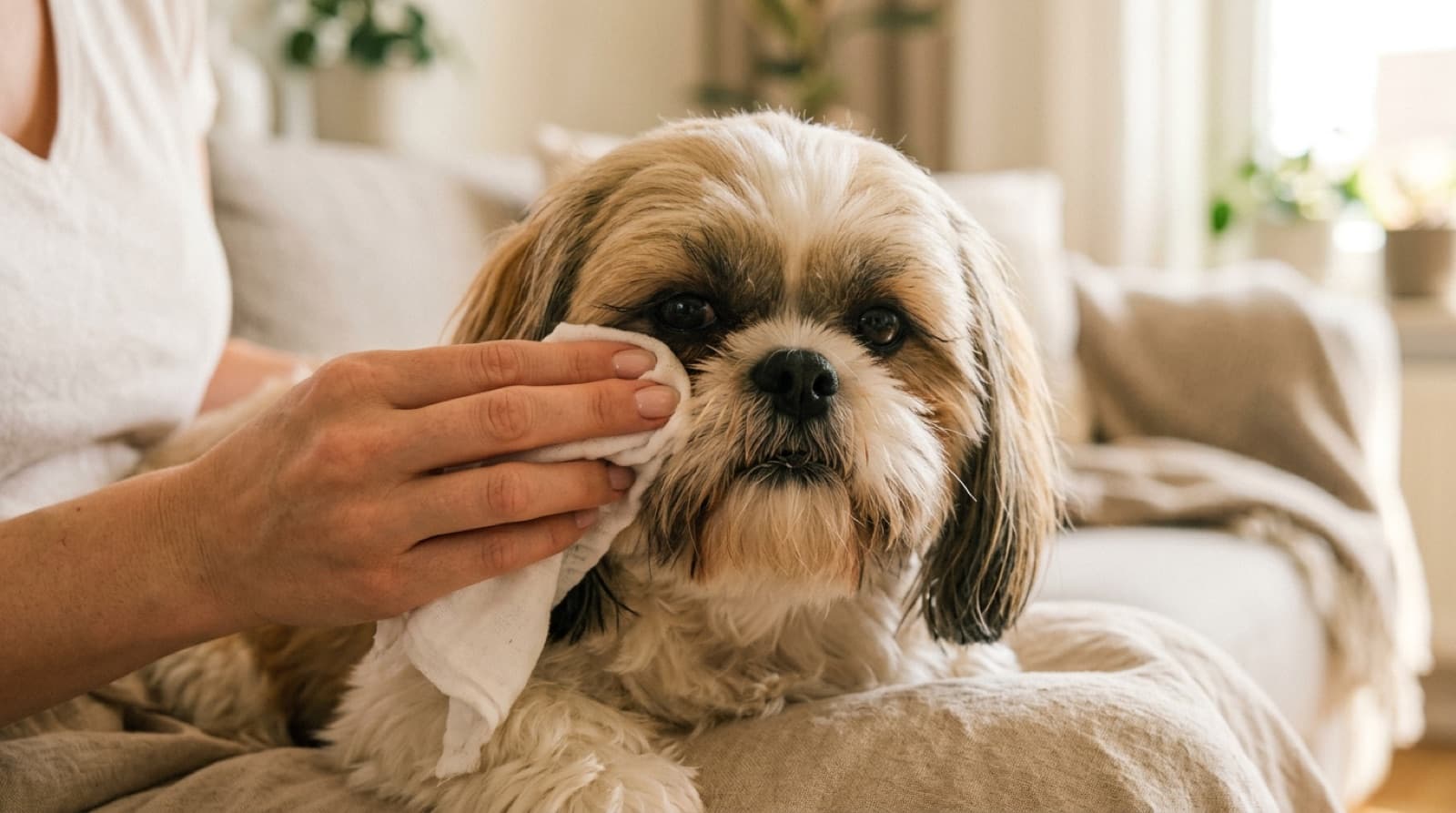
The short muzzle has folds, and the beard traps food, water, and saliva, so both need daily attention or they turn into odour and skin-fold dermatitis. Wipe the muzzle and the folds after meals and drinks, and comb the beard out every day. It is a two-minute habit that prevents a genuinely uncomfortable skin problem.
Bathe every three to four weeks for a companion coat, always after a full brush-out, since water sets any remaining mats into felt. Use a gentle, tearless shampoo on the face. Then dry to the skin with a dryer on low heat while brushing, since a damp undercoat mats and irritates the skin. Keep the heat low and never use a hot human dryer, because a flat-faced breed is sensitive to heat and the skin burns easily. Keep nails short with a nail grinder, and keep the ear canal hair maintained so it does not block airflow and invite infection.
The honest cost: groomer versus doing it yourself
A Shih Tzu costs more to groom than a smooth-coated small dog, and it is worth pricing in before you adopt. Professional grooms commonly run around $60 to $100 or more per visit in Canada, higher in Toronto and Vancouver, every four to six weeks. Canadian grooming cost surveys like Dogster's give a sense of the ranges, and coat condition on arrival swings the price a lot.
The extra cost is real labour: the double coat plus mandatory de-matting time, the delicate face and eye trim work near those prominent eyes, the beard and fold cleaning, and topknot styling all take skilled hands. A matted dog draws a de-matting surcharge or a shave-down. Grooming at home cuts the bill, and a starter kit, a quality pin brush, a steel comb, a dematting tool, a tearless shampoo, detangler, an ear cleaner, eye wipes, and blunt-tip scissors, is a modest spend. Clippers and a low-heat dryer are the larger add-ons for going fully DIY, with the honest note that the face and eye work near a Shih Tzu's eyes takes a steady hand and some practice.
Thinking about adopting a Shih Tzu?
Plan the face and eye routine, choose a coat length you can maintain, and you will have a happy dog. Browse Shih Tzus and Shih Tzu mixes available now from the rescues we track across Canada.
See Available Shih Tzus →Frequently Asked Questions
How often should I brush a Shih Tzu?
Daily for a long coat, and every 2 to 3 days for a puppy cut, always brushing down to the skin in layers rather than skimming the surface. The Shih Tzu has a double coat, and mats form in the soft undercoat right against the skin, where a brush that glides over the top never reaches. It gets dramatically harder during the coat change around 10 to 12 months, so a consistent daily habit through that stage saves a lot of grief.
Puppy cut or long coat, which is better?
Neither is better, it is a lifestyle and kindness call. The flowing floor-length coat is beautiful but needs near-daily brushing and baths every week or two, realistically only sustainable for show homes or very dedicated owners. The puppy or teddy-bear cut, about one to two inches, is far more manageable, still looks great, and needs a professional groom every 4 to 6 weeks. If your dog dislikes long brushing sessions, a shorter cut is the more comfortable choice for everyone.
Can hair in the eyes actually harm my Shih Tzu?
Yes, and this is the part owners underestimate. Shih Tzus have large, prominent, exposed eyes, and hair falling onto the cornea causes irritation and tearing and can contribute to corneal ulcers. That is why keeping the face hair off the eyes, with a topknot, a trim, or a puppy cut, is a health task and not just a cosmetic one. See a vet promptly for squinting, redness, pawing at the eye, or a cloudy surface, since eye problems in this breed can escalate.
Why does my Shih Tzu mat so fast?
The soft, silky double coat tangles against the skin, and modern breeding has made the coat softer, which mats more easily. The friction spots, behind the ears, in the armpits, under the collar, and the rear, go first, and the matting spikes during the coat change around 10 to 12 months. The two habits that prevent it are line brushing all the way to the skin and never bathing a coat that still has mats in it.
What is the safest way to deal with tear stains?
A daily wipe with a warm, damp cloth is the safe baseline, along with keeping the hair around the eyes trimmed. Avoid tear-stain products that contain tylosin, an antibiotic that the American Shih Tzu Club and the FDA warn against using for staining, since it is not approved for this and drives resistance. If the tearing is new or heavy, see a vet to rule out a blocked duct, an eye problem, or allergies, because the cause matters more than the colour.
Should I clean the face folds and beard?
Yes, daily. The short brachycephalic muzzle has folds, and the beard traps food, water, and saliva, which leads to odour and skin-fold dermatitis if it is left. Wipe the muzzle after meals and drinks and comb the beard out every day. It is a small habit that prevents a genuinely uncomfortable skin problem on a flat-faced breed.
How do I keep hair out of the eyes without a full haircut?
Tie a topknot with a soft grooming band once there is enough hair, usually around five months, or trim the hair above the eyes so it does not fall onto them. A rat-tail comb helps part the hair cleanly for a topknot. Use proper latex or silicone grooming bands, never household rubber bands, which snap and break the coat, and never tie it tight.
How often should I bathe a Shih Tzu?
Roughly every 3 to 4 weeks for a companion coat, more often for a full show coat, always brushing the coat completely mat-free first. Dry it down to the skin afterward, since a damp undercoat mats and can irritate the skin, and use a tearless shampoo on the face. Keep the dryer on a low heat setting, because this is a flat-faced breed and hot air is both a burn and an overheating risk.
How to Groom a Maltese
Another small long-coated breed with tear stains and the same puppy-cut trade-off.
How to Groom a Poodle
The same line-brushing rules and the same low-maintenance-clip logic.
What to Feed a Shih Tzu
The other half of Shih Tzu care: portions, the flat-faced eating quirks, and treats.
Shih Tzus for Adoption
Live listings of Shih Tzus and Shih Tzu mixes from the rescues we track.