The short answer
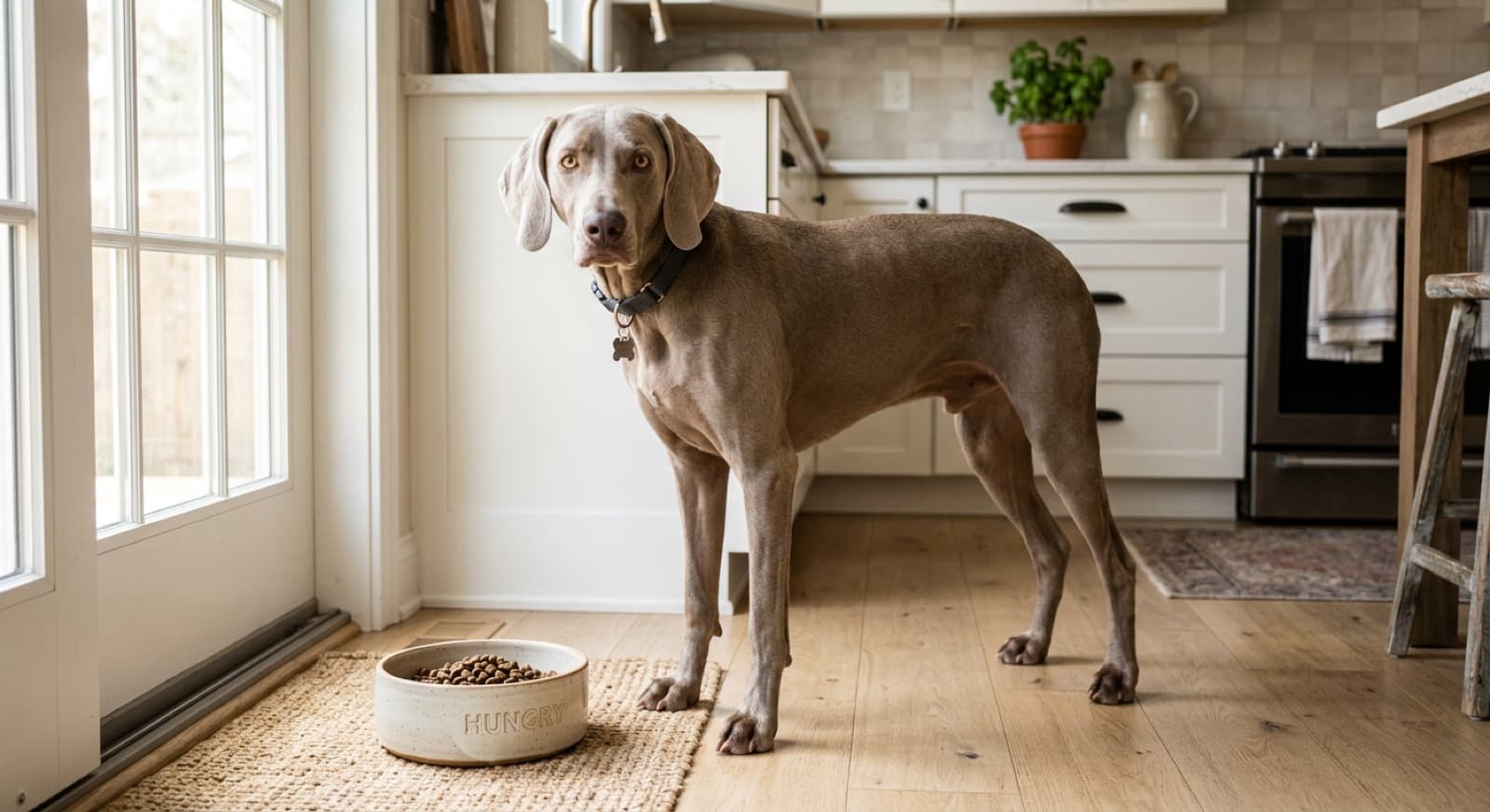
Feed a Weimaraner as a high-risk, high-energy large breed: a complete food in two or more smaller meals, from the floor, never a raised bowl. Bloat is the headline concern, so smaller frequent meals, slow feeding, and a serious look at a preventive gastropexy matter more than the brand. Grow the puppy slowly on a controlled-calcium large-breed formula with no supplements. Match calories to how hard the dog actually works and keep it lean. Sensitive stomachs are common, so transition foods slowly and lean on established brands.
Bloat: the concern that comes first
The Weimaraner is one of the highest-risk breeds for bloat. Raised bowls increase the risk, not reduce it. Feed from the floor, in smaller meals, and ask your vet about a gastropexy.
Everything about feeding a Weimaraner is shaped by one fact: it is a top-tier bloat-risk breed. Cornell and the American College of Veterinary Surgeons both name the Weimaraner among the breeds most commonly affected, alongside Great Danes and St. Bernards. Bloat is when the stomach fills with gas and twists, and it is rapidly fatal: the large Purdue study found roughly a quarter to a third of affected dogs died even with treatment.
The myth to retire is the raised bowl. That same Purdue research found raised feeders were associated with an increased risk in large and giant breeds, attributing a substantial share of cases to them, so feed a Weimaraner from the floor. The habits that genuinely help: feed two or more smaller meals a day instead of one large one, since one daily meal roughly doubles the risk, and slow a fast eater with a slow-feeder bowl, since fast eating multiplies it. The single most reliable protection is a preventive gastropexy, which tacks the stomach so it cannot twist, dropping recurrence from up to 80 percent to a few percent. For a breed at this level of risk, it is a real conversation to have with your vet, often bundled with spay or neuter. A swollen, drum-tight belly with unproductive retching is an emergency.
Growing a Weimaraner puppy
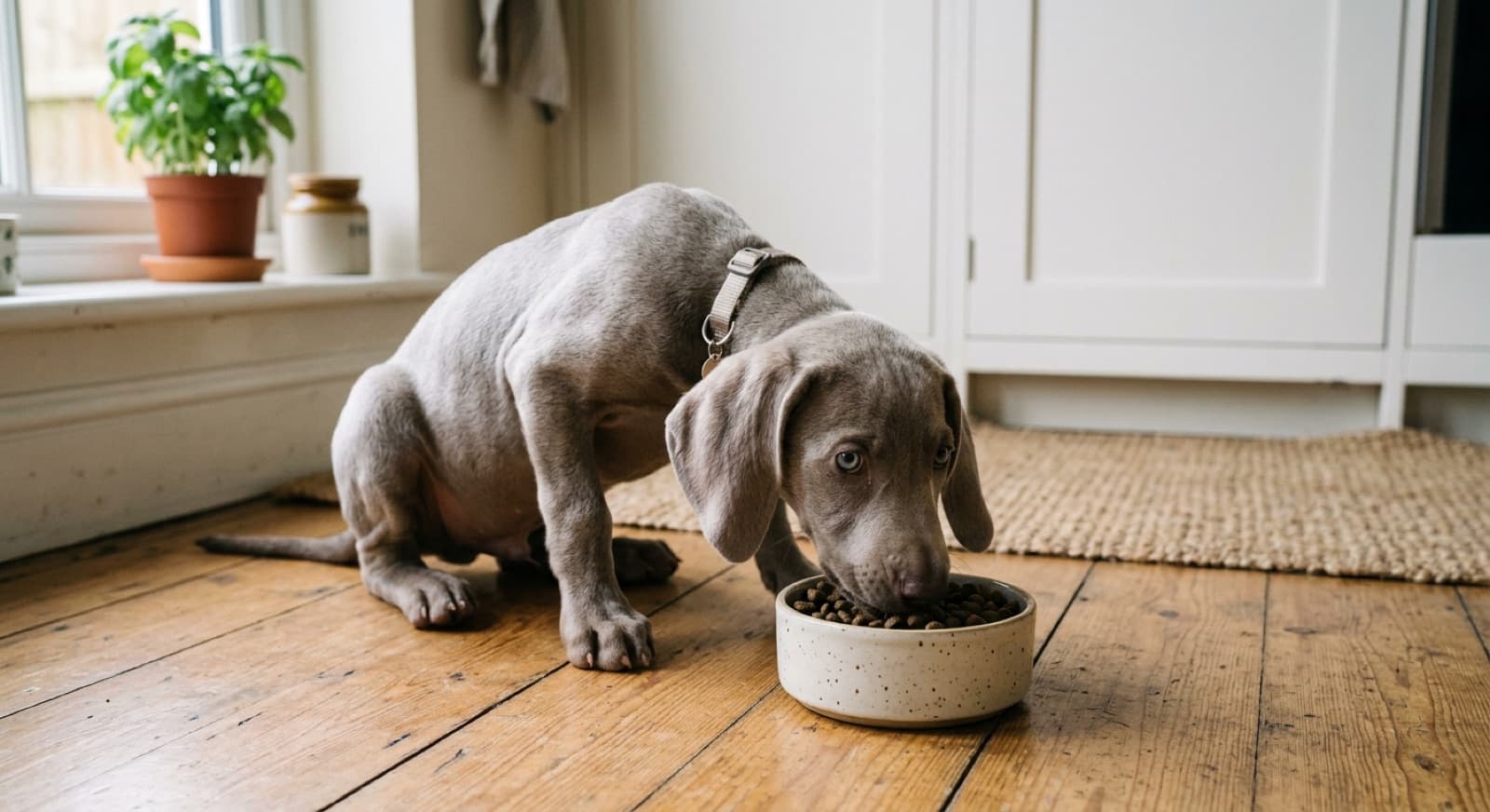
A Weimaraner is a large breed, though not a giant one, so feed a large-breed puppy formula. As VCA explains, these foods control calcium and calories specifically to slow growth and protect developing joints, because a large-breed puppy passively absorbs most of the calcium it eats and cannot regulate the excess.
That gives one firm rule: do not add a calcium supplement or multivitamin to a complete large-breed puppy food, which is contraindicated and causes skeletal disease rather than building a sturdier dog. Look for the AAFCO statement that the food is for the growth of large-size dogs, keep the puppy lean, and transition to adult food around 12 to 15 months, earlier than the 18-to-24-month window a giant breed needs. Slow, lean growth now protects the athletic frame the breed depends on.
Fueling a real athlete, and keeping it lean
The Weimaraner Club of America cannot stress exercise enough, and that energy has to be fueled. For a genuinely active or working Weimaraner, fat is the key, because it is the most concentrated energy source and the primary fuel for endurance, so a higher-fat active-dog or performance formula suits a hard-working dog, especially in hunting season. Scale the calories up when the dog is working hard and back down in the off-season.
But fuel the dog you actually have. A companion Weimaraner that gets good daily exercise still does not need a sled-dog ration, and over-feeding any Weimaraner just makes it fat. Feed to body condition against the WSAVA 9-point scale, aiming for a lean 4 to 5 with ribs easily felt, a visible waist, and a tuck. The payoff is real: the landmark Purina lifespan study found lean dogs lived a median of nearly two years longer than overweight ones.
Sensitive stomachs and itchy skin
Ask Weimaraner owners about feeding and loose stools come up first. The breed is prone to sensitive stomachs, so the simplest wins are real: transition any new food slowly, over at least a week and longer for a sensitive dog, and choose a complete sensitive-stomach or gastrointestinal formula from an established brand. For persistent trouble, a vet-prescribed gastrointestinal diet often settles things.
When the problem is itchy skin rather than the gut, the important correction is that environmental allergies are far more common than food allergies, so the bag is usually not the culprit. As the Merck Veterinary Manual notes, true food allergy is uncommon, and when it exists the triggers are usually proteins like beef, dairy, and chicken, not grains. The only reliable way to diagnose a food allergy is a vet-supervised elimination diet, since Tufts notes the blood and saliva tests are not reliable. On grain-free, the FDA has investigated a possible link to heart disease without proving it, so the cautious default is an established, nutritionist-backed brand.
The protein-hyperactivity myth
Because Weimaraners are so intense, owners sometimes wonder whether a high-protein food is winding the dog up, and try cutting protein to settle it. It does not work. A controlled study by Dodman and colleagues found protein level had no effect on hyperactivity, and protein is not the body's main energy source anyway, so the premise is wrong.
A Weimaraner's drive is breed temperament plus a genuine need for exercise and mental work. Tellingly, experienced owners agree, attributing a wild Weimaraner to under-exercise rather than its dinner. The fix for a bouncing-off-the-walls Weimaraner is more physical and mental stimulation, not a lower-protein bag. Feed a complete, quality diet and solve the energy with activity.
Foods to avoid
Keep these away from a Weimaraner completely:
- Chocolate (darker is worse)
- Grapes and raisins (can cause kidney failure, even a few)
- Xylitol (in sugar-free gum, some peanut butters, and baking), which is rapidly fatal to dogs
- Onions, garlic, leeks, and chives
- Macadamia nuts
- Alcohol and caffeine
- Cooked bones (they splinter), and rich, fatty scraps that upset a sensitive stomach
A tall, athletic, food-driven Weimaraner can clear a counter easily, so keep food and bins secured. If your dog eats something on this list, call your vet, the nearest emergency clinic, or a pet poison helpline right away.
Looking to adopt a Weimaraner?
Plan the bloat-prevention and lean-feeding routine before day one. Browse Weimaraners and Weimaraner mixes available now from the rescues we track across Canada.
See Available Weimaraners →Where to buy Weimaraner food
Every brand worth feeding a Weimaraner is easy to find:
- Pet specialty chains (Pet Planet, Tail Blazers, Tisol). Carry active-dog and performance formulas plus sensitive-stomach and large-breed lines.
- Pet Valu and PetSmart. Stock the major large-breed puppy, adult, and active-dog formulas.
- Your vet clinic. The best source for a gastrointestinal prescription diet if your Weimaraner's stomach needs more help.
For a sensitive Weimaraner, a sensitive-stomach formula from an established brand is a good start; for a hard-working dog, a higher-fat performance food suits the workload. A slow-feeder bowl is essential gear for this bloat-prone breed.
Frequently Asked Questions
Are Weimaraners at high risk of bloat?
Yes, the Weimaraner is one of the highest-risk breeds for bloat, named by veterinary authorities alongside Great Danes and St. Bernards. Bloat, or gastric dilatation-volvulus, is when the stomach fills with gas and twists, and it is rapidly fatal, with roughly a quarter to a third of affected dogs dying even with treatment. Because the risk is genuinely high, prevention is not optional: feed two or more smaller meals a day from a floor-level bowl, slow a fast eater, and seriously consider a preventive gastropexy, which many vets recommend for this breed and which can be done at spay or neuter.
Do raised or elevated bowls prevent bloat in a Weimaraner?
No, and this is the most important myth to correct for the breed. The large Purdue study found that a raised feeding bowl was associated with an increased risk of bloat in large and giant breeds, attributing a substantial share of cases to raised feeders. So the old advice to elevate the bowl is reversed: feed a Weimaraner from the floor. The habits that genuinely lower risk are smaller, more frequent meals, slowing a fast eater with a slow-feeder bowl, and keeping hard exercise away from mealtimes. The single most reliable protection is a preventive gastropexy.
What is a gastropexy and should my Weimaraner have one?
A gastropexy is a surgery that tacks the stomach to the body wall so it cannot twist. It does not prevent the stomach from filling with gas, but it prevents the lethal twisting that makes bloat fatal, dropping the recurrence risk dramatically. Because the Weimaraner is a top-tier bloat-risk breed, many veterinary surgeons recommend a preventive gastropexy, and it is commonly done at the same time as spaying or neutering to save a separate anesthetic. It is a genuine conversation to have with your vet for this breed, especially if a close relative has bloated.
How much should I feed a Weimaraner?
More than the average dog its size when it is active, because Weimaraners are high-energy working dogs that burn a lot of fuel, but the exact amount depends on the food and the dog's real activity. Real-world owners often feed an active adult around four cups a day split into two meals, scaled up on heavy-exercise days, but treat that as a starting point. Feed to body condition, not the chart: aim for a lean 4 to 5 on the 9-point scale with ribs easily felt, a visible waist, and a tuck. Weigh the food and adjust to hold that lean, athletic condition.
Do I feed a Weimaraner puppy large-breed puppy food?
Yes. A Weimaraner is a large breed, so feed a food formulated for large-breed growth, which controls calcium and calories to slow growth and protect the joints. A large-breed puppy absorbs most of the calcium it eats and cannot regulate the excess, so do not add a calcium supplement or multivitamin to a complete puppy food, because excess calcium causes skeletal disease. Look for the label statement that the food is for the growth of large-size dogs, keep the puppy lean, and transition to adult food around 12 to 15 months, earlier than a giant breed.
My Weimaraner has a sensitive stomach. What helps?
Sensitive stomachs and loose stools are the single most common feeding complaint in the breed. Start by transitioning foods slowly, over at least a week, since fast switches upset Weimaraner stomachs. A complete sensitive-stomach or gastrointestinal formula from an established brand helps many dogs, and for persistent trouble your vet may prescribe a gastrointestinal diet. If the issue is itchy skin rather than the gut, know that environmental allergies are far more common than food allergies, so do not assume the bag is the problem. A true food allergy is diagnosed by a vet elimination diet, not by guesswork.
Does high-protein food make a Weimaraner hyperactive?
No. A controlled veterinary study found that the level of protein in the diet had no effect on hyperactivity in dogs, and protein is not the body's main energy source, so the idea that it winds a dog up is not how canine metabolism works. A Weimaraner's famous intensity comes from being a high-drive working breed that needs a great deal of exercise and mental work, not from its food. As the breed people say, a tired Weimaraner is a good Weimaraner. If yours is bouncing off the walls, the answer is more activity, not a lower-protein bag.
What to Feed a Vizsla
Fueling another lean, high-energy, deep-chested pointing breed.
What to Feed a German Shorthaired Pointer
Athletic-gundog fueling and the deep-chest bloat caution.
What to Feed a Great Dane
The bloat and controlled-growth playbook for another top-risk breed.
Weimaraners for Adoption
Live listings of Weimaraners and Weimaraner mixes from the rescues we track.