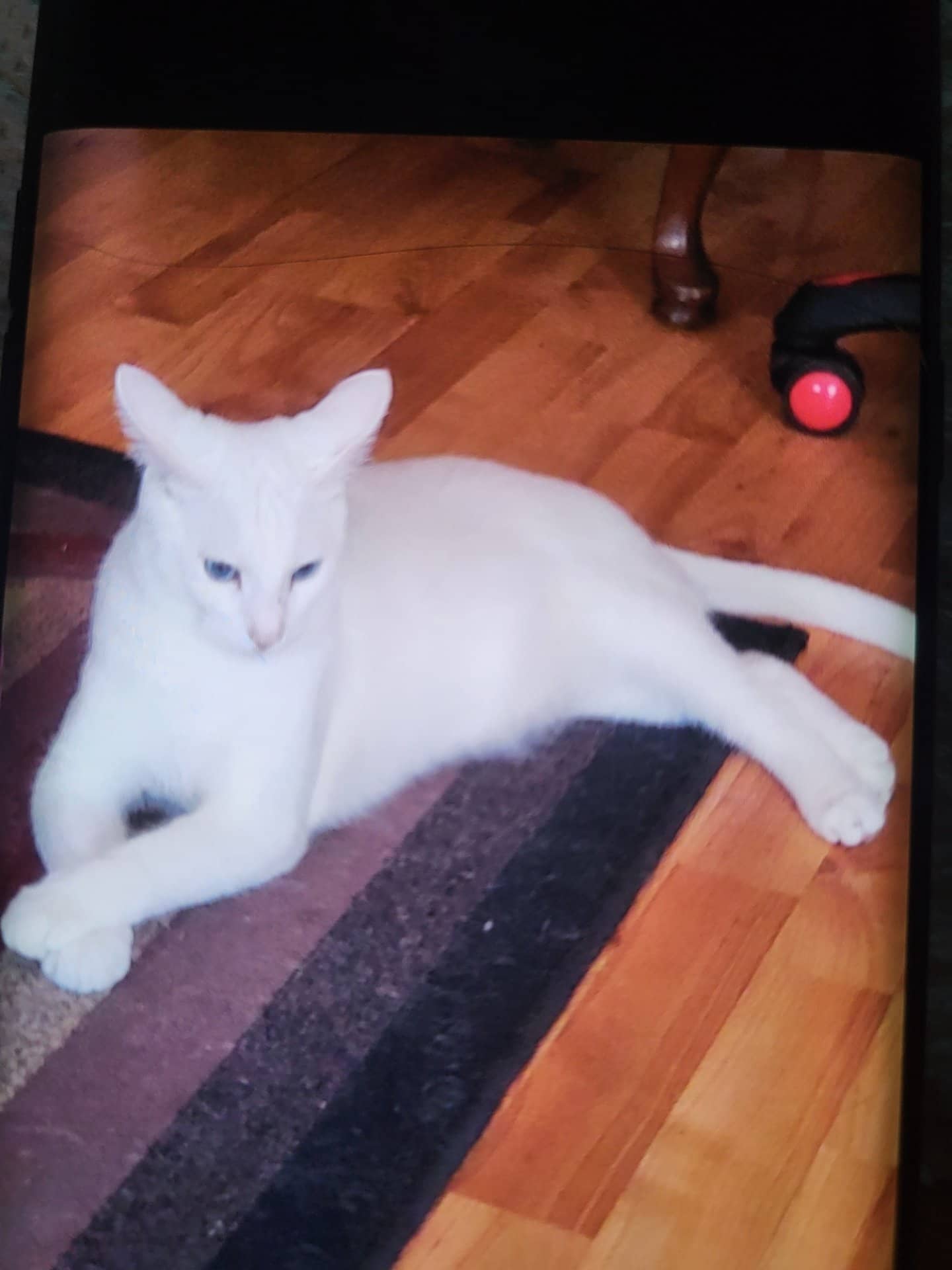


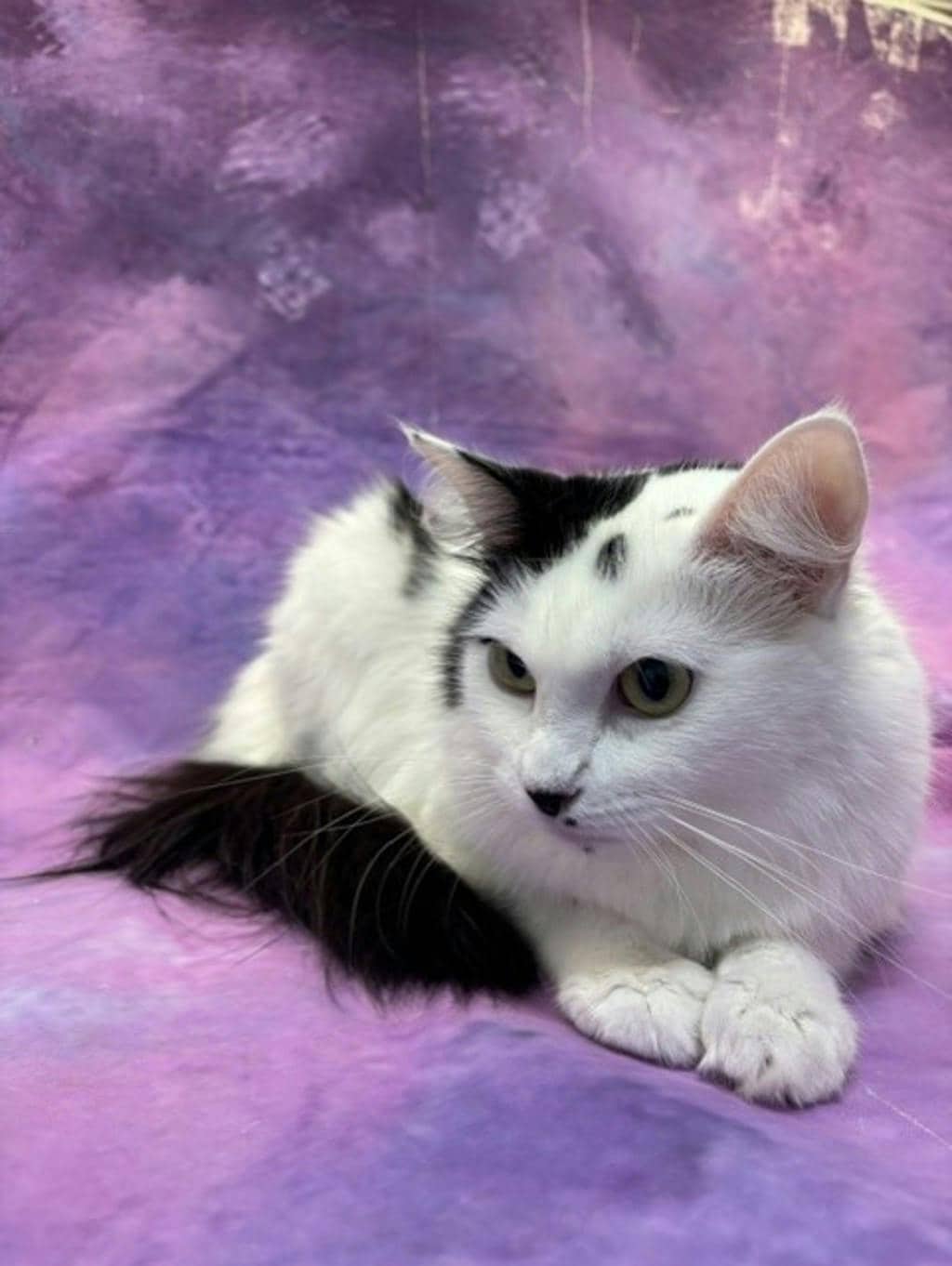

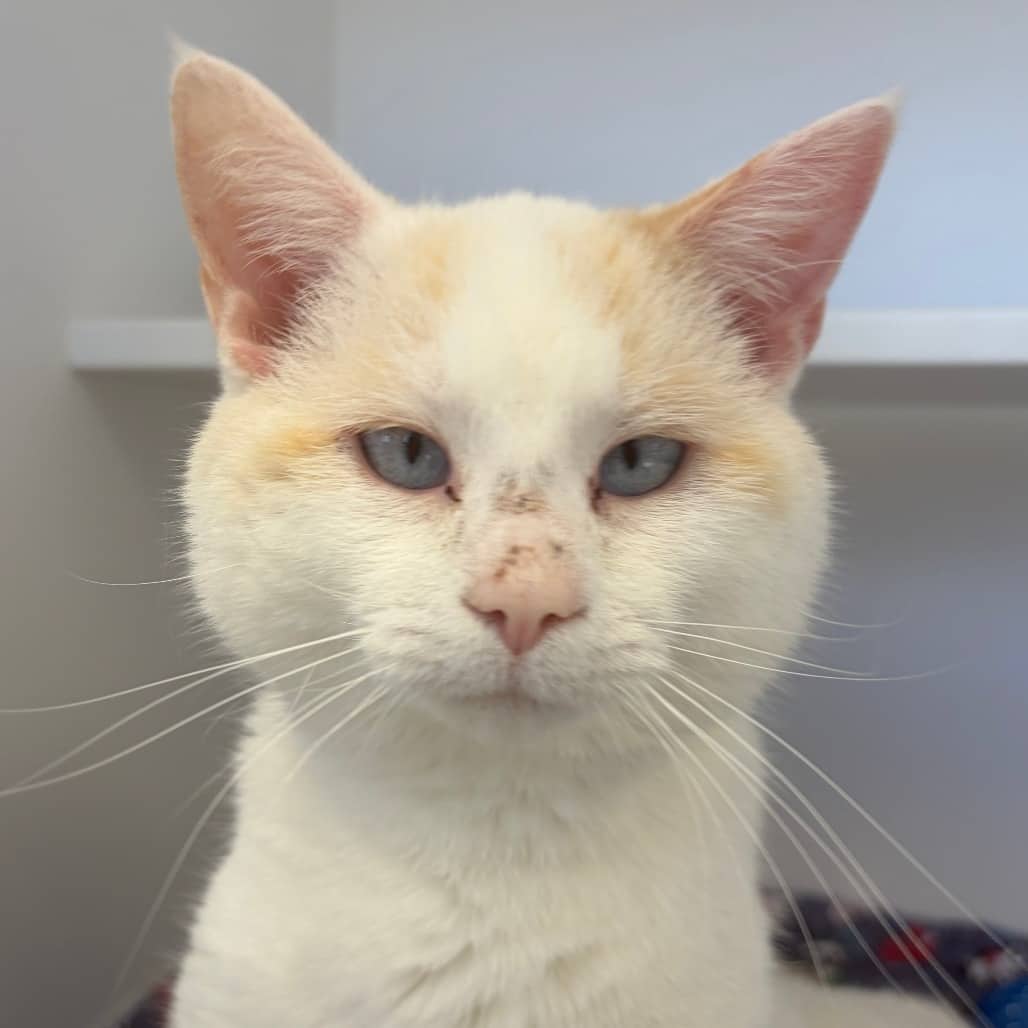
Get notified when a White Cat is listed
We will email you the moment a White Cat becomes available in Canada, from a rescue or an owner rehoming.
Ask whether the cat can hear
This is the one question that genuinely matters on a white cat, and it is the one most adopters do not know to ask. Congenital deafness is associated with the dominant white gene, and the association strengthens with blue eyes: strongest of all in a white cat with two blue eyes, weaker with one blue eye, weaker again with green or gold eyes.
Plenty of white cats hear perfectly well, so this is not a reason to avoid them. It is a reason to ask. Any rescue placing a white cat should have noticed whether it startles at sound, and a foster who has lived with the cat will know within a day. If nobody has checked, a vet can assess it.
A deaf cat is an easy cat, with two rules
Deaf cats are not harder work in daily terms. They play, they cuddle, they use the litter box, and they are often described by owners as unusually calm. Two things change, and both are straightforward.
- Indoors only, without exception. A deaf cat cannot hear a car, a dog, or a coyote.
- Communicate by sight and vibration: a hand wave, a light flicked on and off, a firm footfall on the floor.
- Approach where the cat can see you, and avoid waking it by touch, which startles.
- Expect a louder cat. Deaf cats cannot moderate their own volume.
Pale skin, thin ears, and sunny windows
White cats have little pigment protecting the skin, and the thin fur on the ear tips and the bridge of the nose is where that shows. A cat that suns itself in a south-facing window can burn, and repeated burning across years is linked to skin cancer at exactly those sites.
It is a slow risk rather than an emergency, and it is easy to manage. Keep the cat indoors, and if it has a favourite bright window consider UV-filtering film or shifting the perch. Any crusting or scabbing on the ear tips that does not resolve is worth a vet visit rather than watching.
White is a colour, not a breed
Nearly every white cat in Canadian rescue is a domestic shorthair or domestic longhair that happens to be white. A handful of breeds are commonly white, but a documented pedigree is rare in rescue and a claim without paperwork describes appearance rather than ancestry.
- Turkish Angora and Turkish Van: frequently claimed, rarely documented.
- Persian and British Shorthair: white variants exist and occasionally surrender.
- White domestic shorthair or longhair: by far the most likely, and a fine cat.
Check it is actually white, not cream
Cream cats, which are diluted orange, get listed as white constantly, especially in poorly lit shelter photographs. The distinction is worth making because it changes the questions: white carries the deafness association, cream does not.
Look for a warm buff tone and faint tabby striping in daylight, which cream shows and true white does not. If a listing is ambiguous, ask for a photo taken beside a window.
White Cat Cat Adoption FAQ
Tap a question to expand
How many White Cats are available for adoption in Canada?▼
Are white cats deaf?▼
Is a deaf cat hard to look after?▼
Do white cats need sun protection?▼
How do I tell a white cat from a cream cat?▼
Looking for white cat cat adoption in a specific city? Each city link above has a city-scoped page with local rescue context and city-specific FAQ. Or browse the Calgary White Cat cat adoption guide for the most detailed local content we have.