
Get notified when a White Cat is listed
We will email you the moment a White Cat becomes available in British Columbia, from a rescue or an owner rehoming.
The one question to ask about a white cat
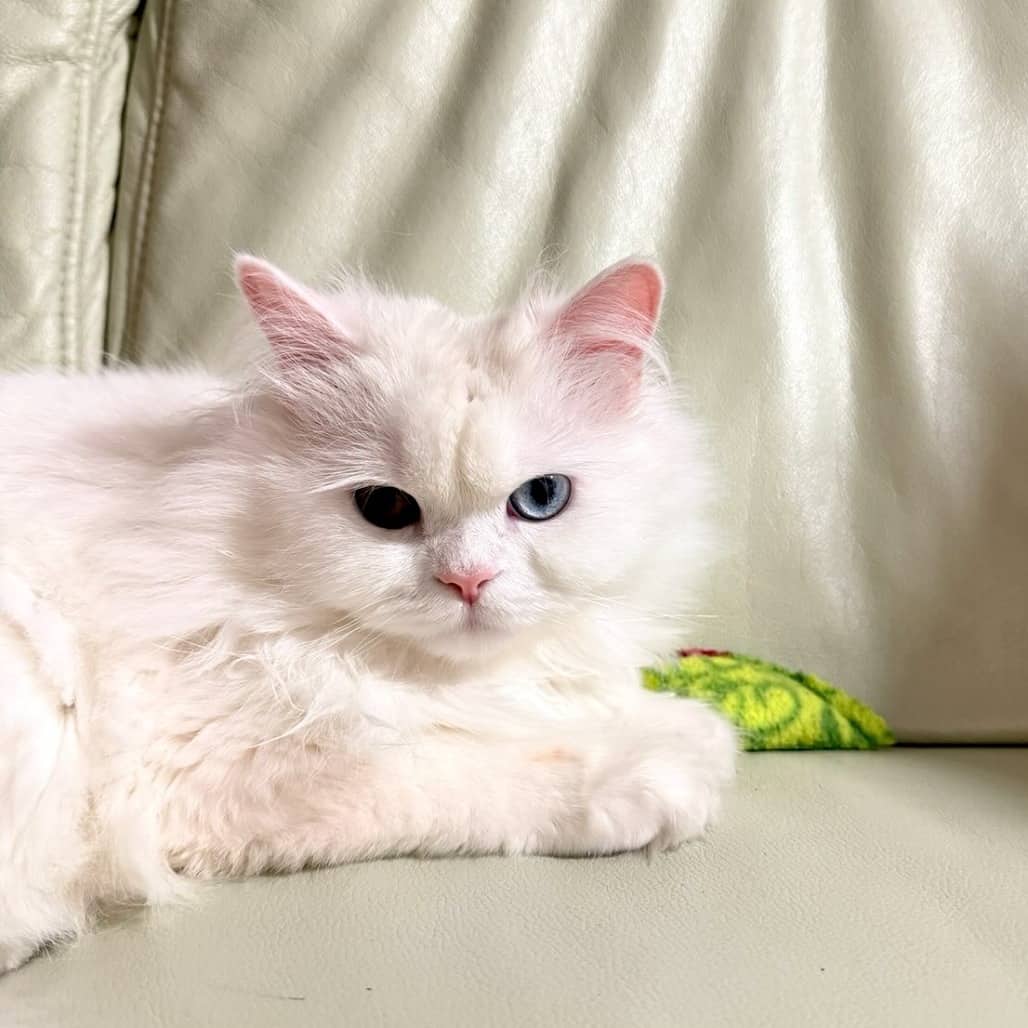
Ask whether the cat can hear. Congenital deafness is genuinely associated with the dominant white gene, most strongly in white cats with blue eyes and more strongly again in those with two blue eyes. Plenty of white cats hear perfectly well, but it is common enough that any rescue placing one should have checked, and a good one raises it before you ask.
A deaf cat is a fine pet and often an easy one, but two things change. It must live indoors without exception, because it cannot hear a car or a coyote. And you communicate visually and through vibration rather than by voice, which most people pick up within a week. BC rescue is heavily foster-based, so the foster can usually tell you whether the cat responds to sound.
Sun, skin and a pale coat
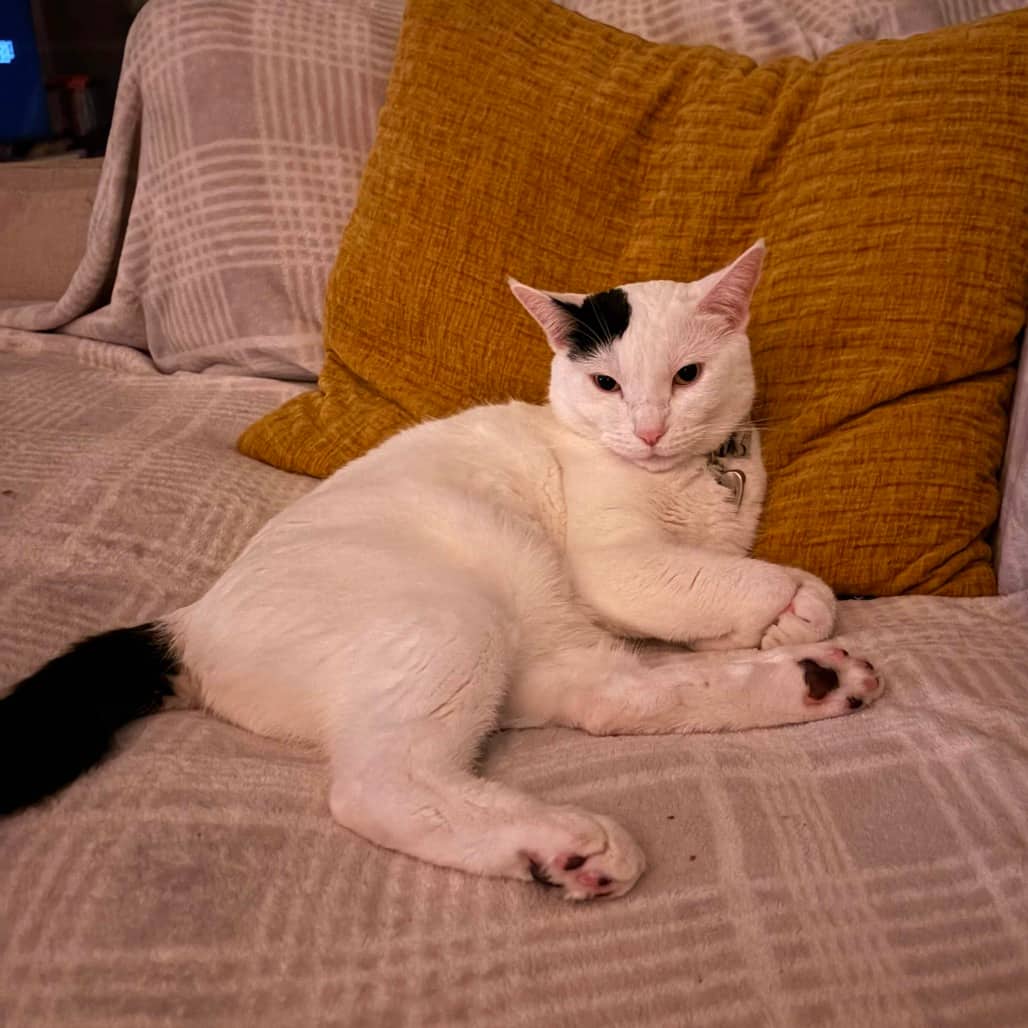
White cats have little pigment protecting the skin, and the thin fur on the ear tips and nose is where that shows. A cat that suns itself in a window can burn, and repeated burning over years is linked to skin cancer at those sites. BC summers in the Okanagan and the southern Interior are considerably harder on a white cat than a grey Vancouver spring.
The answer is straightforward: keep the cat indoors, and if it favours a bright window consider UV-filtering film or moving the perch. Any persistent crusting or scabbing on the ear tips is worth a vet visit rather than watching it.
Otherwise, ordinary care
White is a colour rather than a breed, and nearly every white cat in BC rescue is a domestic shorthair or longhair. Grooming follows coat length rather than colour, though a white coat shows dirt and tear staining more, and the damp coastal climate means a longhaired white cat takes longer to dry out.
Indoor living is the BC default for traffic, coyotes and Island predators rather than for cold, and it stops being optional if the cat turns out to be deaf.
Looking more broadly? Browse every adoptable cat across the province on Cat Adoption British Columbia.
The rescues that most often list White Cats across the province are BC SPCA, VOKRA, Heart and Soul Dog and Cat Rescue, and Broken Promises Rescue Society.
White Cat Adoption FAQ — British Columbia
Tap a question to expand
How many White Cats are available for adoption in British Columbia?▼
Where can I adopt a white cat near me in British Columbia?▼
Are white cats deaf?▼
Do white cats need sun protection?▼
How much does it cost to adopt a White Cat in British Columbia?▼
Popular cat breeds in British Columbia
White Cat adoption by city in British Columbia
Each city page lists only the white cats available from rescues serving that city.