The short answer
Poodles are generally healthy and long-lived, with size-specific risks. The breed is notably associated with Addison’s disease (a manageable but easily missed adrenal condition), plus eye conditions, hip dysplasia, epilepsy, and ear infections (from hair in the ear canal). Standards add a bloat risk; Toys and Minis add a slipping kneecap and dental disease. The doodle caveat: hybrid vigour is not guaranteed, a doodle can inherit both parents’ problems, so health-tested parents (for a puppy) or a vet workup (for a rescue) matter. Most Poodles live 12 to 15+ years. Insurance is worth considering, especially for Standards and unknown-breeding doodles.
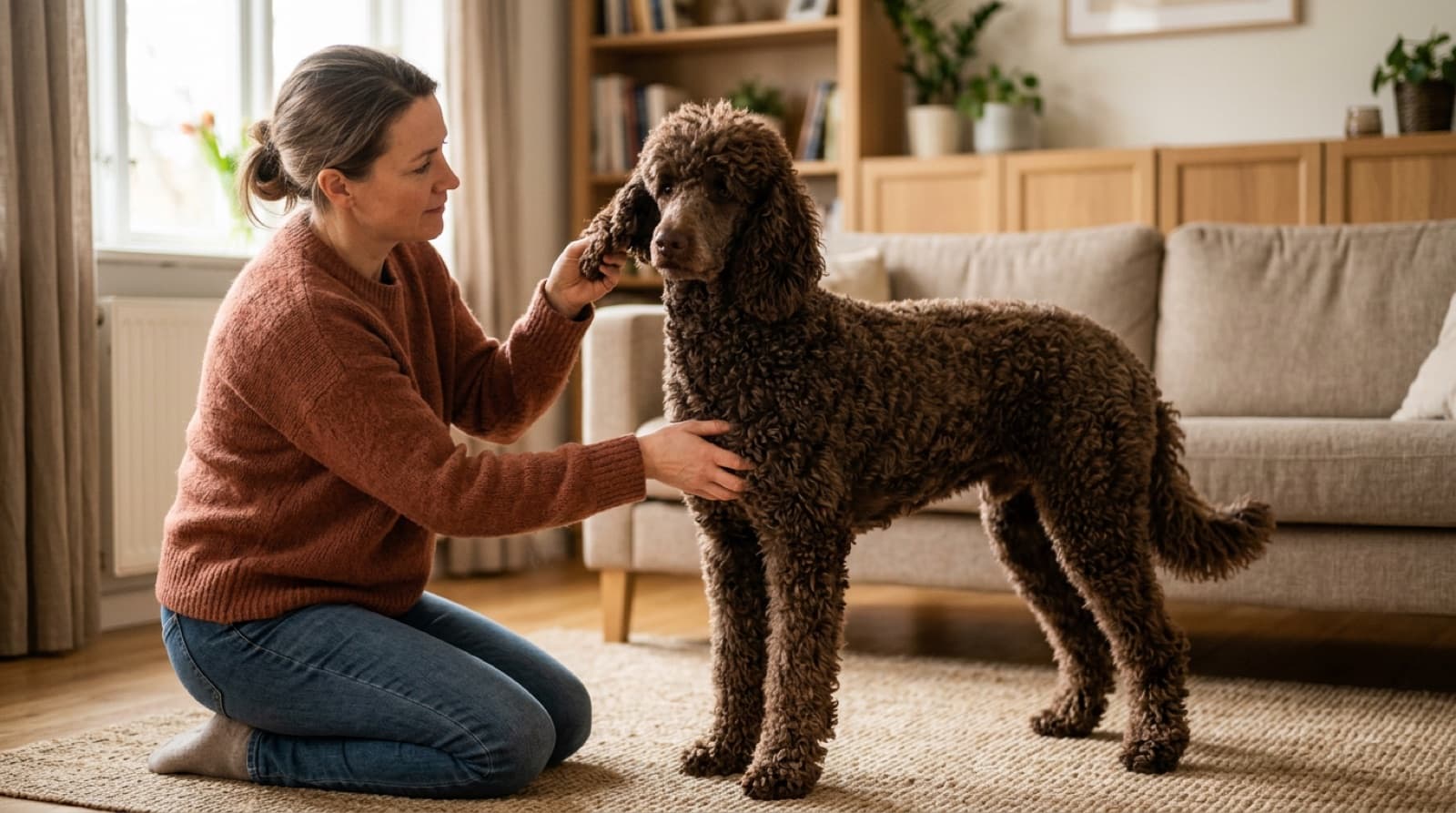
Addison’s disease, and the doodle caveat
Addison’s disease (an adrenal hormone deficiency) is strongly associated with Poodles, especially Standards, and it is a diagnostic trap: vague, intermittent signs, lethargy, poor appetite, gut upset, weakness, that are easily missed until a life-threatening crisis. Once diagnosed, it is very manageable with lifelong hormone replacement. If your Poodle has recurring vague illness, ask your vet specifically about Addison’s. The doodle caveat: hybrid vigour is oversold, a doodle can inherit both parent breeds’ problems rather than neither, so health-tested parents (for a puppy) or a full vet workup (for a rescue) are the real protection, not the crossbreed label.
The Orthopedic Foundation for Animals maintains the databases reputable Poodle breeders screen against for hips, eyes, and more.
Eyes, joints, bloat, and ears
Eyes. Progressive retinal atrophy and cataracts appear in the breed. Annual eye checks catch changes early, and reputable breeders screen parents’ eyes.
Joints. Standards are prone to hip dysplasia; Toys and Minis to luxating patella (a slipping kneecap) and Legg-Calvé-Perthes disease of the hip. Keep the dog lean and watch for a skip in the gait or hind-leg lameness.
Bloat. The deeper-chested Standard Poodle carries a bloat risk. Learn the signs, swollen belly, unproductive retching, restlessness, and act immediately, which in Westman may mean a Winnipeg drive. Ask about a preventive gastropexy.
Ears. Hair in the ear canal plus floppy ears means frequent infections. Keep ears clean and dry as part of grooming, ask your groomer about the ear hair, and chase an underlying allergy if infections recur. Sebaceous adenitis (a skin condition) and epilepsy are also seen in the breed.
What it costs, and the Winnipeg factor
| Condition | Typical Treatment Cost | Notes |
|---|---|---|
| Addison’s (diagnosis + annual care) | $1,000 to $2,000 first year, then ongoing | Lifelong hormone replacement; very manageable once diagnosed |
| Luxating patella / LCP surgery | $2,000 to $4,000+ | Small Poodles; per knee/hip |
| Emergency bloat surgery (Standard) | $3,000 to $6,000+ | Time-critical; know your Winnipeg route |
| Ear infection (per flare) | $100 to $300 | Recurrent cases cost more; treat the root allergy |
| Professional grooming (ongoing) | $70 to $120 every 6 to 8 weeks | Not medical, but a real and unavoidable coat cost |
Figures are Canadian dollars and before Manitoba’s 12 percent tax. See the full budget in our Brandon adoption costs guide.
Meet an adoptable Poodle or Doodle in Brandon
A rescue Poodle or doodle comes with a vet workup already done, and you meet the actual adult dog. Browse who is available.
See Available Poodles →Frequently Asked Questions
What health problems are Poodles prone to?
Poodles are generally healthy and long-lived, but the breed has a recognisable set of risks that vary by size. Across sizes, Poodles are prone to Addison’s disease (an adrenal hormone deficiency the breed is notably associated with), eye conditions including progressive retinal atrophy, hip dysplasia, epilepsy, and sebaceous adenitis (a skin condition). Standard Poodles additionally carry a bloat risk from their deeper chest, while Toy and Miniature Poodles are prone to luxating patella (a slipping kneecap), dental disease, and Legg-Calvé-Perthes disease of the hip. Ear infections are common across sizes because of hair growing in the ear canal. Most Poodles live 12 to 15 years or more, especially the smaller sizes, so with routine care they are a durable breed.
What is Addison’s disease, and why does it matter for Poodles?
Addison’s disease (hypoadrenocorticism) is a deficiency of adrenal hormones, and Poodles, especially Standards, are among the breeds most associated with it. It matters because it is a genuine diagnostic trap: the signs are vague and intermittent, lethargy, poor appetite, vomiting, weakness, and increased thirst, so it is easily mistaken for other problems or missed until a dog reaches a life-threatening Addisonian crisis. The good news is that once diagnosed, Addison’s is very manageable with lifelong hormone replacement, and affected dogs live full lives. The takeaway for a Poodle owner is awareness: if your Poodle has recurring vague illness, unexplained weakness, or gut upset, ask your vet specifically about Addison’s so it is on the radar rather than overlooked.
Do Doodles inherit fewer health problems than purebreds?
Not reliably, and the hybrid-vigour claim is oversold in doodle marketing. The idea is that crossing two breeds dilutes genetic disease, but it only works if both parents are health-tested, which many doodle breeders skip, and a doodle can inherit the health problems of both parent breeds rather than neither. A Goldendoodle, for example, can carry the Poodle’s risks and the Golden’s elevated cancer and joint risks. Because there is no doodle breed standard and much of the market rewards volume over health, doodle health is genuinely a mixed bag that depends on the specific breeding. The practical protection is the same as for any dog: for a puppy, insist on health-tested parents; for a rescue, get a vet workup and consider insurance.
Why do Poodles and Doodles get ear infections?
Poodles and Poodle crosses grow hair inside the ear canal, and combined with floppy ears that trap moisture, this creates a warm, damp environment where infections thrive, so recurrent ear infections are one of the most common complaints in the breed and its crosses. Signs are head-shaking, scratching, redness, odour, or discharge. Prevention is part of the regular grooming routine: keep the ears clean and dry, especially after baths, ask your groomer about managing the ear hair, and check the ears weekly. If infections keep recurring, have your vet check for an underlying allergy, a frequent root cause. Staying on top of ear care is a real, ongoing part of owning a curly-coated dog, and neglecting it leads to painful, costly chronic infections.
How much do Poodle and Doodle health problems cost to treat in Brandon?
It varies by condition and size. Routine care runs a few hundred dollars a year. Addison’s disease involves diagnosis and then lifelong medication and monitoring, a manageable but ongoing cost. Recurrent ear infections run $100 to $300 per flare. Luxating patella or Legg-Calvé-Perthes surgery in a small Poodle can run several thousand dollars, hip surgery in a Standard more, and emergency bloat surgery in a Standard $3,000 to $6,000. Manitoba’s 12 percent tax applies to vet services. Brandon has capable everyday vet care, but the nearest specialty and emergency hospitals are in Winnipeg, about 215 km east, so surgery or a complex case may mean a drive. Pet insurance for a young dog runs commonly $40 to $80 a month.
Should I get pet insurance for a Poodle or Doodle?
It is worth serious consideration, particularly for a Standard Poodle or a doodle from unknown breeding. The Addison’s risk, the orthopaedic possibilities, and, in doodles, the chance of inheriting either parent breed’s problems all argue for coverage. Enrol while the dog is young and healthy, because insurers exclude pre-existing conditions, and a doodle adopted as an adult may already have something on record. Expect roughly $40 to $80 a month for a young dog, varying by size and breed. Read how the policy handles hereditary and breed-specific conditions, per-condition and annual limits, and reimbursement percentage. The Winnipeg drive for specialty care makes the financial cushion matter for a Brandon owner.
How long do Poodles and Doodles live?
Poodles are relatively long-lived, and size is the biggest factor: Toy and Miniature Poodles commonly reach 14 to 16 years, while Standard Poodles, like most larger dogs, average a bit less, around 11 to 14 years. Doodles vary with their size and breeding, generally tracking the range you would expect for their weight. The levers that maximise a Poodle or doodle’s life are the usual ones plus the breed’s specifics: keep the dog lean, stay on top of dental care (especially for the small sizes), maintain the ear and coat routine to prevent chronic infections, keep up annual vet exams and eye checks, and be alert to the vague signs of Addison’s. With good care, Poodles and well-bred doodles are durable, long-lived companions.
Is it safe to adopt an adult Poodle or Doodle with unknown history?
Usually yes, and with a doodle it is arguably the smarter path, because you meet the actual adult dog, its coat, size, energy, and any known health issues, rather than gambling on how a puppy will turn out. A reputable rescue does a vet workup before adoption and shares what it knows. Book your own wellness exam with a Brandon vet in the first week or two to set a baseline, including a look at the ears, eyes, and, for a Poodle, awareness of the Addison’s risk. For a senior, expect to absorb some vet costs directly, since insurers exclude pre-existing conditions. Many adopters find a grown Poodle or doodle, with its temperament and coat already known, an easier and more predictable choice than a puppy.
Related Guides
New dog? Start with these care guides
Everything a new adopter needs to set up a safe, happy home.