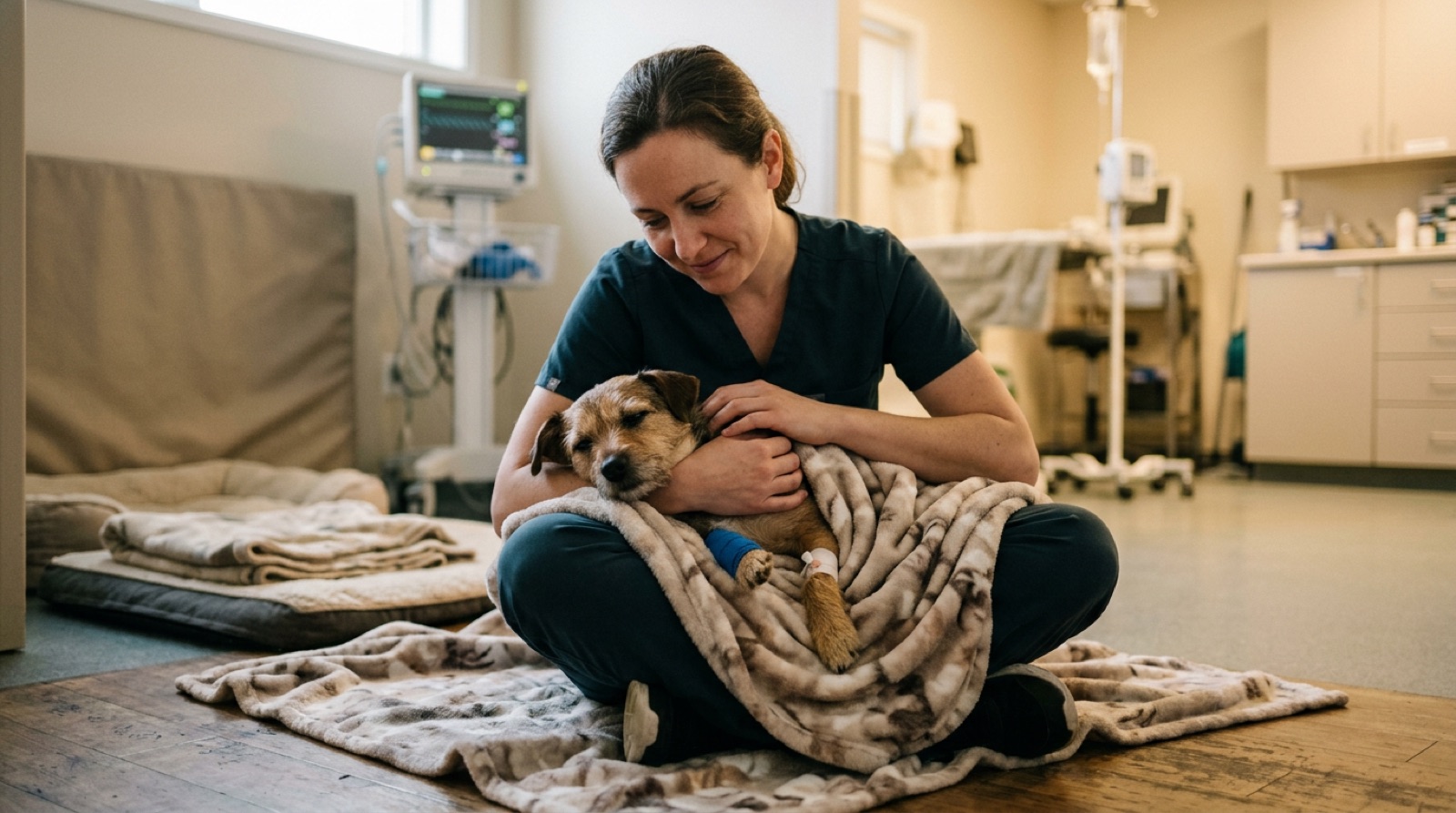
The short answer
Greater Saint John clinics quote spay/neuter per dog, so plan on several hundred dollars plus 15% HST and get written estimates from two or three hospitals. The Saint John SPCA Animal Rescue does not run a public surgery clinic, but every dog it adopts out arrives already spayed or neutered inside the $375 fee. The City of Saint John then charges fixed dogs a $10 annual licence instead of $25, a discount that repeats every year for the life of the dog.
Heads up: This article is informational and is not veterinary advice. Always consult your Saint John veterinarian about timing, individual health factors, and the right procedure for your dog. Clinic pricing in this region is quoted per dog and changes over time; confirm fees with the clinic before booking.
Spaying or neutering is one of the first decisions a new Saint John dog owner runs into. The surgery prevents accidental litters, removes several cancers and infections from your dog's future, calms roaming and marking behaviour, and cuts your annual City of Saint John dog licence from $25 a year to $10. The hard part is the booking: unlike big-city markets, no Saint John clinic posts a flat price online, so the process starts with phone calls.
Already adopted? Every dog from the Saint John SPCA Animal Rescue arrives already spayed or neutered, vaccinated, and microchipped, so the surgery is done before the dog gets in your car on Bayside Drive. Skip ahead to recovery if you are here for aftercare, or read our Saint John licensing guide to register at the cheaper rate.
Haven't adopted yet? The cheapest total-cost route to a fixed dog is adopting one that is already fixed. The $375 fee at the Saint John rescue network bundles the surgery with vaccines, deworming, flea treatment, and a microchip, and it is generally less than paying for those pieces separately.
Where to Spay or Neuter Your Dog in Saint John
Saint John SPCA Animal Rescue
The Saint John SPCA Animal Rescue at 295 Bayside Drive is the city's shelter and its animal-control contractor. It is not a public spay/neuter clinic for owned pets, but every dog adopted through the rescue goes home already spayed or neutered, vaccinated, dewormed, flea-treated, and microchipped. The $375 dog adoption fee covers all of it, plus one complimentary vet visit at a partner clinic. If you are asking about subsidised surgery for a dog you already own, phone ahead; the rescue does not advertise a public voucher program, and what community help exists changes over time.
Address: 295 Bayside Drive, Saint John, NB E2J 1B1
Phone: 506-642-0920
Kennebecasis Valley Animal Hospital
Kennebecasis Valley Animal Hospital in Rothesay serves the KV communities and Saint John proper, and lists spay and neuter surgery among its core services alongside vaccinations, x-rays, ultrasound, and surgical care. Like most full-service hospitals it quotes per dog rather than posting a flat price, because weight, age, and pre-anaesthetic bloodwork all move the number. Phone 506-849-1137 for a written estimate tied to your specific dog. A full-service hospital is the right call for older dogs or any dog with a health history, since bloodwork and follow-up live under one roof.
Address: 90 Hampton Rd, Rothesay, NB E2E 2P5
Phone: 506-849-1137
Other greater Saint John clinics
Saint John has a healthy cluster of full-service veterinary hospitals on the east side, the west side, and up the valley toward Quispamsis. None of them publish a flat spay/neuter price online, and that is normal: the quote depends on your dog's weight, age, and whether pre-anaesthetic bloodwork is included. As a directional guide, expect a few hundred dollars for a neuter and somewhat more for a spay, with large breeds at the top of any clinic's range. New Brunswick's 15% HST applies on top of the quoted price, so ask whether the estimate you are given is before or after tax. Getting two or three written quotes for the same dog is a normal thing to do.
Adopt a Saint John dog (already fixed)
Every dog adopted from the Saint John SPCA Animal Rescue arrives already spayed or neutered, vaccinated, and microchipped. The $375 adoption fee is generally less than what the surgery, vaccines, and microchip would cost separately at a private clinic, and it comes with a dog. You also skip the surgery booking, the cone, and the two-week recovery grind. For first-time owners in uptown Saint John or the Kennebecasis Valley, this is the lowest total-cost path to a fixed dog.
Why Fix Your Dog (The Saint John Math)
The licence gap pays you back every year. Saint John licenses fixed dogs at $10 and intact dogs at $25. Over a ten-year dog lifetime that is $150 saved from the licence alone, before you count anything medical. The rescue community sees the same signal: the SPCA Animal Rescue requires adopters' existing pets to be fixed and licensed before it will place another animal in the home.
Behaviour changes are real but not magic. Neutering usually reduces roaming, urine marking, and some hormone-driven aggression, which matters in dense uptown neighbourhoods where dogs pass each other on narrow sidewalks. Spaying ends heat cycles entirely. Surgery is not a substitute for training, but it removes the hormonal static underneath it.
Lower lifetime vet costs. Spaying eliminates pyometra, a life-threatening uterine infection, and sharply reduces mammary cancer risk. Neutering eliminates testicular cancer and reduces prostate problems. Avoiding one emergency surgery later in life pays for the elective one several times over.
Fewer accidental litters in a small rescue system. Saint John has one shelter doing the heavy lifting for a whole region. Every accidental litter lands on the same intake desk on Bayside Drive. Fixing owned dogs is the most direct way an individual owner supports that system.
When to Spay or Neuter Your Dog
Veterinary research has moved away from a blanket “always at 6 months” rule. The right timing depends on breed, size, sex, and individual health. The American Veterinary Medical Association's spay/neuter guidance describes the same shift. Confirm timing with your own Saint John vet for your specific dog.
Small breeds
Generally safe around 6 months. Smaller dogs mature faster and do not carry the joint-development considerations of the big breeds.
Large and giant breeds
Many vets now recommend waiting until 12 to 18 months so growth plates close fully. Labs, shepherds, and the big maritime mixes that come through Atlantic rescue intake all sit in this category.
Rescue dogs
The Saint John SPCA Animal Rescue fixes dogs before adoption regardless of age, so the timing question is already answered by the time you apply.
Senior dogs
Rarely too late. Healthy older dogs can be fixed safely; pre-anaesthetic bloodwork becomes more important with age. Spaying an older female still removes the pyometra risk.
Pre-Surgery Preparation
Fasting: standard guidance is no food after midnight the night before. Water is usually fine until you leave for the clinic. Protocols vary, so follow your clinic's specific instructions.
Drop-off: most clinics ask for a morning drop-off and a same-day afternoon pickup. Plan for someone to be home with the dog for the first 24 hours.
What to bring: vaccination records, any medications, and a well-fitting leash and collar. Your clinic will tell you if it wants the dog to arrive in a harness.
Bloodwork: pre-anaesthetic bloodwork is optional for most healthy young adults and strongly recommended for seniors or dogs with a health history. It screens kidney and liver function before anaesthesia and is usually a separate line on the estimate.
Recovery Timeline (Fog, Salt, and Freeze-Thaw)
| Timeline | What to Expect |
|---|---|
| Day 1-2 | Grogginess from anaesthesia, reduced appetite, rest needed. Quiet room, e-collar on. |
| Day 3-5 | Energy returns before healing does. No running, jumping, or stairs. Leash out for bathroom breaks only. |
| Day 5-10 | Incision should look calmer each day. Check daily for redness, swelling, or discharge. No baths, cone on. |
| Day 10-14 | Stitches out (if not dissolvable) and the clinic clears a return to normal activity. |
| 2-4 weeks | Gradual return to full walks: Rockwood Park trails, Harbour Passage, the off-leash areas. Spays take the longer end. |
Maritime winter recovery note
Saint John winter is not prairie winter. It is freeze-thaw, fog off the Bay of Fundy, wet snow, and a lot of road salt. Three adjustments for a winter surgery:
- A snug recovery suit or sweater that does not rub the incision, because a shaved belly and a raw wind off the harbour are a bad pairing
- Wipe paws and belly after every wet outing; salt-slush clings, and a dog in a cone cannot clean itself
- Watch footing on refrozen sidewalks; a post-surgical dog slipping on ice can pull stitches, so pick the flattest, best-cleared route on your block
In summer, the same dog needs a cool indoor recovery spot. Humid July afternoons make a panting, overheated dog worry at the incision more.
Red flags. Call your vet
- Incision opening, gaping, or bleeding
- Discharge, strong odour, or significant swelling at the site
- Fever, vomiting, or lethargy lasting beyond day 3
- Refusal to eat or drink past 48 hours
- Repeated licking or chewing at the incision (the cone is non-negotiable)
If it is after hours and your regular clinic is closed, Saint John has a 24/7 option; our emergency vet guide covers where to go and what to expect.
Post-Surgery Care at Home
E-collar enforcement: the cone stays on for the full 10 to 14 days. One minute of licking can introduce bacteria or pull a stitch. Inflatable donuts work for some dogs; verify yours cannot reach the incision past it.
Leash-only walks: no off-leash time at Rockwood Park or the Little River Reservoir until the clinic clears it. Calm bathroom walks only. Substitute mental work (puzzle feeders, sniffing games, short training sessions) for the physical exercise your dog is missing.
No baths for 14 days: the incision must stay dry. Use a damp cloth for spot cleaning. Fundy fog and slush make this genuinely harder here; towel off wet fur around (never on) the site.
Crate or contained rest: for jumpers and counter-surfers, crate rest or a pen during the day is the safest call.
Pain medication: use exactly what your vet prescribed, on schedule. Never give human painkillers; acetaminophen and ibuprofen are toxic to dogs.
The Licence Discount: $10 Fixed vs $25 Intact
Saint John's Dog Control By-law requires every dog to be registered and licensed, and the fee schedule is refreshingly simple: $10 a year for a spayed or neutered dog, $25 for an intact one. Licences are sold at the SPCA Animal Rescue on Bayside Drive, at City Hall, and at some animal hospitals and pet shops. You will need your contact information, your dog's details, and proof of distemper and rabies vaccination.
The 2.5x gap is the city's standing nudge toward sterilisation, and it compounds: $15 saved every year for a decade is real money for a $10 piece of tin. Rescue adopters land on the cheap rate automatically because their dogs arrive fixed. The full registration walk-through, including what to bring and where to go, lives in our Saint John pet licensing guide.
Why Saint John Rescue Dogs Are Already Fixed
The Saint John SPCA Animal Rescue's adoption package includes spay/neuter, vaccines, deworming, flea treatment, and a microchip in the $375 dog fee, plus one complimentary visit at a partner clinic. The surgery is done before the dog is listed, not promised for later.
The math favours adopters: paying separately for surgery, vaccines, and a microchip at a private clinic generally costs more than the whole adoption fee, and the fee comes with a dog attached. It also funds the shelter's next intake. For a region served by a single shelter, that circle matters. Our Saint John adoption costs guide breaks the full first-year budget down.
Health Benefits
Spaying (female dogs)
- ✓Eliminates the risk of pyometra, a life-threatening uterine infection
- ✓Greatly reduces mammary cancer risk, especially before the first heat
- ✓No heat cycles (no bleeding, no intact males tracking scent to your door)
- ✓Prevents accidental litters
Neutering (male dogs)
- ✓Eliminates testicular cancer risk
- ✓Reduces prostate problems later in life
- ✓Reduces roaming, marking, and some hormone-driven aggression
- ✓Fewer scraps at the off-leash parks; intact males draw more challenges
Browse adoptable Saint John dogs
Every Saint John rescue dog arrives already spayed or neutered, vaccinated, and microchipped. Skip the surgery booking and the two-week cone standoff.
See Available Saint John Dogs →Frequently Asked Questions
How much does it cost to spay a dog in Saint John?▾
Greater Saint John clinics quote spay surgery per dog rather than posting flat prices, so there is no single number to give you. Directionally, expect several hundred dollars, with small dogs at the low end and large breeds at the top, plus 15% HST. Pre-anaesthetic bloodwork is often quoted separately. Phone two or three clinics, including Kennebecasis Valley Animal Hospital at 506-849-1137, and ask for a written estimate for your dog's weight and age. Rescue dogs skip the bill entirely: every Saint John SPCA Animal Rescue dog arrives already spayed.
How much does it cost to neuter a dog in Saint John?▾
Neutering costs less than spaying because it is a simpler procedure with no abdominal incision, but Saint John clinics still quote it per dog. Expect a few hundred dollars before HST as a directional range, with weight driving the price. Ask what the quote includes: pain medication, the e-collar, and a recheck are bundled at some clinics and itemised at others. Adopting an already-neutered dog from the Saint John SPCA Animal Rescue is the cheapest total-cost route.
Does the Saint John SPCA Animal Rescue offer low-cost spay/neuter?▾
The rescue does not advertise a public low-cost surgery program for pets that owners already have at home. What it does guarantee is that every animal it adopts out is already fixed: the $375 dog fee includes spay/neuter, vaccines, deworming, flea treatment, and a microchip. If you own an unaltered dog and money is tight, phone the rescue at 506-642-0920 and ask what community options exist right now; the honest answer changes year to year.
Why is the Saint John dog licence cheaper for fixed dogs?▾
The City of Saint John charges $10 a year to license a spayed or neutered dog and $25 for an intact one. That 2.5x gap is the city's standing financial nudge toward sterilisation, and it repeats every single year you own the dog. Over a ten-year life that is a $150 difference from the licence alone. Licences are sold at the SPCA Animal Rescue on Bayside Drive, City Hall, and some animal hospitals and pet shops, and you need proof of distemper and rabies vaccination to get one.
When should I spay or neuter my dog?▾
Veterinary guidance has moved away from a blanket six-months rule. Small breeds are generally fine around 6 months. Many vets now recommend waiting until 12 to 18 months for large and giant breeds so growth plates close fully. The right answer depends on your specific dog's breed, size, and health history, so bring it up at an early visit with your Saint John vet rather than booking off a rule of thumb.
How long is spay recovery for a dog?▾
Plan for 10 to 14 days. The first day or two is grogginess and a picky appetite. Days 3 to 7 are the hard part: energy comes back but activity has to stay restricted, so no running, stairs, or Rockwood Park trails. Stitches come out or finish dissolving around day 10 to 14, and full internal healing for a spay can take 3 to 4 weeks. The cone stays on the whole time. Spays take a little longer than neuters because they are abdominal surgery.
Does winter in Saint John change spay/neuter recovery?▾
It changes the logistics. Saint John winters are maritime: freeze-thaw cycles, fog, wet snow, and heavily salted sidewalks rather than steady deep cold. The shaved incision area needs protection from wind and slush, so a snug recovery suit or sweater that does not rub the site earns its keep. Road salt is the bigger issue; it clings to paws and bellies on wet days, and wiping down a dog wearing a cone takes patience. Keep outdoor trips to short bathroom breaks until your vet clears normal walks.
Do rescue dogs in Saint John come already fixed?▾
Yes. The Saint John SPCA Animal Rescue spays or neuters every dog before adoption, along with vaccines, deworming, flea treatment, and a microchip. It is part of the standard $375 adoption package, and adopters also get one free visit at a partner veterinary clinic. The rescue requires that existing pets in an adopter's home be fixed and licensed too, which tells you how central sterilisation is to its adoption policy.
What is included in a spay/neuter quote?▾
A typical full-service quote covers the pre-surgery exam, general anaesthetic, the surgery, monitoring, take-home pain medication, and an e-collar. Pre-anaesthetic bloodwork is often listed separately and is strongly recommended for dogs over about 5 years old, because it screens kidney and liver function before anaesthesia. Ask for the estimate in writing, ask whether it includes the 15% HST, and ask what a recheck costs if the incision needs a second look.
Is it too late to spay or neuter an older dog?▾
Rarely. Healthy senior dogs can be safely spayed or neutered; the difference is that pre-anaesthetic bloodwork moves from optional to important. Spaying an older female still removes the risk of pyometra, a life-threatening uterine infection that shows up in unspayed seniors. If you have adopted or taken in an older intact dog, talk to your vet about age-appropriate anaesthetic protocols rather than assuming the window has closed.
Should large-breed dogs wait longer before surgery?▾
Many Canadian vets now suggest 12 to 18 months for large and giant breeds, so the skeleton finishes developing before the hormones that guide it are removed. The trade-off for females is one or two heat cycles, which slightly raises mammary cancer risk. There is no single right answer; it is a breed-by-breed, dog-by-dog conversation. Raise it early with your clinic so the timing is a plan rather than an accident.
What are the health benefits of fixing a dog?▾
Spaying eliminates pyometra and sharply reduces mammary cancer risk, especially when done before the first heat. Neutering eliminates testicular cancer and reduces prostate trouble later in life, and it usually dials down roaming, marking, and some hormone-driven scrapping. None of it replaces training, but removing the hormonal floor makes training easier. The avoided vet bills later in life are usually worth multiples of the surgery cost up front.
Related Saint John Guides
Skip the Surgery Bill. Adopt.
Every Saint John rescue dog comes already spayed or neutered, vaccinated, and microchipped, inside the adoption fee.
Browse Available Saint John Dogs →Spay & Neuter Cost Across Canada
What the surgery costs by province, what subsidised clinics charge, and how to find one near you.
New dog? Start with these care guides
Everything a new adopter needs to set up a safe, happy home.