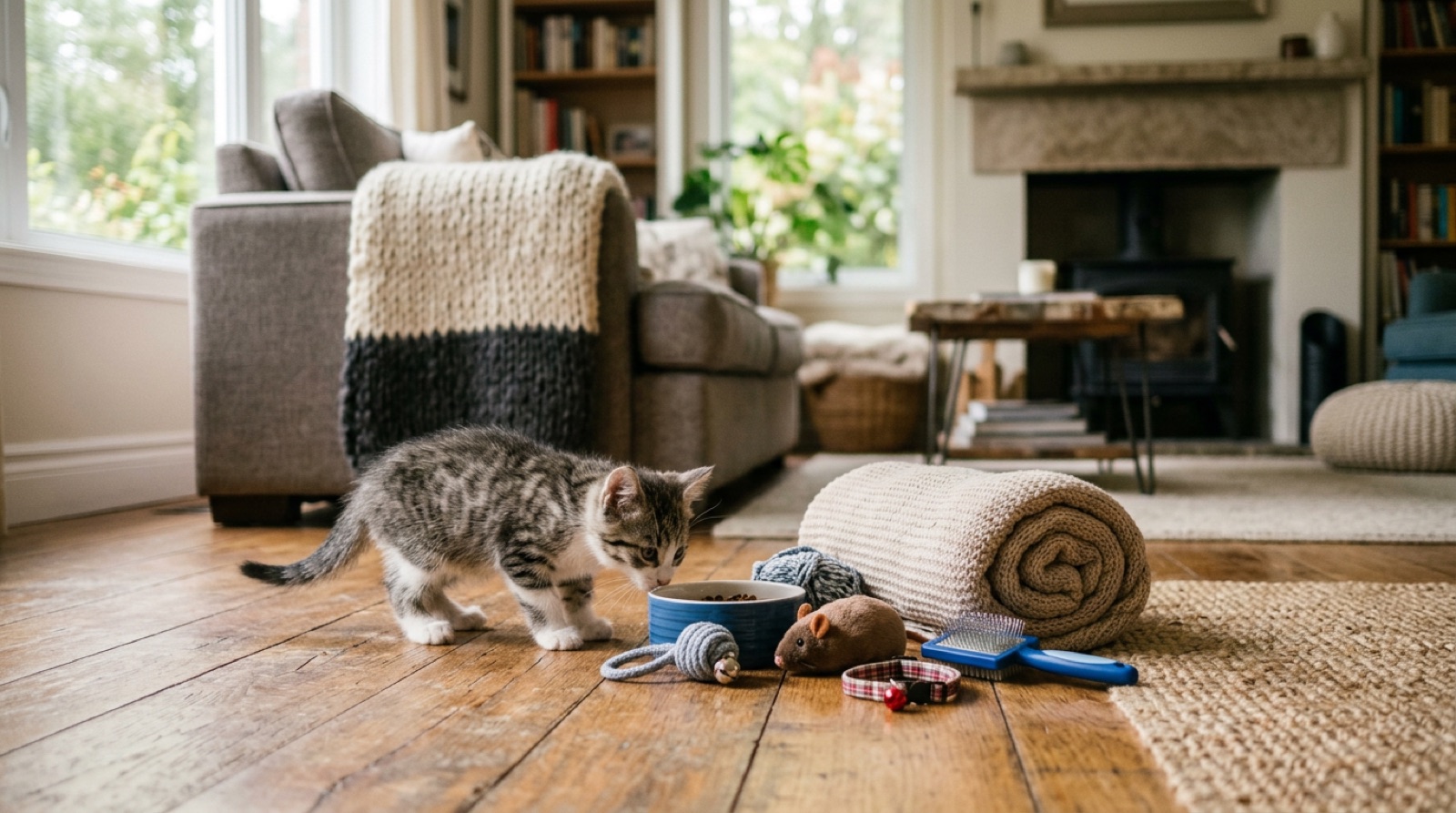
The short answer
Buy before pickup: two litter boxes, unscented clumping litter, a hard-sided carrier, the food the kitten already eats, shallow bowls, and two scratching surfaces. Set up one closed safe room. Book the next vaccination appointment immediately, since the kitten series runs on a schedule that does not wait. Kitten-proof by removing cords, string, and every lily in the home. Ottawa kitten fees run $275 to $320, with the spay or neuter and microchip already included.
Heads up: This is general guidance, not veterinary advice. Your vet sets your kitten's vaccination protocol, diet, and deworming schedule. We do not recommend medications or doses. Fees are current as of July 2026 and change.
Bringing home a kitten is mostly a logistics problem dressed up as an emotional one. The kitten will be fine. What determines how the first month goes is whether the litter box was already out, whether the food matches what the foster fed, and whether the balcony door latches properly.
Ottawa adopters have a real advantage here. Kittens from the Ottawa Humane Society and Ottawa Stray Cat Rescue arrive already spayed or neutered, microchipped, dewormed, and partway through the vaccine series. You are not starting from zero. You are picking up a schedule someone else began.
Below is the supply list with timing, the vet plan, the kitten-proofing pass that matters most in apartments, and what each of the first four weeks actually looks like. If you are still choosing a kitten, the live Ottawa listings show who is available, and our cost breakdown covers the full first-year budget.
The Supply List, With Timing
| Item | When | Why |
|---|---|---|
| Litter boxes (two minimum) | Before pickup | Low-sided for small kittens. One per cat plus one is the long-term rule. |
| Unscented clumping litter | Before pickup | Ask the rescue what the kitten already uses and match it at first. |
| Hard-sided carrier | Before pickup | Required for pickup. A top-opening carrier makes vet visits far easier. |
| Food the kitten already eats | Before pickup | Switch brands gradually later. Diet changes plus a move equals diarrhea. |
| Shallow bowls, kept apart from the box | Before pickup | Wide and shallow. Cats dislike whiskers touching bowl sides. |
| Two scratching surfaces | Before pickup | One vertical sisal post, one horizontal cardboard. Habits form early. |
| A safe room set up | Before pickup | Spare room or bathroom with box, food, water, bed, and hiding spot. |
| Wand toys and puzzle feeders | Week one | Never hands. A kitten taught that hands are prey becomes a biting adult. |
| Nail clippers | Week one | Start handling paws in week one so trims are routine by month three. |
| Cat tree or window perch | Weeks two to four | Vertical space matters more in small Ottawa apartments than floor space. |
The rule that saves the most trouble: match the rescue's current food and litter for the first two weeks, then change one thing at a time.
The Vet Schedule
Kittens get a vaccine series rather than a single shot, because antibodies passed from the mother interfere with the early doses. The series typically begins around six to eight weeks and repeats every three to four weeks until roughly sixteen weeks, with rabies added at the age your veterinarian recommends. Your rescue hands over a record of what has already been given.
Book the next appointment before you leave the adoption counter. Ottawa clinics book up, and the schedule is genuinely time-sensitive. Letting it slide by several weeks can mean repeating doses.
Spay and neuter is usually already done. If you somehow acquired an unfixed kitten, the American Association of Feline Practitioners endorses sterilisation by five months of age. Kittens reach sexual maturity earlier than most people assume, and the vet bill for an accidental litter dwarfs the surgery.
Ask your vet at the first visit about deworming follow-ups, flea and parasite prevention appropriate to an indoor Ottawa cat, and when to move from growth formula to adult food. Those three questions cover most of year one. The Ottawa spay and neuter guide has more on surgery timing and cost.
Kitten-Proofing: The Things That Actually Hurt Kittens
Get on the floor and look at each room from twenty centimetres up. That is the kitten's view, and it is full of things you stopped noticing years ago.
- ⚠Lilies. Every part of the plant is severely toxic to cats, and pollen licked off fur can cause kidney failure. Remove them from the home entirely. Height is not protection.
- ⚠Blind and curtain pull cords. A strangulation risk. Tie them up out of reach or fit cord cleats.
- ⚠String, ribbon, dental floss, hair elastics, tinsel. Swallowed linear objects can cause intestinal damage that needs surgery. Bin them, do not just hide them.
- ⚠Windows and balconies. Screens are not cat-proof. Ottawa has a lot of high-rise living downtown and along the canal, and cats fall from balconies every summer.
- ⚠Electrical cords. Teething kittens chew. Cord covers or bitter deterrent spray, plus supervision.
- ⚠Recliners, laundry machines, and open toilets. Kittens climb into all three. Check before you close, sit, or start a cycle.
If your kitten ever eats something questionable, phone a veterinarian or a 24-hour hospital rather than searching for a home remedy. Ottawa has round-the-clock emergency options in the east end, the south end, and Kanata. Know which is closest to you tonight.
The First 30 Days, Week by Week
Week 1: the safe room
One closed room with the box, food, water, a bed, and a hiding spot. Watch three things: eating, drinking, and litter box use. Sit on the floor and read aloud so your voice becomes ordinary. Short handling sessions, ending before the kitten gets overstimulated. Kittens often settle within days, but the controlled space is what lets you catch a problem early.
Week 2: expand and handle
Open one more room, supervised. Start handling paws daily and touching ears and mouth briefly so grooming and vet exams are unremarkable later. Leave the carrier out with a blanket in it so it stops being the thing that means a car ride. Establish a play routine with wand toys and never with hands.
Week 3: full run of the home
Most kittens are ready for supervised access to the whole place. Add vertical space if you have not already, since a cat tree or window perch is worth more than floor toys in a small apartment. Watch for scratching preferences and put the posts where the kitten is actually choosing to scratch, not where it looks tidy.
Week 4: routine and follow-ups
You should have a rhythm by now: play before meals, meals on a schedule, a hard play session before bed to blunt the 4 a.m. energy. Any remaining vaccinations should be booked or done. Update the microchip registry with your own contact details, which is the step nearly everyone forgets and the one that matters most if a kitten slips out a door.
One Kitten or Two?
We push for two more often than people expect. A single kitten with no feline playmate practises hunting on the only moving target in the house, which is your hands, your ankles, and anything under a blanket. Two kittens exhaust each other, learn bite inhibition from each other, and are noticeably easier to live with.
Ottawa Stray Cat Rescue gives a 10% discount when you adopt more than one, and bonded pairs skip the introduction process entirely because they already live together. Food and litter roughly double. The gear does not: they share the tree, the posts, and eventually your pillow.
The exception is a home with an established adult cat, where adding two kittens at once can overwhelm the resident. In that case one kitten, introduced slowly, is the safer call. Our introduction guide walks through the pacing.
Browse adoptable Ottawa kittens and cats
Kitten season fills Ottawa rescues fast, and foster homes can tell you exactly what a kitten is like before you commit. Listings refreshed regularly.
See Available Ottawa Cats →Frequently Asked Questions
What do I need before bringing an Ottawa kitten home?
The non-negotiables are two litter boxes, unscented clumping litter, a hard-sided carrier, the same food the kitten is already eating, shallow bowls, two scratching surfaces, and one closed room set up as a safe space. Everything else can wait a week. The single most useful thing on that list is matching the current food and litter, because a move plus a diet change is how you end up with a stressed kitten and loose stool in the first 48 hours. Ask the rescue or foster what brands they use before pickup day.
How much does a kitten cost in Ottawa?
The Ottawa Humane Society charges $320 for kittens under six months, and Ottawa Stray Cat Rescue charges $275 for kittens from eight weeks to six months. Both fees include the spay or neuter, at least the first vaccinations, deworming, and a microchip. Budget roughly $200 to $450 more for startup gear, then food, litter, and remaining vet appointments through year one. OSCatR is explicit that any vaccinations or dewormings still outstanding after adoption become the adopter's cost, so ask exactly what is left.
What vaccines does an Ottawa kitten need and when?
Kittens need a series rather than a single shot, because maternal antibodies interfere with early doses. The core series typically starts around six to eight weeks and repeats every three to four weeks until roughly sixteen weeks, with rabies given at the age your vet recommends. Your rescue will hand over a record of what has already been given. Book the next appointment before you leave the adoption counter, because the schedule is time-sensitive and slipping several weeks means restarting parts of it. Your vet sets the exact protocol.
When should an Ottawa kitten be spayed or neutered?
Most rescue kittens are already done before they go home, which is one of the underappreciated benefits of adopting. If you somehow end up with an unfixed kitten, the American Association of Feline Practitioners endorses sterilisation by five months of age. Waiting past that risks an unplanned litter, because kittens can reach sexual maturity earlier than people expect. It also increases spraying and roaming behaviour in males. Our Ottawa spay and neuter guide covers the timing and cost question in more detail.
How do I kitten-proof an apartment?
Get on the floor and look at the room from twenty centimetres up. The things that actually hurt kittens are cords they can chew, blind and curtain pull cords they can hang themselves in, hair elastics and string they can swallow, open toilets, unscreened windows and balcony gaps, and houseplants. Lilies deserve their own sentence: every part of a lily is severely toxic to cats and even pollen licked off fur can cause kidney failure. Get them out of the home entirely rather than putting them somewhere high.
Are balconies safe for a kitten in Ottawa?
Not without full enclosure, and this matters in a city with as much high-rise housing as Ottawa has downtown and along the Rideau Canal. Cats fall from balconies regularly, and railings that look narrow to you are wide open to a kitten. Do not rely on a screen door either, since kittens learn to push and climb them quickly. If you want your kitten to have outdoor air, enclose the balcony properly with mesh, or use harness training on the ground where you control the situation.
How long before a new kitten settles in?
Kittens usually settle faster than adult rescue cats, often within days rather than the classic three-day hiding phase. Keep them in the safe room for the first few days regardless. It gives you a controlled space to monitor eating, drinking, and litter box use, which are the three things you need eyes on. Expand access one room at a time once the kitten is eating normally and coming to greet you. Our first-week guide covers the settling pattern in more detail.
Should I adopt one kitten or two?
Two, if your budget and space allow. A single kitten with no feline playmate practises hunting behaviour on the only moving target available, which is your hands and ankles, and often at four in the morning. Two kittens wear each other out, teach each other bite inhibition, and are meaningfully easier to live with. Ottawa Stray Cat Rescue offers a 10% discount for adopting more than one. Food and litter roughly double; the gear does not, and your furniture may survive better.
Why should not I let my kitten play with my hands?
Because it is adorable at eight weeks and genuinely painful at eight months, and by then the habit is set. A kitten that learns hands are prey grows into an adult that ambushes ankles and bites during petting, and it is one of the behaviour complaints that leads to surrenders. Redirect to a wand toy every single time. If a bite lands, stop the play session and walk away rather than pulling back sharply, which reads as prey behaviour and escalates things.
What should I feed an Ottawa kitten?
Start with exactly what the rescue was feeding, then transition slowly if you want to change. Kittens need food formulated for growth rather than adult maintenance, and they eat frequently because their stomachs are tiny. Talk to your vet about the specific diet and how long to keep the kitten on growth formula. What matters more than brand loyalty is fresh water always available and portion control as the kitten approaches a year, because Ottawa indoor cats gain weight easily during a long winter indoors.
Do I need to register a kitten with the City of Ottawa?
Yes. Ottawa requires cats to be registered with the City, and registration renews annually. The City issues a tag intended for the collar or harness. You can register online through My ServiceOttawa or in person at a Client Service Centre, and current rates are published on the City website. Your kitten will already be microchipped by the rescue, and the chip plus registration is what actually gets a lost cat home. Update the microchip registry with your own contact details too; rescues often forget to mention that step.
What does the first month with a kitten actually look like?
Week one is the safe room, monitoring food, water, and litter use, and short handling sessions. Week two you expand to one more room and start paw handling and carrier desensitisation. Week three the kitten usually has the run of the home under supervision, and the play routine is established. Week four you should be in a rhythm and, if any vaccinations remain, have had that appointment. Expect one chaotic night, at least one plant casualty, and a sharp increase in your tolerance for 4 a.m. wrestling.
Related Ottawa Guides
Set Up First, Adopt Second
An hour of preparation makes the first month easy. Ottawa rescue kittens arrive fixed, chipped, and ready.
Browse Available Ottawa Cats →New cat? Start with these care guides
Everything a new adopter needs to set up a safe, happy home.