

Get notified when a Bengal is listed
We will email you the moment a Bengal becomes available in Ontario, from a rescue or an owner rehoming.
Adopting a Bengal in Ontario
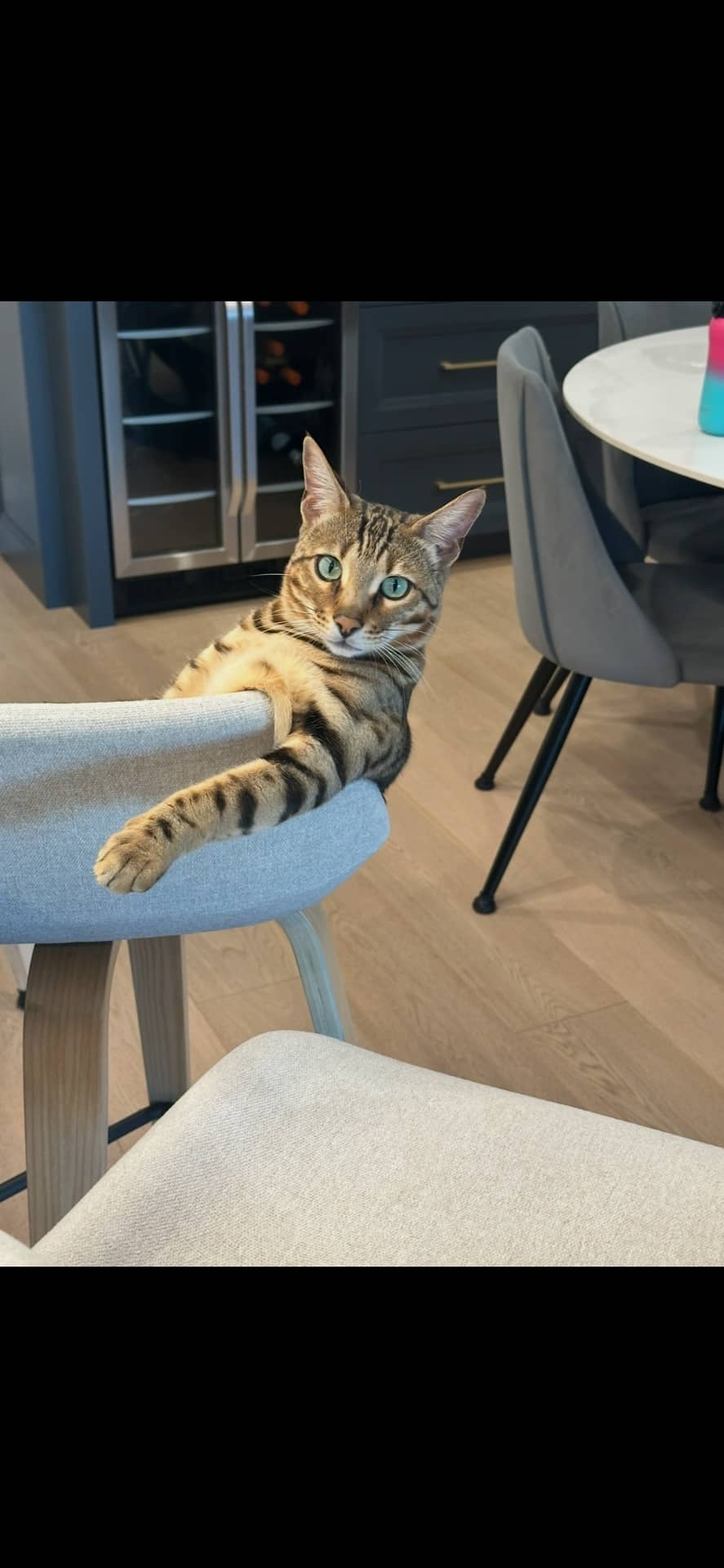
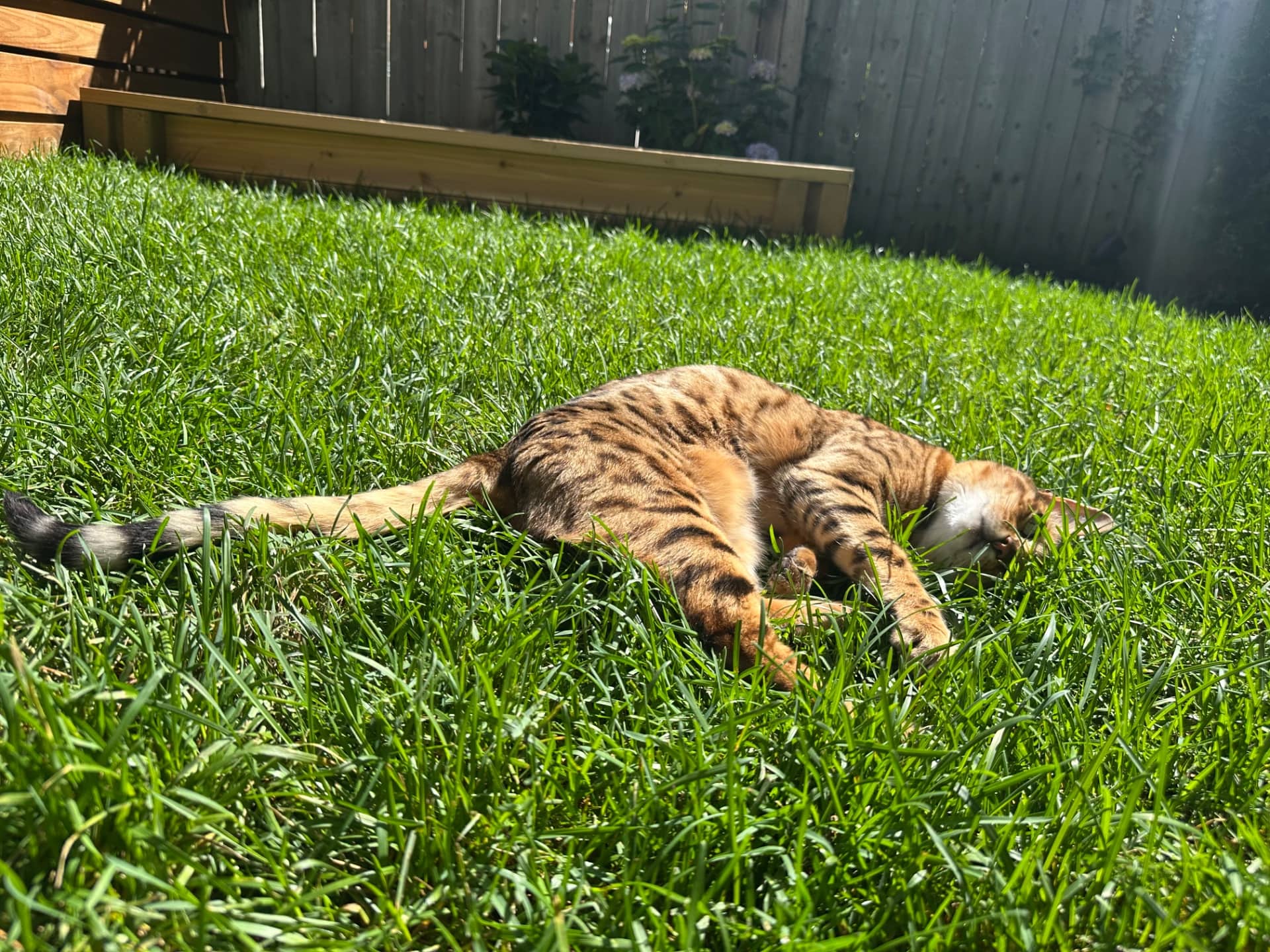
Bengals show up in ON rescue more often than Maine Coons or Ragdolls, and almost always for the same reason. The buyer wanted a striking, exotic-looking cat and underestimated what they were taking on. Bengals are not high-maintenance because of grooming or health. They are high-maintenance because of energy, intelligence, and demand for engagement, and the surrender pattern is consistent across Toronto and Ottawa rescues.
This page lists every adoptable Bengal and Bengal cross from the ON rescues we cover, refreshed regularly. Search the whole province; a Bengal in Hamilton, Kingston, or London is worth the drive when the temperament fits the household.
Why Bengals end up in rescue
A Bengal needs more than a typical house cat. The breed climbs everything, opens cupboards, demands interactive play several times a day, and vocalises constantly. A bored Bengal becomes a destructive Bengal. Owners who bought a kitten for $1,500 to $3,500 from an Ontario breeder without understanding what they were getting often surrender at the one- to two-year mark, when the energy peaks and the household has had enough.
The Bengal in ON rescue is rarely a damaged cat. It is usually a normal Bengal whose first home could not meet the breed's needs. An adopter who genuinely wants an active, engaged cat, ideally with another Bengal or an active dog as a companion, can build a great home for one. An adopter who wants a calm lap cat should pick a different breed.
Early-generation restrictions: only F5+ in Toronto
Bengals are descended from the Asian Leopard Cat, and the generation distance from that wild ancestor matters legally as well as behaviourally. The City of Toronto restricts the keeping of early-generation Bengals (F1 through F4) under its exotic animal bylaw; only F5 and later, which are several generations removed from the wild parent and considered fully domestic, are legal as pets within Toronto. Ottawa Animal Control Bylaw 2003-77 and other Ontario municipalities apply similar standards. Every Bengal that reaches Ontario rescue is F5 or later by default, but adopters considering a private rehome from outside the province should confirm generation before bringing the cat into Toronto.
F1 through F4 Bengals also tend to be much harder to live with: stronger prey drive, less litter box reliability, and louder vocalisation than the F5+ Bengals that are common in Ontario rescue. The legal restriction lines up with the practical one.
Indoor-only in the GTA, never outdoor
Bengals are tall, athletic, and curious, and they have no street sense whatsoever. Ontario cities add three specific risks to the usual indoor-only argument. Toronto and Ottawa traffic is dense and fast, urban raccoons across the GTA carry parasites and disease, and the breed's spotted coat makes a Bengal a target for theft when seen at a window. Every ON rescue places Bengals indoor-only.
The good news is that Bengals take well to harness training and supervised outdoor time. An adopter willing to walk the cat on a long line through a fenced backyard, or set up a screened catio off a Beaches, Glebe, or Westboro porch, gets a happier Bengal than one confined to a small condo. Catio culture in the GTA has grown steadily and a summer-rated catio that handles GTA humid afternoons gives a Bengal a real outlet.
What Bengals are actually like to live with
A Bengal is brilliant company for the right home. The things to plan for:
- Constant motion. A Bengal climbs, jumps, and explores everything. Bookshelves and counters are fair game.
- Loud. The breed is vocal, sometimes raspy or chirping, sometimes a full yowl. Quiet is not on offer.
- Highly intelligent. Bengals figure out doors, drawers, latches, and toilet handles. Childproofing helps.
- Often best in pairs or with a calm dog. A solo Bengal in an empty house is the classic surrender story.
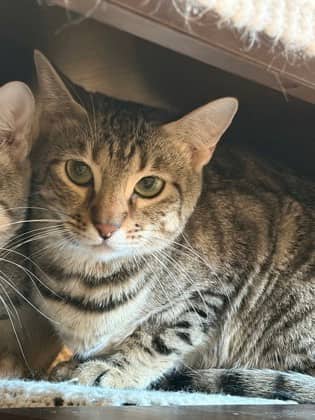
- Easy coat. The short pelt-like coat sheds lightly and needs almost no grooming.
- Water curious. Many Bengals play in sinks, water dishes, or showers. It is part of the breed.
- Indoor only. Not negotiable in Ontario, where traffic, urban predators, and the F5+ legal restriction all apply.
Health concerns to ask about
Bengals are mostly a healthy breed but they do see a few specific conditions. Hypertrophic cardiomyopathy is the most important; a foster can usually tell you whether the cat has been screened. Progressive retinal atrophy band b (PRA-b) and pyruvate kinase deficiency are also known in the line, both DNA testable. Patellar luxation appears at low rates. Toronto and Ottawa primary practices handle most routine cardiology screening; OVC Guelph and VCA Canada specialty branches are the referral options for complex cases.
What the fee usually covers
Bengal adoption fees at ON rescues sit in the same range as other rescue cats, a fraction of breeder pricing for a breed that commonly sells for $1,500 to $3,500 from a Toronto or Ottawa breeder. The fee covers spay or neuter, core vaccinations, microchip, deworming, and a vet check. Confirm the exact figure on the cat's listing.
Looking more broadly? Browse every adoptable cat across the province on Cat Adoption Ontario.
The rescues that most often list Bengals across the province are Toronto Humane Society, Ottawa Humane Society, and Ontario SPCA (Ottawa Area). For breed-specific background, the Canadian Cat Association is a useful reference.
Bengal Adoption FAQ — Ontario
Tap a question to expand
How many Bengals are available for adoption in Ontario?▼
Where can I adopt a Bengal near me in Ontario?▼
Are Bengals legal in Toronto?▼
Why do Bengals end up in rescue so often?▼
Are Bengals good with kids?▼
How much does it cost to adopt a Bengal in Ontario?▼
Popular cat breeds in Ontario
Bengal adoption by city in Ontario
Each city page lists only the bengals available from rescues serving that city.