The short answer
The malamute is bigger and stronger (75 to 100-plus lbs, a freighting dog), the husky smaller and racier (35 to 60 lbs, a speed dog). Both are friendly, independent, stubborn, heavy-shedding, high-prey-drive escape artists with unreliable recall, malamutes lean more toward same-sex dog aggression, huskies toward high-octane mischief. Neither is a beginner or low-effort breed. A malamute is right for you only if you can provide serious daily exercise, patient training, secure dig-proof fencing, tolerance for relentless shedding, and a household that works with strong prey drive, and if you love the outdoors. Ottawa winters are ideal; summer heat needs care (never shave the coat). If you are drawn mainly by the looks, choose a better-matched breed.
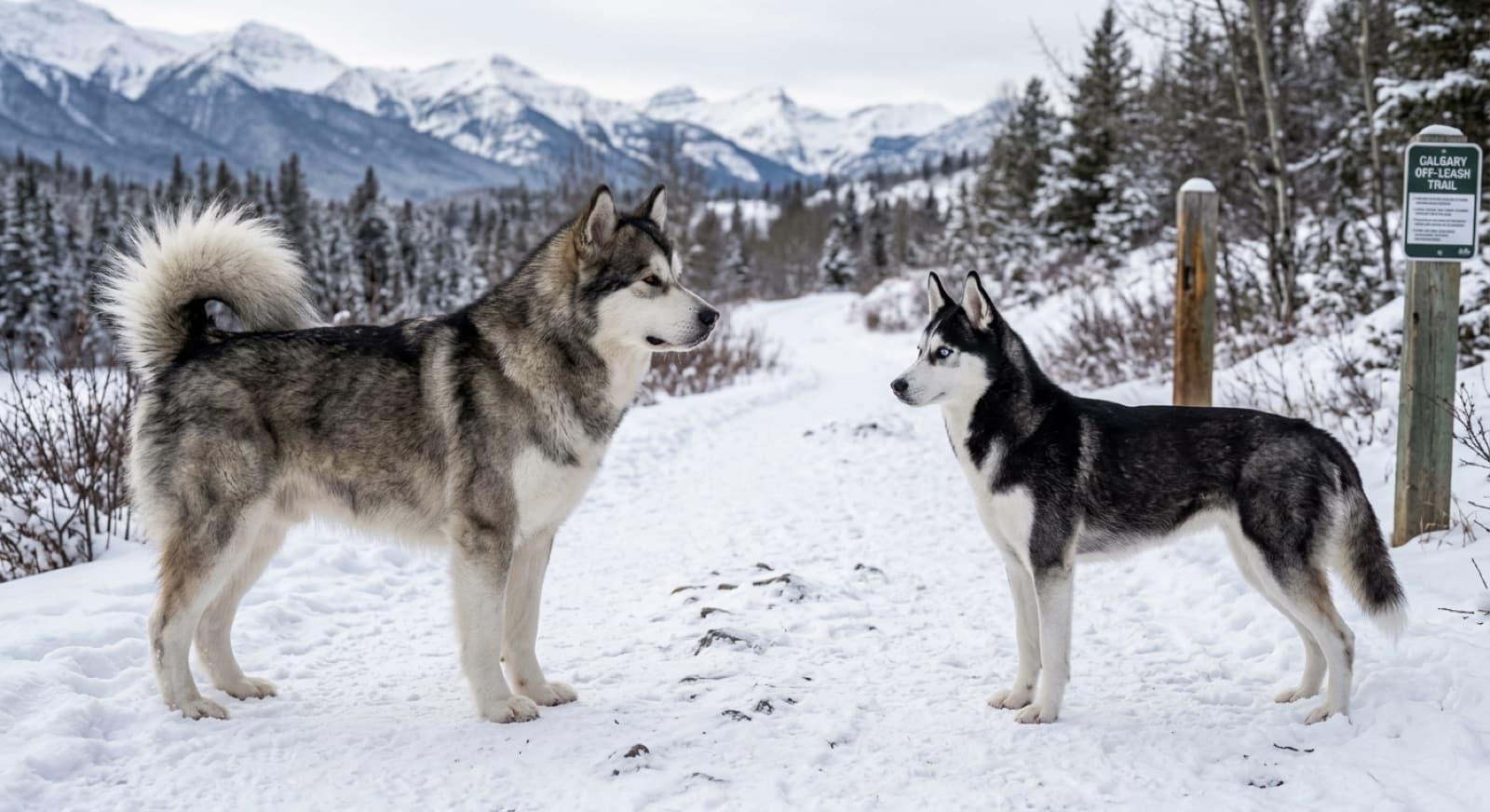
People often start with “malamute or husky?” and the honest answer is that the more important question is whether either breed fits your life at all, because both are demanding working dogs that fill rescues when owners are drawn by the looks without grasping the reality. Here is the comparison, and the harder, more useful self-assessment.
Be honest with yourself before adopting
The single best thing you can do is answer honestly: can you provide the exercise, training, secure fencing, and shedding tolerance a malamute needs, and does your household work with its prey drive? If yes, it is a magnificent companion. If you are a first-time owner, want an easy or low-shedding dog, or are drawn mainly by the looks, a better-matched breed is the kinder choice for you both.
The comparison, and the fit
Malamute vs husky: size is the headline (malamute much larger), and both share heavy shedding, strong prey drive, stubborn independence, escaping, and unreliable recall. Malamutes trend more dignified and more dog-aggression-prone; huskies trend higher-energy and more mischievous. In rescue, dogs are often mislabelled or crossed, so judge the individual dog’s size, energy, and assessed temperament.
The fit: a malamute needs serious daily exercise, patient positive training, thorough socialisation, secure dig-proof fencing, and no off-leash freedom in unfenced areas (prey drive plus poor recall). Expect relentless shedding (never shave the coat), and consider prey drive carefully if you have cats or small pets. Ottawa winters are ideal; summer heat needs management. See our malamute adoption guide, our husky adoption guide for the other breed, and the Canadian Kennel Club for breed background.
Ready for a malamute?
If you have the active home, the commitment, and clear eyes about the breed, a malamute is a magnificent companion. Browse available Alaskan Malamutes and mal mixes from Ottawa and Ontario rescues, refreshed regularly.
See Available Alaskan Malamutes →Frequently Asked Questions
What is the difference between an Alaskan Malamute and a Siberian Husky?
They are two distinct northern sled breeds that look alike and are often confused, but they differ in ways that matter for choosing one. Size is the clearest difference: the Alaskan Malamute is significantly larger and heavier-boned (often 75 to 100-plus pounds), bred as a powerful freighting dog to haul heavy loads, while the Siberian Husky is smaller, lighter, and racier (typically 35 to 60 pounds), bred for speed and endurance. Temperament overlaps but differs in emphasis: both are friendly, independent, and stubborn, but malamutes are often described as somewhat more dignified, pack-oriented, and, importantly, more prone to same-sex dog aggression, while huskies are famously energetic, mischievous, and vocal. Both shed heavily, both have strong prey drive, both are challenging to train, and both are notorious escape artists with unreliable recall. For an adopter, the practical takeaways: a malamute is a bigger, stronger dog (more food, more physical strength to manage, more potential dog-aggression risk), while a husky is a smaller but often even higher-energy escape artist. Neither is an easy or beginner-friendly breed, both are demanding working dogs best suited to experienced, active homes. In rescue you may find either or crosses, and dogs are frequently mislabelled, so focus on the individual dog’s size, energy, and assessed temperament rather than the label alone.
Is an Alaskan Malamute or a Husky more work?
Both are demanding working breeds, and neither is low-maintenance, but they are demanding in slightly different ways, so “more work” depends on what you weigh. In terms of physical management, the malamute is more work: it is a much larger, stronger dog, so it takes more physical strength to handle, eats more, costs more to feed and care for, and its potential for same-sex dog aggression can require careful management. In terms of energy and mischief, the husky is often more work: huskies are famously high-energy, tireless, and endlessly inventive escape artists that can run an owner ragged, and their exercise needs and boredom-driven destructiveness are legendary. Both shed enormously, both have strong prey drive that complicates life with cats or small pets, both are stubborn and hard to train, both need secure fencing and cannot be trusted off-leash, and both need serious daily exercise. The honest summary is that both breeds are a lot of dog and a big commitment, and the choice between them should come down to whether you are better set up for a larger, stronger, potentially more dog-reactive breed (malamute) or a smaller but higher-octane escape artist (husky), and, crucially, on the individual dog in front of you. If you want an easy, low-effort dog, neither breed is the answer.
Is an Alaskan Malamute right for me?
An Alaskan Malamute is right for you if you can honestly answer yes to the demanding realities of the breed, and it is one of the breeds where honest self-assessment before adopting prevents a heartbreaking return later. Ask yourself: Can you provide serious daily exercise and mental engagement for a powerful working dog? Are you prepared for heavy, relentless shedding, including dramatic seasonal coat blows? Can you commit to patient, experienced, positive training and thorough socialisation for a large, stubborn, independent dog? Can you provide very secure fencing (malamutes are champion diggers and escape artists) and accept that the dog can never be trusted off-leash in unfenced areas? Does your household work with the breed’s strong prey drive (cats and small pets are often a poor mix) and potential same-sex dog aggression? Can you afford the ongoing cost of a large breed? And is your home genuinely active rather than sedentary? If you answer yes to these, and especially if you love the outdoors and cold weather, a malamute can be a magnificent, affectionate, deeply rewarding companion. If you are drawn mainly by the looks, are a first-time owner, want an easy or low-shedding dog, or cannot meet the exercise and containment demands, a malamute is very likely the wrong choice, and choosing a better-matched breed is the kinder decision for both of you.
Do Alaskan Malamutes shed a lot, and can they handle Ottawa?
Yes, malamutes shed a great deal, this is one of the breed’s defining practical realities and a common reason owners are unprepared. The thick, dense double coat sheds year-round to some degree and then “blows” dramatically twice a year, when the dog sheds enormous amounts of undercoat over a few weeks, producing tumbleweeds of fur throughout the home. Managing it means regular brushing year-round and intensive daily brushing during coat blows (a good undercoat rake and de-shedding tools are essential), plus tolerance for fur on everything. Crucially, you should never shave a malamute’s double coat to reduce shedding or cool the dog, the coat insulates against both cold and heat and protects the skin, and shaving can damage it and impair the dog’s temperature regulation. As for Ottawa, the climate is genuinely ideal for the breed on the cold side: a malamute is a cold-weather sled dog that absolutely thrives in Ottawa winters and loves snow and cold, so winter is a joy. Summer is the season to manage: the heavy coat makes malamutes heat-sensitive, so hot, humid Ottawa summers require AC, shade, water, and cool-of-day exercise, with no exertion in the heat. So Ottawa suits a malamute beautifully in winter and manageably in summer with sensible care, the shedding, though, is year-round and unavoidable.
Can Alaskan Malamutes be trained and trusted off-leash?
Malamutes can and should be trained, but they are challenging to train and generally cannot be trusted off-leash in unfenced areas, and understanding both points sets realistic expectations. On training, malamutes are intelligent but independent and stubborn, a legacy of being bred to work with a degree of autonomy, so they are not eager-to-please pushovers like some biddable breeds; training relies on patience, consistency, positive reinforcement, high-value rewards, and a relationship of mutual respect, not force (a malamute that feels bullied simply resists), and even a well-trained malamute retains an independent streak. Focus training on the essentials, reliable manners, polite leash walking (important for a strong dog), accepting handling and grooming, and thorough socialisation, and consider a trainer experienced with northern or independent breeds. On off-leash reliability, the honest answer is that malamutes have a strong prey drive and notoriously unreliable recall, meaning a malamute off-leash in an unfenced area may bolt after prey or wander and not come back, so the breed should be kept leashed in all unfenced spaces, with off-leash freedom limited to securely fenced areas. This is not a training failure but a breed characteristic to manage. Combined with the digging and escaping instinct, it means secure containment and leashed walks are simply part of responsible malamute ownership. Train for a well-mannered dog, but manage for a flight risk.
Related Guides
New dog? Start with these care guides
Everything a new adopter needs to set up a safe, happy home.