The short answer
You cannot exercise an Aussie into calmness by running alone, that just builds a tireless athlete. The breed needs 1.5 to 2+ hours of activity daily, but the key is mental work as much as physical: an Aussie was bred to think and problem-solve. Combine physical exercise with heavy mental stimulation (training, puzzles, scent work, and above all dog sports). Manage the herding drive (nipping and chasing) with redirection and a solid recall. Aussies are “velcro dogs” prone to separation anxiety, so plan for company and gradual alone-time training. Without enough work and company, they become anxious and destructive, the top reason they land in rescue. They love Ottawa winters; lean on indoor mental work on brutal days.
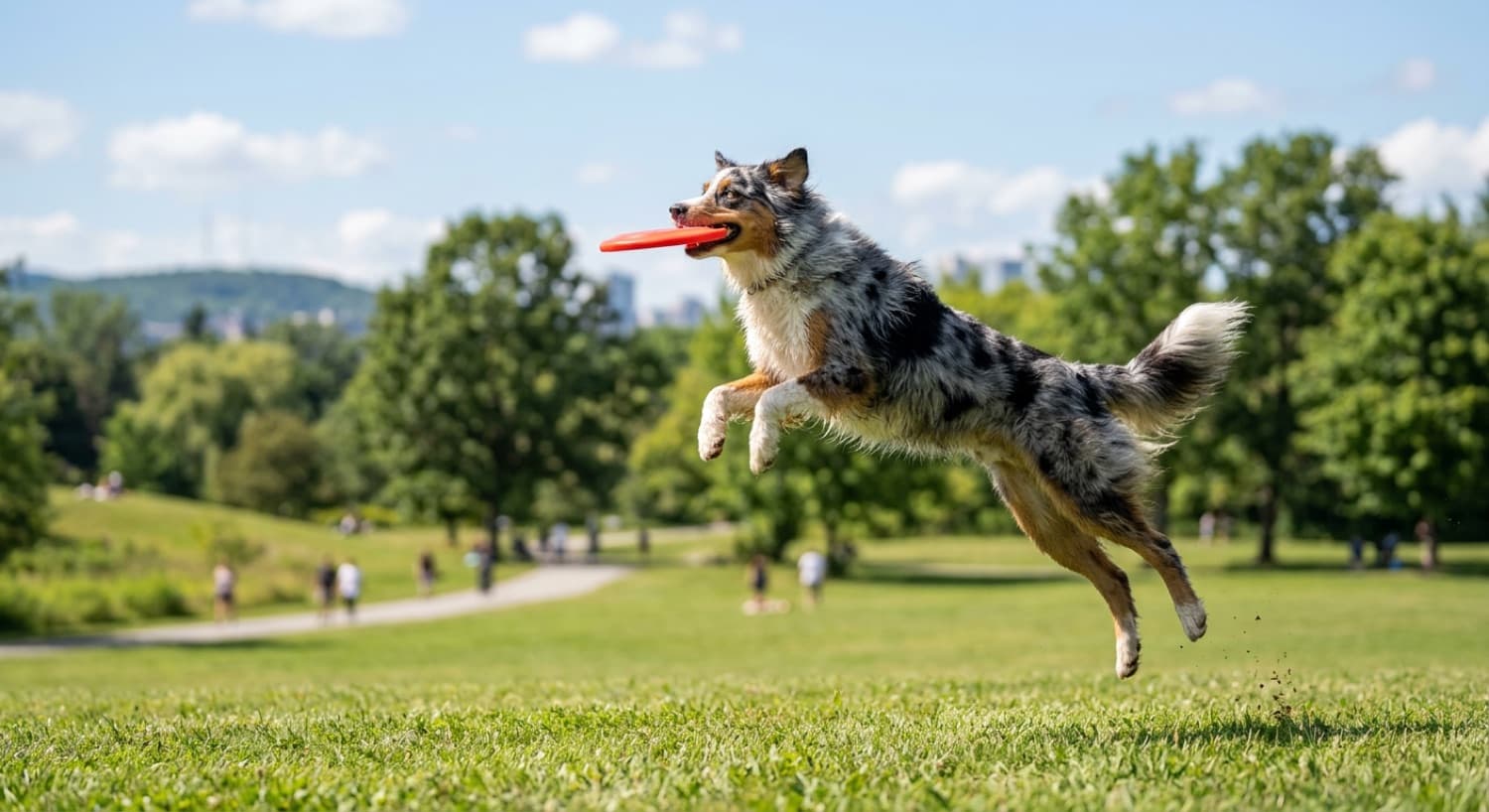
The running trap
The mistake that catches most new Aussie owners is the same one that catches Border Collie owners: faced with an energetic dog, they run it more, and the Aussie, an endurance athlete bred to work all day, simply gets fitter, until the owner is exercising a dog that never seems satisfied and still misbehaves at home.
Physical exercise was never the whole job. The Canadian Kennel Club describes the Australian Shepherd as an intelligent working dog of strong herding and guarding instincts. That thinking, working mind is the part you have to satisfy, and running does not touch it.
Tire the brain, manage the herding, plan for company
The formula is physical exercise plus, crucially, substantial mental work: training, puzzles, scent games, and above all dog sports (agility, flyball, disc, obedience, herding). A short challenging session tires an Aussie more than a long run because it engages the problem-solving mind. Rotate activities, and give the dog a genuine job wherever you can.
Two Aussie-specific things to layer on top. First, manage the herding drive: redirect the nipping and chasing of kids, pets, bikes, and cars into games and sports, teach a solid recall and “leave it,” and supervise around young children. Second, plan for company: Aussies are velcro dogs prone to separation anxiety, so a tired, fulfilled dog plus gradual alone-time training, safe chews when you leave, and a midday walk or daycare for long workdays prevents the barking-and-destruction spiral.
Both tie into settling a new dog well, covered in our first-week guide.
Find your Australian Shepherd in Ottawa
If hours of daily physical and mental engagement sound like a joy, a rescue Aussie is a devoted, brilliant partner. Browse available Australian Shepherds and mixes from Ottawa and NCR rescues, with foster notes on drive.
See Available Australian Shepherds →Exercise through an Ottawa winter
Winter suits the breed, Aussies love cold and snow, so keep up outdoor exercise (rinse road salt off the paws, watch for ice balls). Off-leash running at spaces like Bruce Pit or Conroy Pit, once recall is reliable, works year-round; see our off-leash parks guide.
On the most brutal cold days, lean hard on indoor mental work: training, puzzles, scent games, and trick sessions, plus indoor dog-sport facilities many Ottawa owners use through winter. The rule never changes: an Aussie’s needs do not shrink with the temperature, so if the cold cuts a walk short, make up the difference with mental stimulation, and keep the velcro dog company, or you will have a frustrated, anxious dog by February.
Frequently Asked Questions
How much exercise does an Australian Shepherd really need?
A lot, but as with all working herding breeds, physical exercise alone is not the answer. An Australian Shepherd needs at least one and a half to two hours of activity a day, and often more for a young or working-line dog, but the common mistake is thinking that means running. An Aussie is an endurance athlete, so the more you run it, the fitter and harder to tire it becomes, and you end up with a tireless dog you cannot satisfy through exercise. The breed’s real need is a combination: solid daily physical exercise (walks, hikes, off-leash running with reliable recall, fetch, swimming) plus substantial mental stimulation (training, puzzles, scent work, and ideally dog sports). A mentally-worked Aussie is calm and content; a merely physically-exercised one is a fit dog still looking for a job. Aim for that combination rather than trying to out-run the breed’s stamina.
Why does mental stimulation matter as much as exercise for an Aussie?
Because Australian Shepherds were bred to think and work in partnership, not just to move. As ranch and stock dogs, they made decisions, read livestock, responded to subtle handler cues, and problem-solved all day, so they have a deep need for mental engagement that plain exercise does not meet. An owner who only physically exercises their Aussie finds the dog gets fitter, harder to tire, and still misbehaves, because its brain is bored even when its body is not. Mental work, training sessions, puzzle feeders, scent games, learning tricks and names, and structured problem-solving, tires an Aussie in a way running cannot, and it is the key to a settled dog. A challenging fifteen-minute training session can tire an Aussie more than a long walk. Engage the mind, and many of the behaviour problems that fill rescues, the destructiveness, the obsessive and herding behaviours, largely resolve.
What happens if an Australian Shepherd does not get enough exercise and mental work?
It develops the behaviour problems that land Aussies in rescue. An Australian Shepherd starved of physical and, especially, mental outlets becomes anxious, frustrated, and destructive, and it channels the unspent drive into problems: obsessive behaviours, excessive barking, destructiveness, and misdirected herding, nipping at heels and chasing children, other pets, cars, and bikes. Layered on top is the breed’s intense bonding: Aussies are "velcro dogs" that can develop real separation anxiety if left alone too long without adequate exercise and enrichment, adding barking, destruction, and distress when alone. The dog is not being bad; it is a working animal with no work and, often, too much time alone. This combination is a leading reason Aussies are surrendered, and it is largely preventable with enough exercise, mental stimulation, structure, and company. If you are seeing these behaviours, the answer is usually more mental work and less alone-time, ideally with a positive-reinforcement trainer.
What are the best mental-stimulation activities for an Australian Shepherd?
Variety and challenge are the goals, and dog sports are the gold standard. Training is the foundation: teach obedience, tricks, toy names, and complex behaviour chains, Aussies are quick, eager learners, and daily sessions both tire and bond. Puzzle feeders and food-dispensing toys make the dog work for meals. Scent games and nosework engage a different part of the brain. But the best outlet for the breed is dog sports: agility, flyball, disc, obedience, rally, treibball, and herding (where available) provide exactly the physical-and-mental combination an Aussie craves, plus structure and a job, and the breed excels at all of them. In Ottawa, training clubs and sport facilities offer classes in these. Rotate activities to keep them novel, mix short intense mental sessions through the day, and give the dog a genuine "job" wherever you can. A working Aussie with meaningful work is a joy; one without invents its own.
Are Australian Shepherds prone to separation anxiety?
Yes, more than many breeds, and it is important to plan for. Aussies are famously "velcro dogs," intensely bonded to their people and happiest at their side, and that devotion has a flip side: many struggle when left alone for long stretches, developing separation anxiety that shows as barking, howling, destruction, pacing, or distress. The problem is worse when the dog is also under-exercised and under-stimulated, because pent-up energy compounds the anxiety. Prevention and management combine adequate exercise and mental work (a tired, fulfilled dog copes better alone) with gradual alone-time training, safe chews and puzzle feeders when you leave, and never making departures and arrivals dramatic. For owners who work long hours away from home, a midday walk, a dog walker, or daycare makes a real difference, and honestly, an Aussie is not the right breed for someone gone ten hours a day with no plan for the dog. If separation anxiety is severe, work with a positive-reinforcement trainer or behaviourist.
How do I manage an Aussie’s herding instinct?
Redirect it rather than suppress it, because it is deeply wired. Australian Shepherds were bred to control livestock movement, and in a home without stock, that instinct can turn onto whatever moves: children running, other pets, cyclists, joggers, and cars, expressed as circling, staring, chasing, and nipping at heels. This is instinct, not aggression, but it needs managing for safety and manners. Give the drive a legitimate outlet through training games, fetch, and especially dog sports or herding activities. Teach a solid recall and an "off" or "leave it" cue, interrupt and redirect herding attempts, reward calm alternatives, and teach children not to run shrieking past the dog, which triggers the chase. Early socialisation helps enormously. With a proper outlet and consistent redirection, most Aussies learn to reserve the herding for appropriate activities, but the instinct never fully disappears, so ongoing management and supervision, especially around young children and fast-moving triggers, is part of owning the breed.
How do I exercise an Australian Shepherd through an Ottawa winter?
Winter is a good season for the breed, Aussies love cold and snow, so keep up outdoor physical exercise: snowy running and play burn energy well (rinse road salt off the paws afterward and watch for ice balls between the toes). Off-leash running at appropriate Ottawa areas, once recall is solid, works year-round. The bigger lever in winter, as always, is mental work: on the most brutal cold days when outdoor time is limited, lean hard on indoor training sessions, puzzle feeders, scent games, and trick-training to satisfy the brain, and many Ottawa owners use indoor dog-sport facilities and classes through the winter months. The rule never changes: an Aussie’s needs do not shrink with the temperature, so if the cold cuts your walks short, make up the difference with extra mental stimulation indoors, or you will have a frustrated, and possibly anxious, dog by February. The double coat handles the cold far better than summer heat.
Related Guides
New dog? Start with these care guides
Everything a new adopter needs to set up a safe, happy home.