The short answer
Aussies are reasonably healthy, but know a few specifics. The most important is the MDR1 gene: a simple DNA test tells you if your dog is drug-sensitive, so your vet can prescribe safely, this one test can prevent a medical accident. Also plan for hip and elbow dysplasia, inherited eye conditions (cataracts, PRA, CEA), and epilepsy. Understand the double-merle risk (deafness and blindness from merle-to-merle breeding), distinct from a normal, healthy single-merle dog. Aussies live 12 to 15 years. Routine Ottawa care runs $900 to $1,600 a year plus HST. Do the MDR1 test, get a baseline eye exam, and insure early if you insure.
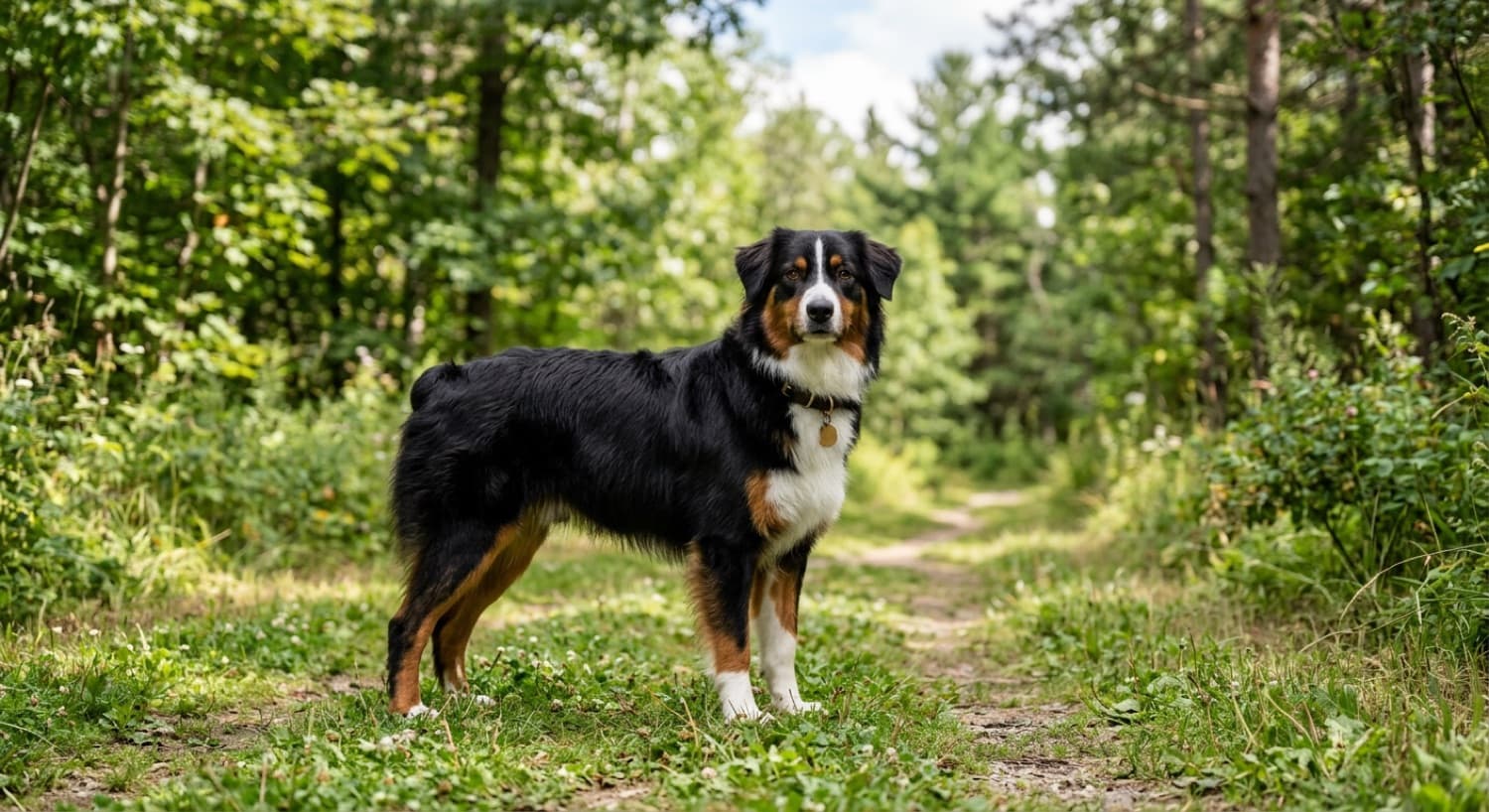
Like the Border Collie, the Australian Shepherd is medically an easy-keeper compared with many popular breeds, bred for ranch work, it largely avoided the exaggerated features that burden others. That does not mean no concerns; it means a short, specific list, one item of which (the MDR1 gene) every owner genuinely needs to know. This is a planning list, and every point should be discussed with your own veterinarian.
Test for MDR1, and tell every vet
The one Aussie health fact that can prevent a medical accident: the breed can carry the MDR1 gene mutation, which makes certain common drugs dangerous at normal doses. A simple DNA test reveals your dog’s status, and knowing it lets your vet choose safe medications. Always mention MDR1 before any prescription. A prolonged seizure (over 5 minutes) or repeated seizures is an emergency, Ottawa has 24-hour care, including the Alta Vista Animal Hospital. Save the number now.
MDR1, hips, and eyes
MDR1. The breed’s most important health fact. An inexpensive DNA test reveals whether your dog is sensitive to certain common drugs; if it is, your vet uses safe alternatives. Do the test and flag it to every vet, it is the same drug-sensitivity gene found in Border Collies.
Hips and elbows. Dysplasia occurs; keep the dog lean and fit, and screen through breeders who test.
Eyes. Cataracts, PRA, Collie Eye Anomaly, and other developmental issues appear in the breed, some linked to merle. A baseline eye exam and periodic checks catch problems early, and responsible breeders certify breeding dogs’ eyes.
Epilepsy and the double-merle issue
Epilepsy. Idiopathic epilepsy appears in the breed, often between six months and five years. Most affected dogs live full lives on daily medication once the right treatment is found with your vet. Get any known seizure records from the rescue.
Double merle. This is distinct from the general inherited conditions. Breeding two merles together strongly risks deafness, blindness, or both in the puppies, a permanent result of irresponsible breeding, not something a normal single-merle Aussie faces. Double-merle dogs (often largely white) sometimes reach rescue and can thrive with hand-signal training and a safe environment, but the condition needs understanding.
For routine-care savings, see our Ottawa low-cost vet guide.
Meet a healthy Aussie in Ottawa
Rescue Australian Shepherds come with a vet workup and honest health notes, so you know what you are adopting. Browse available Aussies and mixes from Ottawa and NCR rescues.
See Available Australian Shepherds →Frequently Asked Questions
What health problems are Australian Shepherds prone to?
Australian Shepherds are a reasonably healthy, functional working breed, but they carry several specific inherited concerns worth knowing. The most important for medical safety is the MDR1 gene mutation, which affects sensitivity to certain drugs (a simple DNA test reveals it). Beyond that, plan for hip and elbow dysplasia, a range of eye conditions (cataracts, progressive retinal atrophy, Collie Eye Anomaly, and others), epilepsy, and, in dogs from irresponsible merle-to-merle breeding, the congenital deafness and blindness of "double merle." Some Aussies are also prone to certain cancers with age. Most concerns are manageable, and the highest-value things an Ottawa owner can do are test for MDR1, get a baseline eye exam, keep the dog lean and fit, and use ethical sources that screen breeding stock. Always make health decisions for your individual dog with your veterinarian.
What is the MDR1 gene and why does it matter for Aussies?
MDR1 (multidrug resistance 1, also called ABCB1) is a genetic mutation common in Australian Shepherds and other herding breeds that changes how the dog processes certain medications. Dogs with the mutation cannot properly clear some drugs from the brain, so normal doses of certain parasite preventives (like high-dose ivermectin), some sedatives, certain chemotherapy agents, and some anti-diarrheal drugs can build to toxic levels and cause serious neurological reactions. This is entirely manageable once known: an inexpensive DNA cheek-swab test reveals your dog’s MDR1 status, and if it carries the mutation, your vet simply avoids or adjusts the affected drugs, using safe alternatives. If you adopt an Aussie, MDR1 testing is well worth doing, and you should tell any vet treating your dog to consider MDR1 before prescribing. It is the single most useful piece of health knowledge for the breed and can prevent a genuine medical accident.
What eye problems do Australian Shepherds have?
Aussies are prone to several inherited eye conditions, which is why responsible breeders have breeding dogs’ eyes certified by a veterinary ophthalmologist. These include cataracts (clouding of the lens, one of the more common eye issues in the breed), progressive retinal atrophy (gradual, inherited vision loss that dogs adapt to well), Collie Eye Anomaly (a congenital condition ranging from mild to, rarely, sight-threatening), and iris coloboma and other developmental issues, some linked to the merle gene. For an adopted Aussie, a veterinary eye exam establishes a baseline and catches problems early, and any cloudiness, vision change, or eye discomfort warrants prompt attention. Separately, the double-merle issue (from merle-to-merle breeding) is a distinct and more severe eye-and-ear problem, not the same as these general inherited conditions. Periodic eye checks through the dog’s life are wise for the breed.
What is double merle and how serious is it?
Double merle is the result of breeding two merle-patterned dogs together, which gives each puppy a chance of inheriting two copies of the merle gene, and that double dose is strongly linked to serious congenital defects, most notably deafness, blindness, or both, along with eye abnormalities. These dogs are often largely white. A normal single-merle Aussie (one merle gene) is perfectly healthy and common; the problem is specifically the double dose from irresponsible breeding. Ethical breeders never breed merle to merle for exactly this reason, but some backyard breeders do it to produce more of the fashionable merle coats, and the resulting deaf or blind dogs sometimes end up in rescue. A double-merle Aussie can still make a wonderful, happy pet with appropriate accommodations, hand-signal training for a deaf dog, a safe and predictable environment for a blind one, but the condition is permanent and needs understanding. It is a strong argument for adopting from ethical sources.
How much does Australian Shepherd health care cost in Ottawa?
Because Aussies are reasonably healthy and a medium size, routine care is affordable: a wellness exam, vaccines, parasite prevention, and dental attention run roughly $900 to $1,600 a year in Ottawa, plus Ontario’s 13 per cent HST, and the breed’s moderate size keeps food and medication costs reasonable, though grooming for the heavy double coat adds some cost. Worthwhile early one-time costs are the MDR1 DNA test and a baseline eye exam. The budget wildcards are the inherited conditions if they arise: hip or elbow surgery can be costly, epilepsy means lifelong (inexpensive) medication and monitoring, and eye problems may need specialist care. Overall the breed’s relative healthiness keeps expected lifetime vet costs moderate. As with other working breeds, the practical "cost" of an Aussie, the exercise, training, sports, grooming, and daycare, often exceeds the medical one. See our Ottawa low-cost vet guide for routine-care savings.
Is pet insurance worth it for an Australian Shepherd?
It can be, weighed against the breed’s relative healthiness. Aussies avoid many of the expensive chronic conditions of higher-risk breeds, so the odds of a huge bill are somewhat lower, but the breed still carries real risks, hip and elbow dysplasia, epilepsy, eye conditions, and the ordinary injuries an intensely active, athletic dog is prone to during running, jumping, and dog sports (ligament tears, fractures). Insurance taken out while your Aussie is young and healthy locks in coverage before any condition becomes a pre-existing exclusion, which matters especially for epilepsy (which can appear in young adulthood) and orthopedic issues. Premiums for a young Aussie commonly run $40 to $70 a month in Ottawa. Weigh it against your savings buffer and your dog’s activity level, and if you do a lot of high-impact sport, injury coverage is worth considering. If you insure, do it early and confirm the breed’s known conditions are covered.
How long do Australian Shepherds live?
Australian Shepherds are long-lived for their size, typically 12 to 15 years, and an active, well-cared-for dog with good genetics often reaches the upper end, a reward of a sound working breed. Longevity depends on the usual levers: keeping the dog fit and lean (rarely a challenge for such an active breed), staying current on eye checks and parasite prevention, knowing the dog’s MDR1 status so medications are chosen safely, and annual vet visits that catch conditions early. For Ottawa owners, that long lifespan means a 12-to-15-year commitment to a demanding breed whose exercise and mental-work needs barely diminish with age, and budgeting for senior care and possible cancer or orthopedic issues in the later years. An Aussie adopted as an adult still has many active, engaged years ahead, and the breed’s relative healthiness means those years are often lower-drama medically than for many popular dogs.
Related Guides
New dog? Start with these care guides
Everything a new adopter needs to set up a safe, happy home.