The short answer
Obesity plus the long back is the Basset’s biggest health risk. The breed’s short-legged, long-spined build predisposes it to IVDD and back strain, and the food-obsessed appetite makes obesity common, which loads the spine, so weight control is the number-one lever. Also plan for recurrent ear infections (those long ears trap moisture), eye conditions (glaucoma, cherry eye, ectropion/entropion), and some bloat risk. Bassets live 10 to 13 years. Routine Ottawa care runs $900 to $1,600 a year plus HST, but a serious back or eye surgery can run into the thousands. Insure early, before a back or eye condition becomes a pre-existing exclusion. Make all health decisions with your vet.
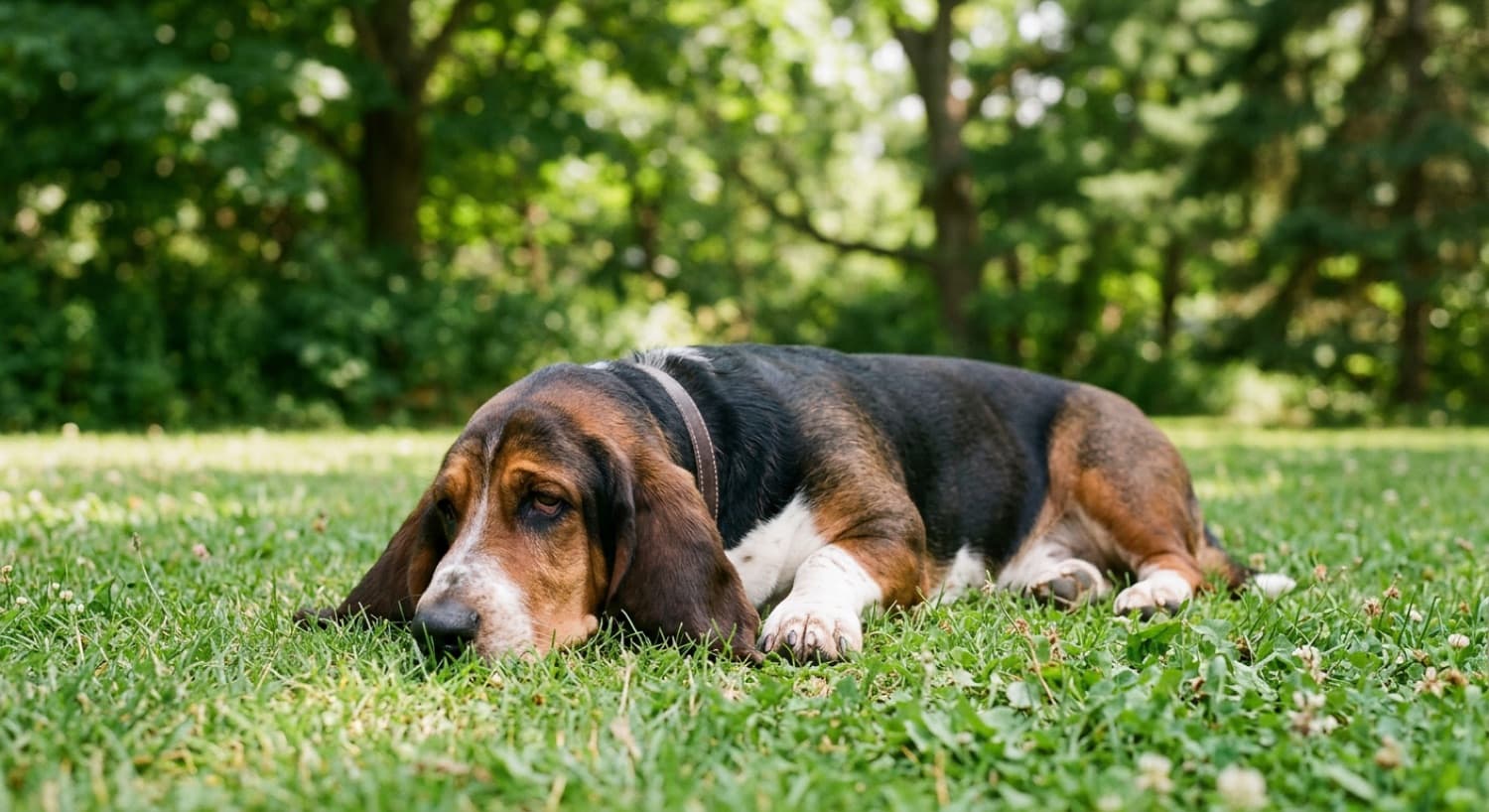
Bassets are, on the whole, fairly hardy dogs, but the same distinctive build that makes them so charming, the long body, short legs, long ears, and droopy eyes, is also where most of the breed’s health concerns lie, and obesity ties several of them together. This is a planning list, so an Ottawa owner knows what to watch for and where the budget goes, and every point should be discussed with your own veterinarian.
Emergencies that need care now
Sudden hind-leg weakness or dragging with pain or a hunched back may be a ruptured disc. Sudden eye pain, redness, or cloudiness may be acute glaucoma. A distended, hard belly with unproductive retching and restlessness is possible bloat (GDV), a deep-chested-breed emergency. Any of these needs an emergency vet immediately. Ottawa has 24-hour care, including the Alta Vista Animal Hospital. Save the number now.
Weight and the back: one linked problem
Treat these together, because they are connected. Bassets are chondrodystrophic (their short legs come from a form of dwarfism), which predisposes the spinal discs to degenerate and rupture, and the long spine and heavy body add strain, so IVDD and back trouble are real breed concerns. The single biggest thing that pushes a Basset from at-risk to injured is excess weight, which loads the spine directly, and the food-obsessed breed gains weight readily.
So weight control is not cosmetic, it is spinal protection. Measure every meal, count treats in the daily calories, skip table scraps, and keep the dog lean enough to feel the ribs. Alongside that, protect the back mechanically: discourage jumping on and off furniture, use ramps or steps, and lift with support under both chest and rear, keeping the back level. These habits, more than anything else, keep a Basset mobile into old age.
Ears, eyes, and bloat
Ears. Those long, low-hanging ears trap moisture and are a leading reason Bassets visit the vet. Check weekly, clean with a vet-approved product, keep them dry (especially after snowy Ottawa walks where they drag), and catch infections early. Regular ear care is central, not optional, for the breed.
Eyes. The prominent, droopy eyes are prone to glaucoma (a same-day emergency when acute), cherry eye (usually fixed surgically), and ectropion/entropion (lids rolling out or in). An annual eye check catches problems early, and any sudden eye change warrants prompt care.
Bloat. As a deep-chested breed, Bassets carry some GDV risk. Feed smaller meals, avoid heavy exercise right after eating, and know the emergency signs. Elbow and joint issues can also develop given the heavy front end. For routine-care savings, see our Ottawa low-cost vet guide.
Meet a healthy Basset in Ottawa
Rescue Bassets come with a vet workup and honest health notes, including any back or ear history, so you know what you are adopting. Browse available Bassets and Basset mixes from Ottawa and NCR rescues.
See Available Basset Hounds →Frequently Asked Questions
What health problems are Basset Hounds prone to?
The Basset’s distinctive build drives its main health concerns. The long back and short, heavy-boned legs make the breed prone to back problems including intervertebral disc disease (IVDD), and obesity, which the food-driven breed is very prone to, dramatically worsens the back and joints, so weight control is the single most important health lever. The long, low-hanging ears trap moisture and are prone to recurrent infections. The prominent, droopy eyes are prone to conditions including glaucoma, cherry eye, and ectropion or entropion (eyelids that roll out or in). As a deep-chested breed, Bassets also carry some bloat (GDV) risk, and their heavy front ends can develop elbow and joint issues. Most are manageable, and the highest-value things an Ottawa owner can do are keep the dog lean, protect the back, and stay on top of the ears and eyes. Always make health decisions for your individual dog with your veterinarian.
Why is obesity such a serious issue for Basset Hounds?
Because Bassets combine a hearty, food-obsessed appetite with a body that suffers greatly from extra weight. The breed loves food and will happily overeat, counter-surf, and beg, and owners who give in end up with an overweight dog, which is very common in the breed. This matters enormously because a Basset’s long back and heavy, low-slung frame are already under mechanical stress, and excess weight loads the spine directly (raising the risk of disc disease), accelerates joint and elbow wear, strains the heart, and reduces mobility in a dog that is not very agile to begin with. A fat Basset is a Basset headed for back and joint trouble. The management is simple discipline: measure every meal, count treats as part of the daily calories, skip table scraps and counter-surfing opportunities, and keep the dog lean enough to feel the ribs. Ask your vet to set a target weight, this is the core of keeping a Basset healthy and mobile.
Do Basset Hounds have back problems?
Yes, the breed is prone to them, and it is tied to the very build that defines the Basset. Bassets are a chondrodystrophic breed (their short legs come from a form of dwarfism), which predisposes the spinal discs to degenerate and rupture, so intervertebral disc disease (IVDD) is a real concern, along with general back strain from the long spine and heavy body. Signs of a back problem include reluctance to jump or climb stairs, a hunched posture, yelping when moving or being picked up, and, in serious cases, weakness or dragging of the hind legs, which is an emergency. Protect the back by keeping the dog lean (the biggest risk factor is excess weight), discouraging jumping on and off furniture, using ramps or steps, supporting the body properly when lifting (one hand under the chest, one under the rear, keeping the back level), and not letting the dog overexert. Weight control and back protection are the two most valuable things you can do for a Basset’s spine.
Why do Basset Hounds get ear infections, and how do I prevent them?
Those long, low-hanging ears are iconic and also a magnet for infection. They trap heat and moisture against the ear canal, block air circulation, and drag on the ground collecting dirt and debris, creating a warm, moist environment where yeast and bacteria thrive, so recurrent ear infections are one of the most common reasons Bassets see the vet. Signs include head shaking, scratching at the ears, redness, odour, and dark discharge. Prevention is routine and important: check the ears at least weekly, clean them with a vet-approved ear cleaner as directed, keep them dry (especially after baths, swims, and snowy Ottawa walks where the ears drag in snow), and lift and air the ears periodically. Catch infections early, because chronic untreated ear disease can become painful and hard to resolve. For a Basset, regular ear care is not optional maintenance, it is central to the dog’s comfort and a predictable part of owning the breed.
What eye conditions affect Basset Hounds?
The Basset’s prominent, droopy eyes with their loose lower lids are prone to several conditions. Glaucoma, a painful build-up of pressure in the eye that can cause blindness if not treated quickly, is a known concern in the breed and is a genuine emergency when acute, so sudden eye pain, redness, or cloudiness needs same-day vet care. Cherry eye (a prolapse of the third-eyelid gland) shows as a red mass in the corner of the eye and is usually corrected surgically. Ectropion (the lower lids rolling outward, exposing the eye) and entropion (lids rolling inward, irritating the eye) both occur given the loose facial skin, and can cause irritation or need surgical correction. The droopy lids also collect debris and can be prone to irritation and infection. For an adopted Basset, an annual vet eye check catches problems early, gentle daily attention to the eye area helps, and any sudden change in the eyes warrants prompt attention.
How much does Basset Hound health care cost in Ottawa?
Routine annual care, a wellness exam, vaccines, parasite prevention, and dental attention, runs roughly $900 to $1,600 a year for a Basset in Ottawa, plus Ontario’s 13 per cent HST, and the breed’s regular ear care adds a small but real ongoing cost. The budget wildcards are the back, the eyes, and bloat: IVDD treatment ranges from crate rest and medication for a mild case to spinal surgery costing several thousand dollars for a serious disc rupture, eye surgery (for cherry eye, entropion/ectropion, or glaucoma) is costly, and bloat surgery several thousand more. Chronic ear infections add up over the years too. This combination of predictable ear care plus the potential for expensive back, eye, or bloat events is exactly why keeping a Basset lean matters financially as well as medically, and why pet insurance taken out while the dog is young and healthy tends to pay off. See our Ottawa low-cost vet guide for routine-care savings.
Is pet insurance worth it for a Basset Hound?
Often yes, mainly for the back, eye, and bloat risks. Bassets are otherwise fairly hardy, but the breed carries real wildcards, a serious IVDD episode can mean spinal surgery costing several thousand dollars, eye conditions can need costly surgery, and as a deep-chested breed there is bloat risk, each of which arrives unpredictably. Insurance taken out while your Basset is young and healthy, before any condition is documented, locks in coverage before exclusions apply. This matters especially for the back and eyes, once a disc problem or an eye condition is on the record, no insurer will cover it, and those are exactly where the big Basset bills come from. Premiums for a young Basset commonly run $45 to $75 a month in Ottawa. Weigh it against your savings buffer, and if you insure, do it early and confirm the back and eye conditions are covered. Keeping the dog lean also lowers your odds of ever needing to claim on the back.
How long do Basset Hounds live?
Basset Hounds typically live around 10 to 13 years, and a lean, well-cared-for Basset with a protected back often reaches the upper end, while obesity and back disease can shorten both mobility and life. Longevity depends heavily on the levers you control, and for this breed weight is the biggest one: an obese Basset risks disabling back and joint disease, so keeping the dog trim is genuinely protective. Beyond weight, stay on top of the ears and eyes, protect the back throughout the dog’s life, keep up dental and parasite care, and maintain annual vet checks that catch conditions early. For Ottawa owners, that lifespan means a decade or more of an easygoing, affectionate companion, and budgeting for the ongoing ear care and possible back or eye issues, especially in the senior years. A Basset adopted as an adult still has many good years ahead, and a lean one will have the mobility to enjoy them.
Related Guides
New dog? Start with these care guides
Everything a new adopter needs to set up a safe, happy home.