The short answer
A bernedoodle can inherit conditions from both parents, so “hybrid vigour” is only partly true. Plan for hip and elbow dysplasia, bloat (GDV) (a deep-chested-dog emergency, consider a preventive gastropexy), eye conditions (PRA, cataracts), allergies, and, from the Bernese side, an elevated cancer risk (though the Poodle cross often reduces it versus a purebred Bernese, and extends lifespan). Bernedoodles live 12 to 15 years (better than a purebred Bernese). The biggest protective factor is breeding quality. Routine Ottawa care runs $1,000 to $1,700 a year plus HST, plus grooming. Keep the dog lean, watch for cancer signs with age, and consider insuring early. Make all health decisions with your vet.
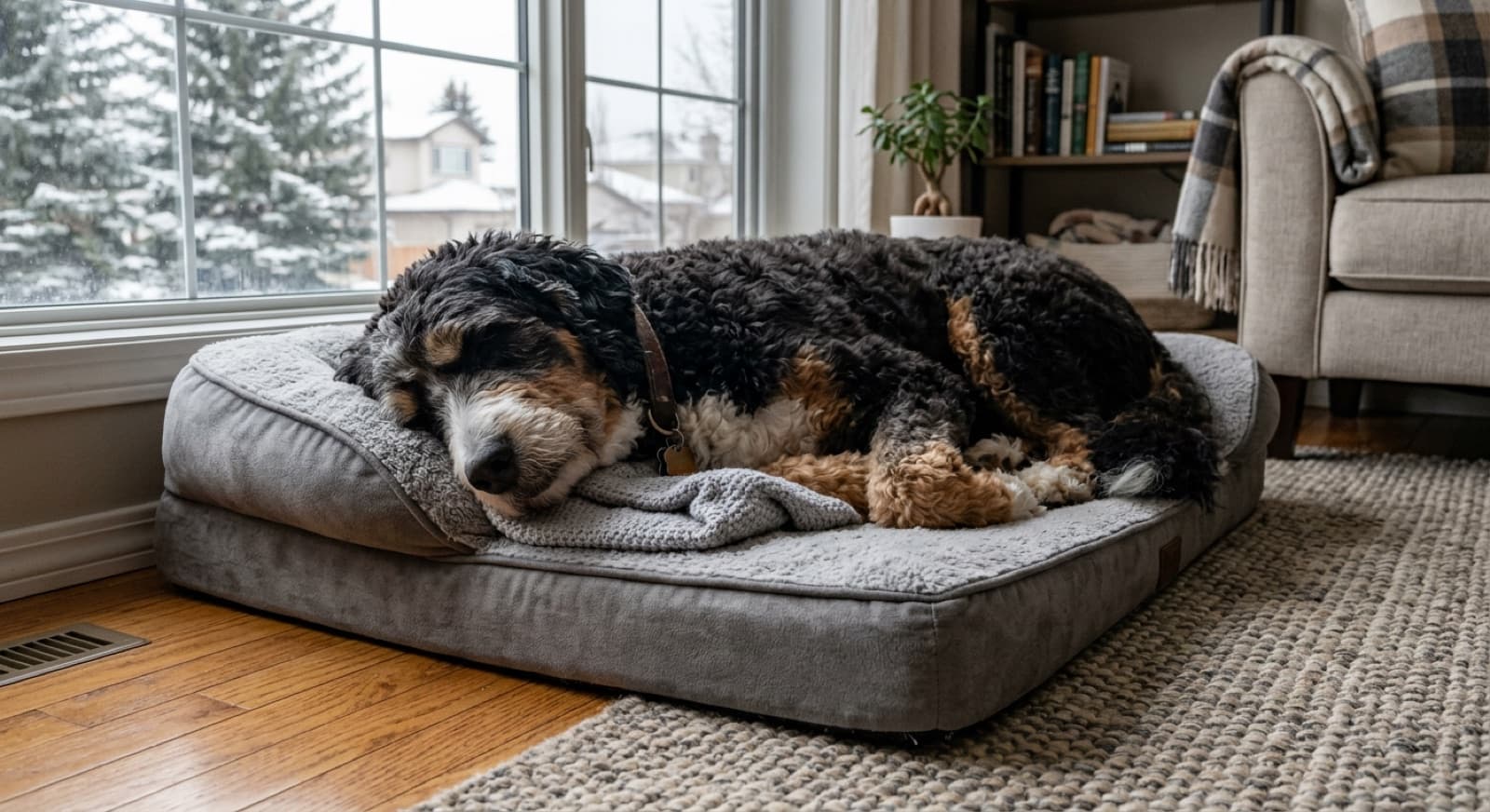
The most important thing to understand about bernedoodle health is that a bernedoodle is not a magically healthy dog, but it may be a healthier one than a purebred Bernese Mountain Dog. Crossing a Bernese and a Poodle combines the risk lists, but because the Bernese is so cancer-prone and short-lived, the cross can dilute that risk somewhat, one of the breed’s genuine appeals. This is a planning list; every point should be discussed with your own veterinarian.
Bloat is an emergency, and watch for cancer signs
A distended abdomen, unproductive retching, restlessness, and collapse point to bloat, a life-threatening emergency in deep-chested dogs, get to an emergency vet at once (Ottawa has 24-hour care including the Alta Vista Animal Hospital). Given the Bernese heritage, also stay attentive to cancer signs (lumps, unexplained weight loss, lethargy) and have them checked promptly, early detection matters.
The combined risk list
Joints and bloat. Hip and elbow dysplasia come from both parents; keep the dog lean and value breeders who screen. Bloat is a real risk in deep-chested bernedoodles, feed smaller meals, avoid heavy exercise around meals, and discuss a preventive gastropexy.
Cancer. The Bernese side carries an elevated cancer predisposition; the Poodle cross often reduces it versus a purebred Bernese and extends lifespan, but it is not eliminated, so age-related vigilance matters.
Eyes, skin, and Addison’s. PRA, cataracts, allergies, and (from the Poodle side) Addison’s disease and sebaceous adenitis occur. Source from tested lines where you can. For routine-care savings, see our Ottawa low-cost vet guide, and the Canadian Kennel Club for parent-breed background.
Meet a healthy bernedoodle in Ottawa
Rescue bernedoodles come with a vet workup and honest health notes. Browse available Bernedoodles and doodle mixes from Ottawa and Ontario rescues.
See Available Bernedoodles →Frequently Asked Questions
What health problems are Bernedoodles prone to?
Because a bernedoodle is a Bernese Mountain Dog crossed with a Poodle, it can inherit health conditions common to either parent breed, so the honest health picture is the combined risk list of both, not the “healthier hybrid” the marketing suggests. From the Bernese side, the main concerns are hip and elbow dysplasia (joint conditions leading to arthritis, significant in a larger dog), bloat (gastric dilatation-volvulus, a life-threatening emergency in deep-chested dogs), and, importantly, an elevated risk of certain cancers, the Bernese Mountain Dog is one of the more cancer-prone breeds, and bernedoodles can inherit some of that predisposition (though crossing with the Poodle may reduce it somewhat compared to a purebred Bernese). From the Poodle side come possibilities like hip dysplasia, eye conditions (progressive retinal atrophy, cataracts), Addison’s disease, sebaceous adenitis, and, in Standard Poodles, bloat as well. Both parent breeds can have allergies and skin/ear issues. The degree to which a given bernedoodle faces these depends heavily on breeding quality (health- and DNA-tested parents) and, to some extent, generation. The key myth to dispel is “hybrid vigour”, crossing does not guarantee a healthier dog. Always discuss your individual dog’s health with your veterinarian, and for a rescue, focus on the individual dog’s current health.
Is the “hybrid vigour” claim about Bernedoodles true?
Only partly, and not in the way it is marketed. “Hybrid vigour” is used to suggest that crossing two breeds automatically produces a much healthier dog free of the parent breeds’ problems, and that is largely a myth. A bernedoodle can inherit health conditions from either the Bernese Mountain Dog or the Poodle side, and in practice bernedoodles are prone to the combined list of both breeds’ issues, hips, bloat, eyes, skin, and, from the Bernese side, cancer risk. There is a genuine kernel of truth in the bernedoodle case: because the Bernese Mountain Dog has a notably high cancer rate and a short lifespan, crossing it with a Poodle can, in some dogs, dilute that risk and extend lifespan somewhat compared to a purebred Bernese, which is part of the breed’s appeal. But this is a probabilistic reduction, not a guarantee, and it only holds meaningfully when the breeding uses health-tested parents. Because bernedoodles are not a recognised breed with a strong health-testing culture, a large share are bred by backyard breeders and puppy mills who test nothing, which undercuts the potential benefit. So the honest reality: a bernedoodle from genuinely health-tested parents may be somewhat healthier and longer-lived than a purebred Bernese, but the crossbreed status itself guarantees nothing. Judge the breeding, not the buzzword, and for a rescue, focus on the individual dog.
Do Bernedoodles get cancer like Bernese Mountain Dogs?
This is an important and nuanced question. The Bernese Mountain Dog is unfortunately one of the more cancer-prone breeds, with a notably high rate of certain cancers and a relatively short lifespan as a result, and this is a major reason some people choose a bernedoodle instead, hoping the Poodle cross reduces the risk. The honest answer is that bernedoodles can inherit some elevated cancer predisposition from the Bernese side, but crossing with the Poodle (a breed without the same extreme cancer rate) appears, in many cases, to reduce the risk compared to a purebred Bernese and to extend lifespan somewhat, which is a genuine potential benefit of the cross. However, this is not a guarantee, an individual bernedoodle can still develop cancer, and the degree of risk reduction depends on genetics and breeding. For an owner, the practical implications are: source from health-conscious breeding where possible, stay attentive to your dog’s health as it ages (watch for lumps, unexplained weight loss, lethargy, or other changes and have them checked promptly, since early detection matters), and consider pet insurance, since cancer treatment can be very expensive. For a rescue bernedoodle, you cannot know the breeding, so the same vigilance applies. Cancer is a real consideration for the breed, less extreme than for a purebred Bernese, but not eliminated, and worth discussing with your vet.
How much does Bernedoodle health care cost in Ottawa?
Routine annual care depends on size, but for a typical medium-to-large bernedoodle, a wellness exam, vaccines, parasite prevention, and dental attention, runs roughly $1,000 to $1,700 a year in Ottawa, plus Ontario’s 13 per cent HST, with larger dogs costing more for food and medication, and on top of that comes the significant, ongoing grooming cost (professional grooming every 6 to 8 weeks). The budget wildcards are the inherited conditions: hip or elbow surgery if dysplasia is severe (into the thousands, more for a large dog); emergency bloat surgery (several thousand dollars, and worth discussing a preventive gastropexy for a deep-chested dog); cancer treatment (potentially very expensive, and a real consideration given the Bernese heritage); eye conditions; and skin/allergy or Addison’s management. Because bernedoodles vary so much by breeding quality and size, a well-bred one may cost little beyond routine care and grooming, while a poorly bred or larger one can face bigger bills. This mix, guaranteed grooming plus the potential for expensive orthopedic, bloat, or cancer costs, is exactly why many owners find pet insurance worthwhile, ideally taken out while the dog is young and healthy. See our Ottawa low-cost vet guide for routine-care savings, and remember grooming is a separate, ongoing cost insurance does not cover.
Is pet insurance worth it for a Bernedoodle, and how long do they live?
Bernedoodles typically live around 12 to 15 years (mini and tiny bernedoodles tend toward the longer end, standards toward the shorter), which is notably better than the roughly 7 to 10 years of a purebred Bernese Mountain Dog, one of the appeals of the cross, and a well-cared-for bernedoodle from health-tested lines, kept lean and well cared for, has the best chance of a long life. On insurance: it is often worthwhile, because the bernedoodle’s combined-parent risk list includes several potentially expensive conditions, hip or elbow dysplasia, bloat, cancer, eye disease, and Addison’s, and insurance taken out while the dog is young and healthy locks in coverage before anything becomes a pre-existing exclusion. This matters especially given the cancer consideration: cancer treatment is among the most expensive in veterinary medicine, and if a condition is already diagnosed, no insurer will cover it. Premiums for a young bernedoodle commonly run $50 to $95 a month in Ottawa (higher for larger dogs). Note that insurance covers illness and injury, not the routine grooming this breed requires. Weigh it against your savings buffer: if you could not comfortably absorb a multi-thousand-dollar surgery or cancer bill, early coverage is sensible. For an adopted adult bernedoodle, ask the rescue about any known health issues before insuring, since those may already be excluded. Either way, enrolling early is the key, and keeping the dog lean is the biggest free health lever.
Related Guides
New dog? Start with these care guides
Everything a new adopter needs to set up a safe, happy home.