The short answer
Bernese are heavy shedders with a thick double coat. Expect fur year-round plus two dramatic coat blows (spring and fall). Brush several times a week year-round, daily during a blow, using an undercoat rake, a slicker, and a metal comb, working down to the skin, especially behind the ears, on the britches, and under the collar. Never shave a Berner: the coat regulates both heat and cold; for summer heat use shade, water, AC, and cool-hour exercise instead. Berners drool moderately (less than a Mastiff). They are not hypoallergenic. Brushing does not cut total shedding, but it decides whether the fur lands in your brush or your home, and it lets you spot lumps early.
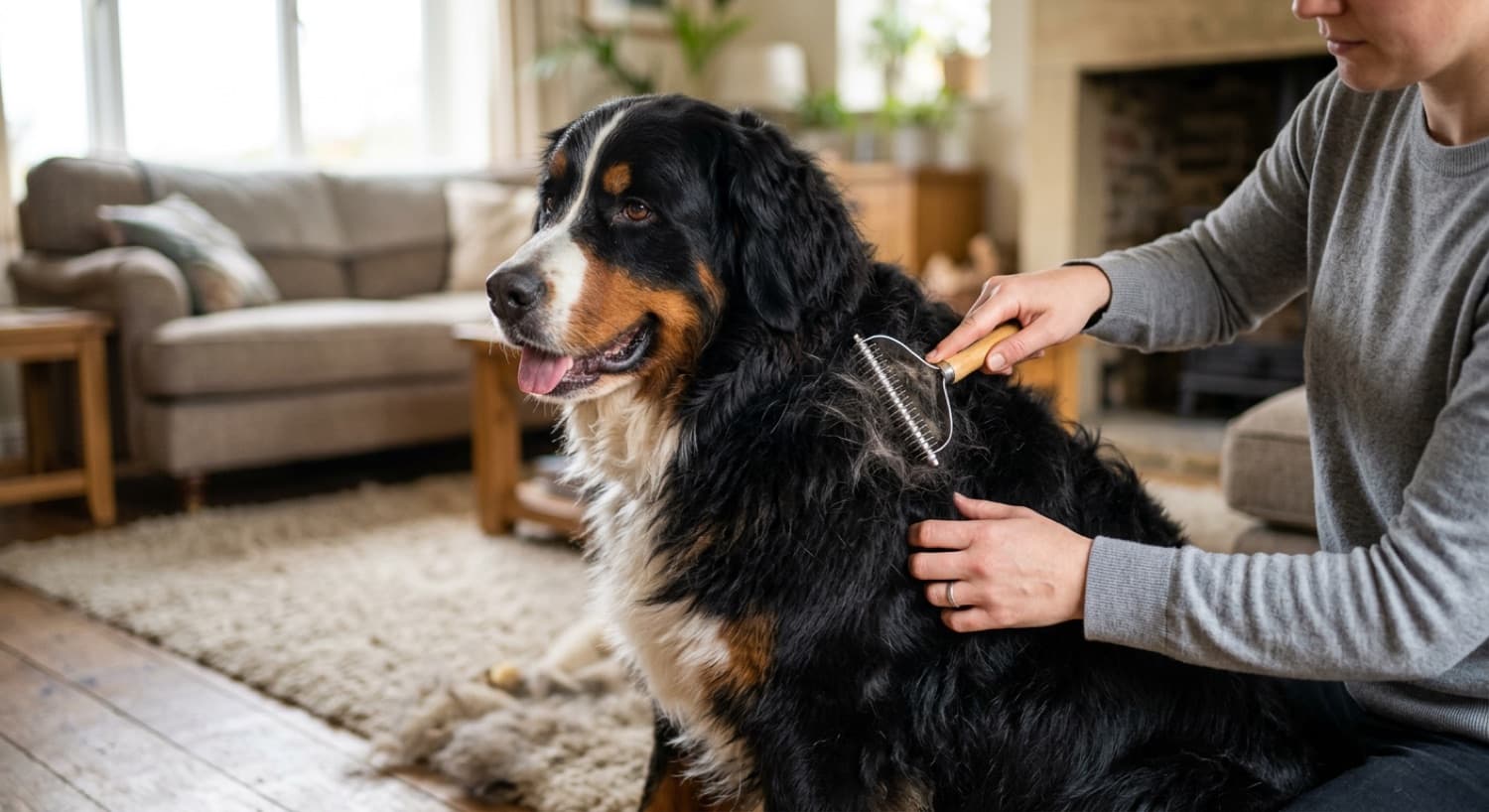
The Bernese Mountain Dog’s striking tricolour double coat is one of the breed’s glories, and one of its biggest practical commitments. Between the year-round shedding, the twice-yearly blows, and the mat-prone feathering, coat care is a regular part of Berner life. Here is how to stay on top of it, and it doubles as a chance to check the skin for the lumps that matter so much in this cancer-prone breed.
Brushing beats matting and controls the shed
A Berner’s double coat tangles and mats without regular attention, especially in the friction zones, behind the ears, the armpits and groin, the britches, and under the collar. Brush thoroughly several times a week, using an undercoat rake to reach the dense undercoat, a slicker for the outer coat and tangles, and a metal comb to check you have reached the skin (if the comb snags, there is a mat the brush missed). Line-brush in sections, working from the skin outward, not just over the top.
Brushing does not reduce the total amount the dog sheds, but it intercepts that fur, into your brush and outdoors rather than across your home, and it keeps the coat healthy and insulating. Just as important for this breed, regular hands-on brushing lets you find lumps, swellings, or skin changes early, which genuinely matters given the Bernese cancer risk covered in our health guide.
Coat blows, drool, and never shaving
Coat blows. Twice a year (spring and fall) a Berner sheds its undercoat in impressive volume over a few weeks. Step up to daily brushing with an undercoat rake and de-shedding tool, ideally outdoors, and a high-velocity dryer clears a blowing coat fast, especially handy for a giant breed.
Drool. Moderate, less than a Mastiff or Saint Bernard, but present, especially around food and water. A drool towel and a wipe after meals handle it.
Never shave. The Canadian Kennel Club describes the Bernese as a heavy-coated working breed, and that double coat regulates both heat and cold. Shaving does not cool the dog and can damage the coat permanently; manage summer heat with shade, water, AC, and cool-hour exercise instead.
Ready for the coat?
If a serious vacuum habit and twice-yearly fur explosions sound manageable, a rescue Berner is a gentle, devoted companion. Browse available Bernese Mountain Dogs and mixes from Ottawa and NCR rescues, with foster notes on coat and temperament.
See Available Bernese Mountain Dogs →Frequently Asked Questions
How much do Bernese Mountain Dogs shed?
A great deal, year-round, plus two heavy seasonal blows, this is a serious shedding breed, and prospective owners should be ready for it. A Berner’s thick double coat (a long outer coat over a dense undercoat) sheds moderately-to-heavily all year, leaving fur on floors, furniture, and clothing, and then "blows coat" twice a year (typically spring and fall), releasing the undercoat in dramatic quantities over a few weeks. Combined with the breed’s giant size, that means a lot of hair, more than most breeds. Regular brushing intercepts much of it, but no amount of grooming makes a Bernese a low-shedding dog. If wall-to-wall fur, a serious vacuum habit, and fur in your food occasionally are dealbreakers, this is not the breed for you. For those who love the breed, the shedding is simply part of the package, managed with consistent brushing.
How often should I brush a Bernese Mountain Dog?
At least a few times a week year-round, and daily during the twice-yearly coat blows. The double coat tangles and mats without regular brushing, especially in the friction areas, behind the ears, in the "armpits" and groin, on the britches (rear legs), and around the collar, so a thorough brush-out several times weekly keeps the coat healthy, reduces loose fur in your home, and lets you check the skin. Use an undercoat rake to reach the dense undercoat, a slicker brush for the outer coat and tangles, and a metal comb to check for mats down to the skin. Line-brush in sections, working from the skin outward, rather than skimming the surface. During a coat blow, step up to daily brushing (outdoors is easier) to keep the shedding undercoat under control. A well-maintained Berner coat is beautiful; a neglected one mats painfully and may need a groomer to sort out.
What is "blowing coat" in a Bernese, and how do I manage it?
Blowing coat is the twice-yearly process, usually spring and fall, when a Bernese sheds its dense undercoat over a few weeks to adjust for the coming season. Given the breed’s size and heavy coat, the volume is genuinely impressive, you can brush out bags of undercoat. Managing it is all about intensive brushing: during a blow, brush daily with an undercoat rake and a de-shedding tool, working the loose undercoat out in sections down to the skin, ideally outdoors. A high-velocity dryer (at a groomer, or bought for home use) is the professional tool for blasting a blowing coat clear quickly and is especially useful for a giant breed. The more loose undercoat you remove with the brush and dryer, the less ends up carpeting your home. Between the two big blows, brushing several times a week keeps the year-round shedding manageable. Patience during the few-week peaks is the whole game.
Should I ever shave my Bernese Mountain Dog?
No, never shave a Berner (except for a genuine medical reason on veterinary advice). The double coat is not just for warmth, it is an insulation and temperature-regulation system that protects the dog from both cold and heat and shields the skin from sun. Shaving does not keep a Berner cooler in summer, that is a myth, and can actually make the dog hotter and vulnerable to sunburn, while the coat often grows back patchy, damaged, or with altered texture, sometimes permanently. For managing summer heat (a real issue for this heavy-coated breed in Ottawa), the answer is never shaving, it is shade, water, air conditioning, cool surfaces, and exercising in the cool of early morning and evening, plus keeping the coat well brushed and free of mats so it can do its insulating job. A well-groomed, un-shaved double coat is the dog’s best protection in both Ottawa’s cold winters and hot summers.
Do Bernese Mountain Dogs drool?
Somewhat, though less than the truly heavy-drooling giant breeds like Mastiffs or Saint Bernards. Bernese Mountain Dogs have fairly tight lips for a large breed, so their drool is moderate rather than extreme, but they do drool, especially around food, water, and after drinking, and some individuals more than others. Expect the occasional slobber string, drool flung when they shake their heads, and water dripped from their beards after a drink. Keeping a "drool towel" handy, wiping the mouth after meals and water, and accepting a bit of slobber as part of giant-breed life all help. It is a minor consideration compared with the shedding and the health profile, but it is worth knowing that a Bernese is not a tidy, drool-free breed, and if you are extremely fastidious about slobber on walls and clothing, a giant breed like this may test your patience. For most Berner lovers, it is a non-issue.
How do I care for a Bernese coat through Ottawa winters and summers?
The two seasons ask opposite things of you. Winter is the breed’s element, the heavy coat handles deep Ottawa cold effortlessly and most Berners love the snow, so grooming is straightforward: brush several times a week, and after snowy walks, rinse road salt off the paws and belly, dry the coat, and check for ice balls in the feathering. Never shave for winter, obviously, and keep the coat clean and mat-free so it insulates well. Summer is the challenge: the same coat that protects against cold makes the breed genuinely prone to overheating in Ottawa’s hot, humid July and August, so keep the coat well brushed (a matted or fur-clogged coat cannot regulate temperature), provide shade, water, air conditioning, and cool surfaces, and exercise only in the cool of morning and evening. Spring and fall bring the coat blows, when daily brushing keeps the undercoat explosion under control. Work with the coat’s natural cycle rather than against it.
Does brushing reduce how much a Bernese sheds, and is the breed hypoallergenic?
Brushing does not reduce the total amount a Berner sheds, that is set by the coat cycle, but it dramatically changes where the fur ends up: in your brush and outdoors rather than on your floors, furniture, and clothes. Regular brushing also keeps the coat healthy and insulating, prevents painful mats, and lets you spot skin issues or lumps early (valuable given the breed’s cancer risk). During a coat blow, aggressive daily brushing removes enormous quantities of loose undercoat that would otherwise carpet your home. As for allergies: no, Bernese Mountain Dogs are emphatically not hypoallergenic, they are heavy shedders with a dense coat that releases plenty of dander and fur, placing them firmly at the high-allergen end of the spectrum. If someone in your household has dog allergies, a Berner is one of the breeds most likely to trigger them. (A Bernedoodle cross is sometimes chosen for lower shedding, but even those vary and are not guaranteed.)
Related Guides
New dog? Start with these care guides
Everything a new adopter needs to set up a safe, happy home.