The short answer
Cancer defines Bernese health. The breed has one of the highest cancer rates of any dog (including aggressive histiocytic sarcoma), driving a heartbreakingly short average lifespan of 7 to 8 years. Also plan for hip and elbow dysplasia (very common), bloat (a deep-chest emergency), and real heat sensitivity under that heavy coat. Routine Ottawa care runs $1,200 to $2,000 a year plus HST, but cancer or joint treatment can run into many thousands. The biggest daily lever is keeping the dog lean. Insure early, before the breed’s high cancer risk creates a claim history. Go in with eyes open, and make all health decisions with your vet.
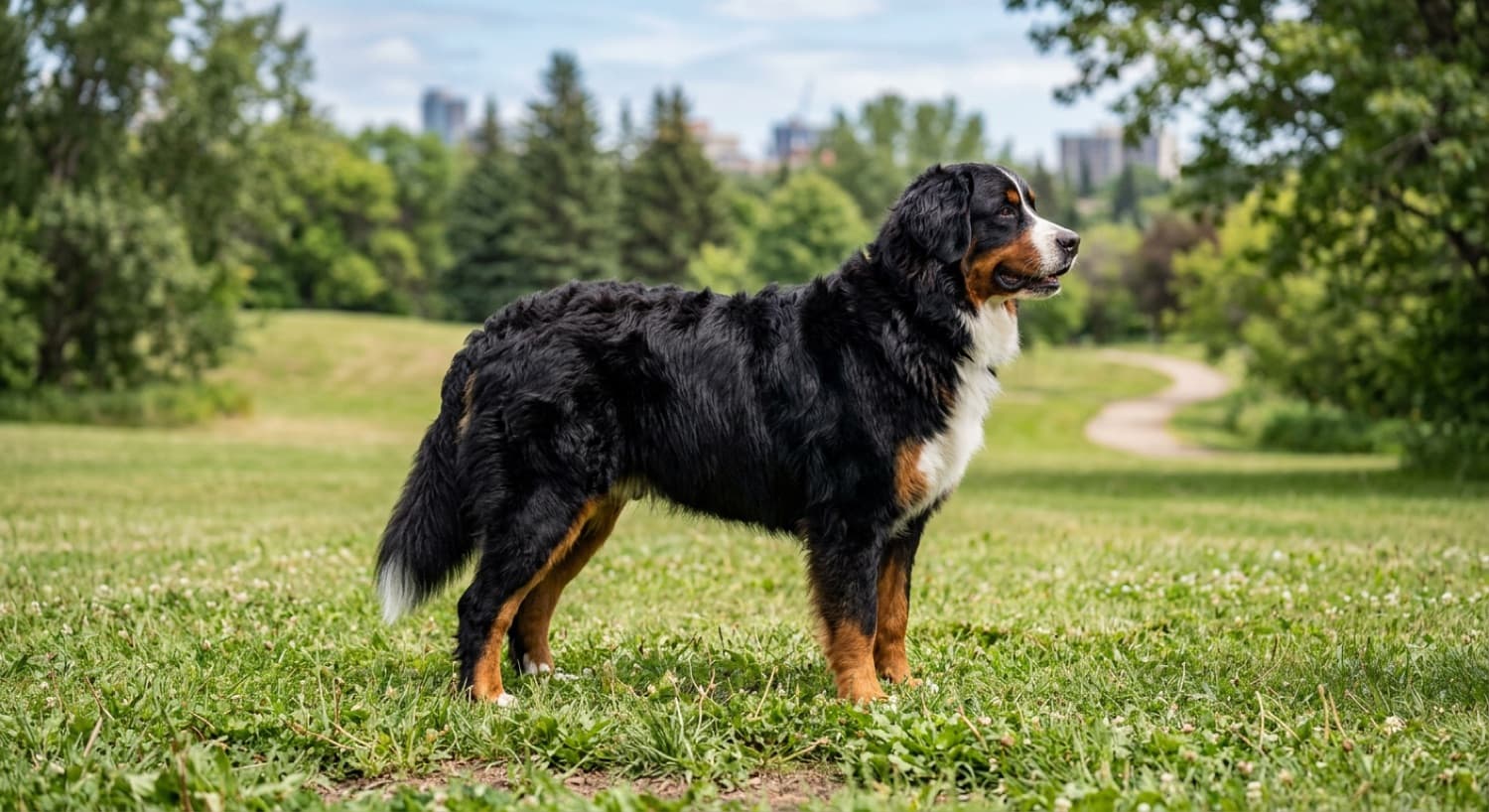
Bernese Mountain Dogs are among the most beloved of all breeds for their gentle, devoted nature, and there is no way to write an honest health guide without being direct: this breed faces serious health challenges, with cancer and a short lifespan at the centre. Knowing this before you adopt lets you plan, budget, monitor, and, above all, cherish the time. This is a planning list, and every point should be discussed with your own veterinarian for your individual dog.
Emergencies, and what to act on
A distended or hard belly with unproductive retching, restlessness, and drooling is possible bloat (GDV), a deep-chest emergency, go to an emergency vet immediately. Also act promptly (not an emergency, but soon) on any unusual lumps, swelling, persistent lameness, lethargy, or weight loss, given the breed’s cancer risk, early detection matters. Ottawa has 24-hour care, including the Alta Vista Animal Hospital. Save the number now.
Cancer and the short lifespan
This is the hard centre of the breed’s health. Bernese Mountain Dogs have one of the highest cancer rates of any dog, with aggressive histiocytic sarcoma tragically over-represented, along with elevated rates of lymphoma, mast cell tumours, and osteosarcoma. This is the primary reason the breed’s average lifespan is just 7 to 8 years, among the shortest of all dogs, and it largely traces to a limited gene pool and historical breeding that did not prioritise longevity.
You cannot fully prevent it, but you can support the best outcome: keep the dog at a healthy weight, maintain regular veterinary checkups so anything is caught early, and act promptly on any lumps, swelling, lethargy, weight loss, or lameness. Many owners feel the breed’s exceptional gentleness makes the fewer years worth it, but going in informed is essential. Discuss the breed’s cancer risk and any monitoring plan with your vet.
Joints, bloat, and heat
Hips and elbows. Dysplasia is very common in this heavy giant breed, sometimes appearing young. Keep the dog lean, avoid overexercising a growing puppy, use joint support, and screen through breeders who test. Severe cases may need costly surgery.
Bloat. As a deep-chested breed, Berners are at risk of GDV. Feed smaller meals, avoid heavy exercise right after eating, know the emergency signs, and discuss a preventive gastropexy with your vet.
Heat. That heavy double coat built for the Swiss Alps means Berners struggle in Ottawa summer heat and are at real risk of overheating, provide shade, water, air conditioning, and cool-hour exercise in summer. Ottawa winters, by contrast, are ideal for the breed.
For routine-care savings, see our Ottawa low-cost vet guide.
Meet a Bernese Mountain Dog in Ottawa
Rescue Berners come with a vet workup and honest health notes, so you know what you are adopting. Browse available Bernese Mountain Dogs and mixes from Ottawa and NCR rescues.
See Available Bernese Mountain Dogs →Frequently Asked Questions
What health problems are Bernese Mountain Dogs prone to?
The defining and most heartbreaking Bernese health issue is cancer, the breed has one of the highest cancer rates of any dog, including aggressive cancers like histiocytic sarcoma, and it is the leading cause of the breed’s tragically short lifespan. Beyond cancer, Berners are prone to hip and elbow dysplasia (very common in the breed), other orthopedic and joint problems, bloat (gastric torsion, a deep-chest emergency), and, being a heavy-coated giant breed, real heat sensitivity. Some also develop eye conditions and von Willebrand disease. This is a serious health profile, and prospective owners must go in fully informed. Many Berners still live joyful lives and are cherished for their gentle nature, but the breed’s health, and the emotional reality of likely fewer years, is central to the decision. Every point here should be discussed with your veterinarian for your individual dog.
Why do Bernese Mountain Dogs get cancer so often?
The breed carries a genetic predisposition to cancer that is, sadly, among the highest of any dog breed, and this is the single biggest factor in their short average lifespan. Histiocytic sarcoma, an aggressive cancer, is tragically over-represented in Berners, and the breed also sees elevated rates of other cancers like lymphoma, mast cell tumours, and osteosarcoma. This predisposition largely traces to a limited gene pool and historical breeding that did not prioritise longevity or screen against cancer lines. There is no way to fully prevent it, though keeping the dog at a healthy weight, avoiding known carcinogens where possible, and maintaining regular veterinary checkups (so any tumour or symptom is caught early) all support the best possible outcome. If you notice any unusual lumps, swelling, lethargy, weight loss, or lameness in a Berner, have it checked promptly, and discuss the breed’s cancer risk and any monitoring with your vet. It is a hard reality, but an informed owner is better prepared.
How serious is hip and elbow dysplasia in Berners?
Very common, and a significant quality-of-life issue for the breed. Hip and elbow dysplasia are inherited malformations of the joints that cause them to fit poorly, leading to pain and progressive arthritis, and Bernese Mountain Dogs, as a large-to-giant, heavy breed, are notably prone to both. Signs include stiffness, difficulty rising, reluctance to climb stairs or jump, a bunny-hopping gait, and lameness, sometimes appearing even in young dogs. Management ranges from weight control, joint supplements, physiotherapy, and anti-inflammatory medication for milder cases to surgery for severe ones, which is costly for a large dog. Prevention starts with breeders who screen hips and elbows (OFA or PennHIP), and the biggest lever an owner controls is keeping the dog lean and providing appropriate, non-jarring exercise, especially avoiding overexercising a growing puppy. For an adopted Berner, weight management and joint support are among the most valuable things you can do for the dog’s comfort and mobility.
Are Bernese Mountain Dogs at risk of bloat?
Yes. As a large, deep-chested breed, the Bernese is at elevated risk of gastric dilatation-volvulus (GDV, or bloat), where the stomach fills with gas and can twist, cutting off blood supply. It is a true emergency, a dog can die within hours, and the signs include a distended or hard belly, unproductive retching, restlessness, pacing, drooling, and collapse. If you see these, get to an emergency vet immediately; do not wait. Reduce the risk by feeding two or three smaller meals rather than one large one, avoiding vigorous exercise right after eating, using a slow-feeder if your dog gulps, and not letting the dog gorge on water after exertion. Some owners of at-risk deep-chested breeds elect a preventive gastropexy (surgically tacking the stomach), often done at the same time as spay or neuter, and worth discussing with your vet. Knowing the emergency signs and having a 24-hour vet’s number saved can genuinely save a Berner’s life.
How much does Bernese Mountain Dog health care cost in Ottawa?
High, reflecting the breed’s giant size and demanding health profile. Routine annual care, a wellness exam, vaccines, parasite prevention, and dental, runs roughly $1,200 to $2,000 a year in Ottawa plus Ontario’s 13 per cent HST, and large-breed food and weight-dosed medication add significantly to the baseline. The budget wildcards are substantial: cancer treatment (chemotherapy, surgery, or specialist care) can run into many thousands of dollars, joint surgery for severe dysplasia is costly, and bloat surgery several thousand more. This combination of a giant body and serious, common conditions makes the Bernese one of the more expensive breeds to own, and it is exactly why pet insurance, taken out while the dog is young and healthy, is strongly advised, ideally before the cancer risk that defines the breed can create a claim history. See our Ottawa low-cost vet guide for routine-care savings, and price insurance early.
Is pet insurance worth it for a Bernese Mountain Dog?
For Bernese Mountain Dogs, yes, strongly, given the breed’s combination of a giant size and a high risk of expensive conditions, cancer above all, plus joint disease and bloat. The odds of a significant vet bill over the dog’s (sadly short) life are high, and cancer treatment in particular can be very expensive. Insurance taken out while your Berner is young and healthy, before any condition is documented, locks in coverage before exclusions apply. This matters enormously, because once cancer, a joint problem, or another condition is on the record, no insurer will cover it, and those are exactly the conditions that generate the big Berner bills. Premiums run higher for a giant breed with this risk profile, commonly $70 to $130 a month in Ottawa, but a single cancer treatment course or joint surgery can dwarf years of premiums. Insure early, read the exclusions carefully, and confirm the breed’s known conditions, especially cancer, are covered from the start.
How can I help my Bernese Mountain Dog live longer and better?
While you cannot change the breed’s genetic cancer predisposition, several things genuinely support the best possible quality and length of life. Keep the dog lean, obesity worsens joint disease, strains the heart, and is linked to worse outcomes across the board, so weight management is the highest-value daily lever. Provide appropriate, moderate exercise that maintains fitness without overloading the joints (and avoid overexercising a growing puppy). Feed a good large-breed diet, protect against bloat with smaller meals, keep up parasite prevention and dental care, and maintain regular veterinary checkups so any problem, especially a tumour, is caught as early as possible. Manage summer heat carefully, given the heavy coat. And cherish the time: many Berner owners focus on giving their dog the fullest, happiest life possible in the years they have. Discuss a wellness and monitoring plan with your vet tailored to the breed’s risks, and act promptly on any lumps, lameness, or changes.
Related Guides
New dog? Start with these care guides
Everything a new adopter needs to set up a safe, happy home.