The short answer
Bichons are hardy and long-lived (14 to 16 years), but plan for allergies and skin conditions (the most common issue, and the coat can hide them), bladder stones (a real breed predisposition, sometimes surgical and recurring), luxating patella (slipping kneecaps), and dental disease (crowded small-breed teeth). Eye conditions and tear-duct issues also occur. Routine Ottawa care runs $700 to $1,300 a year plus HST, plus non-negotiable grooming every 4 to 6 weeks. Watch the skin and ears, support urinary health, keep the teeth clean and the dog lean, and consider insuring early. Make all health decisions with your vet.
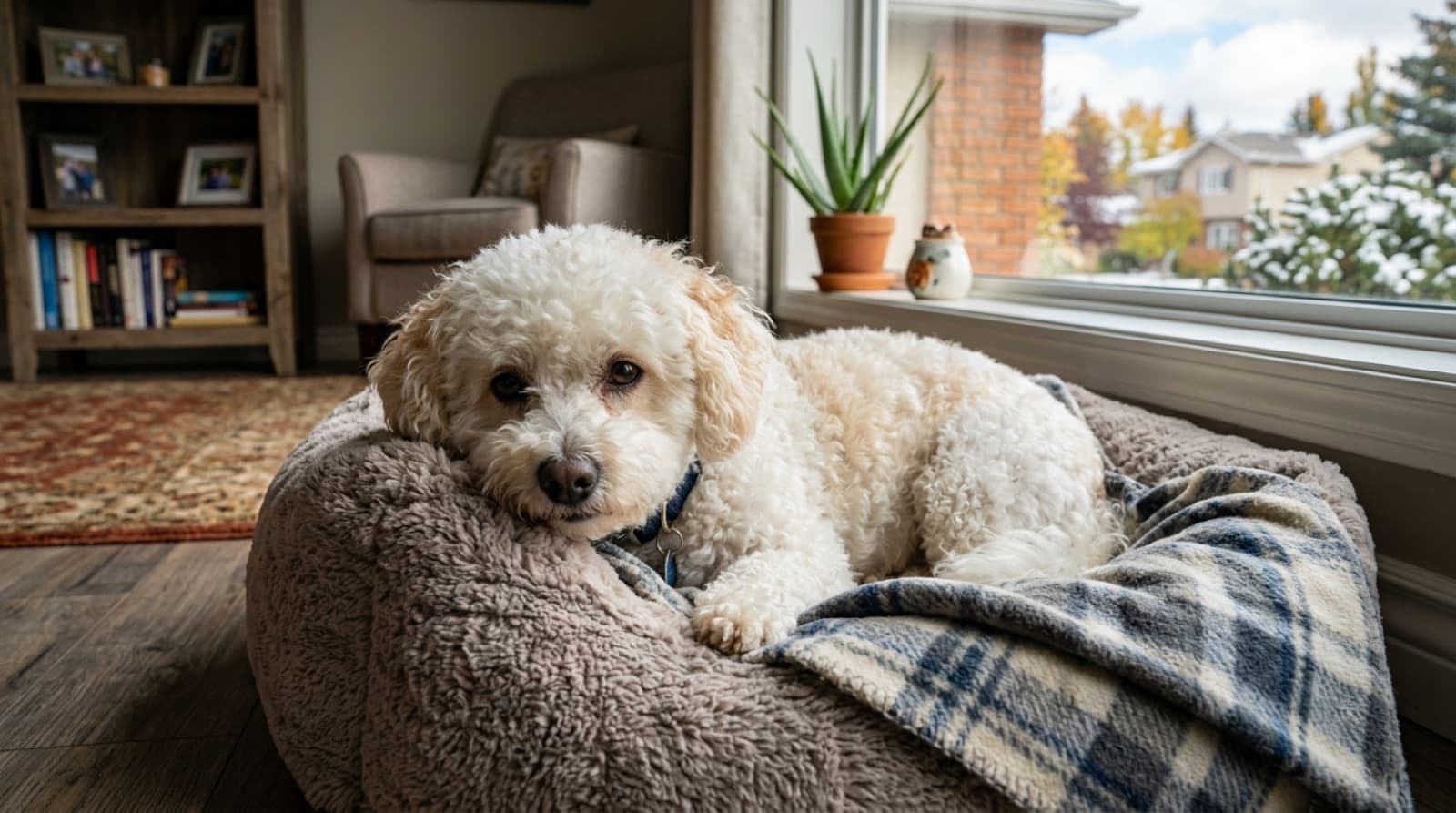
The Bichon Frise is a genuinely hardy little dog with an enviable lifespan, but a few conditions come with the breed, and the dense white coat has a habit of hiding the earliest signs of skin and ear trouble. This is a planning list so an Ottawa owner knows what to watch for and where the budget goes, and every point should be discussed with your own veterinarian.
Straining to urinate is an emergency
Bichons are prone to bladder stones. Straining, frequent urination, or blood in the urine warrants a prompt vet visit, and a complete inability to urinate is a life-threatening emergency, get to a vet immediately. Ottawa has 24-hour care including the Alta Vista Animal Hospital. Ensure constant access to fresh water and don’t let the dog hold urine for long periods.
Allergies, stones, knees, and teeth
Allergies and skin. The most common Bichon issue, environmental and food allergies causing itching, ear infections, and skin problems. Check the skin and ears during grooming (the coat hides changes), treat ear infections promptly, and work through triggers with your vet. Ottawa’s seasons bring spring/summer pollen and dry indoor winter air.
Bladder stones. A real breed predisposition; some dissolve with diet, others need surgery, and they can recur, so water intake and diet matter. Knees. Luxating patella (slipping kneecaps) is the small-breed classic; keeping the dog lean protects the joints.
Teeth and eyes. Dental disease is important in a small crowded mouth, so routine dental care matters. Cataracts and blocked tear ducts occur (the latter feeding the tear staining Bichons are known for). For routine-care savings, see our Ottawa low-cost vet guide, and our Bichon grooming guide for tear-stain management.
Meet a healthy Bichon in Ottawa
Rescue Bichons come with a vet workup and honest health notes, including any known allergies or urinary history. Browse available Bichon Frises and mixes from Ottawa and Ontario rescues.
See Available Bichon Frises →Frequently Asked Questions
What health problems are Bichon Frises prone to?
Bichon Frises are generally a hardy, long-lived small breed, but they do have a handful of characteristic health concerns Ottawa owners should plan for. Allergies and skin conditions are probably the most common, Bichons are notably prone to environmental and food allergies that cause itching, ear infections, and skin problems, which the dense coat can mask until they are advanced. Bladder and kidney stones are another well-known breed issue, sometimes needing dietary management or surgery. Orthopedically, the small-breed classics appear: luxating patella (slipping kneecaps) and, less commonly, hip issues. Dental disease is important, as in all small breeds whose teeth crowd a small mouth, so routine dental care matters. Eye conditions occur, including cataracts and blocked tear ducts (the latter contributing to the tear staining Bichons are known for). Rarer breed-associated conditions include a specific liver shunt and an autoimmune condition. Most of these are manageable, and the highest-value everyday things an owner can do are watch the skin and ears, support urinary health, keep the teeth clean, and keep the dog lean. Always make health decisions for your individual dog with your veterinarian.
Are Bichon Frises prone to allergies and skin problems?
Yes, allergies and skin conditions are among the most common Bichon health issues, and the breed is genuinely predisposed to both environmental allergies (pollen, dust, mould) and food allergies, which typically show up as itching, licking and chewing (especially paws), recurrent ear infections, skin redness, and secondary infections. Because the Bichon’s dense white coat can hide skin changes, problems sometimes advance before an owner notices, so regular hands-on checks of the skin and ears during grooming are valuable. Management depends on the cause and is something to work through with your vet: it can involve identifying and avoiding triggers, dietary trials for suspected food allergies, medicated shampoos, ear care, and, in some cases, anti-itch medication or allergy treatment. Ottawa’s distinct seasons can bring seasonal flare-ups (spring and summer pollen, indoor dust and dry air in winter). Keeping up with grooming, promptly addressing ear infections, and not letting itchy skin go untreated all help. For an adopted Bichon, ask the rescue whether the dog has any known allergies or skin sensitivities, and mention the breed’s predisposition to your vet so it is on the radar from the start.
What are bladder stones, and why are Bichons prone to them?
Bladder stones are mineral formations that develop in the bladder, and Bichon Frises are one of the breeds genuinely predisposed to them, which is why it is worth knowing the signs. Stones can cause straining to urinate, frequent urination, blood in the urine, urinating in unusual places, and, in a serious emergency, a complete inability to urinate (a blockage, which is life-threatening and needs immediate veterinary care). Some stone types can be dissolved with a prescription diet, while others require surgical removal, and dogs that have formed stones once are prone to forming them again, so ongoing dietary management and monitoring are often needed. Prevention and management focus on encouraging water intake, appropriate diet (your vet may recommend a specific urinary diet, especially after a stone episode), not letting the dog hold urine for long periods, and prompt treatment of urinary tract infections, which can contribute. For an Ottawa Bichon owner, the practical takeaways are to ensure constant access to fresh water, watch for any change in urination, and see the vet promptly if you notice straining or blood, and treat inability to urinate as an emergency. Ask a rescue whether an adopted Bichon has any urinary history.
How much does Bichon Frise health care cost in Ottawa?
Routine annual care for a small dog, a wellness exam, vaccines, parasite prevention, and dental attention, runs roughly $700 to $1,300 a year for a Bichon in Ottawa, plus Ontario’s 13 per cent HST, and on top of that comes the significant, non-negotiable grooming cost (professional grooming every 4 to 6 weeks). The budget wildcards are the breed conditions: allergy and skin management (often ongoing, ranging from inexpensive to substantial depending on severity), bladder-stone treatment (dietary management is modest, but surgery to remove stones can run into four figures and may recur), dental cleanings and extractions (small-breed teeth need regular attention), and luxating-patella surgery if severe. Because food quantities are small, feeding a Bichon is cheap, but grooming and the potential for recurring urinary or skin issues are where the money goes. This mix, mostly manageable but with a real possibility of surgery or chronic-condition costs, is why many owners find pet insurance worthwhile, ideally taken out while the dog is young and healthy. See our Ottawa low-cost vet guide for routine-care savings, remembering grooming is a separate line item insurance does not cover.
Is pet insurance worth it for a Bichon Frise?
Often yes, because the Bichon’s common conditions, allergies and skin disease, bladder stones, dental problems, and luxating patella, can each become recurring or surgical, and insurance taken out while the dog is young and healthy locks in coverage before anything becomes a pre-existing exclusion. This matters most for the chronic and recurring items: allergies and bladder stones in particular tend to be lifelong management once they appear, and if they are already documented, no insurer will cover them. Bladder-stone surgery alone can cost well over a thousand dollars and may recur, which is exactly the kind of unpredictable expense insurance smooths out. Premiums for a young Bichon commonly run $40 to $70 a month in Ottawa (small breeds are often at the lower end). Note that insurance covers illness and injury, not the routine grooming this breed requires, which remains your ongoing cost. Weigh it against your savings buffer: if you could comfortably absorb a surgical bill and ongoing allergy management, self-insuring is reasonable; if not, early coverage is sensible. For an adopted adult Bichon, ask the rescue about any known allergies, urinary history, or dental issues before insuring, since those may already be excluded.
How long do Bichon Frises live?
Bichon Frises are a long-lived breed, typically living around 14 to 16 years, which is excellent even by small-dog standards and one of the joys of the breed. A well-cared-for Bichon, kept lean with attentive skin, dental, and urinary care, has a good chance of reaching the upper end. Longevity depends on the usual levers plus breed-specific ones: manage allergies and skin conditions before they become chronic, support urinary health and watch for bladder stones, keep up with dental care (crucial in a small breed and often neglected), keep the dog lean to protect the knees, and maintain the coat. For Ottawa owners, that lifespan means well over a decade, often approaching two, of a cheerful, affectionate companion, so the grooming and care commitment is a long one, but the payoff is a devoted little dog for many years. A Bichon adopted as an adult, even a senior, still typically has many good years ahead given the breed’s longevity, which makes adopting an older Bichon a genuinely rewarding option rather than a short-term one. With attentive care, most Bichons enjoy long, happy, healthy lives.
Related Guides
New dog? Start with these care guides
Everything a new adopter needs to set up a safe, happy home.