The short answer
The Bichon coat does not shed out, it grows and mats, so grooming is the biggest ongoing commitment of ownership. Plan on brushing several times a week (line brushing to the skin, not just the surface) plus professional grooming every 4 to 6 weeks ($60 to $100-plus per visit in Ottawa). Neglect it and the coat mats to the skin and has to be shaved. Add nail trims, ear cleaning, dental care, and tear-stain management (rule out a medical cause first, then gentle daily cleaning and short eye-area hair). Ottawa winters add paw and salt care. Keeping a shorter “puppy cut” is a valid way to ease maintenance.
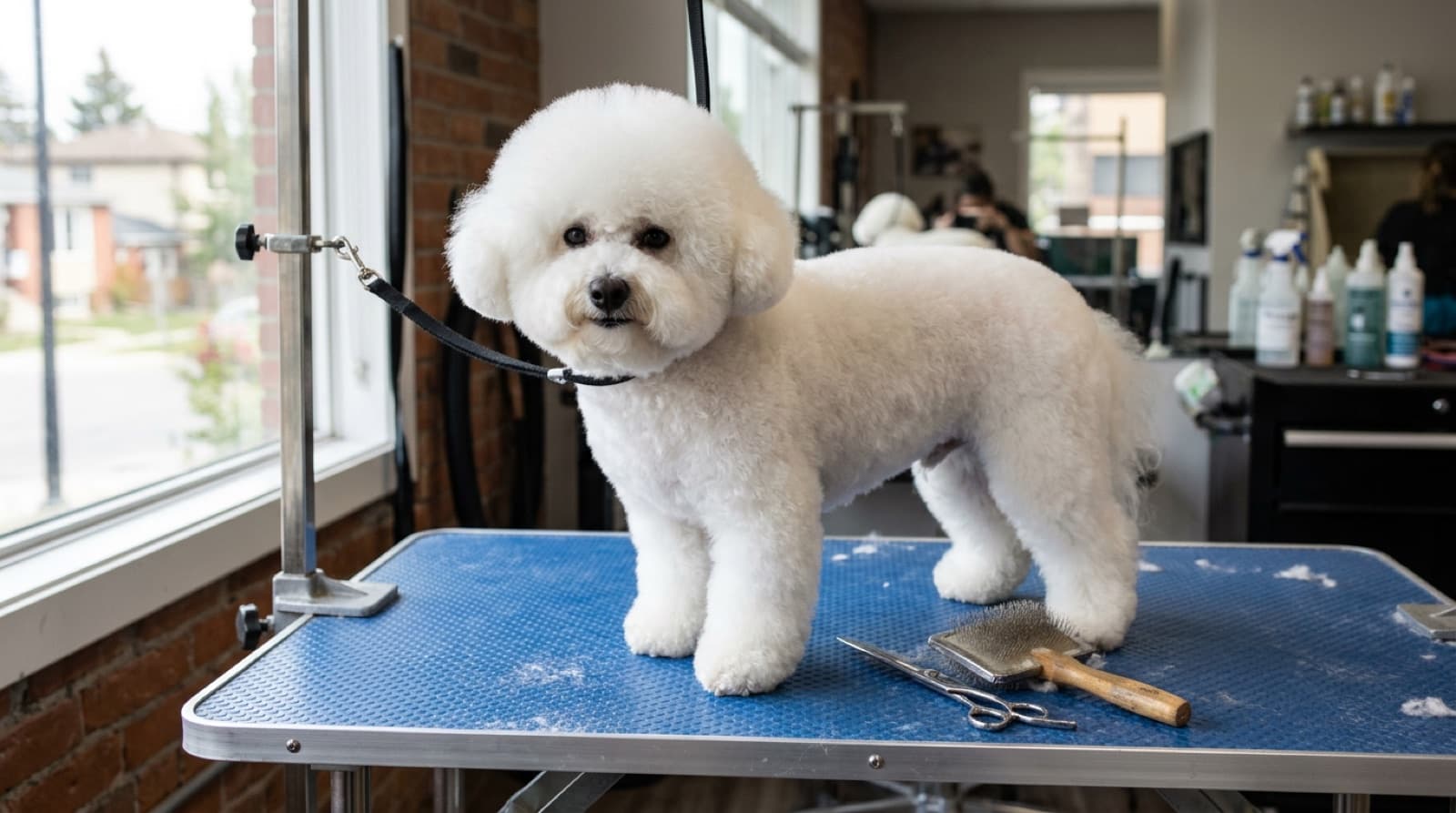
If there is one thing to understand before adopting a Bichon Frise, it is that the coat is a lifestyle. The breed’s iconic powder-puff look does not happen on its own, it is the result of relentless, correct grooming, and the single biggest reason Bichons end up matted, shaved, or surrendered is owners who loved the look but underestimated the upkeep.
Surface brushing is not enough
The Bichon coat mats from the skin outward, so brushing only the top leaves mats forming underneath while the surface still looks fluffy. You must line brush: part the coat in sections down to the skin and brush each layer from the roots out. Never bathe a matted dog (water felts the mats), and never cut a mat out with scissors (a common cause of accidental skin cuts).
The routine, and the tear stains
Brush several times a week with a slicker brush and metal comb, checking that the comb passes to the skin in the high-friction spots that mat first, behind the ears, armpits, groin, collar, and under a harness. Add regular nail trims, ear cleaning and plucking (the breed is ear-infection prone), and dental care. Most owners pair this home upkeep with professional grooming every 4 to 6 weeks for the bath, de-mat, and the skilled trim that creates the rounded Bichon shape.
For tear staining, common and very visible on white fur, first rule out a medical cause with your vet (blocked tear ducts, which Bichons are prone to, allergies, or irritation), since treating that matters more than cleaning. Then manage routinely: wipe the eye area daily, keep the hair around the eyes trimmed short, and keep it dry. Be cautious with over-the-counter stain removers (some contain antibiotics), check with your vet first. See our Bichon health guide for the medical side, and the Canadian Kennel Club for breed-standard grooming background.
Ready for the fluff (and the brushing)?
If you are ready for the grooming, a Bichon is a joyful companion. Browse available Bichon Frises and bichon mixes from Ottawa and Ontario rescues, refreshed regularly.
See Available Bichon Frises →Frequently Asked Questions
How much grooming does a Bichon Frise need?
A lot, and it is the single biggest ongoing commitment of Bichon ownership. The Bichon’s signature coat is a soft, dense, curly double coat that does not shed out but grows continuously, which means loose hair stays in the coat and mats readily unless it is actively managed. In practice, a Bichon needs thorough at-home brushing several times a week (ideally most days, and daily during heavy shedding of the undercoat or when mats are forming) plus professional grooming every 4 to 6 weeks to bathe, de-mat, trim, and shape the coat. Skip either and the coat mats close to the skin, which is uncomfortable, traps moisture and skin problems, and often forces the groomer to shave the dog down. On top of coat care, Bichon grooming includes regular nail trims, ear cleaning and plucking (the breed is prone to ear issues), dental care, and management of tear staining around the eyes. This is not a wash-and-go breed. Prospective owners drawn to the adorable fluffy look must understand that the look is entirely a product of constant grooming, and budget the time and money accordingly, or keep the coat in a shorter, lower-maintenance trim.
How do I prevent matting in a Bichon’s coat?
Matting prevention comes down to frequent, correct brushing, and “correct” is the part many owners get wrong. Because the Bichon’s coat mats from the skin outward, brushing only the surface of the coat leaves mats forming underneath while the top still looks fluffy, so you have to line brush: work in sections, part the coat down to the skin, and brush each layer from the roots out, so the whole coat, not just the top, is tangle-free. Use a good slicker brush and a metal comb, and always check that the comb passes cleanly to the skin, especially in the high-friction areas that mat first: behind the ears, the armpits and groin, the collar area, and anywhere a harness rubs. Brush several times a week at minimum, and daily when the undercoat is shedding or mats are appearing. Brushing a dry or lightly misted coat (not soaking wet) is easiest, and never bathe a matted dog, water tightens mats into felt. If you find a mat, work it out gently with fingers and comb or have the groomer address it; do not cut it out with scissors (a common way owners accidentally cut the skin). Frequent brushing plus professional grooming every 4 to 6 weeks is the reliable formula.
How do I deal with tear stains on a Bichon?
Tear staining, the reddish-brown discolouration under the eyes, is common and especially visible on a Bichon’s white coat, and while it is largely cosmetic, it is worth managing for hygiene and appearance. The staining comes from tears and porphyrins (pigments in tears and saliva) combined with moisture that lets yeast and bacteria grow in the damp facial hair. The first step is to rule out a medical cause with your vet, because excessive tearing can stem from blocked tear ducts (which Bichons are prone to), eye irritation, allergies, or ingrown lashes, and if there is an underlying issue, treating it matters more than cleaning the stains. For routine management: gently wipe the eye area daily with a damp cloth or a vet-approved eye wipe to remove tears and debris, keep the hair around the eyes trimmed short (a groomer can do this) so it does not wick tears onto the face, keep the area dry, and ensure good facial hygiene overall. Be cautious with over-the-counter tear-stain removers and supplements, some contain antibiotics or unproven ingredients, so check with your vet before using them. Consistency with gentle daily cleaning and keeping the eye-area hair short does more than any product. For an Ottawa Bichon, this becomes a small part of the daily grooming routine.
Should I take my Bichon to a professional groomer or do it myself in Ottawa?
Most Bichon owners do both, and the realistic answer for the average owner is a combination: professional grooming every 4 to 6 weeks plus at-home brushing and upkeep in between. A professional groomer handles the full bath, de-matting, coat trimming and shaping (the classic rounded Bichon look takes skill), nail trims, ear cleaning, and sanitary trims, and in Ottawa this typically runs $60 to $100-plus per visit depending on the dog’s condition and the salon. Between appointments, the owner must brush frequently (several times a week) to prevent matting, wipe the eyes, and check ears, because a dog that is only groomed every six weeks with no brushing in between will mat badly and may need shaving. Owners who want to reduce grooming costs can learn to do more at home, brushing, bathing, basic trims, and even full grooming with the right tools and practice, but the Bichon coat is genuinely difficult to trim well, so many owners leave the clipping and shaping to a professional and handle maintenance themselves. Whichever route you choose, the coat cannot be neglected. Building a relationship with a good Ottawa groomer early, and keeping up brushing at home, is the winning approach, and keeping the coat in a shorter “puppy cut” is a perfectly good way to make maintenance easier.
Does Ottawa’s climate affect Bichon grooming?
Yes, in practical ways worth planning for. In Ottawa winters, a Bichon’s coat picks up snow, ice balls, and road salt on walks, salt is irritating and can be harmful if licked, so rinse or wipe the paws, legs, and belly after winter outings, and dry the dog thoroughly, since a damp coat in cold weather is uncomfortable and mats faster. Snow and moisture also mean more frequent matting in winter, so brushing vigilance goes up. Many owners keep the coat a bit shorter in winter to reduce snow-clumping and drying time, while others prefer a little more length for warmth, either works, but a wet coat should always be dried. In spring and summer, shedding of the undercoat and pollen (a Bichon allergy trigger) can increase brushing needs, and a shorter summer trim helps keep the dog cool and clean. Year-round, humidity and moisture are the enemies of a mat-free coat, so drying thoroughly after baths, swims, or wet walks is essential. None of this changes the fundamental routine, frequent brushing plus professional grooming every 4 to 6 weeks, but Ottawa’s seasons add paw and coat care in winter and a bit more brushing in shedding season. A good groomer can advise on a seasonally appropriate trim.
Related Guides
New dog? Start with these care guides
Everything a new adopter needs to set up a safe, happy home.